
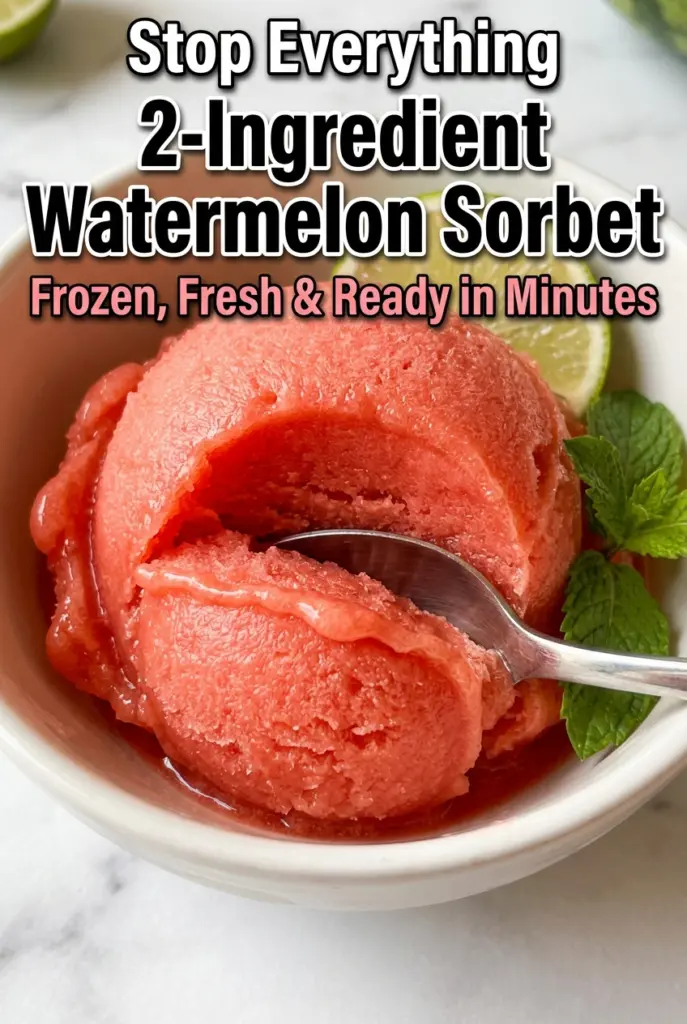
2-Ingredient Watermelon Sorbet
Watermelon sorbet tastes like pure summer fruit, but the texture is what makes this version worth keeping around. It turns icy melon into something smooth, bright, and spoonable with almost…
Tip: save now, cook later.Watermelon sorbet tastes like pure summer fruit, but the texture is what makes this version worth keeping around. It turns icy melon into something smooth, bright, and spoonable with almost no effort, and the lime keeps it from tasting flat or one-note. The best part is that it doesn’t need an ice cream maker to turn out clean and creamy.
The trick is freezing the watermelon in a single layer first, so the blender can catch the pieces evenly instead of choking on one giant block. Once the fruit is fully solid, the lime juice does more than add flavor — it helps the sorbet taste sharper and less sugary, which matters because watermelon can go bland once it’s frozen. A high-powered blender gives the silkiest result, but a food processor works too if you stop and scrape down the sides a few times.
Below, you’ll find the small details that keep the texture smooth instead of watery, plus the best way to freeze it if you want a firmer scoop later.
The texture came out unbelievably smooth for something with just watermelon and lime. I froze it overnight and it scooped like a dream after about 20 minutes on the counter.
Keep this 2-Ingredient Watermelon Sorbet handy for the days when you want a frozen treat that tastes clean, bright, and ridiculously refreshing.
The Freeze-Then-Blend Step That Keeps Watermelon Sorbet Creamy
Most watermelon sorbet turns icy because the fruit goes straight into the blender with too much liquid around it. Watermelon already carries a lot of water, so if you skip the full freeze, you end up with a thin slush instead of a smooth sorbet. Freezing the chunks in a single layer gives the blender small, even pieces to work with, which is what helps the final texture stay creamy instead of grainy.
The other thing that matters is how long you blend. Stop as soon as the mixture turns smooth and starts to look like soft-serve; if you keep going for too long, the blade can warm it just enough to loosen the texture. If the blender stalls, pause and scrape the sides rather than adding extra liquid. More liquid is the fastest way to lose that dense frozen finish.
What the Watermelon and Lime Are Each Doing Here
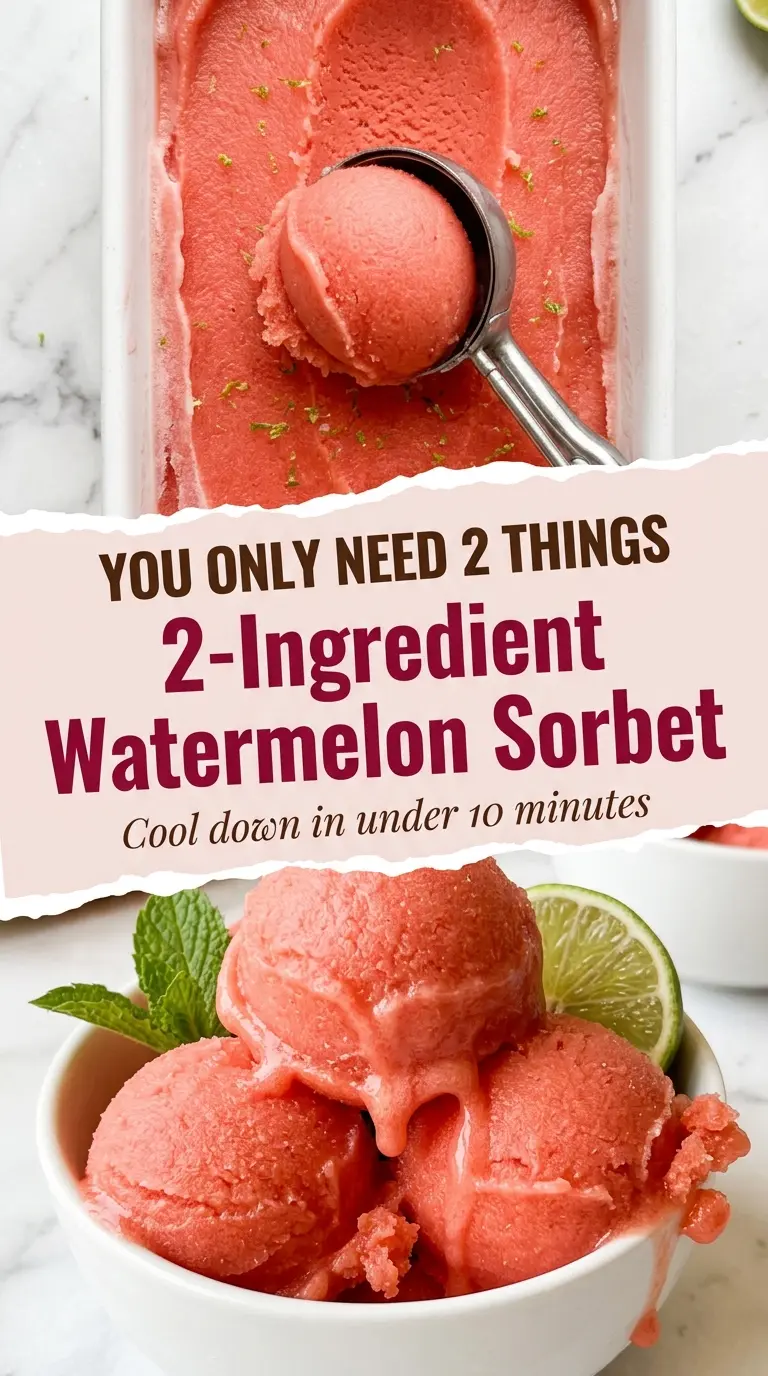
- Watermelon — Use ripe, sweet melon with deep color and plenty of flavor. If the fruit tastes bland out of the fridge, it will taste even flatter once frozen, so this is one place where good fruit matters. Seedless is easiest, but seeded watermelon works fine as long as you remove the seeds before freezing.
- Fresh lime juice — Lime sharpens the sweetness and keeps the sorbet from reading as just frozen melon. Bottled juice can work in a pinch, but fresh juice tastes cleaner and brighter. Start with the full amount, then add a little more only if the melon needs a lift.
The Two Minutes That Turn Frozen Fruit Into Sorbet
Freezing the Fruit in a Single Layer
Spread the watermelon chunks out on a parchment-lined baking sheet so they freeze as individual pieces, not one solid clump. That extra step pays off because the blender can process them evenly. If the pieces freeze together, the motor has to work too hard and the texture ends up uneven.
Blending Until It Looks Like Soft-Serve
Add the frozen melon and lime juice to the blender or food processor and pulse at first, then move to high speed once the blades start catching. The mixture will look crumbly for a moment, then suddenly turn smooth and glossy. Stop there. If it starts looking soupy, the fruit has warmed too much, and the sorbet will be soft rather than scoopable.
Choosing Your Final Texture
Spoon it straight from the blender if you want a soft-serve feel. For firmer scoops, spread it in a loaf pan and freeze it for 1 to 2 hours until the top feels set but still yields under a spoon. Longer freezing is fine too, but let it sit at room temperature for a few minutes before scooping so it doesn’t crack into hard shards.
How to Adapt This Sorbet When You Want a Different Finish
Make It Sweeter Without Changing the Texture
If your watermelon is only mildly sweet, add a teaspoon or two of honey or simple syrup after the first blend. Keep it small, though — too much extra liquid softens the sorbet and dulls the clean melon flavor.
Lemon Instead of Lime
Lemon gives a slightly softer, rounder acidity if that’s what you have on hand. Lime is sharper and makes the watermelon taste more vivid, but lemon still works well as long as you use fresh juice.
Make It Dairy-Free and Vegan by Default
This recipe already fits both dairy-free and vegan eating without any changes. That’s part of the appeal: the melon itself creates the creamy body, so you don’t need milk, cream, or any swap to get a satisfying frozen dessert.
Storage and Reheating
- Refrigerator: Not recommended. It melts fast and turns watery.
- Freezer: Store covered for up to 5 days. The texture gets harder the longer it sits, so press plastic wrap or parchment against the surface if you want to limit ice crystals.
- Reheating: There’s no reheating step here. Let frozen sorbet sit on the counter for 5 to 10 minutes before scooping so it softens just enough to serve cleanly.
Answers to the Questions Worth Asking
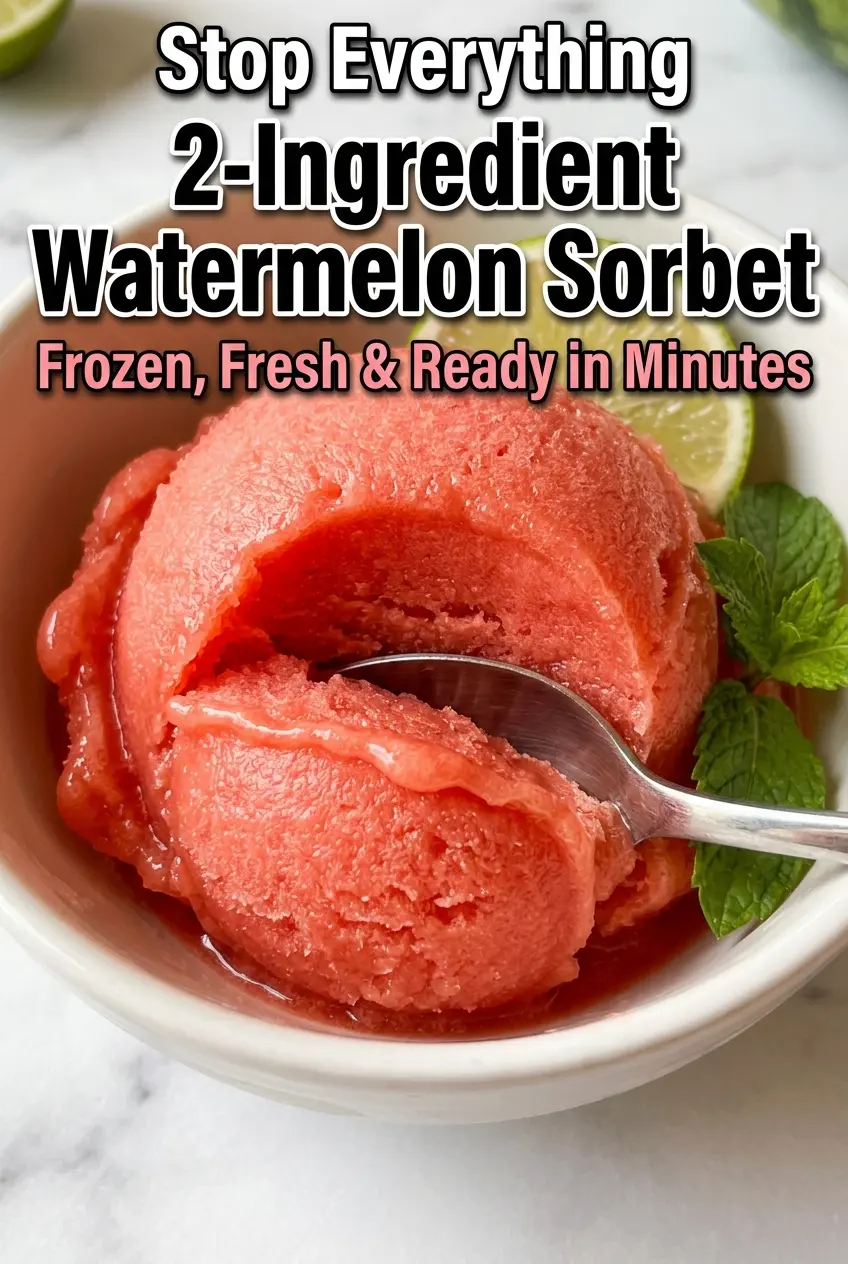
2-Ingredient Watermelon Sorbet
Ingredients
Equipment
Method
- Cut the watermelon into rough chunks and remove seeds until you have about 6 cups total.
- Spread the watermelon pieces in a single layer on a parchment-lined sheet pan, then freeze for at least 4 hours or overnight until completely solid.
- Transfer the frozen watermelon chunks to a high-powered blender or food processor.
- Add the fresh lime juice and blend on high, stopping to scrape down the sides as needed, until completely smooth and creamy, about 60–90 seconds.
- Taste and adjust lime juice if desired.
- Serve immediately as soft-serve sorbet, or transfer to a loaf pan, smooth the top, and freeze for another 1–2 hours for a firmer, scoop-able texture.
- Scoop into bowls or cones and serve immediately, then store leftovers covered in the freezer for up to 5 days.
