
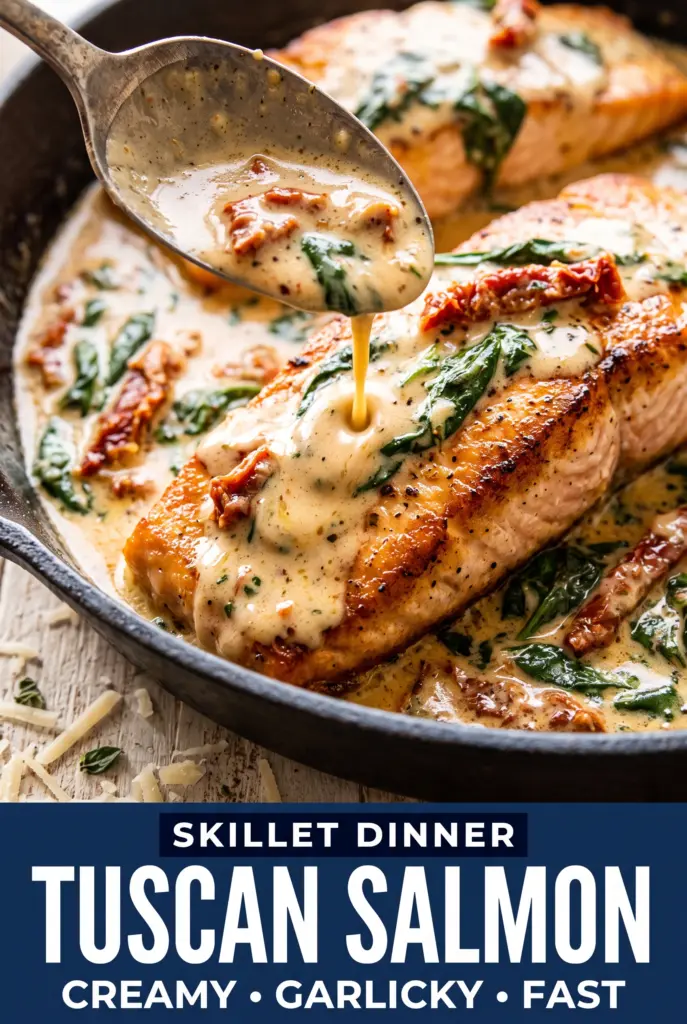
Tuscan Salmon with Parmesan Cream Sauce
Pan-seared salmon turns into a full dinner the second it meets a Parmesan cream sauce that clings to every bite. The fish stays tender in the center, the edges pick…
Tip: save now, cook later.Pan-seared salmon turns into a full dinner the second it meets a Parmesan cream sauce that clings to every bite. The fish stays tender in the center, the edges pick up a light golden crust, and the sauce brings in garlic, sun-dried tomatoes, and spinach without turning heavy or muddled. It tastes like something ordered at a nice restaurant, but it lands in one skillet and still leaves you time to get the bread on the table.
The part that makes this version work is restraint. The salmon gets seared first and pulled out before the sauce goes in, which keeps the fillets from overcooking while the cream does its thing. Parmesan goes in off the hottest part of the burner so it melts smooth instead of turning grainy, and the sun-dried tomatoes bring enough tang to keep the sauce from tasting flat.
If you’ve made cream-sauce salmon before and had the fish go soft or the sauce split, the sections below will help. There’s a timing tip that matters, a few ingredient notes worth knowing, and a couple of swaps that still keep the dish balanced.
The salmon stayed perfectly moist and the sauce thickened up without turning greasy. I served it with crusty bread and my husband was scraping the skillet clean.
Tuscan Salmon with Parmesan Cream Sauce is the kind of skillet dinner that stays silky, saucy, and weeknight-fast.
The reason the sauce stays silky instead of breaking
Parmesan cream sauces usually fail in one of two ways: the cheese seizes into little specks, or the sauce turns oily after it sits for a minute. Both problems come from heat. Cream wants gentle heat, and Parmesan needs to melt into a warm base, not boil hard in it. That means the sauce should only barely simmer before the cheese goes in, and the skillet should come off the burner if things start moving too fast.
The other detail that matters is the order. The salmon sears first, then rests while the sauce builds in the same pan. Those browned bits left behind give the sauce depth, and pulling the fish out early keeps it from overcooking when you return it at the end. You end up with salmon that flakes cleanly and a sauce that looks glossy, not heavy.
What each ingredient is doing in this skillet
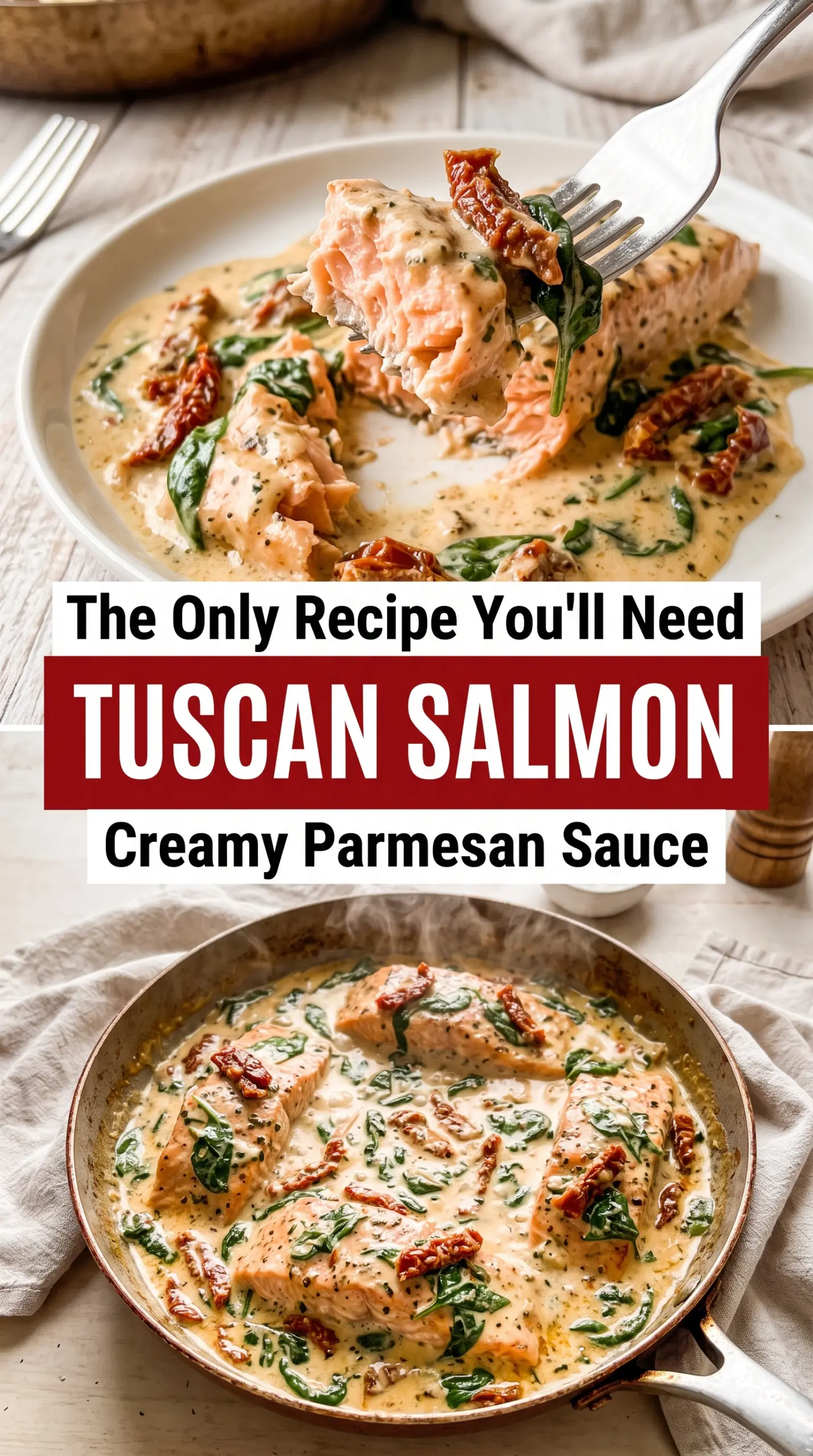
- Salmon fillets — Use fillets that are similar in thickness so they cook at the same pace. Skin-on or skinless both work, but skin-on gives you a little extra protection during the sear and helps the fish release cleanly from the pan.
- Sun-dried tomatoes — These carry the tang that keeps the sauce from tasting one-note. The oil-packed kind are my pick here because they’re soft and easy to chop; if you use dry-packed, soak them in hot water for a few minutes first so they don’t stay leathery.
- Heavy cream — This is what gives the sauce its body. Half-and-half can work in a pinch, but it makes a thinner sauce and gives you less room before the cheese starts acting up.
- Parmesan cheese — Grate it yourself if you can. Pre-shredded Parmesan often has anti-caking starches that keep it from melting as smoothly, which is exactly what you don’t want in a cream sauce.
- Baby spinach — It wilts fast and disappears into the sauce without getting stringy. If you use a sturdier green, slice it thin so it softens before the salmon goes back in.
- Chicken broth — This loosens the cream just enough so the sauce feels rich instead of pasty. If you don’t have it, water works, but the sauce will taste flatter and need a stronger hand with seasoning.
How to build the skillet without overcooking the fish
Getting the salmon sear
Season the fillets with salt and pepper, then lay them into a hot skillet with the oil shimmering, not smoking. You want a sizzle the moment they hit the pan. Leave them alone until the first side releases easily and shows a deep golden crust, then flip once and cook just until the center still has a little give. If the salmon sticks, it’s usually not ready to turn yet.
Starting the sauce in the same pan
Remove the fish and drop the butter into the same skillet. The garlic only needs about a minute, just long enough to smell fragrant; if it browns, it turns bitter fast. Stir in the sun-dried tomatoes, cream, and broth, scraping up the browned bits from the bottom as the liquid comes up to a gentle simmer. That flavor belongs in the sauce.
Melting in the Parmesan
Lower the heat before adding the cheese and whisk steadily until the sauce turns smooth and lightly thickened. If you dump the Parmesan into a boiling sauce, it can turn grainy or stringy. Once the sauce looks glossy and coats a spoon, add the spinach, Italian seasoning, and red pepper flakes, then let the greens wilt just until they turn dark and tender.
Returning the salmon at the end
Slide the fillets back into the skillet and spoon the sauce over the top. They only need a couple of minutes to warm through, not a long simmer. If you leave them in too long, the salmon dries out and the sauce can reduce too much, so serve as soon as the fish flakes and the sauce is still loose enough to spoon.
How to adapt this when you need a different version
Dairy-free version
Swap the butter for olive oil and use a full-fat unsweetened coconut cream or plain dairy-free cooking cream in place of the heavy cream. The sauce won’t taste exactly the same, but it still turns silky and rich if you keep the heat low and add the dairy-free Parmesan-style cheese at the end instead of boiling it hard.
Lower-carb serving
The salmon itself is already low in carbs, so the main adjustment is what you serve under it. Spoon it over zucchini noodles, cauliflower mash, or roasted asparagus instead of pasta. The sauce is bold enough to carry those vegetables without feeling like it needs starch to finish the meal.
Using frozen salmon
Thaw it fully and pat it very dry before it ever touches the pan. Extra surface moisture is what keeps the fish from browning, and it also makes the sauce thinner when the salmon goes back in. Frozen salmon works fine here as long as you give it time to dry out on paper towels.
Swapping the fish
This sauce also works with trout, cod, or boneless chicken cutlets, but the cooking time changes. Cod needs a gentler hand because it flakes sooner, and chicken should be cooked through before it goes back into the sauce. The sauce stays the same, but the protein you choose changes how long it can sit in the pan.
Storage and Reheating
- Refrigerator: Store leftovers in an airtight container for up to 2 days. The sauce thickens as it chills, and the salmon is best when it hasn’t been reheated over and over.
- Freezer: I don’t recommend freezing this dish. Cream sauces often separate after thawing, and the salmon texture turns dry and crumbly.
- Reheating: Warm it gently in a skillet over low heat with a splash of broth or cream to loosen the sauce. The biggest mistake is microwaving it too long, which makes the salmon tough and can make the Parmesan sauce split.
Questions I Get Asked About This Recipe
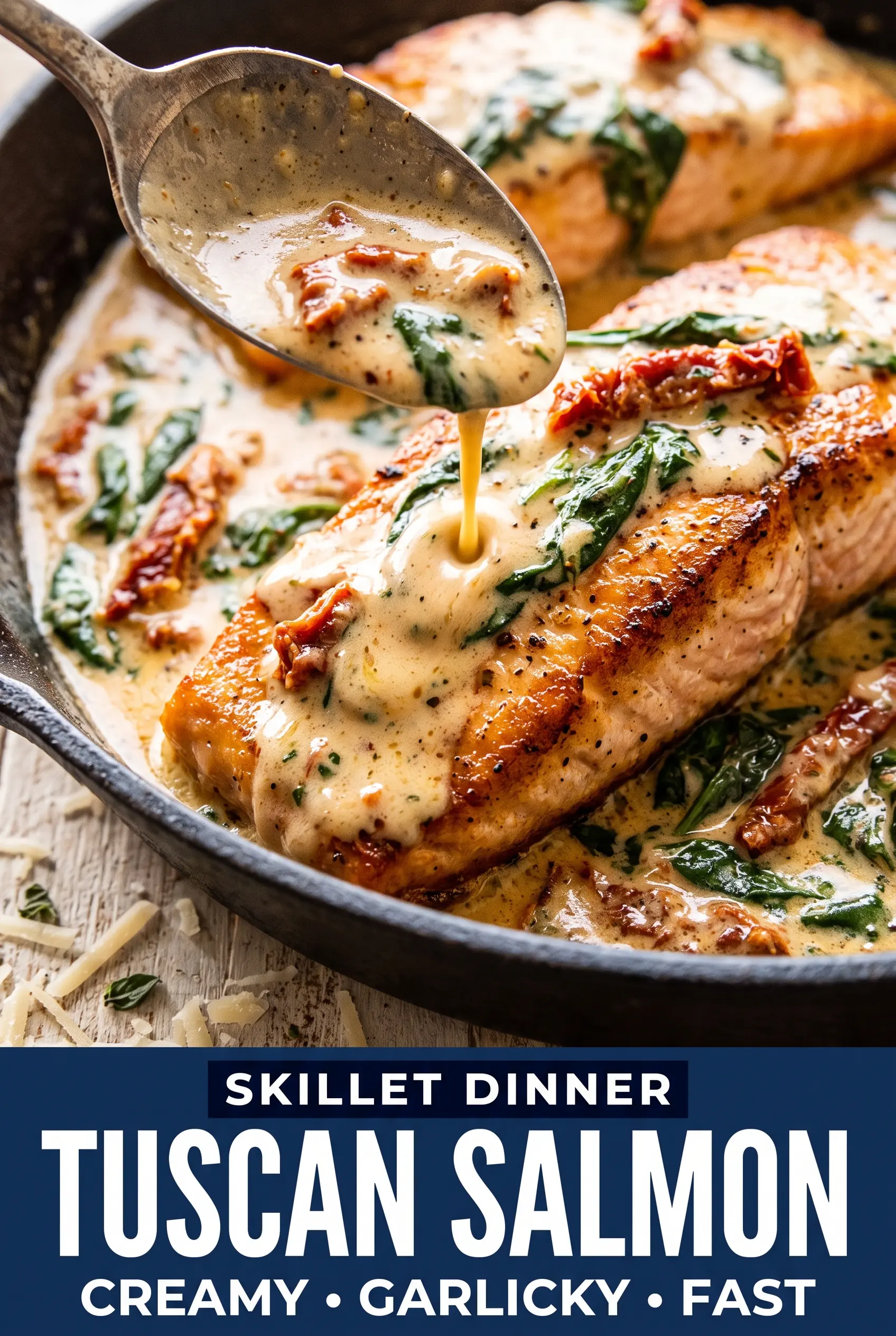
Tuscan Salmon with Parmesan Cream Sauce
Ingredients
Equipment
Method
- Season the salmon fillets with salt and black pepper on both sides.
- Heat the olive oil in a large skillet over medium-high heat, then sear the salmon for 3–4 minutes per side until golden and cooked through; remove and set aside.
- Melt the butter in the same skillet, then sauté the garlic until fragrant for about 1 minute.
- Add the sun-dried tomatoes, heavy cream, and chicken broth, then stir and bring to a gentle simmer.
- Whisk in the Parmesan cheese until the sauce is smooth and creamy.
- Stir in the spinach, Italian seasoning, and red pepper flakes, then cook until the spinach wilts, about 2 minutes.
- Return the salmon to the skillet and spoon the sauce over the top.
- Simmer for 2–3 minutes to warm the salmon through, then serve immediately with extra sauce.
