
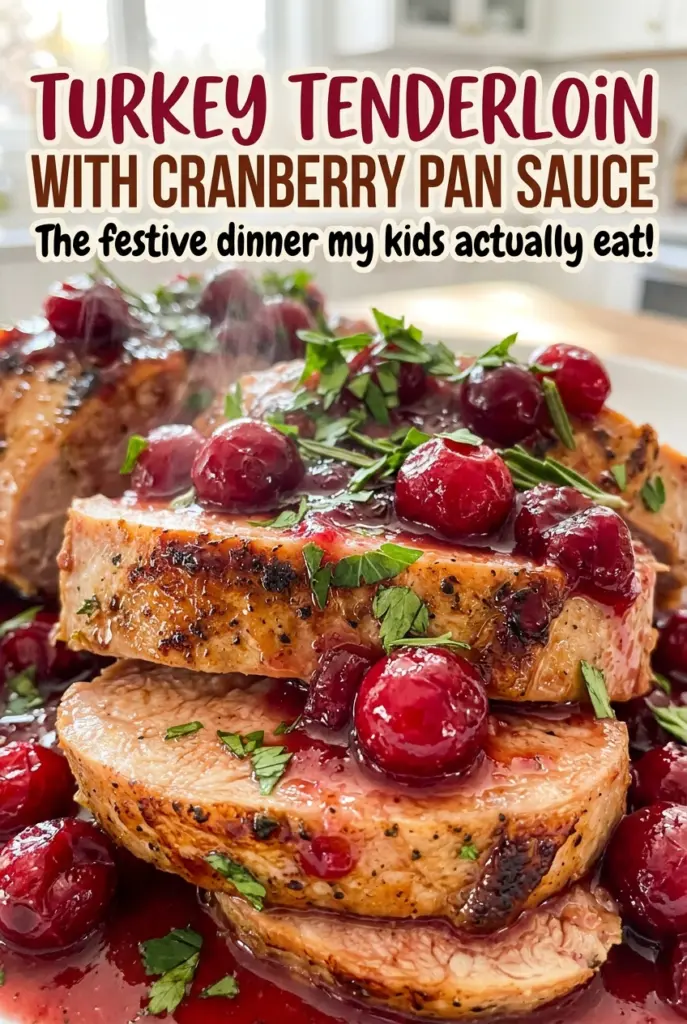
Turkey Tenderloin with Cranberry Pan Sauce
The first sizzle in the skillet tells you whether the turkey is dry enough to brown: if it’s still damp, it steams before it gets those golden patches. I pat…
Tip: save now, cook later.The first sizzle in the skillet tells you whether the turkey is dry enough to brown: if it’s still damp, it steams before it gets those golden patches. I pat the tenderloins dry, then give them room in a hot skillet so they brown on every side before they go into the oven. That quick sear builds the savory base for Turkey Tenderloin with Cranberry Pan Sauce without asking the lean meat to spend too long cooking.
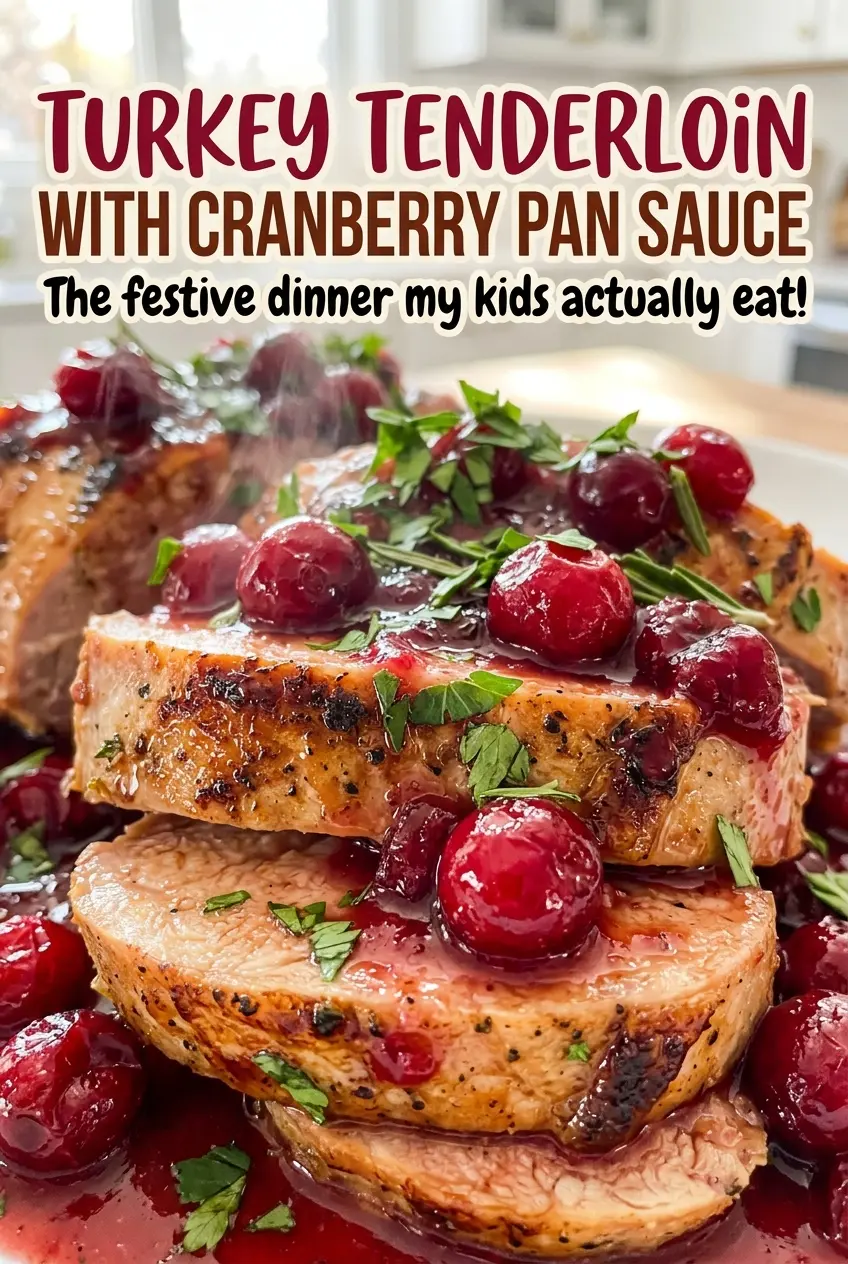
Once the turkey is resting, the same skillet turns into the sauce pan. Cranberries simmer with orange juice, broth, brown sugar, and Dijon, picking up the browned bits left behind by the turkey. I like this approach because the tart berries and gentle sweetness make a lively sauce, while the tenderloin stays easy to slice. Each serving gets warm turkey with a glossy spoonful of cranberry sauce.
Kitchen Note
Give the turkey its full 5 to 10 minutes of rest before slicing. Cutting too soon lets the juices run onto the board instead of staying in the meat.
Save this Turkey Tenderloin with Cranberry Pan Sauce for a dinner with tender, browned turkey and a bright cranberry finish.
Why the Brown Bits Matter More Than a Longer Sear
Those browned marks on the bottom of the skillet aren’t something to scrub away or leave behind. They’re concentrated bits from the turkey, and the broth and orange juice loosen them when the sauce comes together. That gives the cranberries a savory foundation, so the finished sauce tastes rounded rather than like fruit topping added at the last minute.
A longer sear isn’t the goal. The tenderloins finish roasting in the oven, and keeping the stovetop browning brief helps the outside develop color without extending the cooking time of lean meat. Work around the tenderloins so each side meets the hot skillet, then stop once they’re browned. When the liquid goes in later, scrape the pan to lift the fond into the sauce. If you skip that step, the sauce will still simmer, but it won’t have the same roasted turkey flavor.
This is also why an oven-safe skillet makes the cooking flow smoothly: the turkey browns and roasts in one pan, and the sauce uses that same pan afterward. There’s no separate roasting dish to lose those flavorful bits.
What the Cranberries, Orange, and Dijon Each Bring
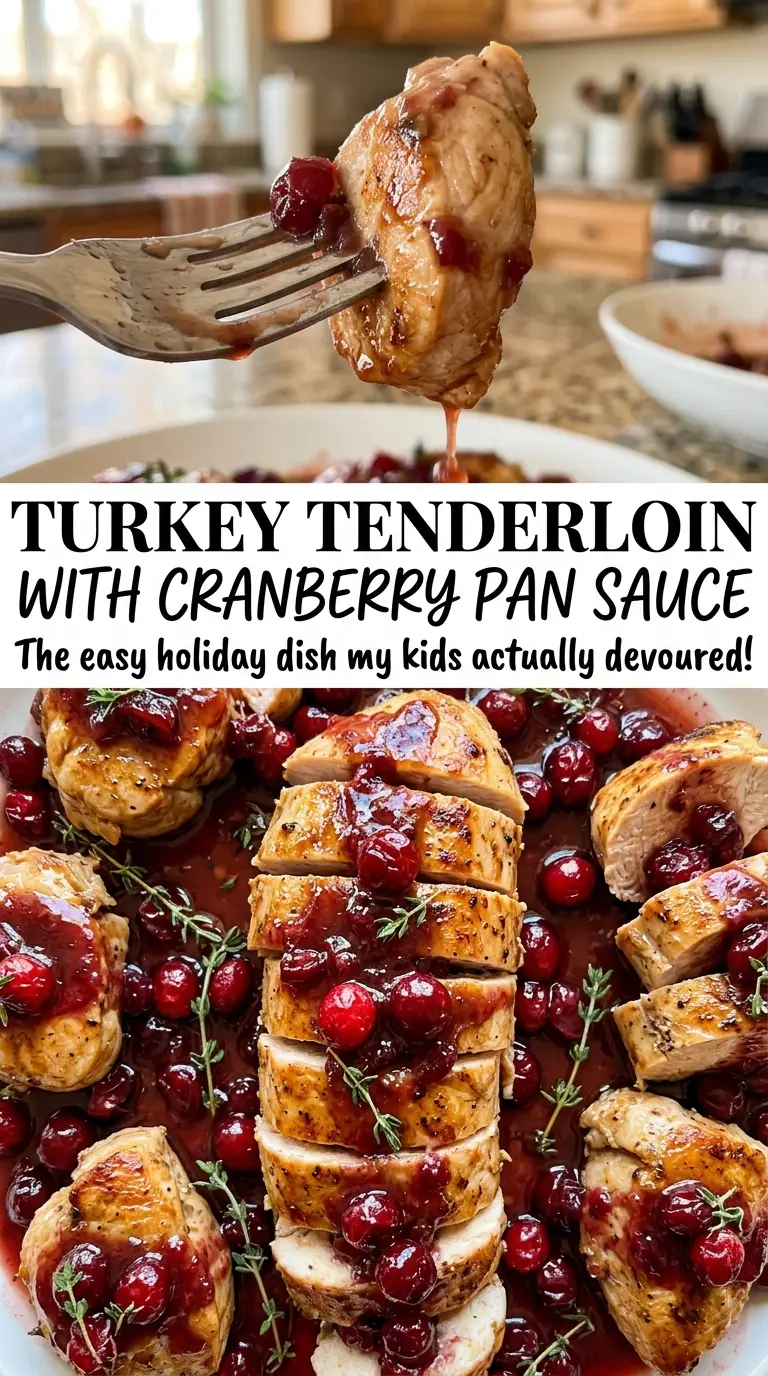
- Turkey tenderloins — Their lean, even shape suits a quick sear followed by a short roast. Choose pieces that are similar in thickness so they finish at about the same time; check each tenderloin at its thickest point rather than assuming they’re identical.
- Cranberries — Fresh berries give the sauce its tart flavor and burst into little soft pockets as they simmer. Frozen cranberries work too; choose them when that’s what you have on hand. The sauce is meant to retain some cranberry texture, not become a smooth puree.
- Orange juice and brown sugar — Orange juice brings acidity and fruit flavor, while brown sugar rounds out the cranberries’ sharpness. The measured balance keeps the sauce tart-sweet instead of turning it into a dessert-like glaze.
- Dijon mustard — A small amount adds a gentle tang that helps connect the fruit and savory broth. Dijon is more integrated here than a coarse mustard, which would leave a different texture in the sauce.
- Chicken broth, shallot, and butter — Broth loosens the browned bits, minced shallot softens into the sauce, and butter gives it a smooth finish. Low-sodium broth lets the seasoned turkey and sweet-tart sauce stay balanced. For a dairy-free version, olive oil can stand in for the butter, though the sauce will lose that buttery richness.
How to Brown, Roast, and Sauce the Tenderloins in One Skillet
Dry and Season for Even Browning
Heat the oven to 400°F. Pat the tenderloins dry, then season all over with kosher salt and black pepper. Moisture on the surface makes the meat steam instead of brown, so take a moment to dry every side. Keep the tenderloins ready while the olive oil heats in a 12-inch oven-safe skillet over medium-high heat.
Sear First, Then Finish in the Oven
Brown the tenderloins on all sides, about 2 to 3 minutes per side. Give them enough contact with the skillet to pick up color; turning constantly won’t give the surfaces time to brown. Transfer the skillet to the 400°F oven and roast for 12 to 18 minutes. Check the thickest part of each tenderloin with a thermometer and take them out when each reads 165°F.
Rest Before You Slice
Move the turkey to a cutting board and tent it loosely with foil. Let it rest for 5 to 10 minutes while you make the sauce. A tight foil cover traps more steam than you need, while a loose tent keeps the turkey warm without sealing it in. Slice after the rest so the pieces stay moist on the board.
Simmer the Cranberries in the Turkey Pan
Set the skillet over medium heat and melt the butter, then cook the minced shallot for 1 to 2 minutes, stirring until softened. Add the cranberries, chicken broth, orange juice, brown sugar, and Dijon. Bring everything to a simmer and scrape up the browned bits as the liquid loosens them from the pan. Cook for 8 to 10 minutes, until most of the cranberries have burst and the sauce has thickened slightly; spoon it over the sliced turkey to serve.
Two Useful Changes for the Cranberry Pan Sauce
Make the Sauce Dairy-Free
Use olive oil instead of butter when you soften the shallot. The sauce will still come together in the turkey skillet, but it won’t have the rounded, buttery finish; the cranberry, orange, and Dijon flavors will come through more clearly.
Use Frozen Cranberries When Fresh Aren’t Available
Frozen cranberries are a direct option for this sauce and keep its tart, berry-forward character. Cook until most berries have burst and the sauce thickens slightly; judge it by that texture rather than expecting every berry to remain whole.
Storage and Reheating
- Refrigerator: Store the turkey and sauce in airtight containers for 3 to 4 days. The sauce firms as it chills, and the turkey may be less juicy after refrigeration.
- Freezer: Freeze the turkey and sauce in airtight, freezer-safe containers for up to 2 to 3 months. Thaw overnight in the refrigerator; the sauce may need a stir as it warms.
- Reheating: Warm sliced turkey gently in a covered skillet with some of the sauce, or microwave it covered in short intervals. High heat can dry out the lean turkey before the center warms through.
The Questions That Come Up While the Turkey Cooks
Turkey Tenderloin with Cranberry Pan Sauce
Ingredients
Equipment
Method
- Preheat the oven to 400°F.
- Pat the turkey tenderloins dry and season all over with the kosher salt and black pepper.
- Heat the olive oil in a 12-inch oven-safe skillet over medium-high heat, then brown the tenderloins on all sides, about 2-3 minutes per side.
- Transfer the skillet to the oven and roast for 12-18 minutes, until a thermometer inserted into the thickest part of each tenderloin reads 165°F.
- Transfer the turkey to a cutting board, tent loosely with foil, and rest for 5-10 minutes.
- Set the skillet over medium heat, melt the unsalted butter, and cook the minced shallot for 1-2 minutes, stirring, until softened.
- Add the cranberries, low-sodium chicken broth, orange juice, brown sugar, and Dijon mustard; bring to a simmer, scraping up the browned bits from the skillet, and cook for 8-10 minutes until most cranberries burst and the sauce thickens slightly.
- Slice the turkey and serve with the cranberry pan sauce.
