
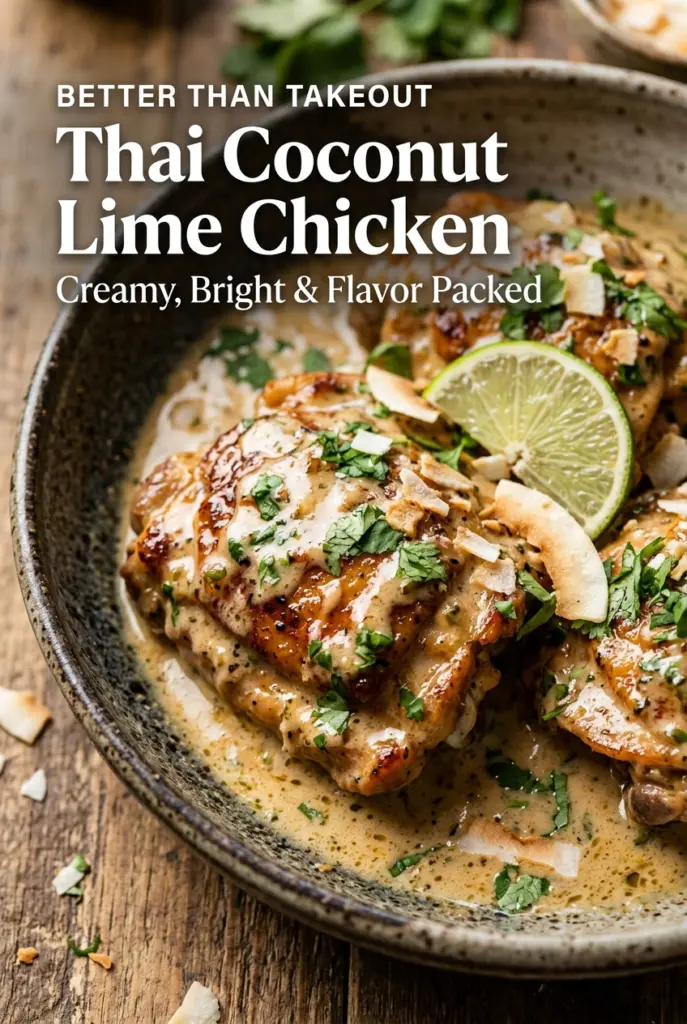
Thai Coconut Lime Chicken
Tender chicken in a creamy coconut-lime sauce earns its place in the dinner rotation fast, especially when the pan does most of the work. The coconut milk turns silky, the…
Tip: save now, cook later.Tender chicken in a creamy coconut-lime sauce earns its place in the dinner rotation fast, especially when the pan does most of the work. The coconut milk turns silky, the lime cuts through the richness, and the whole skillet ends up tasting bright, savory, and a little luxurious without asking for much time or cleanup.
What makes this version work is the balance. Full-fat coconut milk gives the sauce body, while fresh lime juice and zest keep it from tasting flat or heavy. Searing the chicken first builds flavor in the pan, and the ginger, garlic, soy sauce, and a touch of honey create a sauce that lands between tangy, salty, and gently sweet in the right way.
Below you’ll find the one step that keeps the sauce smooth, the ingredient swaps that still give you a good result, and a few ways to adjust the heat or make the dish work with what you already have.
The sauce thickened up beautifully and the lime stayed bright instead of getting lost in the coconut. I served it over rice and my husband went back for seconds before I even sat down.
Save this Thai Coconut Lime Chicken for the nights when you want a creamy skillet dinner with bright lime, ginger, and almost no cleanup.

The Reason the Sauce Stays Creamy Instead of Breaking
The biggest mistake with coconut milk sauces is rushing them after the lime goes in. Acid is what gives this dish its lift, but if you boil it hard once the coconut milk is in, the sauce can turn grainy or separate around the edges. Keep the simmer gentle and the sauce will stay glossy and spoonable.
Chicken thighs also matter here. They stay tender through the longer simmer and don’t dry out the way lean breast meat can. Searing first gives you browned bits in the pan, and those bits dissolve into the sauce instead of getting washed away by the coconut milk.
- Chicken thighs — Thighs bring better texture here because they can simmer in the sauce without tightening up. Chicken breast works in a pinch, but pull it as soon as it reaches temperature or it turns dry and stringy.
- Full-fat coconut milk — This is what gives the sauce its body. Light coconut milk makes the sauce thinner and less silky, so use full-fat if you want that restaurant-style finish.
- Fresh lime juice and zest — The zest gives the sauce the lime perfume; the juice brings the sharpness. Bottled juice tastes flatter and can make the sauce seem harsh, so fresh lime matters here.
- Fish sauce — Optional, but a small amount adds depth without making the dish taste fishy. If you don’t have it, a little extra soy sauce works, though the sauce will be a bit less layered.
- Ginger and garlic — These need only a short cook in the pan. If they brown too much, they turn bitter and overpower the coconut milk, so keep that stage quick and fragrant.
Building the Sauce Without Losing the Lime
Searing the Chicken First
Season the chicken well, then let it sit in the hot oil until the underside turns deep golden before you move it. If the pan is crowded, the chicken will steam instead of sear, and the sauce won’t have those browned bits that give the dish its backbone. You want color, not pale chicken with no fond underneath.
Waking Up the Garlic and Ginger
Once the chicken comes out, add the garlic and ginger to the same skillet and stir them just until they smell sharp and fragrant. Thirty seconds is plenty. If they start to brown, the heat is too high, and the next layer of flavor will taste rough instead of clean.
Letting the Coconut Milk Simmer Gently
Pour in the coconut milk and stir in the lime juice, zest, soy sauce, honey, and red pepper flakes. Bring it to a low simmer, not a hard boil, then return the chicken to the pan. The sauce should bubble lazily around the edges while the chicken finishes cooking; if it boils hard, the coconut milk is much more likely to split.
Finishing to the Right Thickness
Cook until the chicken is tender and the sauce clings to the spoon. If it looks thin at first, give it a few more minutes before reaching for extra thickeners; coconut milk reduces as it simmers. The sauce is ready when it lightly coats the chicken and leaves a trail for a second when you drag a spoon through the pan.
Three Ways to Adjust the Dish Without Losing What Makes It Work
Make It Dairy-Free and Gluten-Free
This recipe already fits both of those needs if you use gluten-free soy sauce or tamari. The coconut milk gives you all the creaminess you need, so there isn’t any dairy to replace. Just check the label on the soy sauce and fish sauce if you’re cooking for someone with strict gluten concerns.
Swap the Chicken for Shrimp
Shrimp works well, but it only needs a few minutes in the sauce at the end. Sear the aromatics, build the sauce, then add the shrimp and cook just until pink and curled. Overcooking is the real risk here, and shrimp goes from tender to rubbery fast.
Dial the Heat Up or Down
The red pepper flakes give a gentle background heat, not a burn. For a milder version, cut them in half and keep the ginger. For more heat, add sliced fresh chile or a little extra pepper flakes at the end so the spice stays bright instead of cooking flat.
Storage and Reheating
- Refrigerator: Store in an airtight container for up to 4 days. The sauce thickens as it chills, which is normal.
- Freezer: It freezes well for about 2 months, though the coconut sauce may look slightly less smooth after thawing. Freeze in portions for the easiest reheating.
- Reheating: Warm it gently in a covered skillet over low heat with a splash of water or coconut milk. High heat is what makes coconut sauces separate, so keep the flame low and stir often.
Answers to the Questions Worth Asking
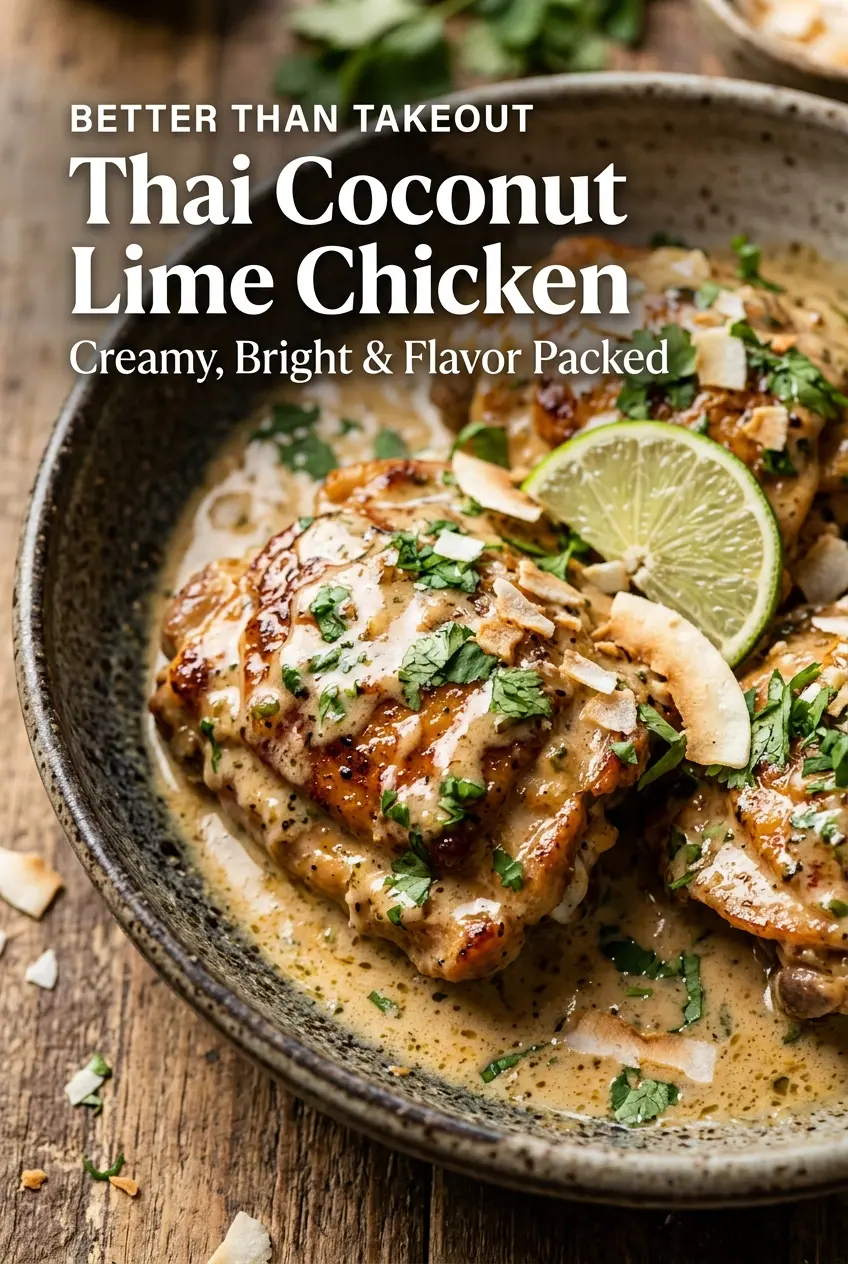
Thai Coconut Lime Chicken
Ingredients
Equipment
Method
- Season chicken thighs with salt and black pepper.
- Heat olive oil in a large skillet over medium-high heat.
- Sear chicken for 4–5 minutes per side until browned, then remove to a plate.
- Add minced garlic and grated ginger to the skillet and cook for 30 seconds, stirring until fragrant.
- Pour in full-fat coconut milk and bring to a gentle simmer.
- Stir in lime juice, lime zest, soy sauce, honey, fish sauce, and red pepper flakes until fully combined.
- Return chicken to the skillet and simmer for 15–20 minutes, stirring occasionally, until chicken is tender and the sauce thickens.
- Top with chopped cilantro, lime slices, and toasted coconut flakes, then serve over jasmine rice.
