

Sweet Potato Casserole with Pecan Topping
When a fork slides easily into the sweet potato chunks, they’re ready to mash; if the centers still feel firm, the filling won’t come together evenly. I cook the potatoes…
Tip: save now, cook later.When a fork slides easily into the sweet potato chunks, they’re ready to mash; if the centers still feel firm, the filling won’t come together evenly. I cook the potatoes until they’re very tender, then mash them right in the pot before adding the eggs, milk, and brown sugar. That simple order gives this sweet potato casserole with pecan topping a soft, even filling without turning the cooking into a pile of extra dishes.
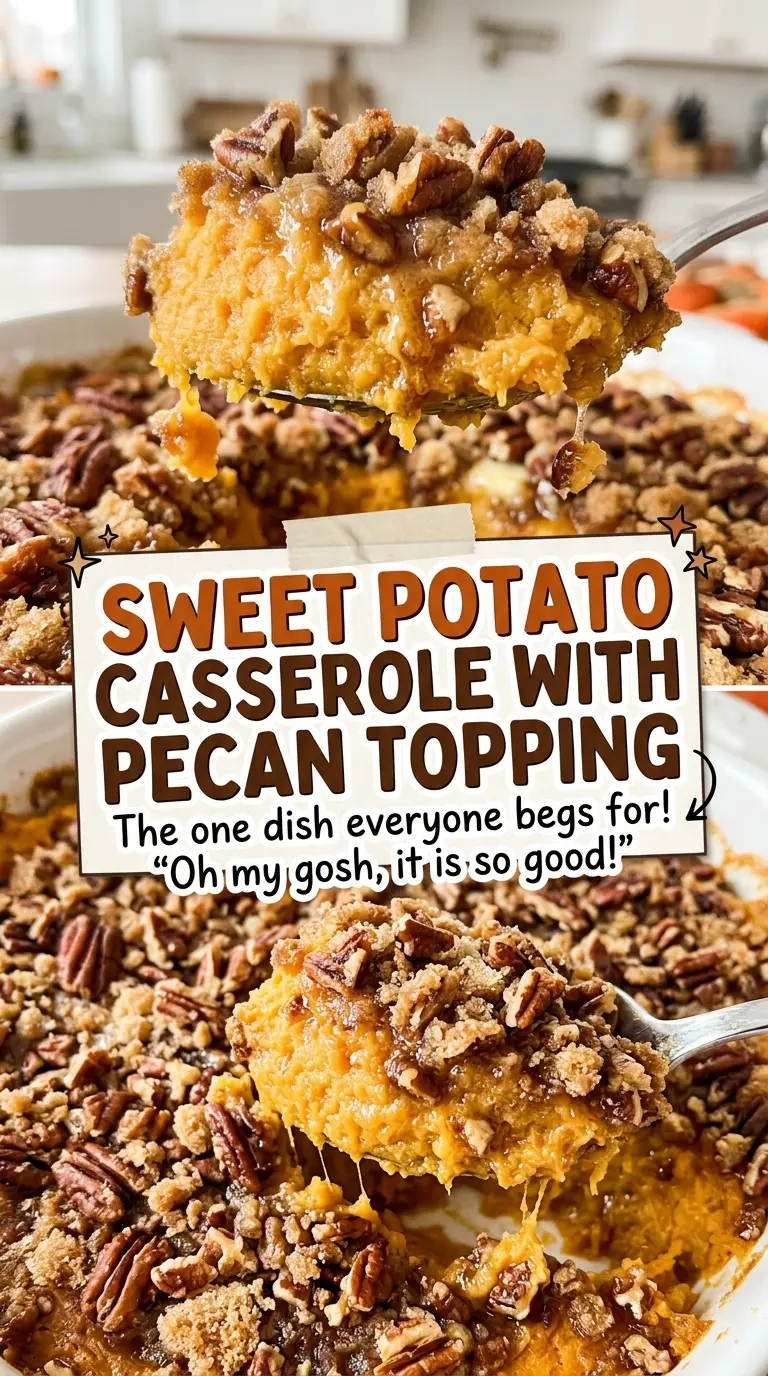
The topping is a proper crumb, not a layer of loose nuts: cold butter gets rubbed into flour, brown sugar, and pecans until the mixture forms coarse crumbs. Spread that over the sweet potatoes and the oven does the rest, turning the top golden while the center sets. It’s the contrast I want in every spoonful: tender sweet potato underneath, with a buttery, crunchy pecan topping.

Kitchen Note
Give the casserole its full 10-minute rest before serving. The filling is softer straight from the oven, and that short pause helps each spoonful hold together.
Save this sweet potato casserole with pecan topping for its tender filling and buttery, golden crumble.
Why the Filling Should Stay Mostly Smooth, Not Pureed
Sweet potatoes soften into a naturally creamy mash, so there’s no need to chase a perfectly silky puree. Stop when the mixture is mostly smooth. A few small, soft pieces keep the filling from feeling overly processed, and they make a nice contrast with the crisp topping.
There’s also a practical reason not to overwork the mash: once the eggs and milk are in, the goal is an evenly combined filling, not extra mixing. Stir just until you don’t see streaks of egg or pockets of cinnamon. The brown sugar melts into the warm potatoes, and the eggs help the filling set as it bakes. That leaves you with a casserole that’s soft enough to scoop but substantial enough to serve in portions.
Think of the filling and topping as two different textures doing separate jobs. The sweet potatoes should stay tender and gently mashed; the pecan mixture should remain crumbly before it goes into the oven. Keeping those textures distinct is what makes each bite feel balanced rather than uniformly soft.
What Sweet Potatoes, Eggs, and Pecans Each Bring to the Dish
- Sweet potatoes — Fresh sweet potatoes give you control over the final texture because you boil them until fork-tender, then mash them yourself. Choose firm potatoes without soft spots. Peeling and cutting them into even chunks before cooking helps them soften at a similar pace.
- Eggs and whole milk — The eggs help the filling set, while whole milk loosens the mash and gives it a richer texture. Lightly beat the eggs before stirring them in so they distribute evenly. Lower-fat milk can work, but the filling won’t be quite as rich; for a dairy-free version, use the swap below.
- Light brown sugar — Its moist texture blends smoothly into the filling and helps the topping hold together in crumbs. Pack it when measuring. If the sugar has hardened into lumps, break them up before mixing so you don’t find dense pockets in either layer.
- Pecans — Chopped pecans add the crunch and nutty flavor that define the topping. Fresh pecans taste sweeter and less stale; if your pecans have been open for a while, taste one before using them. Walnuts are the closest straightforward swap, though they bring a slightly more earthy flavor.
- Cold unsalted butter — Cold butter makes it possible to rub the topping into coarse crumbs instead of a smooth paste. Unsalted butter also lets the kosher salt in the filling stay in balance. Cut the butter into small pieces before working it through the dry ingredients.
- Vanilla and cinnamon — These give the sweet potato filling warmth without covering up its flavor. Fresh cinnamon has a clearer aroma than an old jar that’s been sitting open for years; standard vanilla extract works well here.
From Fork-Tender Potatoes to a Golden Pecan Crumble
Simmer the Sweet Potatoes Until Very Tender
Heat the oven to 350°F and grease a 9×13-inch baking dish. Put the peeled, 1-inch sweet potato chunks in a 5-quart pot, cover them with 10 cups of cold water or enough water to cover, and bring the pot to a boil over high heat. Reduce the heat and simmer for 15 to 20 minutes, until a fork pierces the largest pieces easily. If the centers still feel firm, give them more time before draining.
Mash and Season the Filling
Drain the potatoes well, return them to the pot, and mash until mostly smooth. Stir in the brown sugar, whole milk, lightly beaten eggs, vanilla, cinnamon, and salt until the mixture is evenly combined. If you see streaks of egg or unmixed cinnamon, keep stirring gently until they disappear. Spread the filling evenly in the prepared baking dish.
Rub the Butter Into Coarse Crumbs
In a medium bowl, stir together the flour, brown sugar, and chopped pecans. Add the cold butter pieces and work them in with your fingertips until the mixture forms coarse crumbs. The mixture should look uneven, with visible small pieces of butter; if you keep pressing until it becomes a uniform paste, you’ll lose the crumbly texture. Sprinkle the topping evenly over the sweet potato filling.
Bake Until the Center Sets
Bake for 30 to 35 minutes, until the topping is golden and the center reaches 160°F. Check the middle of the casserole rather than judging doneness by the edges, which heat first. Once baked, let the casserole rest for 10 minutes before serving so the filling has time to settle.
Swaps That Change the Crumble Without Losing the Casserole
Use Walnuts for a More Earthy Topping
Swap the chopped pecans for the same amount of chopped walnuts. The topping keeps its crunch, but the walnut flavor is a little more robust and less sweet.
Make the Crumble Gluten-Free
Replace the all-purpose flour with a measure-for-measure gluten-free baking flour blend. Keep the rest of the topping the same; the crumbs may be a little more delicate, so sprinkle them over the filling rather than pressing them down.
Make It Dairy-Free
Use plain, unsweetened oat or soy milk in place of the whole milk, and use cold dairy-free butter in the topping. The filling will be a little less rich, but the crumb still forms; keep the butter substitute cold and cut it into small pieces.
Storage and Reheating
- Refrigerator: Cover and refrigerate within 2 hours; use within 3 to 4 days. The pecan topping softens as it sits.
- Freezer: Freeze tightly wrapped portions for up to 2 to 3 months. Thaw in the refrigerator; expect the topping to lose some of its original crunch.
- Reheating: Reheat covered in a 325°F oven until the center reaches 165°F, uncovering near the end if you’d like to crisp the topping. Microwave individual portions in short bursts, knowing the topping will stay softer.
Questions That Come Up While This Casserole Bakes
Sweet Potato Casserole with Pecan Topping
Ingredients
Equipment
Method
- Heat the oven to 350°F.
- Grease a 9x13-inch baking dish.
- Put the sweet potatoes in a 5-quart pot and add the cold water, or enough to cover.
- Bring to a boil over high heat.
- Reduce the heat and simmer for 15 to 20 minutes, until the potatoes are very tender when pierced with a fork.
- Drain the potatoes well and return them to the pot.
- Mash until mostly smooth.
- Stir in the brown sugar, milk, eggs, vanilla, cinnamon, and salt until evenly combined.
- Spread the sweet potato mixture in the prepared baking dish.
- In a medium bowl, stir together the flour, brown sugar, and pecans.
- Work in the cold butter with your fingertips until the mixture forms coarse crumbs.
- Sprinkle the topping evenly over the sweet potatoes.
- Bake for 30 to 35 minutes, until the topping is golden and the center reaches 160°F.
- Let the casserole rest for 10 minutes before serving.
