
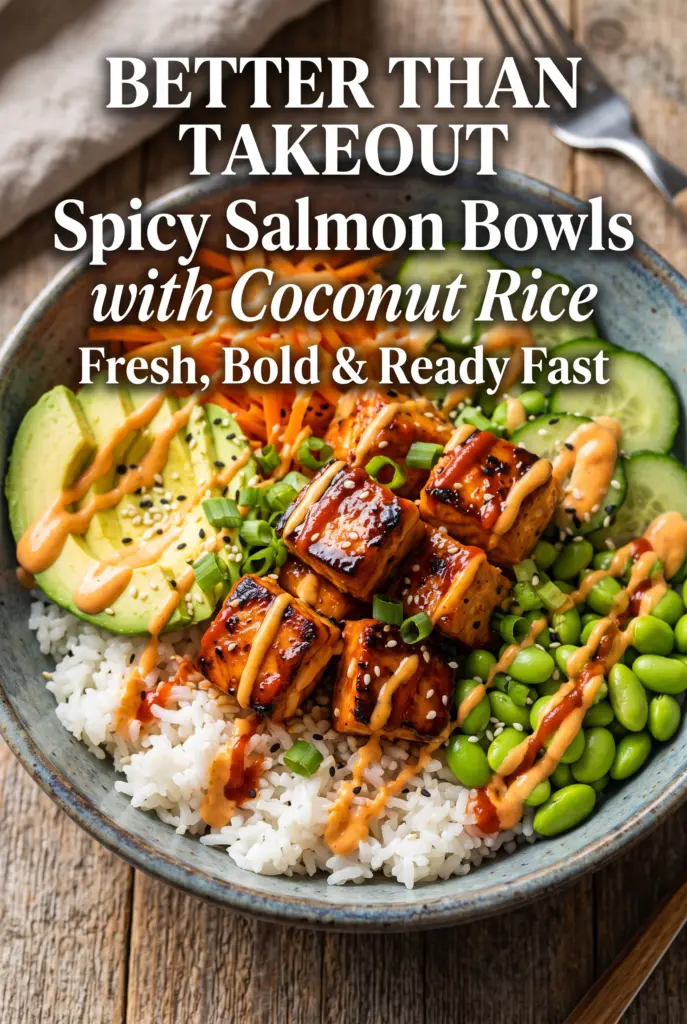
Spicy Salmon Bowls with Coconut Rice
Spicy salmon bowls with coconut rice hit that sweet spot between fresh and comforting. The salmon comes out sticky and caramelized at the edges, the rice turns creamy without getting…
Tip: save now, cook later.Spicy salmon bowls with coconut rice hit that sweet spot between fresh and comforting. The salmon comes out sticky and caramelized at the edges, the rice turns creamy without getting heavy, and the crisp vegetables keep every bite bright. Add the spicy mayo on top and the whole bowl suddenly tastes like something you’d order out, except it lands on the table faster than takeout.
What makes this version work is the balance in the salmon marinade and the way the coconut rice is cooked. The soy sauce and sriracha bring salt and heat, honey helps the glaze brown, and sesame oil gives the fish a deep savory note that plain oil can’t match. On the rice side, canned coconut milk adds richness, but the water keeps it from turning dense or greasy. The result is soft and spoonable, not clumpy.
Below, I’ve broken down the small details that matter most: how to keep the rice fluffy, when the salmon is done before it dries out, and how to swap ingredients without losing the whole point of the bowl.
The salmon caramelized beautifully in the oven and the coconut rice was fluffy, not gummy. I meal prepped it for lunch and the spicy mayo kept everything tasting fresh even after two days.
Save these spicy salmon bowls with coconut rice for nights when you want a fast dinner with creamy rice, crisp vegetables, and a sticky salmon glaze.
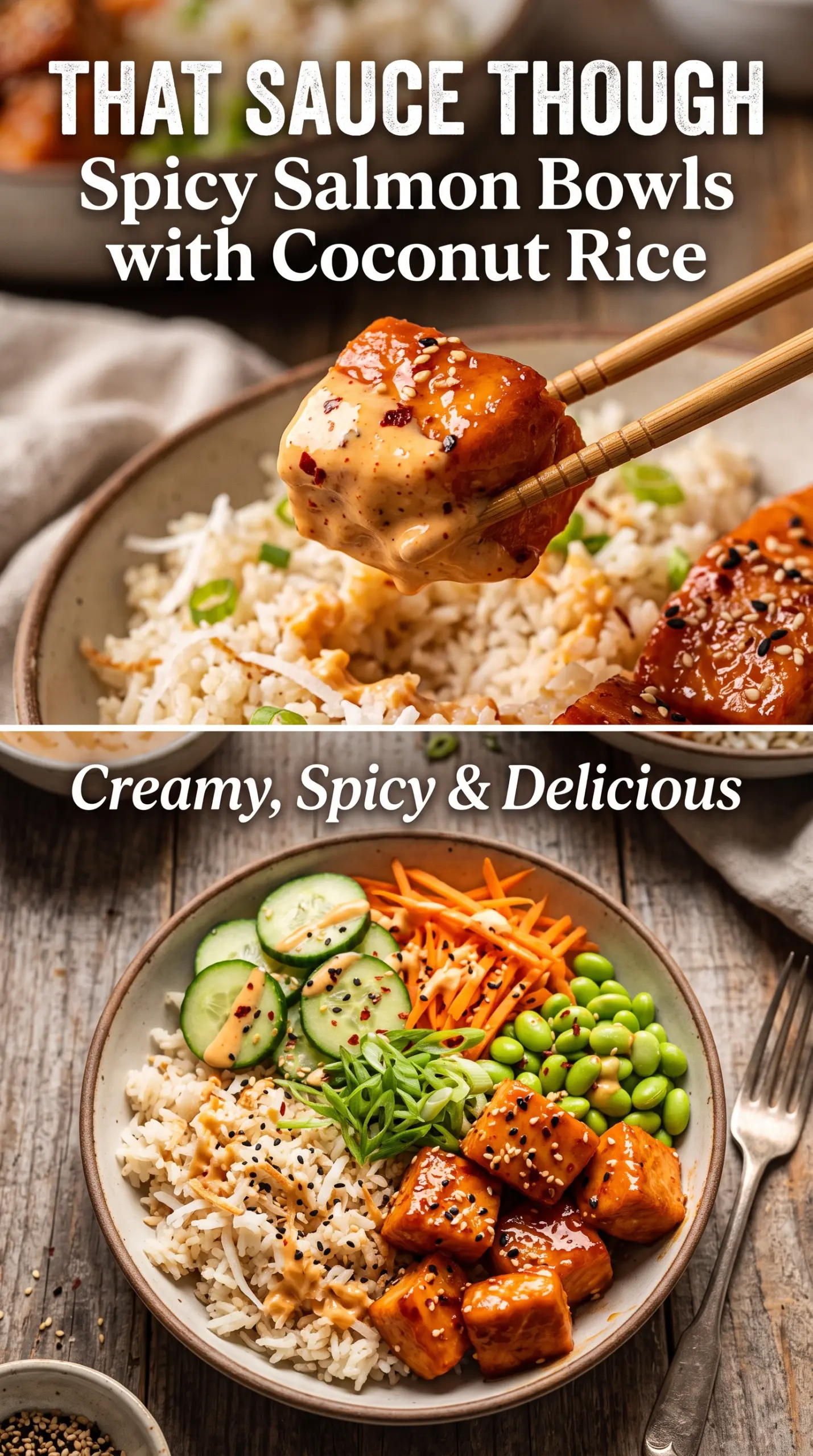
The Sticky Salmon Trick That Keeps the Glaze On the Fish
Most salmon bowl recipes lose their edge because the marinade gets watery in the oven and slides right off the fish. Cubing the salmon changes that. More surface area means more caramelized edges, and the higher heat helps the honey, soy, and sriracha turn glossy instead of thin and soupy.
The other mistake is overbaking. Salmon cubes only need a short roast, and they should still look slightly glossy in the center when you pull them from the oven. They finish cooking from residual heat on the tray, and that rest keeps them tender instead of dry and chalky.
- Cubed salmon — Cutting the fish into chunks gives you more browned edges and better glaze coverage than whole fillets. Wild or farmed salmon both work; just choose pieces that are thick enough to hold their shape.
- Coconut milk — Use full-fat canned coconut milk here. Light coconut milk makes the rice taste flat and less creamy. Shake the can well before measuring so the rich part and the liquid stay mixed.
- Jasmine rice — Jasmine rice gives you the soft, slightly fragrant base these bowls need. Long-grain white rice is the best backup if that’s what you have, but it won’t be quite as plush.
- Sriracha — This does double duty in the salmon glaze and the mayo. If you want less heat, reduce it in the mayo first and keep the marinade bold so the salmon still tastes seasoned after baking.
- Fresh ginger and garlic — Fresh is worth it here because the sauce is short-cooked, so those flavors need to pop immediately. Ground ginger and garlic powder can work in a pinch, but use less and expect a softer finish.
Building the Bowls in the Right Order
Rinsing and Cooking the Rice
Rinse the jasmine rice until the water runs mostly clear. That washes off excess starch and keeps the grains separate instead of gluey. Once the coconut milk, water, and salt come to a boil, cover the pan and drop the heat to a low simmer. If the pot is bubbling hard, the rice on the bottom can scorch before the top finishes.
Mixing the Marinade
Whisk the soy sauce, sriracha, honey, sesame oil, garlic, ginger, and smoked paprika until the honey dissolves. The mixture should look smooth and glossy, not streaked with oil. Toss the salmon gently so every piece is coated, but don’t let it sit for long enough to turn the surface mushy. A short marinade is enough because the oven does the real work here.
Roasting the Salmon
Spread the salmon pieces in a single layer so they roast instead of steam. You’re looking for lightly browned edges and fish that flakes with a fork but still looks juicy in the center. If the cubes are crowded, they’ll give off moisture and the glaze won’t cling. Pull the tray when the salmon is just cooked through; it will go dry fast if it stays in the oven too long.
Finishing the Bowl
Stir the spicy mayo until it’s smooth, then build each bowl with rice first. That base catches the salmon juices and the sauce so nothing gets wasted. Add the vegetables last so the avocado stays intact and the cucumber stays crisp. A final sprinkle of sesame seeds and green onions gives the bowl the contrast it needs.
How to Adapt These Salmon Bowls Without Losing the Balance
Make It Dairy-Free as Written
These bowls are naturally dairy-free as long as your mayonnaise doesn’t contain any unexpected dairy ingredients, which most don’t. The creamy texture comes from coconut milk in the rice and mayo in the drizzle, so you won’t miss anything by keeping the recipe as-is.
Swap the Rice for Cauliflower Rice
If you want a lower-carb bowl, use cauliflower rice instead of jasmine rice and cook it just until tender. You’ll lose the rich, creamy base that coconut rice gives you, so drizzle a little extra spicy mayo over the top to bring back some body and balance.
Turn It Into a Tuna or Shrimp Bowl
The same glaze works on shrimp or seared tuna, but the timing changes. Shrimp need only a few minutes in a hot oven or skillet, and tuna should be seared quickly so the center stays tender. Keep the sauce the same and adjust the cooking time to the protein instead of forcing the salmon schedule onto it.
Storage and Reheating
- Refrigerator: Store the components separately for up to 3 days. The rice firms up a little, and the vegetables stay crisper if they’re not mixed in early.
- Freezer: The salmon and rice can be frozen, but the cucumber, avocado, and mayo don’t hold up. Freeze only the cooked salmon and coconut rice in airtight containers for up to 2 months.
- Reheating: Reheat the rice with a splash of water in the microwave or on the stove until steaming. Warm the salmon gently so it doesn’t dry out, then add the fresh toppings after heating. The biggest mistake is blasting the whole bowl together, which turns the vegetables limp and the salmon tough.
Answers to the Questions Worth Asking
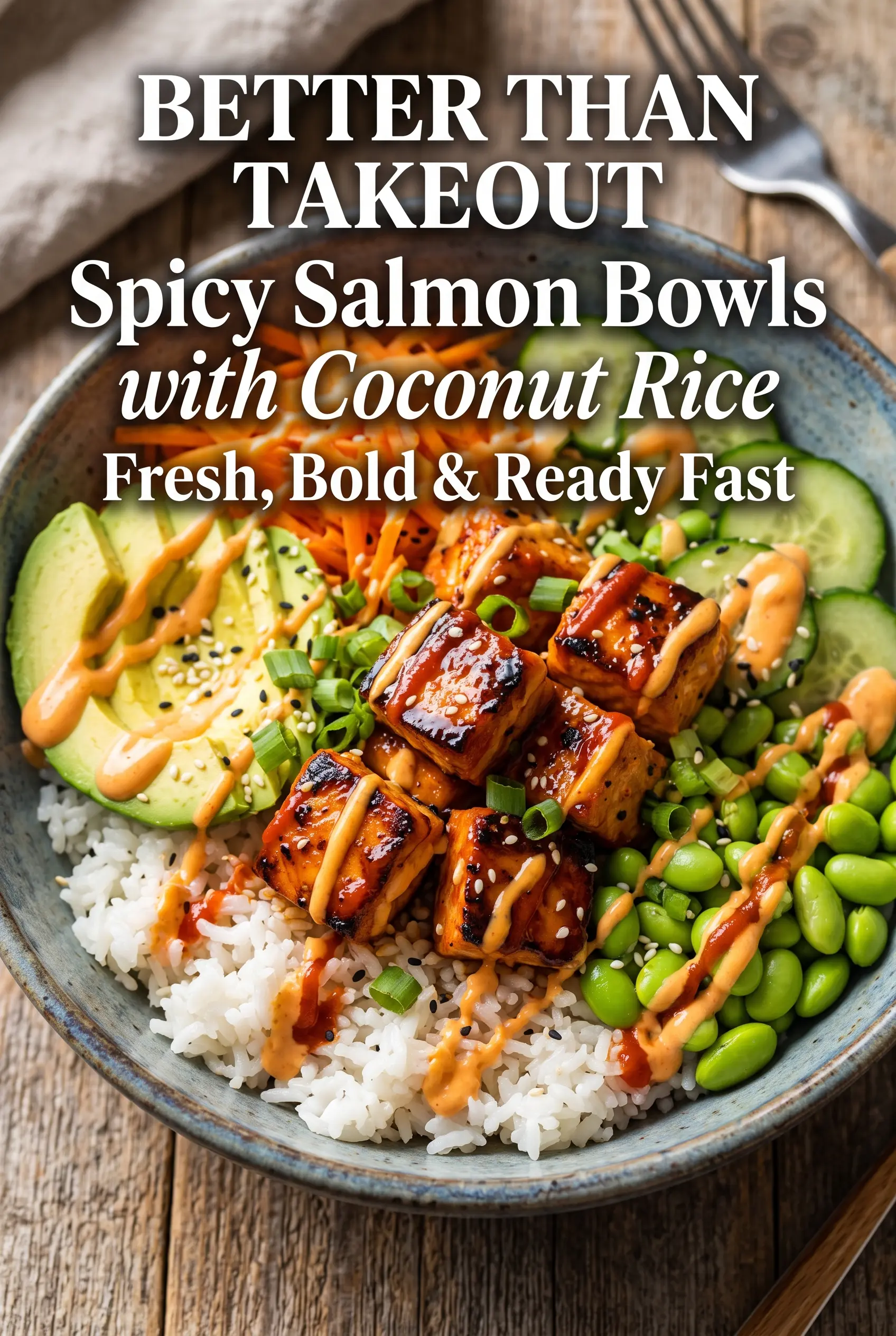
Spicy Salmon Bowls with Coconut Rice
Ingredients
Equipment
Method
- Rinse the jasmine rice until the water runs clear.
- Add the rice, canned coconut milk, water, and salt to a saucepan and bring to a boil over high heat.
- Cover and simmer for 15 minutes.
- Turn off the heat and let the rice rest for 10 minutes, still covered.
- Whisk together soy sauce, sriracha, honey, sesame oil, garlic cloves, fresh ginger, and smoked paprika to make the marinade.
- Toss the salmon fillets with the marinade until well coated.
- Bake the salmon at 400°F (200°C) for 10–12 minutes, until the salmon flakes easily with a fork.
- Stir together mayonnaise, sriracha, and lime juice until smooth.
- Divide the coconut rice among serving bowls.
- Top each bowl with salmon, shredded carrots, cucumber, avocado, and shelled edamame.
- Drizzle with spicy mayo and garnish with sesame seeds and green onions.
