
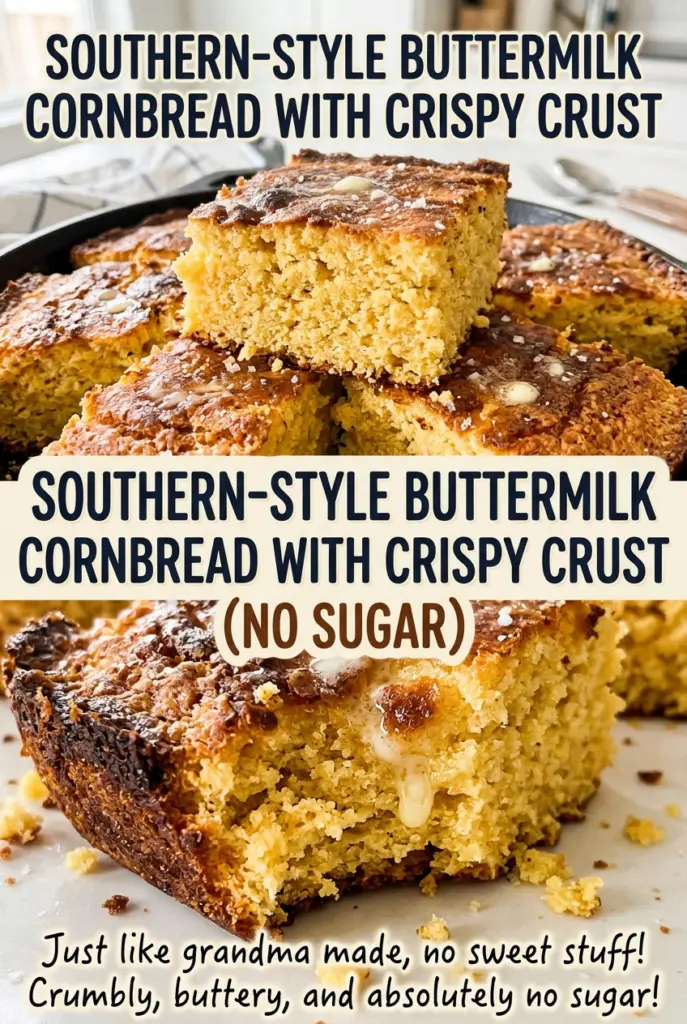
Southern-Style Buttermilk Cornbread with Crispy Crust (No Sugar)
When the batter meets the hot skillet, the edges start to sizzle before the center has even had a chance to set. That sound is a good sign: the bacon…
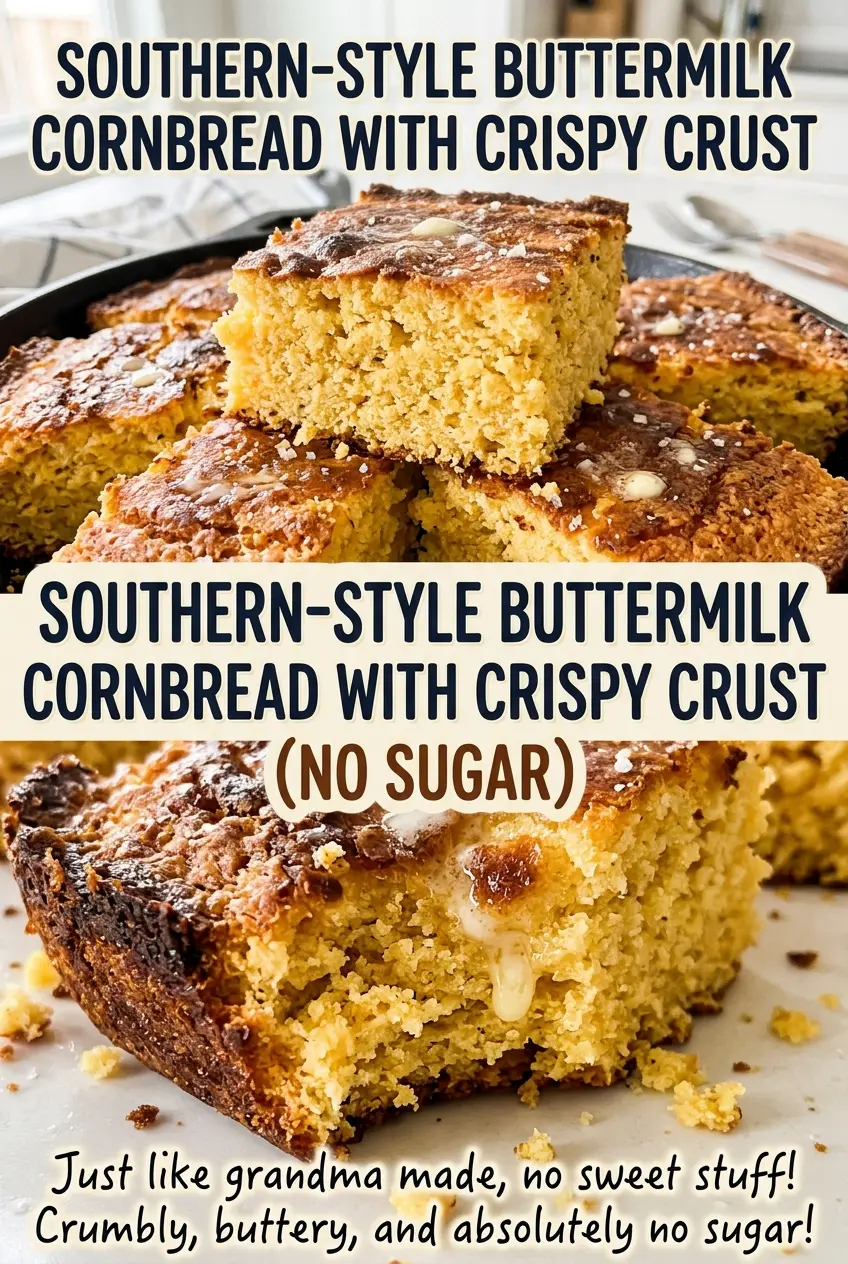
Tip: save now, cook later.When the batter meets the hot skillet, the edges start to sizzle before the center has even had a chance to set. That sound is a good sign: the bacon drippings are hot enough to give this Southern-style buttermilk cornbread its crisp, deeply golden crust. I like this no-sugar version when I want the corn flavor to stay savory, with a crumb sturdy enough to slice but still tender from the buttermilk and butter.
Unlike sweet, cake-like cornbread, this one keeps the seasoning simple and lets yellow cornmeal lead. The batter comes together quickly, but two little details matter: don’t overwork it once wet meets dry, and don’t let the skillet cool while you get everything ready. I whisk the dry bowl first, mix the wet ingredients separately, and bring them together only when the oven and skillet are ready. After a short rest in the pan, each wedge has a browned edge and a soft middle without a spoonful of sugar in sight.
Kitchen Note
Let the melted butter cool slightly before you whisk it with the eggs and buttermilk. If it’s piping hot, it can start to cook the eggs before the batter ever reaches the oven.
Save this no-sugar buttermilk cornbread for its crackly skillet crust and savory, tender crumb.
Why No-Sugar Cornbread Shouldn’t Taste Like a Dry Biscuit
With no added sugar, this cornbread isn’t aiming for the soft, sweet crumb of a cake-style slice. Its character is more savory: corn-forward, lightly tangy, and substantial enough to hold together when you cut it. The crisp edge and tender middle are what keep that texture from feeling dry.
Sugar isn’t the only route to a satisfying crumb. Here, the balance of cornmeal and flour gives the bread body without making it heavy, while the buttermilk, eggs, and butter keep the interior from turning coarse. The batter should be mixed only until the dry ingredients disappear; a completely smooth, vigorously beaten batter isn’t the goal. That restraint lets the cornmeal remain the star and keeps the slices from becoming tough.
It’s also worth expecting a savory finish rather than the sweetness some diners associate with cornbread. The bacon drippings deepen the crust, and the tang of buttermilk gives the crumb a pleasant lift. If you want sweet cornbread, this isn’t the version to quietly adjust at the table; this skillet loaf is designed to stay sugar-free and let its corn and browned edges do the talking.
What the Cornmeal, Buttermilk, and Skillet Fat Each Bring
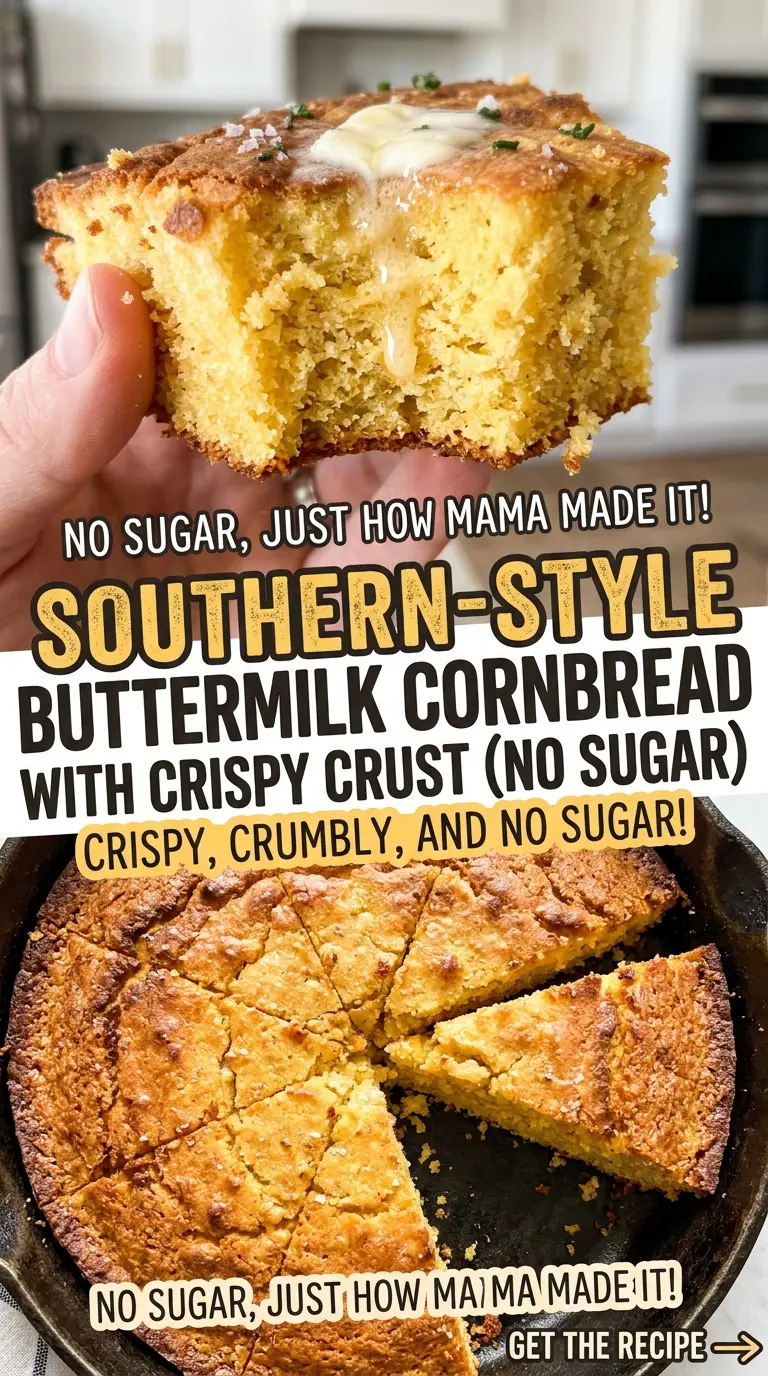
- Yellow cornmeal — This is where the corn flavor and familiar slightly nubby texture come from, so use a fresh bag with a grind you enjoy eating. A standard grocery-store cornmeal works well; an unusually coarse grind will make the crumb feel more rustic. White cornmeal can stand in measure for measure, but the cornbread will look paler and taste a little milder.
- All-purpose flour — The flour gives the slices enough structure to lift cleanly without making this taste like wheat bread. A good gluten-free 1-to-1 baking blend is the most practical swap; it may leave the crumb a little more delicate, so let the cornbread rest before cutting.
- Baking powder and baking soda — They supply the lift, with the soda working alongside the acidity in the buttermilk. Fresh leaveners matter more than a premium brand here. Self-rising cornmeal mix isn’t a direct replacement because it may bring extra leavening and salt that throw off the balance.
- Buttermilk — Its tang and acidity give the crumb more character than plain milk and help the baking soda do its job. A regular carton from the dairy case is fine; there’s no need to seek out a specialty brand. Plain milk doesn’t replace buttermilk one-for-one without changing the rise and flavor.
- Eggs and melted butter — The eggs help hold the crumb together, and the butter adds richness inside the bread. Use large eggs, as the batter’s proportions rely on them. Unsalted butter keeps the seasoning easier to control.
- Bacon drippings — These coat the skillet and bring a savory note to the crisp bottom and sides. Drippings with a clean, pleasant aroma are what you want; the flavor carries straight into the crust. If you don’t keep drippings, unsalted butter can replace them in the skillet for a less smoky, buttery edge.
Build the Batter, Then Let the Hot Skillet Do Its Work
Heat the Drippings in the Cast-Iron Skillet
Put the 10-inch cast-iron skillet and bacon drippings in the oven as it preheats to 425°F. The fat should be fully melted and the skillet hot when the batter is ready. Use a good oven mitt when you take it out; the handle will be just as hot as the pan. A cool skillet won’t give the edges the same quick start.
Whisk the Dry and Wet Bowls Separately
In a medium bowl, whisk together the cornmeal, flour, baking powder, baking soda, and kosher salt so the leaveners are distributed throughout. In another bowl, whisk the eggs, buttermilk, and slightly cooled melted butter until combined. Separate bowls make it easier to bring the mixture together quickly without overworking it. Scrape the dry ingredients from the bottom and sides as you whisk.
Stir Just Until the Dry Pockets Disappear
Pour the wet mixture into the dry ingredients and stir only until you no longer see dry patches. A few small lumps are fine; trying to beat them all away can make the cornbread tough. Carefully remove the hot skillet and swirl it so the drippings coat both the bottom and sides. Pour in the batter while the pan is still hot.
Bake Until Golden, Then Give It a Short Rest
Bake at 425°F for 20–25 minutes, until the top is golden and a toothpick inserted in the center comes out clean or with a few moist crumbs. A wet smear of batter means the center needs more time; a few crumbs are a good sign, not a reason to keep baking until the loaf dries out. Rest the cornbread in the skillet for 5 minutes before slicing. The short rest helps the crumb settle so the wedges hold their shape.
Three Practical Ways to Adapt This Skillet Cornbread
Make It Gluten-Free
Replace the all-purpose flour with the same amount of a gluten-free 1-to-1 baking blend. The result keeps the cornmeal flavor and crisp skillet edge, though the slices may be a little more tender and delicate than the original.
Use Butter for a Milder Crust
Swap the bacon drippings for 2 tablespoons of unsalted butter in the skillet. The crust will still brown, but it loses the smoky, savory note that drippings bring and tastes more buttery instead.
Give the Crumb a Bacon-Forward Note
For a more pronounced savory taste, use 4 tablespoons of melted bacon drippings in the batter instead of the melted butter. The crumb will taste richer and more distinctly bacon-scented, while the drippings in the skillet keep the edges crisp.
Storage and Reheating
- Refrigerator: Keep cooled leftovers in an airtight container for 3–4 days. The crust softens as it sits, but the crumb stays tender.
- Freezer: Wrap individual slices tightly and freeze for up to 2–3 months. Thaw in the refrigerator before reheating for more even warming.
- Reheating: Warm slices in a 300°F oven, loosely covered with foil, until heated through. High heat without a cover can dry the edges before the center warms.
Questions That Come Up Before the Skillet Goes in the Oven
Southern-Style Buttermilk Cornbread with Crispy Crust (No Sugar)
Ingredients
Equipment
Method
- Place a 10-inch cast-iron skillet with the bacon drippings in the oven.
- Preheat the oven to 425°F.
- Whisk the cornmeal, flour, baking powder, baking soda, and salt in a medium bowl.
- In a separate bowl, whisk the eggs, buttermilk, and melted butter until combined.
- Stir the wet ingredients into the dry ingredients just until no dry pockets remain.
- Carefully remove the hot skillet and swirl to coat the bottom and sides with drippings.
- Pour the batter into the hot skillet.
- Bake at 425°F for 20–25 minutes, until the top is golden and a toothpick inserted in the center comes out clean or with a few moist crumbs.
- Rest the cornbread in the skillet for 5 minutes before slicing.
