
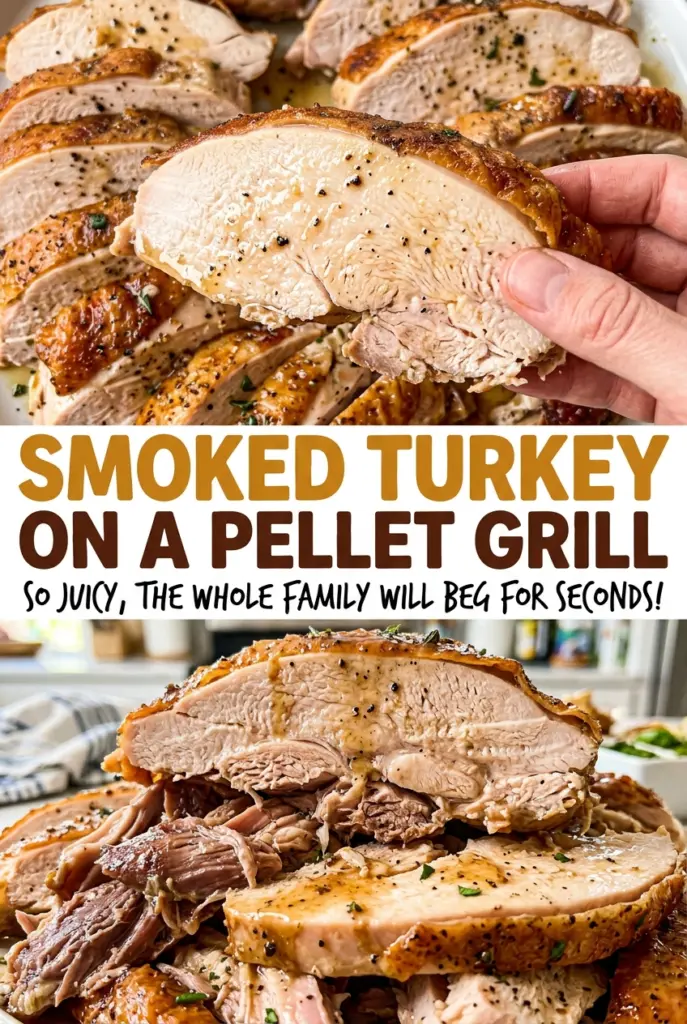
Smoked Turkey on a Pellet Grill
When the turkey goes onto the grill, I keep the lid closed and let the thermometer—not the clock—tell me how it’s doing. A whole bird can take a while to…
Tip: save now, cook later.When the turkey goes onto the grill, I keep the lid closed and let the thermometer—not the clock—tell me how it’s doing. A whole bird can take a while to cook through, and the breast and thigh don’t always reach their best texture at the same moment. This smoked turkey on a pellet grill gives you a steady cooking temperature and a seasoned skin without asking you to fuss over the bird every few minutes.
I salt the turkey ahead of time, then coat the skin with a simple oil-and-spice rub just before it hits the grate. That advance rest gives the salt time to season beyond the surface, while the uncovered refrigerator air helps the skin dry. The result is turkey with savory seasoning in each slice and a gently smoky edge, ready to carve after a proper rest.
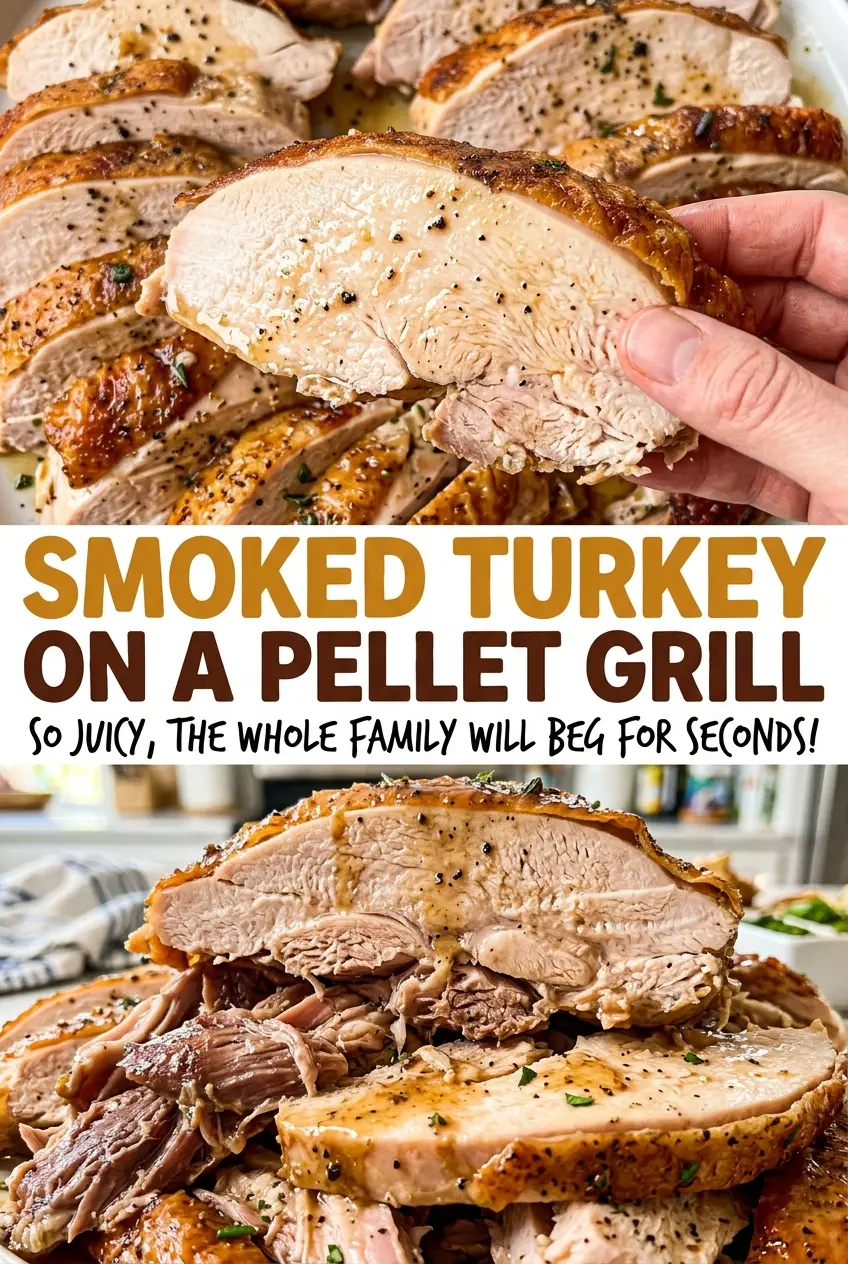
Kitchen Note
Leave the turkey uncovered while it rests in the refrigerator. The rack lets air reach the underside, too, instead of trapping moisture against the skin.
Save this pellet-grill turkey for a holiday table or a weekend cookout—salted ahead, warmly spiced, and cooked until both the breast and thigh are ready.
Why This Turkey Goes Straight on the Grate Instead of Into a Pan
A roasting pan catches drippings, but it also blocks heat and moving air from reaching the turkey’s underside. Here, the bird sits breast side up directly on the pellet grill grate, where heat can circulate around it. That direct placement is part of what makes the cooking more even across a whole bird, rather than leaving the bottom tucked away behind a pan.
It also helps to think of the grill as an oven with a wood-fired character at this temperature, not as a low-and-slow smoke session. The steady 325°F setting cooks the turkey through while the pellet grill adds its smoky quality. Keep the lid closed during cooking; opening it repeatedly lets heat escape and makes the cooking time less predictable. A rimmed baking sheet belongs under the rack during the refrigerator rest, not under the turkey on the grill.
What the Turkey, Salt, and Spice Rub Each Bring
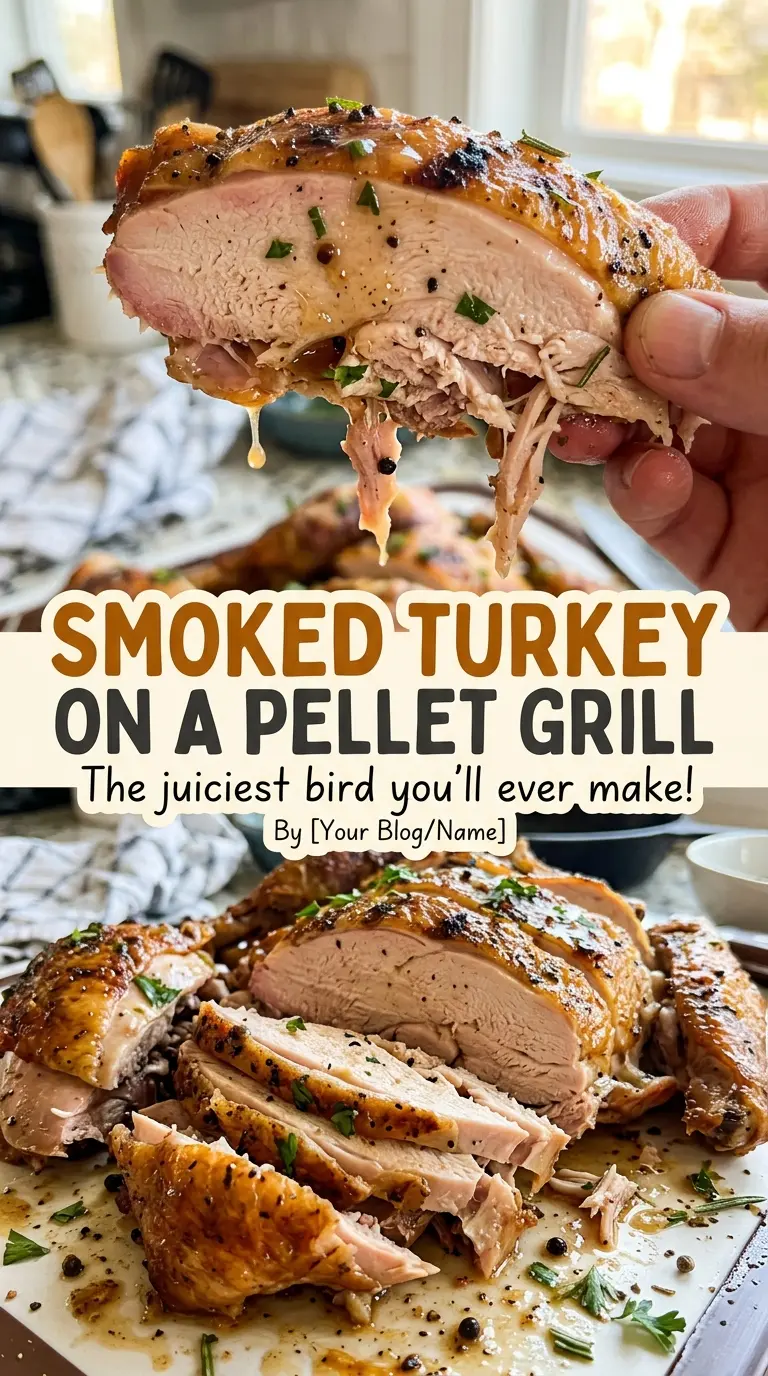
- Whole turkey — Start with a fully thawed bird that hasn’t been pre-brined. A turkey that’s already been salted or injected can turn too salty when it gets the full salt rub, and a frozen center makes it harder for the bird to cook evenly. Remove the neck and giblets before seasoning.
- Kosher salt — Its larger crystals are easy to distribute over the skin and inside the cavity. The salt seasons the meat during its refrigerator rest; it isn’t just a final sprinkle on the outside. Stick with the specified kosher salt rather than swapping in a finer salt measure-for-measure, since different crystal sizes pack differently.
- Neutral oil — Oil gives the paprika, pepper, garlic powder, and onion powder something to cling to on the skin. There’s no need for an expensive bottle here; a fresh, mild-tasting neutral oil works well. Another neutral-tasting cooking oil can stand in one-for-one without changing the spice mixture.
- Paprika, black pepper, garlic powder, and onion powder — These pantry spices make a savory, gently warm coating without overwhelming the turkey. Fresh-smelling spices give a clearer taste than jars that have been open for years. Powdered garlic and onion are useful here because they spread easily through the oil rather than leaving damp bits on the skin.
The Four Stages That Take This Turkey From Fridge to Carving Board
Salt the Turkey and Give It an Uncovered Rest
Pat the fully thawed turkey dry, then rub kosher salt evenly over the skin and inside the cavity. Set it breast side up on a rack over a rimmed baking sheet and refrigerate it uncovered for 12 to 24 hours. The bird should sit securely on the rack, not in pooled liquid on the baking sheet. Don’t rinse it before cooking; that would undo the dry surface you’ve worked to create.
Heat the Grill and Coat the Skin
Preheat the pellet grill to 325°F with the lid closed. While it heats, stir the neutral oil together with the paprika, black pepper, garlic powder, and onion powder until the spices are evenly mixed through. Rub that mixture over the turkey skin so the surface has an even coating. If the oil and spices gather in one spot, spread them out rather than leaving a heavily seasoned patch beside bare skin.
Cook to Temperature, Not Just to the Clock
Set the turkey breast side up directly on the grill grate and cook with the lid closed for about 3 1/2 to 5 hours. Near the end, use an instant-read thermometer to check the thickest part of the breast and the innermost thigh, taking care not to touch bone. Both locations need to reach at least 165°F; the thigh is especially tender at 175°F. If one spot is lagging, keep cooking and check again rather than judging doneness by skin color.
Rest Before You Carve
Transfer the turkey to a carving board when it reaches the right temperature, then tent it loosely with foil. Let it rest for 30 minutes before carving. A tight foil wrap holds in more steam and softens the skin, so leave a little room around the bird. Use a sharp carving knife and separate the legs before slicing the breast.
Small Changes That Work Without Losing the Turkey’s Character
Turn up the paprika’s heat
Swap hot paprika for mild paprika, keeping the same amount. The finished skin will have a more noticeable peppery warmth, while the garlic and onion notes stay in the background.
Make the rub gluten-free
Choose a plain, unseasoned whole turkey instead of one treated with a seasoned or injected solution, and use the listed spices and oil for the coating. The rub doesn’t need a flour-based binder, so this change keeps the turkey’s texture and seasoning intact.
Use white pepper for a softer pepper note
Replace the black pepper with the same amount of white pepper. It keeps a gentle pepper bite in the rub but changes the flavor toward a warmer, less sharp finish.
Storage and Reheating
- Refrigerator: Refrigerate leftover turkey within 2 hours and use it within 3 to 4 days. Sliced meat may lose some moisture as it sits.
- Freezer: Freeze cooled portions in airtight packaging for up to 3 months for best quality. Thaw frozen leftovers in the refrigerator before reheating.
- Reheating: Reheat slices covered in a microwave-safe dish, in short intervals, until they reach 165°F. Long, uncovered heating dries the meat out, so stop once it’s hot throughout.
Questions That Come Up Before the Turkey Hits the Grill
Smoked Turkey on a Pellet Grill
Ingredients
Equipment
Method
- Pat the turkey dry and rub the salt evenly over the skin and inside the cavity.
- Set the turkey breast side up on a rack over a rimmed baking sheet and refrigerate uncovered for 12 to 24 hours.
- Preheat the pellet grill to 325°F with the lid closed.
- Stir together the oil, paprika, black pepper, garlic powder, and onion powder.
- Rub the mixture over the turkey skin.
- Set the turkey breast side up directly on the grill grate.
- Cook with the lid closed for about 3 1/2 to 5 hours, until the thickest part of the breast and the innermost thigh each reach at least 165°F on an instant-read thermometer; the thigh is especially tender at 175°F.
- Transfer the turkey to a carving board and tent loosely with foil.
- Rest for 30 minutes before carving.
