
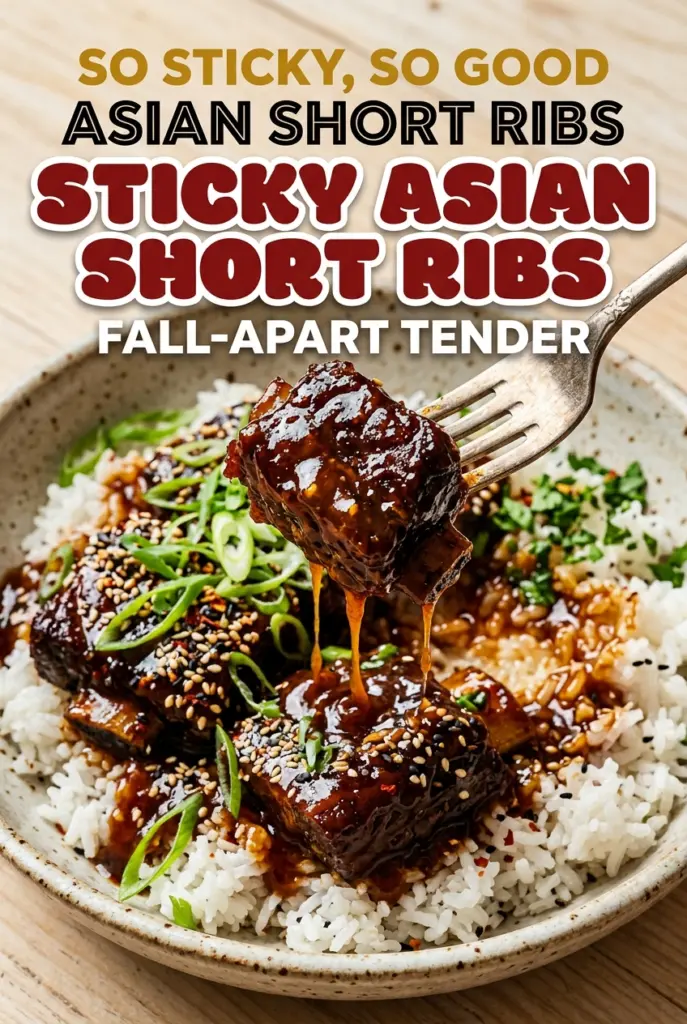
Slow Cooker Sticky Asian Beef Short Ribs
Sticky beef short ribs are the kind of dinner that disappears fast because the meat turns spoon-tender and the glaze clings in all the right places. The short ribs come…
Tip: save now, cook later.Sticky beef short ribs are the kind of dinner that disappears fast because the meat turns spoon-tender and the glaze clings in all the right places. The short ribs come out rich and savory, with a glossy sauce that tastes like it took far more effort than it did. What makes this version worth keeping is the balance: enough brown sugar to round out the soy, enough vinegar to keep it from tasting flat, and a little heat to cut through all that richness.
The slow cooker handles the hard part, but the finishing step matters. If you stop after the long cook, the sauce is thin and a little muddy from the rendered fat. A quick move to the stovetop with cornstarch gives you that thick, lacquered glaze that coats every rib instead of pooling around them. The garlic and ginger stay bold, the sesame oil brings depth, and the sauce tastes cleaner because you skim the fat before thickening it.
Below, I walk through the one part people usually rush — thickening the sauce — plus the ingredient swaps that still keep the ribs deeply flavorful. If you’ve ever had slow cooker ribs that tasted good but looked a little soupy, this version fixes that.
The sauce thickened up perfectly after I moved it to the saucepan, and the ribs were fall-apart tender without getting stringy. My husband kept going back for more of the glaze over rice.
Save these sticky Asian beef short ribs for the night you want tender slow cooker meat with a glossy soy-ginger glaze.
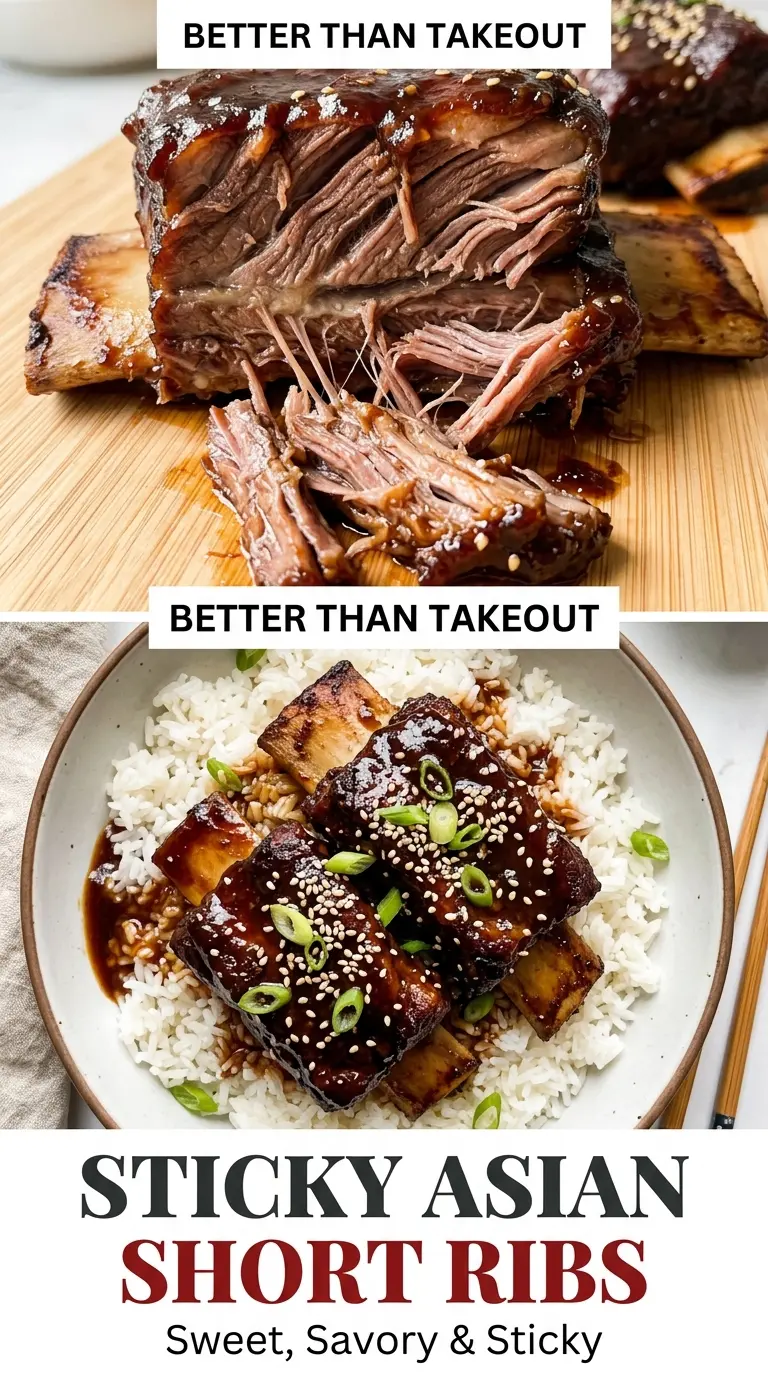
The Reason the Sauce Gets Sticky Instead of Watery
The biggest mistake with slow cooker short ribs is trusting the cooker to do the final sauce work. It won’t. The lid traps moisture, which is great for tender meat but terrible for concentration. That means the liquid needs a finishing step on the stove if you want a glaze that actually clings.
Skimming the fat before you thicken matters too. Beef short ribs release plenty of fat, and if you leave it in, the sauce can feel greasy instead of silky. Cornstarch works here because it tightens the sauce quickly without making it heavy, but it only works cleanly once the liquid is bubbling in a saucepan.
- Short ribs — Bone-in ribs give you the richest flavor and the best texture after long cooking. Boneless short ribs can work, but they usually cook faster and don’t give you the same deep beefy taste.
- Soy sauce — This is the salty backbone of the glaze. Regular soy sauce keeps the balance right; low-sodium soy sauce works too if you want a little more control over the salt.
- Brown sugar — It doesn’t just sweeten the sauce. It helps the glaze darken and gives it that sticky finish after reduction.
- Rice vinegar — This keeps the sauce from tasting one-note. If you swap it, use apple cider vinegar in a slightly smaller amount because it’s sharper.
- Sesame oil — A little goes a long way here. Use the toasted kind for the best nutty finish, but don’t add more than the recipe calls for or it can take over.
- Cornstarch slurry — This is what turns the braising liquid into a glossy coating. Stir it into simmering liquid, not a cold pot, or it can turn lumpy and fail to thicken evenly.
What Happens During the Long Slow Cook
Seasoning and Loading the Pot
Season the short ribs lightly with salt and pepper before they go into the slow cooker. The sauce brings plenty of salt, so you want enough seasoning to wake up the beef without pushing it over the edge. Lay the ribs in a fairly even layer so they cook at the same pace, and pour the sauce over them so every piece gets coated. If the ribs are stacked tightly, rotate them once during cooking if you can, but the recipe still works if you leave them alone.
Cooking Until the Meat Gives Up Easily
Cook on low until the meat pulls back from the bone and a fork slides in without resistance, usually about 8 hours. If the ribs still feel tight or chewy, they need more time; short ribs are one of those cuts that get better only after the connective tissue fully breaks down. Don’t rush this on high heat, because the outside can dry before the inside turns tender. You’re looking for meat that almost falls apart when nudged, not meat that holds a neat shape.
Turning the Braising Liquid Into a Glaze
Transfer the liquid to a saucepan and skim off as much fat as you can. Bring it to a simmer, then stir in the cornstarch slurry and keep it moving for a few minutes until it turns glossy and coats a spoon. If it stays thin, it probably needs another minute or two of bubbling. Add the ribs back only after the sauce has thickened, because returning them too early can water it down again.
How to Tweak These Ribs Without Losing the Sticky Finish
Gluten-Free Version
Use a gluten-free soy sauce or tamari and keep the rest of the recipe the same. The texture stays glossy and rich, and the flavor stays close to the original because the thickening comes from cornstarch, not flour.
Lower-Sugar Swap
Cut the brown sugar back a little and let the sauce reduce a touch longer on the stove. You lose some sweetness, but the vinegar and ginger stay brighter and the glaze still clings well.
Mild Instead of Spicy
Skip the sriracha or use just a few drops. The ribs will still taste balanced because the garlic, soy, and sesame oil carry enough flavor on their own; you just lose that faint heat at the finish.
Storage and Reheating
- Refrigerator: Store in an airtight container for up to 4 days. The sauce thickens as it chills, which actually helps the flavor settle in.
- Freezer: These freeze well for up to 2 months. Freeze the ribs with plenty of sauce so they don’t dry out when thawed.
- Reheating: Warm gently on the stove over low heat or in the microwave at medium power. High heat can make the beef stringy and can loosen the glaze, so go slow and add a splash of water if the sauce gets too tight.
Answers to the Questions Worth Asking
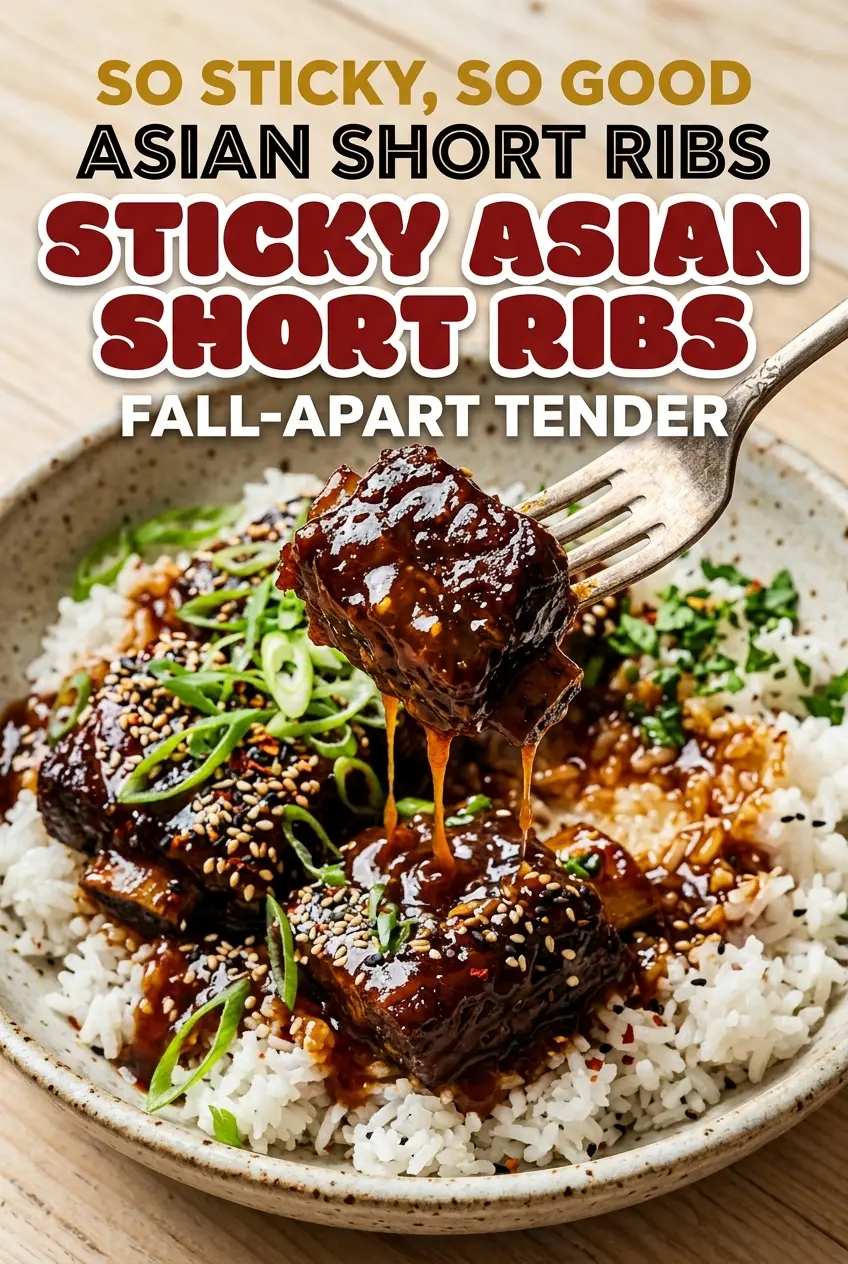
Slow Cooker Sticky Asian Beef Short Ribs
Ingredients
Equipment
Method
- Season the bone-in beef short ribs with salt and black pepper, then place them in the slow cooker.
- Whisk together soy sauce, brown sugar, rice vinegar, sesame oil, minced garlic, grated ginger, and sriracha until smooth and combined.
- Pour the sauce over the short ribs and toss gently to coat so the meat is evenly covered.
- Cover and cook on low for 8 hours, until the meat is fork-tender and the liquid looks deeply flavored.
- Remove the short ribs, skim excess fat from the remaining liquid, and transfer the liquid to a saucepan.
- Whisk cornstarch and water together, then stir into the saucepan to combine smoothly.
- Simmer for 3–5 minutes, until the sauce thickens and turns glossy as it coats the back of a spoon.
- Return the short ribs to the sauce, spooning the glaze over the top to coat generously.
- Serve the short ribs over steamed rice, topped with sliced green onion and sesame seeds.
