
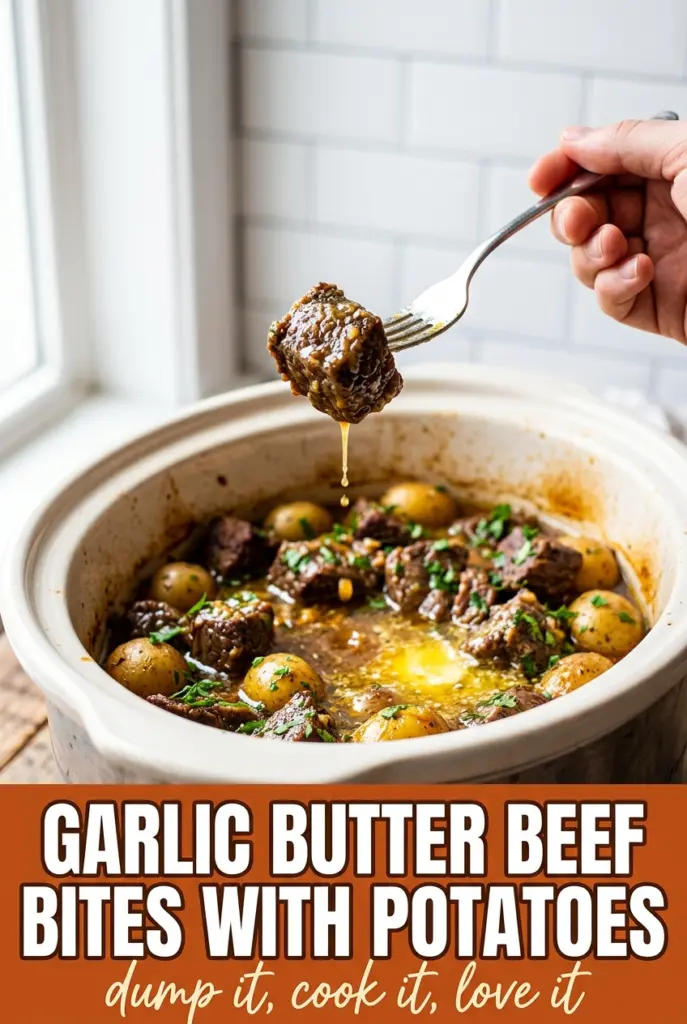
Slow Cooker Garlic Butter Beef Bites with Potatoes
Tender beef bites and buttery potatoes are what this slow cooker does best. The beef turns fork-soft without falling apart into shreds, and the potatoes soak up the garlic butter…
Tip: save now, cook later.Tender beef bites and buttery potatoes are what this slow cooker does best. The beef turns fork-soft without falling apart into shreds, and the potatoes soak up the garlic butter broth until they taste seasoned all the way through. It’s the kind of dinner that feels hearty and comforting without asking you to stand over the stove.
What makes this version work is the order: potatoes on the bottom, beef on top, and the butter scattered across the surface so it melts slowly into the liquid instead of disappearing all at once. Chuck roast is the right cut here because it has enough marbling to stay juicy through hours of low heat. The cornstarch goes in near the end, not at the beginning, so the sauce thickens into a glossy coating instead of turning gummy.
Below, I’ve included the small details that keep the beef tender, the potatoes intact, and the sauce rich enough to spoon over everything. If you’ve had slow cooker beef turn bland or watery before, the fix is in the layering and the final thickening step.
The beef stayed so tender and the potatoes soaked up all that garlic butter flavor. I stirred in the cornstarch slurry at the end like you said, and the sauce actually thickened instead of staying watery. My husband went back for seconds and asked if I could make it again next week.
Save these slow cooker garlic butter beef bites and potatoes for a hands-off dinner with fork-tender beef and a glossy garlic butter sauce.

The Slow Cooker Trick That Keeps the Beef Tender Instead of Dry
The biggest mistake with slow cooker beef bites is treating every cut and every layer the same. Chuck roast needs time, but it also needs to sit in a way that lets the fat render gradually. If the beef goes on the bottom, it spends the whole cook pressed into the hottest part of the crock and can dry out before the potatoes finish.
Putting the potatoes underneath does two things. First, it gives the beef a cushion so it cooks in the steam and liquid above the vegetables. Second, it keeps the potatoes from turning to mush before the meat is done. The other quiet fix here is the cornstarch slurry at the end. Add it too early and the sauce can turn tight and pasty. Add it late and you get a silky glaze that clings to every bite.
- Beef chuck roast — This cut has enough connective tissue and marbling to turn tender over a long cook. Stew meat works in a pinch, but it’s often cut from mixed pieces and can cook unevenly.
- Baby potatoes — Waxy baby potatoes hold their shape better than russets. If yours are on the larger side, cut them into even halves so they finish at the same time as the beef.
- Unsalted butter — Butter gives the sauce its body and richness. Salted butter works if that’s what you have, but it makes the final seasoning harder to control.
- Beef broth — Use a broth you’d actually taste on its own. Since this recipe has a short ingredient list, a weak broth makes the whole dish taste flat.
- Worcestershire sauce — This adds depth and a little tang that keeps the butter from tasting heavy. Don’t skip it unless you have to; it does more than just add salt.
- Garlic, thyme, and rosemary — These are the backbone of the sauce. Crushed rosemary disperses better than whole needles, which helps keep the flavor from feeling sharp or woody.
Building the Garlic Butter Sauce in the Right Order
Layer the Potatoes First
Start with an even layer of halved baby potatoes in the bottom of the slow cooker. They should cover the base without being packed tight, because the beef needs a little room to settle on top. If the potatoes are stacked too high, the ones in the middle can cook unevenly and stay firm while the outer pieces go soft.
Season Before the Liquid Goes In
Scatter the garlic, thyme, rosemary, onion powder, salt, and pepper over the beef and potatoes before adding the broth. Dry seasoning clings better this way, and it wakes up the aromatics before the liquid starts diluting everything. If you dump the seasonings straight into the broth, a lot of that flavor ends up floating instead of coating the food.
Finish with Butter and Wait for the Melt
Pour the broth and Worcestershire sauce over the top, then dot the butter across the surface. The butter melts down through the heat and carries the garlic flavor into the sauce as the beef cooks. Don’t stir at this point; stirring early breaks the layering and can bruise the potatoes before they’ve had time to hold their shape.
Thicken Only at the End
When the beef is fork-tender and the potatoes are done, stir in the cornstarch slurry during the last 20 minutes. The sauce should go from thin and brothy to lightly glossy and coat the back of a spoon. If it still looks loose after 20 minutes, let it cook uncovered for a few more minutes rather than adding more slurry right away.
How to Adapt This for Different Pans, Diets, and Leftovers
Make It Dairy-Free
Swap the butter for a plant-based butter block, not a soft tub spread. You’ll still get richness and a glossy sauce, though the flavor will be a little less round than with real butter.
Use Different Potatoes Without Losing Texture
Yukon golds are the best stand-in if you don’t have baby potatoes. Cut them into 1.5-inch chunks so they cook at the same pace as the beef. Avoid russets unless you want a softer, more broken-down texture.
Add Vegetables Without Watering Down the Sauce
Carrots or pearl onions work well, but add them in larger pieces so they don’t disappear during the long cook. Delicate vegetables like peas or green beans belong at the end, or they’ll go dull and mushy.
Storage and Reheating
- Refrigerator: Store in an airtight container for up to 4 days. The sauce will thicken as it chills, and the potatoes will soak up more of the garlic butter flavor.
- Freezer: Freezes fairly well for up to 2 months, though the potatoes soften a bit after thawing. Cool it completely first and freeze in portions for the easiest reheat.
- Reheating: Warm gently on the stove or in the microwave with a splash of broth to loosen the sauce. High heat can make the beef tough and push the potatoes past their best texture.
Answers to the Questions Worth Asking
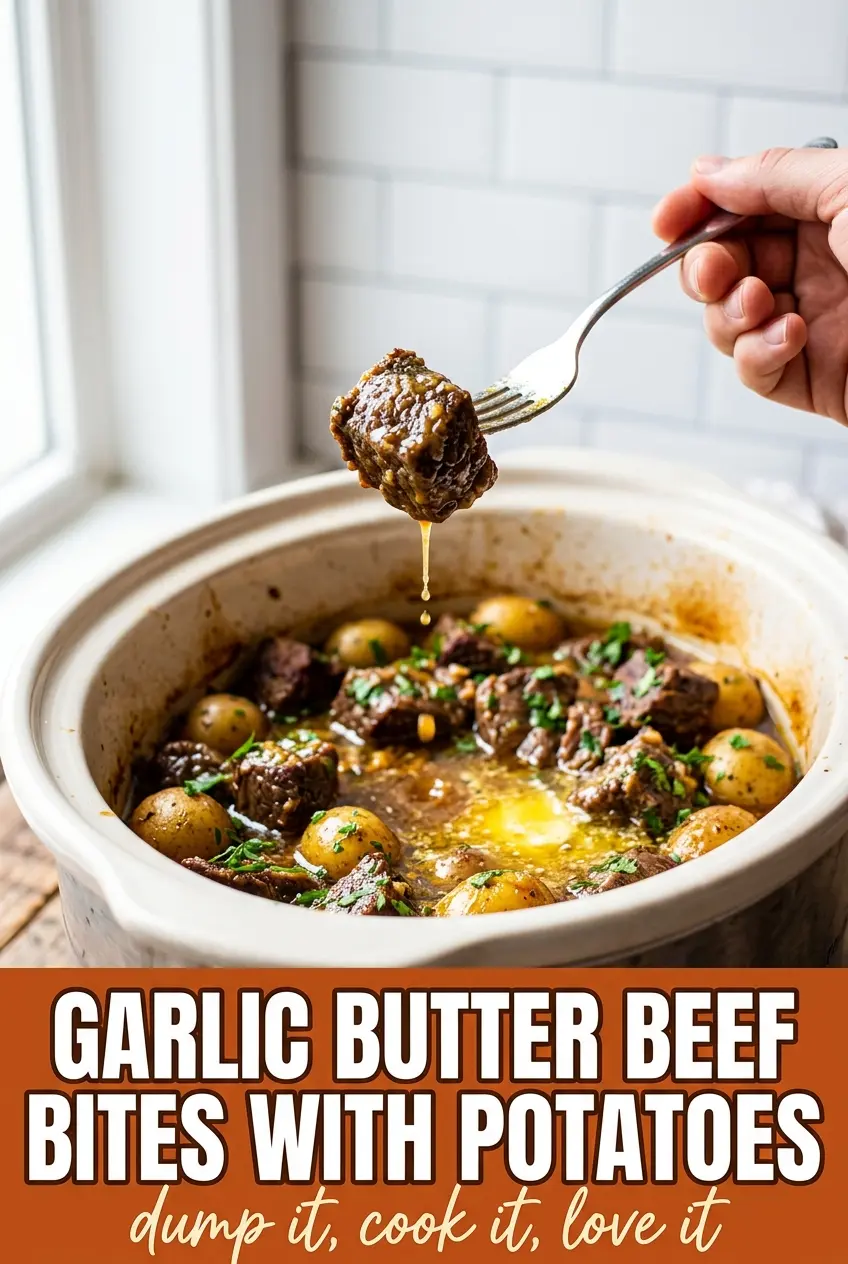
Slow Cooker Garlic Butter Beef Bites with Potatoes
Ingredients
Equipment
Method
- Place halved baby potatoes in an even layer at the bottom of the slow cooker, then add the beef cubes on top.
- Scatter the potatoes and beef so they sit in contact with the bottom for even slow cooking.
- Sprinkle minced garlic, dried thyme, dried rosemary, onion powder, salt, and pepper evenly over the beef and potatoes.
- Press the seasonings lightly so they cling to the surface of the meat and potatoes.
- Pour beef broth and Worcestershire sauce over the top of everything in the slow cooker.
- Scatter cubed butter evenly across the surface so it melts into the sauce as it cooks.
- Cover and cook on LOW for 6–7 hours until the beef is fork-tender and the potatoes are fully cooked through.
- If using HIGH, cover and cook for 3.5–4 hours until the beef is fork-tender and the potatoes are fully cooked through.
- In the last 20 minutes of cooking, stir in the cornstarch slurry to thicken the garlic butter sauce slightly.
- Mix gently and keep the lid on during the final cook time to maintain steady heat.
- Gently stir to coat the beef and potatoes in the glossy garlic butter sauce.
- Garnish with chopped fresh parsley and serve hot straight from the slow cooker.
