
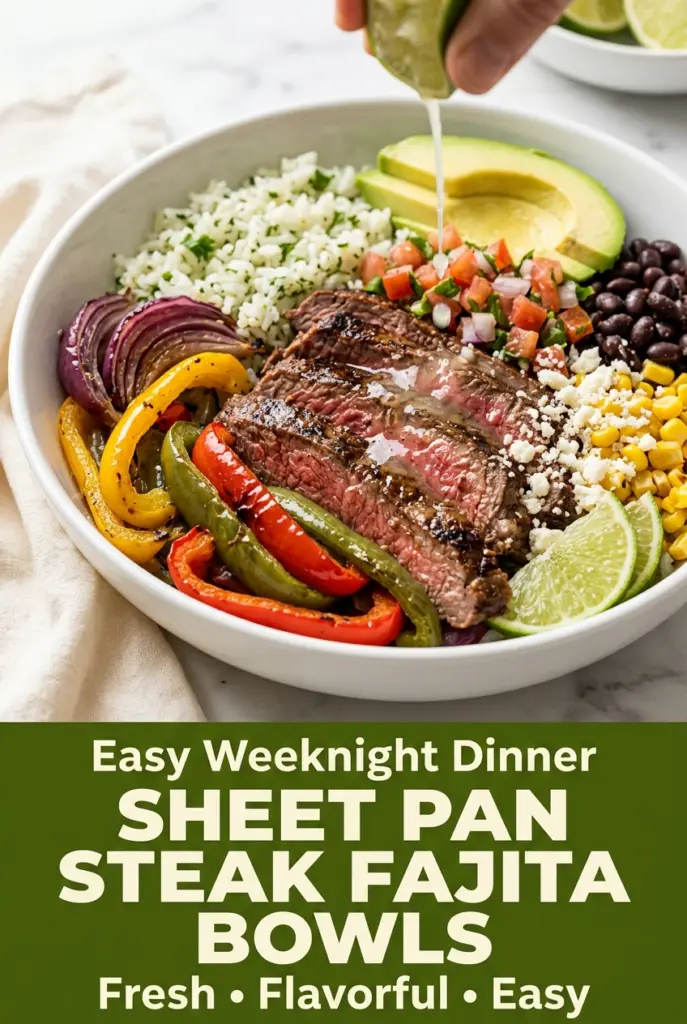
Sheet Pan Steak Fajita Bowls
Juicy steak, charred peppers, and sweet onions all land on the same pan and come out tasting like they took much more work than they did. The vegetables soften just…
Tip: save now, cook later.Juicy steak, charred peppers, and sweet onions all land on the same pan and come out tasting like they took much more work than they did. The vegetables soften just enough at the edges while the steak stays tender if you slice it thin and don’t leave it in the oven a minute too long. Piled over cilantro-lime rice, it’s the kind of dinner that feels balanced, bright, and satisfying without turning the kitchen into a cleanup project.
The key here is treating the steak and vegetables as partners, not separate projects. Thin-sliced flank steak cooks fast, and that’s what keeps it from getting tough. The seasoning mix clings best when the beef and vegetables are tossed together with the lime juice and oil before they hit the sheet pan, and a hot oven gives you those browned edges that make fajita bowls worth repeating.
Below, I’ll walk through the part that matters most: how to keep the steak from overcooking while the peppers and onions still get enough heat to caramelize. I also included a few smart swaps and storage notes, because this is one of those meals that works just as well for dinner tonight as it does for lunch tomorrow.
The steak stayed tender and the peppers had those little charred edges I was hoping for. I used the bowls for meal prep and the rice reheated without getting mushy, which was a huge win.
Save these Sheet Pan Steak Fajita Bowls for an easy dinner with tender steak, roasted peppers, and cilantro-lime rice.
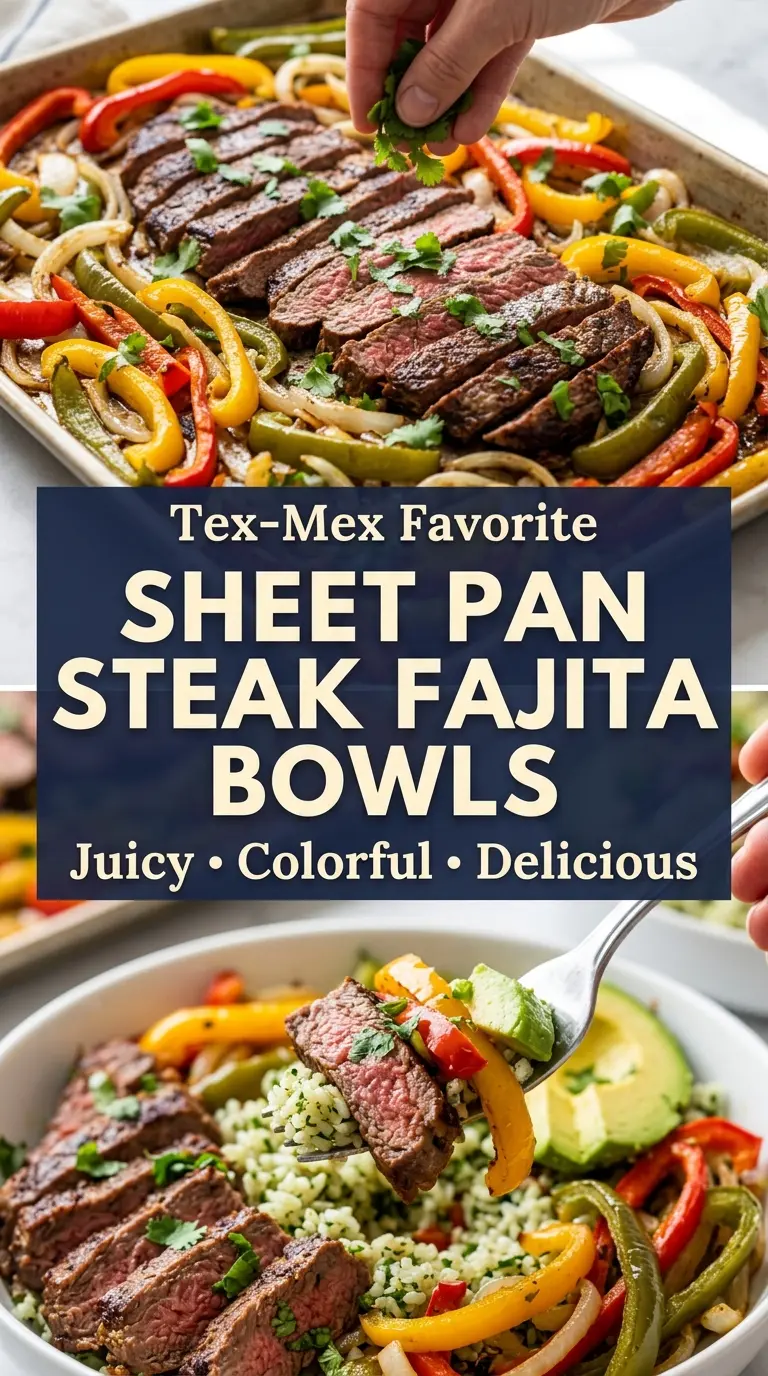
The Trick to Keeping Flank Steak Tender on a Hot Sheet Pan
Flank steak is lean, which is why it tastes great here and also why it can turn chewy if you handle it like a slower braise cut. The move is to slice it thin against the grain and roast it just long enough to brown the outside without driving all the moisture out. On a sheet pan, every extra minute matters because the heat is direct and constant.
The other thing that helps is giving the vegetables enough space to roast instead of steam. If the pan is crowded, the peppers and onions soften into a puddle before their edges ever char. A large sheet pan and a true single layer keep the steak and vegetables moving toward the same finish: browned, juicy, and still lively.
- Flank steak — This cut is ideal because it picks up seasoning fast and stays flavorful when cooked quickly. Skirt steak works too, though it usually cooks even faster, so check it early.
- Bell peppers and red onion — These need high heat to sweeten and pick up those dark edges. If you swap in softer vegetables, the texture changes and you’ll lose some of the fajita feel.
- Lime juice — It brightens the seasoning and loosens the oil enough to coat everything evenly. Use fresh lime here; bottled juice tastes flatter and doesn’t wake up the steak the same way.
- Spices — Chili powder, cumin, smoked paprika, garlic powder, onion powder, and oregano build the base seasoning. The blend matters more than any single spice, so don’t strip it down too far.
How to Roast Everything Fast Without Missing the Char
Mix the Seasoning First
Stir the oil, spices, garlic, and lime juice together before adding the steak and vegetables. That gives you a loose paste that coats the meat evenly instead of leaving dry pockets of seasoning behind. If the garlic is left in clumps, it can scorch on the pan before the steak is done.
Toss and Spread in One Layer
Add the sliced steak, peppers, and onion to the bowl and toss until every piece has a light, even coating. Then spread everything out on the pan with space between the pieces. If the ingredients are piled up, they’ll steam, and the peppers will go soft before the steak picks up color.
Roast Just Until the Steak Springs Back
Put the pan in a 425°F oven and start checking around the 14-minute mark. The vegetables should be tender with browned edges, and the steak should look just cooked through with some darker spots from the heat. If the steak is very thin, pull the pan early; it will keep cooking a little once it’s out of the oven.
Finish the Rice While the Pan Roasts
Stir the warm rice with cilantro and lime juice while the steak and vegetables are in the oven. The rice should taste fresh and lightly tangy, not wet or heavily dressed. If you add too much lime, it can turn sharp and drown out the roasted flavors from the pan.
How to Adapt These Steak Fajita Bowls for Different Nights
Dairy-Free Bowl With the Same Big Finish
Skip the Cotija cheese and load up on avocado, pico de gallo, cilantro, and lime. You won’t miss much, because the roasted steak and vegetables carry the bowl, and the toppings still give you plenty of creaminess and brightness.
Gluten-Free by Default, with One Thing to Check
The bowl itself is naturally gluten-free, but check your chili powder and pico de gallo if you’re using packaged versions. Some blends sneak in additives or thickeners, and that’s the easiest place for gluten to hide.
Make It Lower Carb Without Losing the Structure
Swap the rice for cauliflower rice or shredded lettuce if you want a lighter bowl. Cauliflower rice keeps the warm, spoonable feel, while lettuce turns it into more of a taco salad style meal.
Turn It Into a Meal Prep Base
Keep the avocado and pico de gallo separate until serving so they stay fresh. The steak, vegetables, and rice hold up well for a few days, and the bowl is still good reheated as long as you warm it gently instead of blasting it until the steak tightens up.
Storage and Reheating
- Refrigerator: Store the steak, vegetables, and rice in airtight containers for up to 4 days. The peppers soften a bit, but the flavor holds up well.
- Freezer: The steak and vegetables freeze okay, though the peppers lose some texture after thawing. Freeze the rice separately for the best result.
- Reheating: Warm the bowls covered in the microwave in short bursts or in a skillet with a splash of water. Don’t overheat the steak, or it will turn firm and dry instead of tender.
Answers to the Questions Worth Asking
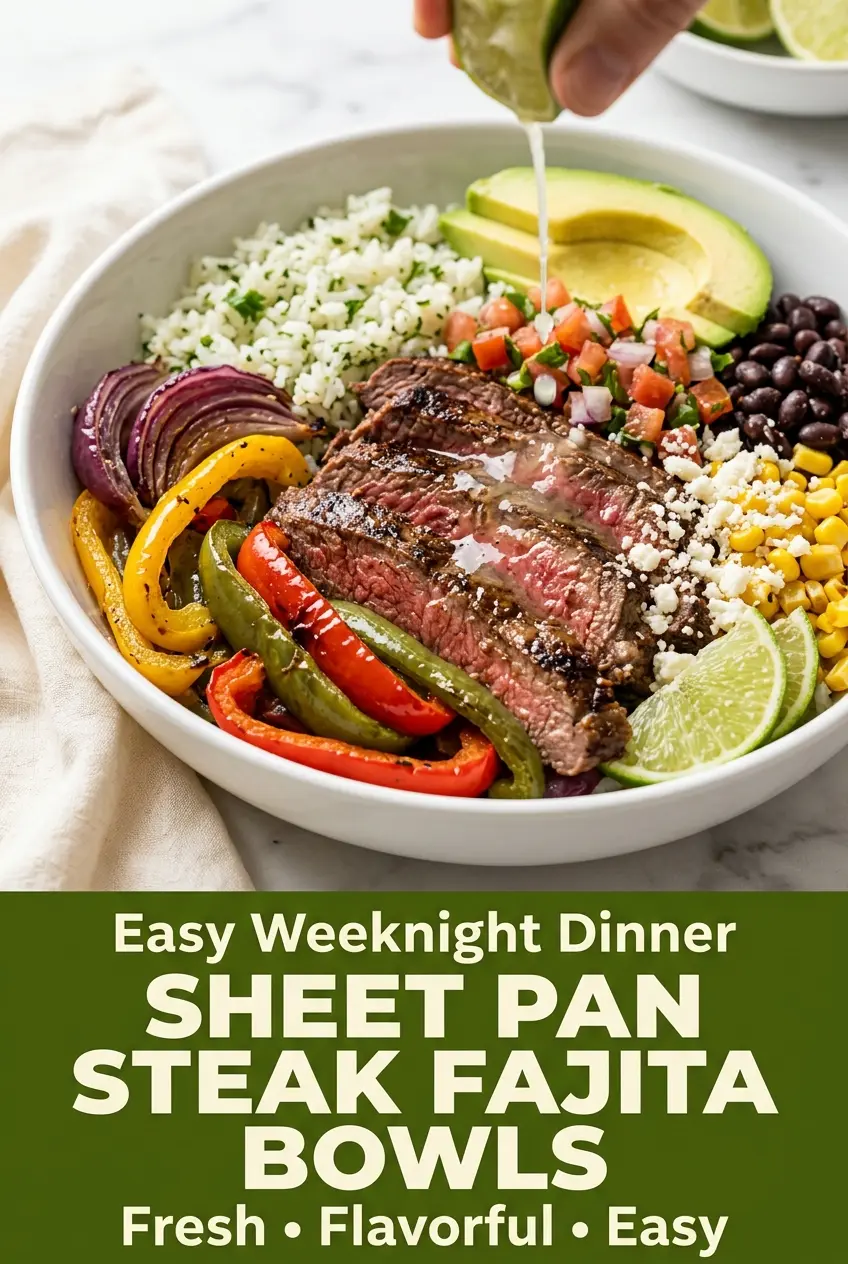
Sheet Pan Steak Fajita Bowls
Ingredients
Equipment
Method
- Preheat the oven to 425°F. Line a large sheet pan with parchment paper or lightly grease it.
- In a large bowl, combine the olive oil, chili powder, smoked paprika, ground cumin, garlic powder, onion powder, dried oregano, salt, black pepper, minced garlic, and lime juice. Mix until the seasoning forms a thick, even coating.
- Add the sliced steak, bell peppers, and red onion. Toss until everything is evenly coated with the seasoning mixture.
- Spread the steak and vegetables into a single layer on the prepared sheet pan. Keep the pieces from crowding so they brown and roast evenly.
- Roast for 14–18 minutes, stirring halfway through. Roast until the steak is browned to your preferred doneness and the vegetables are tender with lightly charred edges.
- Stir the cooked rice with chopped fresh cilantro and lime juice. Keep stirring just until the rice looks evenly speckled and glossy.
- Divide the cilantro-lime rice among serving bowls. Add the roasted steak and fajita vegetables on top.
- Top each bowl with avocado slices, pico de gallo, corn kernels, and black beans. Add Cotija cheese so it melts slightly from the warm steak and vegetables.
- Finish with fresh cilantro leaves and lime wedges. Serve immediately for the best contrast of hot fajita filling and cool toppings.
