
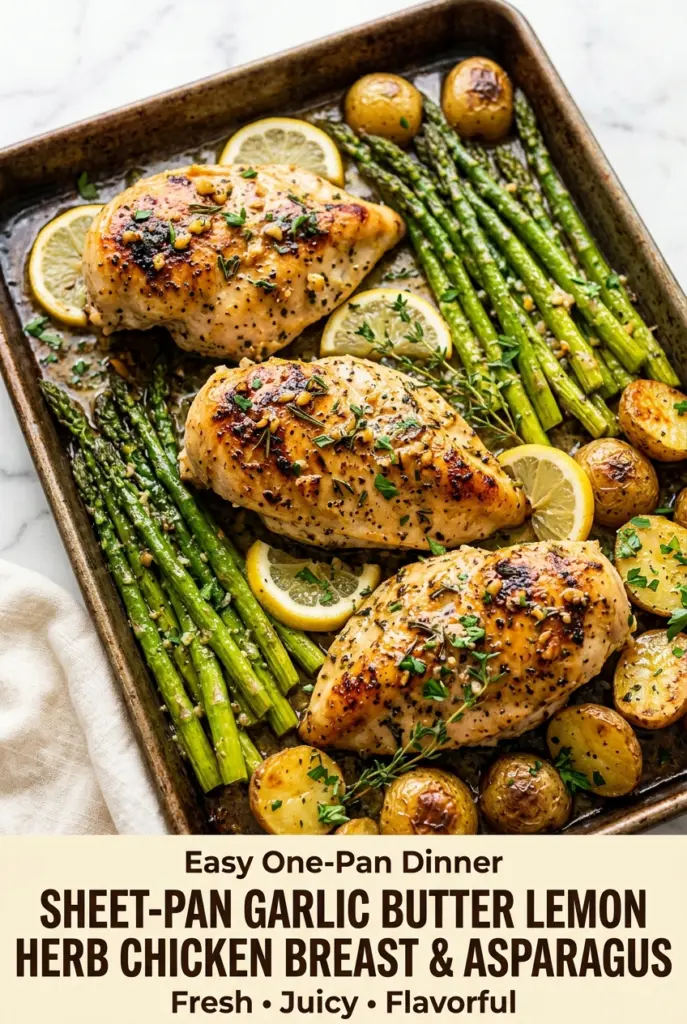
Sheet-Pan Garlic Butter Lemon Herb Chicken Breast & Asparagus
Juicy chicken breasts, tender-crisp asparagus, and caramelized baby potatoes all land on one pan with a garlic butter lemon herb sauce that actually tastes bright instead of heavy. The potatoes…
Tip: save now, cook later.Juicy chicken breasts, tender-crisp asparagus, and caramelized baby potatoes all land on one pan with a garlic butter lemon herb sauce that actually tastes bright instead of heavy. The potatoes get a head start so they turn creamy in the middle and crisp at the edges, while the chicken roasts in the butter without drying out. It’s the kind of dinner that looks like you worked harder than you did.
The trick here is timing and layering. Potatoes need more oven time than chicken or asparagus, so they go in first and the rest joins later. The garlic butter gets brushed on at the right moment, which keeps the herbs fragrant and lets the lemon stay lively instead of cooking off into something flat.
Below you’ll find the small details that keep the chicken juicy, the asparagus from going limp, and the pan from turning greasy. There’s also a simple way to adjust the recipe if your chicken breasts are extra thick or you want to swap in a different vegetable.
The potatoes got those crisp edges I was hoping for, and the chicken stayed juicy even after the broil. The lemon and garlic butter soaked into everything without making the asparagus soggy.
Save this sheet-pan chicken with garlic butter lemon herbs for the nights when you want crisp potatoes, juicy chicken, and one pan to wash.
The Reason the Potatoes Go in First
The biggest mistake with sheet-pan dinners like this is treating every ingredient as if it needs the same amount of time. Potatoes are dense and forgiving. Chicken breasts and asparagus are not. If you throw everything on the pan together, the potatoes stay underdone while the chicken dries out, or the chicken finishes and the asparagus collapses into limp strings.
Starting the potatoes first gives them the oven time they need to develop a browned edge and a creamy center. Adding the chicken after that keeps the meat in the safe zone where it can cook through without going chalky. The asparagus goes in last because it only needs a short roast to turn tender-crisp and soak up the butter without going soft.
What Each Ingredient Is Actually Doing in This Dish
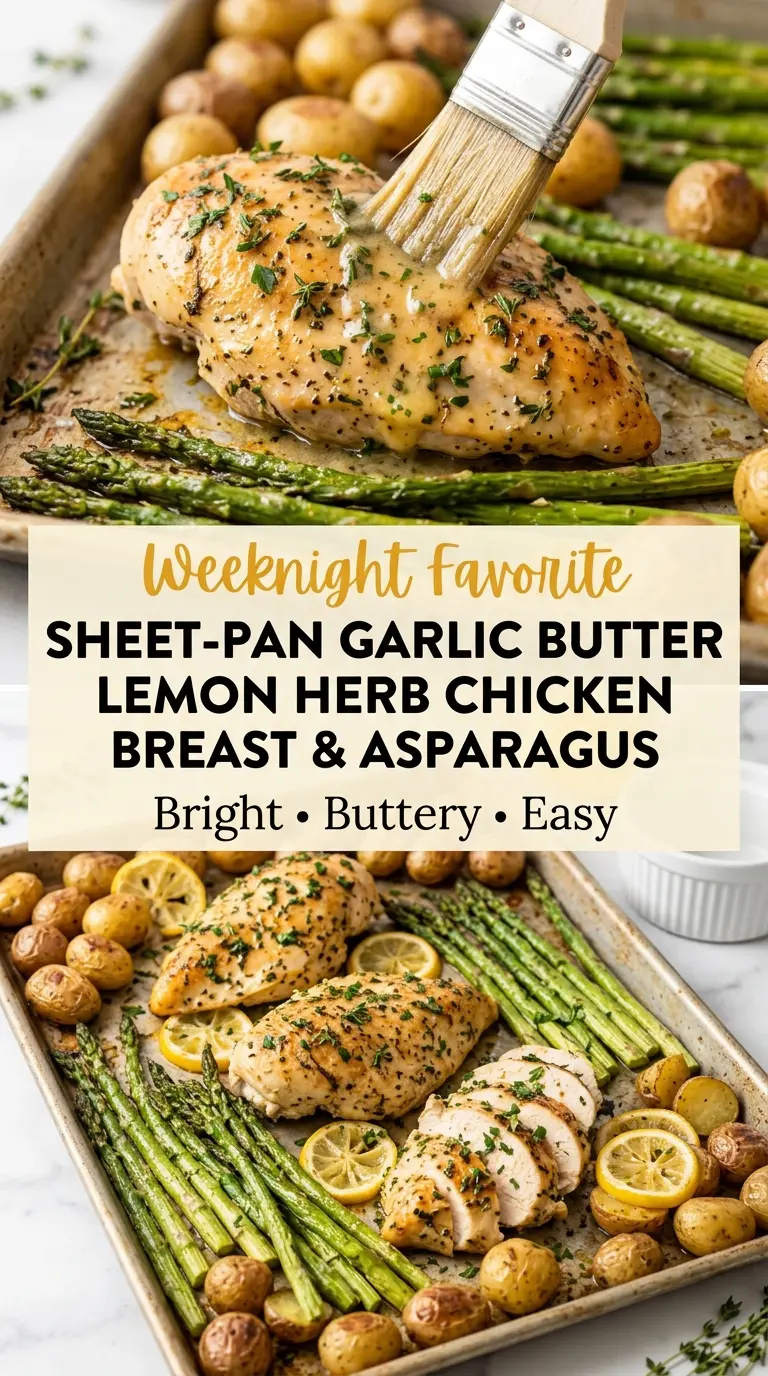
- Chicken breasts — Boneless, skinless breasts are lean, which means they need the olive oil and the short, hot roast to stay juicy. If yours are very thick, pound them to an even thickness so the thin ends don’t dry out before the center is done.
- Baby Yukon Gold potatoes — These hold their shape and turn creamy inside without falling apart. Cut them in half so the cut sides can brown; whole small potatoes take longer and won’t get the same edge.
- Asparagus — Fresh asparagus matters here because it roasts fast and should still have a little snap. Thick spears work fine, but trim off the woody ends so you don’t end up chewing through stringy bottoms.
- Butter, garlic, lemon, and herbs — This is the sauce that ties everything together. Melted butter carries the garlic and herbs across the pan, while lemon juice and zest keep the flavor sharp enough to cut through the richness.
- Italian seasoning plus thyme and rosemary — The dried blend gives the chicken an even seasoning base, while the fresh herbs in the butter stay brighter and more aromatic. If you only have dried thyme and rosemary, use less than fresh because dried herbs hit harder.
How to Roast Everything So Nothing Ends Up Dry
Give the Potatoes a Head Start
Toss the potatoes with oil, salt, and pepper, then spread them in a single layer on one side of the pan. Fifteen minutes in a hot oven starts the browning before anything else has a chance to overcook. If the potatoes are crowded or piled up, they steam and stay pale, so give them room.
Season the Chicken Before It Hits the Pan
Pat the chicken dry first. That step matters more than people think because moisture on the surface blocks browning and dilutes the seasoning. Coat both sides with the spice blend, and don’t skip the smoked paprika even in a small amount; it adds color and a little depth that keeps the chicken from tasting flat.
Brush on the Garlic Butter at the Right Time
Whisk the melted butter with the garlic, lemon, and herbs, then brush most of it over the chicken once it goes onto the pan. The butter should coat the food, not pool around it. If the pan looks flooded, the vegetables will roast in the butter instead of caramelizing in it.
Finish With a Short Broil
Roast until the chicken reaches 165°F and the asparagus is tender-crisp, then broil for 2 to 3 minutes to bring a little color to the top. Watch it closely because the line between browned and burned is short under the broiler. The goal is light caramelization, not a dark crust.
How to Adapt This for Different Eaters and Different Pan Sizes
Dairy-Free Garlic Lemon Chicken
Swap the butter for olive oil or a good plant-based butter. You’ll lose a little of the rich finish, but the lemon and herbs still carry the dish well, and the pan will roast a touch cleaner without excess milk solids.
Lower-Carb Version With Extra Asparagus
Skip the potatoes and double the asparagus, or replace the potatoes with halved Brussels sprouts. Brussels sprouts need a little more time than asparagus, so add them earlier and watch for browned edges before finishing with the chicken.
Using Chicken Thighs Instead
Boneless thighs work well and stay juicy, but they need a few extra minutes and usually don’t need the same level of worry about dryness. They also handle the broiler better, which gives you a deeper brown top without sacrificing tenderness.
Storage and Reheating
- Refrigerator: Store leftovers in an airtight container for up to 4 days. The asparagus softens a bit, but the chicken and potatoes hold up well.
- Freezer: The chicken and potatoes freeze better than the asparagus. If you plan to freeze it, remove the asparagus first and freeze the rest for up to 2 months.
- Reheating: Warm in a 350°F oven covered loosely with foil until heated through. The most common mistake is microwaving everything until the chicken turns rubbery and the potatoes dry out; the oven keeps the texture much closer to the original.
Answers to the Questions Worth Asking
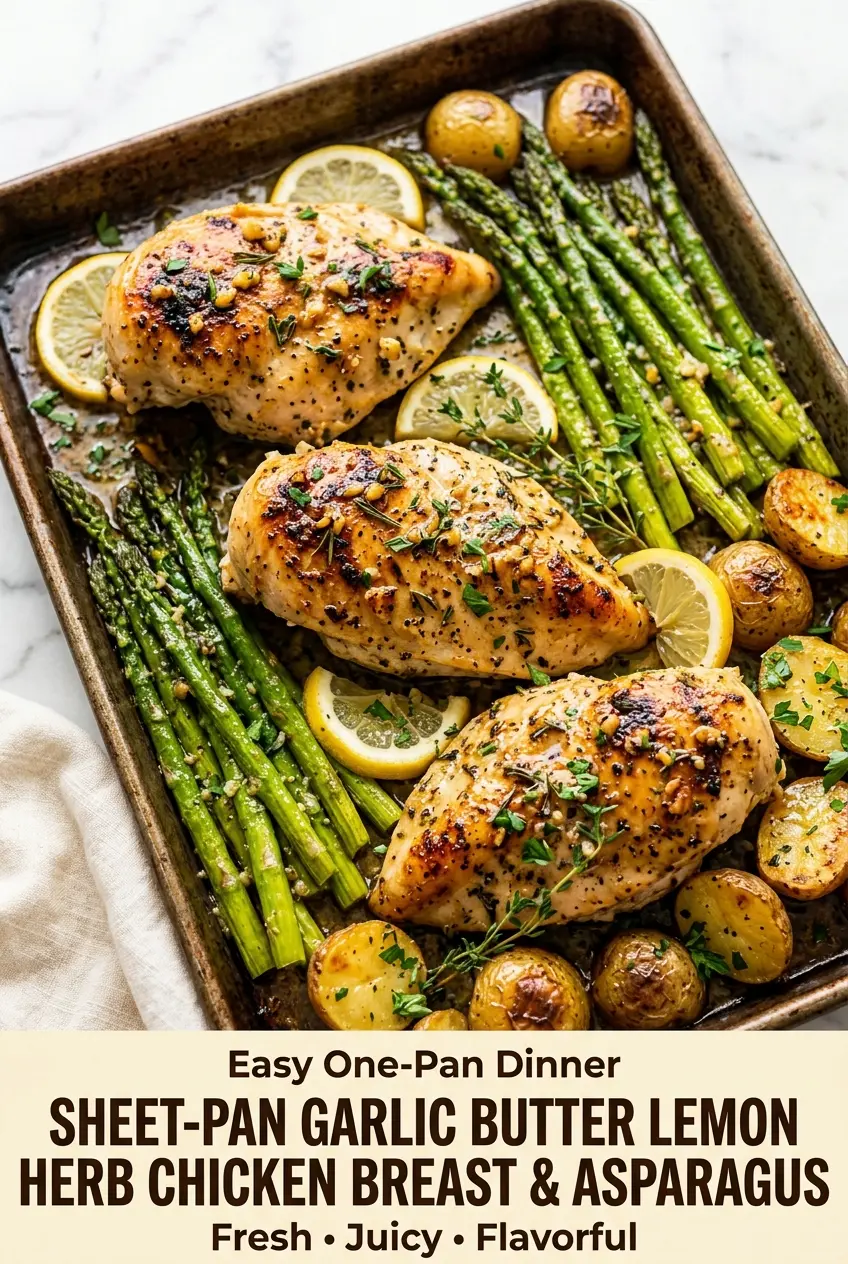
Sheet-Pan Garlic Butter Lemon Herb Chicken Breast & Asparagus
Ingredients
Equipment
Method
- Preheat the oven to 425°F (220°C) and line a large sheet pan with parchment paper or lightly grease it.
- Toss the halved baby Yukon Gold potatoes with olive oil, kosher salt, and black pepper, then spread them onto one side of the sheet pan.
- Roast the potatoes for 15 minutes.
- Pat the chicken breasts dry, then season both sides with kosher salt, black pepper, garlic powder, onion powder, Italian seasoning, and smoked paprika.
- Whisk together the melted unsalted butter, minced garlic, fresh lemon juice, lemon zest, chopped thyme, chopped rosemary, chopped parsley, and crushed red pepper flakes (if using) until combined.
- Remove the sheet pan from the oven, push the potatoes to one side, and place the seasoned chicken breasts on the empty side.
- Brush the chicken generously with the garlic butter lemon herb mixture.
- Arrange the trimmed asparagus around the chicken and drizzle the remaining garlic butter mixture over the asparagus and potatoes.
- Roast for 18–22 minutes, or until the chicken reaches 165°F (74°C) and the asparagus is tender-crisp.
- Switch the oven to broil for the final 2–3 minutes to lightly caramelize the chicken and vegetables.
- Garnish with chopped fresh parsley, lemon slices, and optional freshly grated Parmesan.
- Serve immediately with extra lemon wedges for squeezing over the chicken.
