
Raspberry Cream Pie
Raspberry cream pie earns its place in the dessert rotation because it gives you contrast in every bite: a crisp graham cracker crust, a cold and fluffy cream cheese filling,…
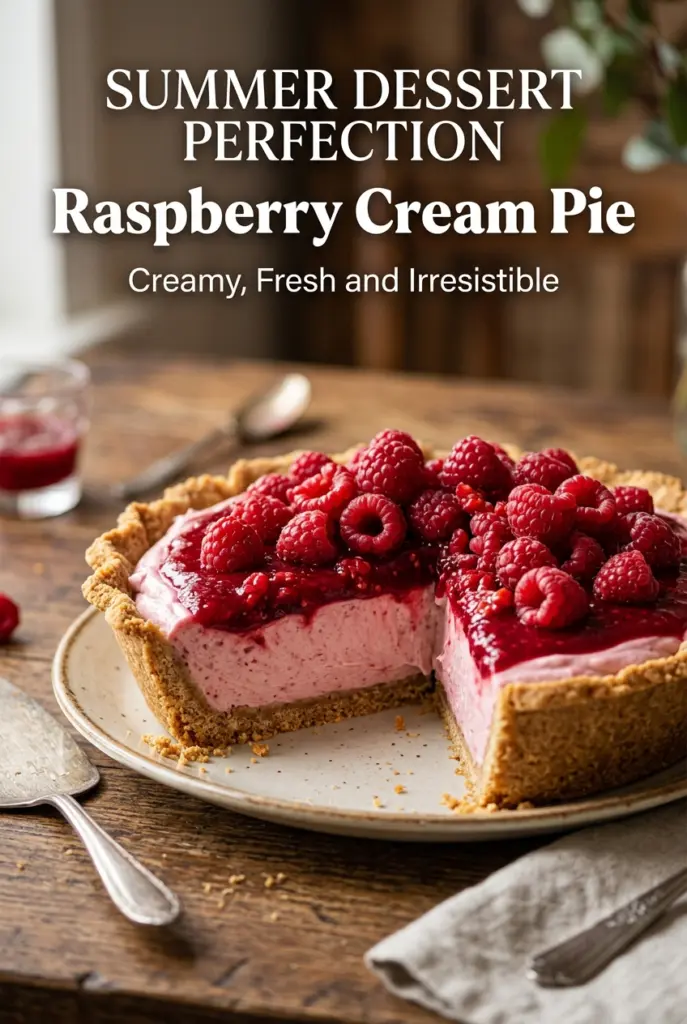
Tip: save now, cook later.Raspberry cream pie earns its place in the dessert rotation because it gives you contrast in every bite: a crisp graham cracker crust, a cold and fluffy cream cheese filling, and a bright raspberry topping that sets up enough to slice cleanly. It looks like a bakery pie, but the work is straightforward, and the payoff is one of those desserts people keep going back to for “just one more sliver.”
The filling works because the cream cheese is beaten smooth first, then lightened with whipped cream that’s folded in gently. That keeps it airy without turning loose or grainy. The raspberry layer gets cooked just enough to thicken with cornstarch, which matters more than people think; if you rush it, the topping slides off the pie instead of sitting in a glossy, spoonable layer.
Below, I’ve included the small details that matter most: how to keep the crust from turning crumbly, how to avoid a lumpy filling, and how to get the raspberry topping thick enough to hold its shape after chilling.
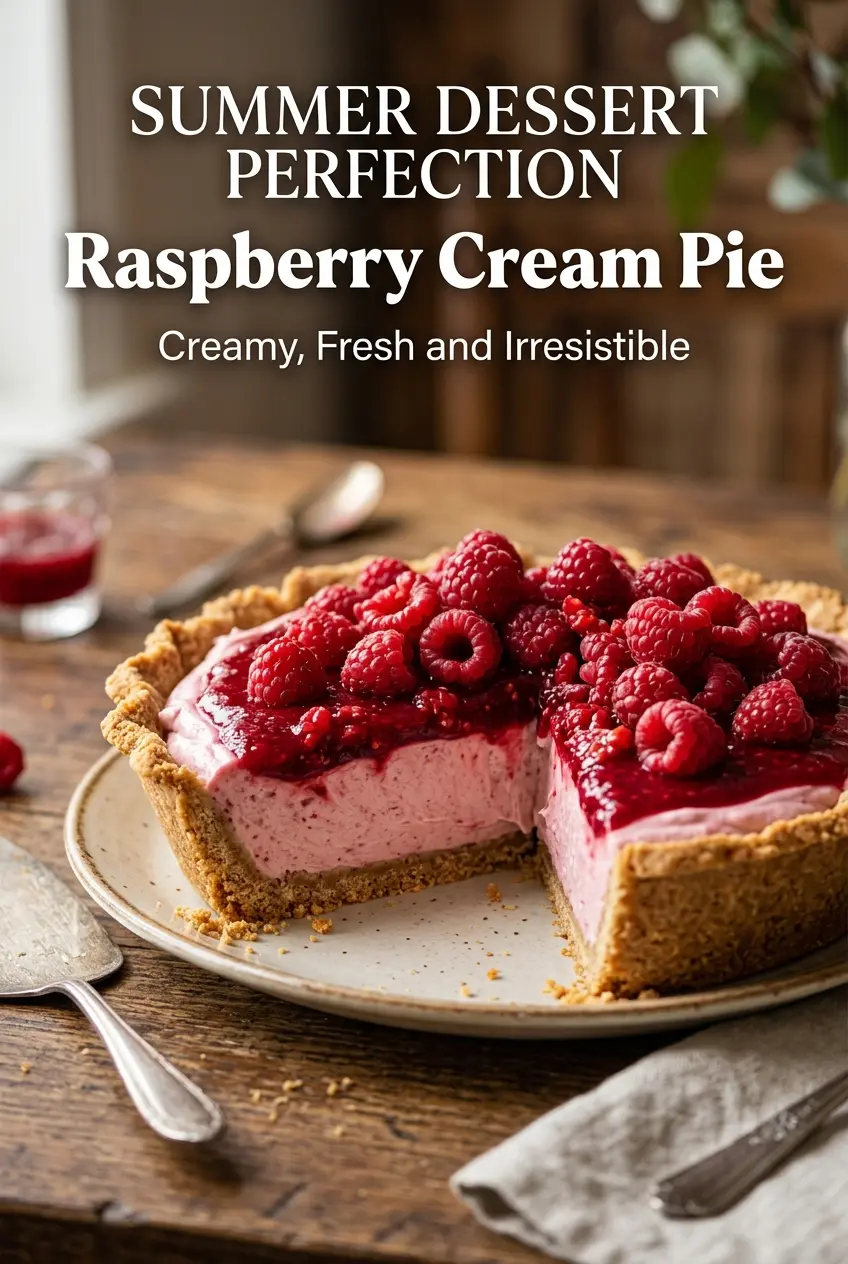
The raspberry topping set up beautifully and didn’t run all over the plate when I sliced it. I also liked that the filling stayed light after chilling instead of getting dense like some cream pies do.
Love the creamy raspberry layers? Save this Raspberry Cream Pie for the days when you want a make-ahead dessert with a clean slice and a glossy fruit topping.
The Trick to a Raspberry Cream Pie That Slices Cleanly
The pie only cuts neatly if each layer is handled on its own terms. A crumb crust needs enough butter to hold together after baking, but not so much that it turns greasy and soft. The cream filling needs to be fully smooth before the whipped cream goes in, because lumps of cream cheese stay lumps forever once the pie chills.
The raspberry topping is the part that usually gets rushed. The berries need time on the heat to break down and release juice before the cornstarch mixture goes in. If you add the starch too early, you can end up with a gummy filling; if you don’t cook it long enough, it stays loose and seeps into the cream layer.
What Each Ingredient Is Actually Doing in This Pie
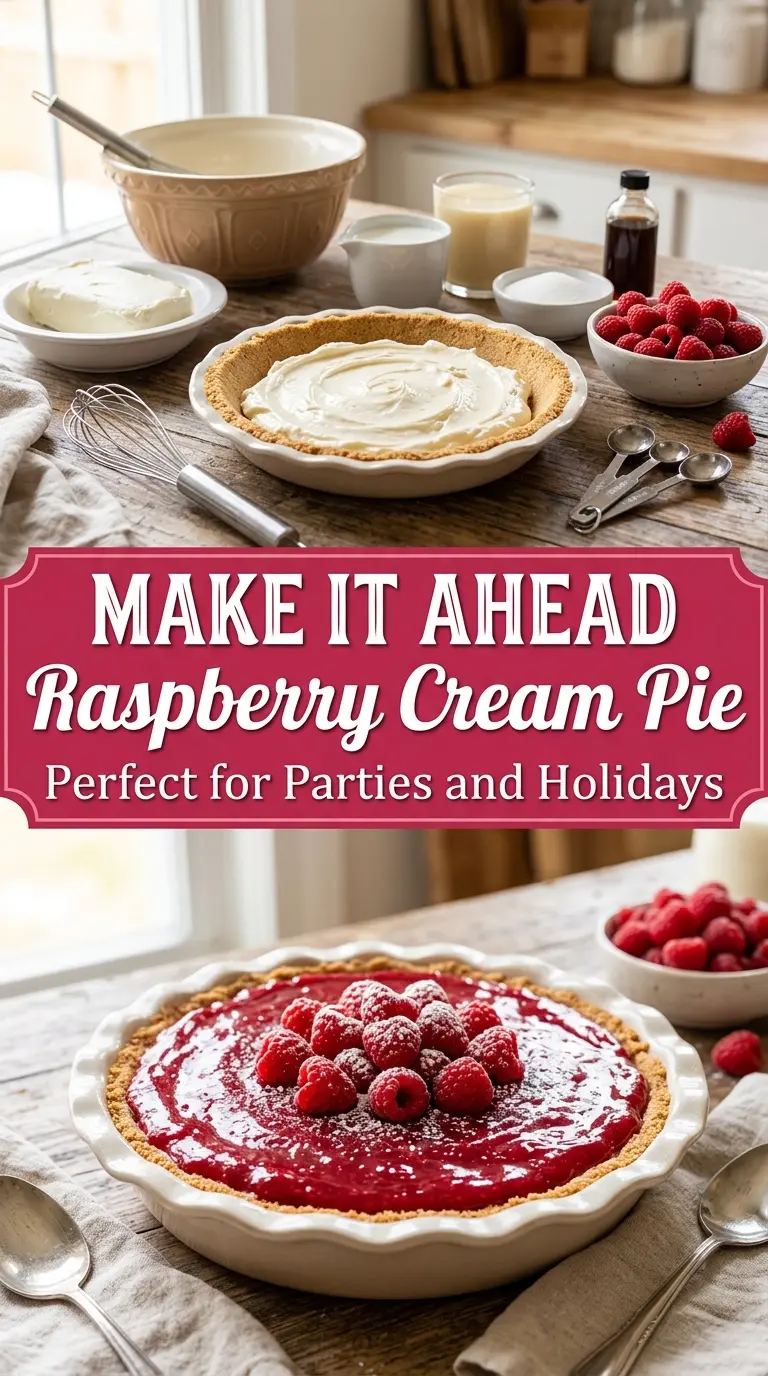
- Graham cracker crumbs — These give the crust its sandy, toasty base. Freshly crushed crumbs hold together a little better than boxed crumbs that have sat open for months.
- Unsalted butter — Butter is what turns the crumbs into a sliceable crust. If the mixture looks dry when you press it into the pan, it won’t set well after baking.
- Cream cheese — This is the backbone of the filling. Use full-fat cream cheese for the best texture; low-fat versions tend to loosen as they chill and can taste a little flat.
- Heavy whipping cream — This adds the light, mousse-like texture. Whip it to stiff peaks, but stop before it looks clumpy or grainy, or the filling can feel dense instead of airy.
- Fresh raspberries — Fresh berries give the topping a brighter flavor and a better texture. Frozen raspberries work too, but they release more liquid, so expect a slightly softer set.
- Cornstarch — This is what thickens the topping into a spoonable layer. Whisk it with water first so it disperses evenly and doesn’t form little cooked lumps.
- Lemon juice — A small amount sharpens the raspberry flavor and keeps the topping from tasting flat. It also helps the fruit taste fresher after chilling.
Building the Layers Without Breaking the Filling
Start with a crust that actually holds
Mix the graham cracker crumbs, sugar, and melted butter until every crumb looks evenly moistened, then press the mixture firmly into the pie dish. The goal is a compact layer that feels like wet sand and holds the shape of the pan. Bake it just long enough to deepen the color and set the butter, then cool it all the way before adding the filling. If the crust is even a little warm, the cream layer starts to soften and the finished pie loses definition.
Whip the cream separately, then fold with patience
Beat the cream cheese until it looks smooth and satin-like before adding the powdered sugar and vanilla. That first step matters because cold or underbeaten cream cheese leaves tiny lumps that show up later in the slice. Whip the cream to stiff peaks in a separate bowl, then fold it into the cream cheese mixture in a few additions. Use a broad spatula and stop as soon as the mixture looks uniform; overmixing knocks out the air and gives you a heavier pie.
Cook the raspberry topping until it turns glossy and thick
Heat the raspberries, sugar, and lemon juice until the fruit softens and the juices start to look syrupy. Stir in the cornstarch slurry and keep cooking until the mixture goes from cloudy to glossy and thick enough to mound on a spoon. That visual change is the cue that the starch has fully activated. Cool the topping completely before spreading it over the cream layer, or it can melt the filling underneath.
Three Ways to Adapt Raspberry Cream Pie
Gluten-Free Crust Swap
Use gluten-free graham-style crumbs in place of the standard ones and keep the butter amount the same. The texture stays close to the original, though some gluten-free crumbs are finer and may press a little tighter, which actually helps the crust hold together.
Frozen Raspberries When Fresh Aren’t Available
Frozen berries work, but don’t thaw them first. Cook them straight from frozen so they don’t shed too much liquid before the cornstarch goes in. The topping will be a little softer and more jam-like, which still tastes great on the chilled cream layer.
Lower-Sugar Filling
You can reduce the powdered sugar in the filling a bit if your berries are very sweet, but don’t cut it aggressively or the cream cheese layer starts tasting sharp and flat. The sugar also helps the filling stay plush after chilling.
Storage and Reheating
- Refrigerator: Store covered for up to 4 days. The crust softens a bit after the first day, but the filling stays light and the topping holds its shape.
- Freezer: This pie freezes poorly once assembled because the whipped filling and fruit layer can separate after thawing. If you need to work ahead, freeze only the baked crust for up to 1 month.
- Reheating: No reheating needed. Serve it straight from the fridge for the cleanest slices, and use a sharp knife wiped clean between cuts so the raspberry layer doesn’t drag.
Questions I Get Asked About This Recipe
Raspberry Cream Pie
Ingredients
Equipment
Method
- Preheat the oven to 350°F (175°C).
- Mix graham cracker crumbs, granulated sugar, and melted butter until the mixture looks evenly moistened.
- Press the crumb mixture firmly into a 9-inch pie dish to create an even layer.
- Bake the crust for 8 minutes, then cool completely.
- Beat the softened cream cheese until smooth.
- Add powdered sugar and vanilla extract, then mix until well combined.
- Whip the heavy whipping cream to stiff peaks in a separate bowl.
- Fold the whipped cream into the cream cheese mixture until no streaks remain, then spread the filling into the cooled crust.
- In a saucepan, combine raspberries, granulated sugar, and lemon juice.
- Cook over medium heat until the berries soften and release their juices.
- Stir together cornstarch and water, then add to the saucepan.
- Simmer until thickened, then cool completely.
- Spoon the raspberry topping over the cream layer.
- Refrigerate the pie for at least 4 hours before serving so the layers set.
