
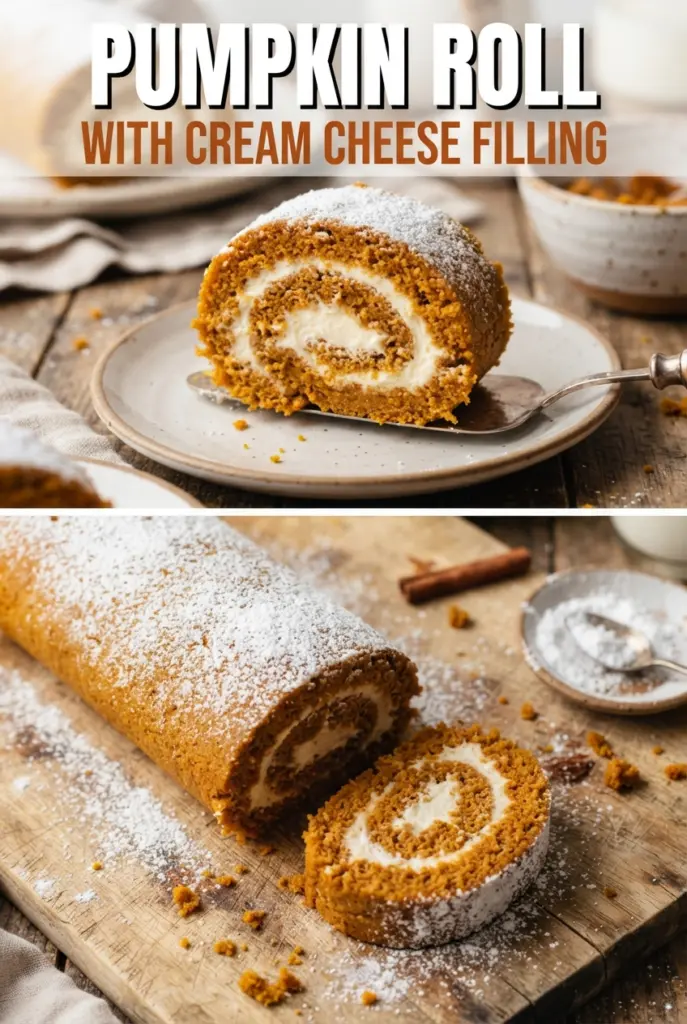
Pumpkin Roll with Cream Cheese Filling
Pumpkin roll slices cleanly into those neat little swirls everyone reaches for first, but the part that makes it worth making is the texture: a soft, flexible sponge cake wrapped…
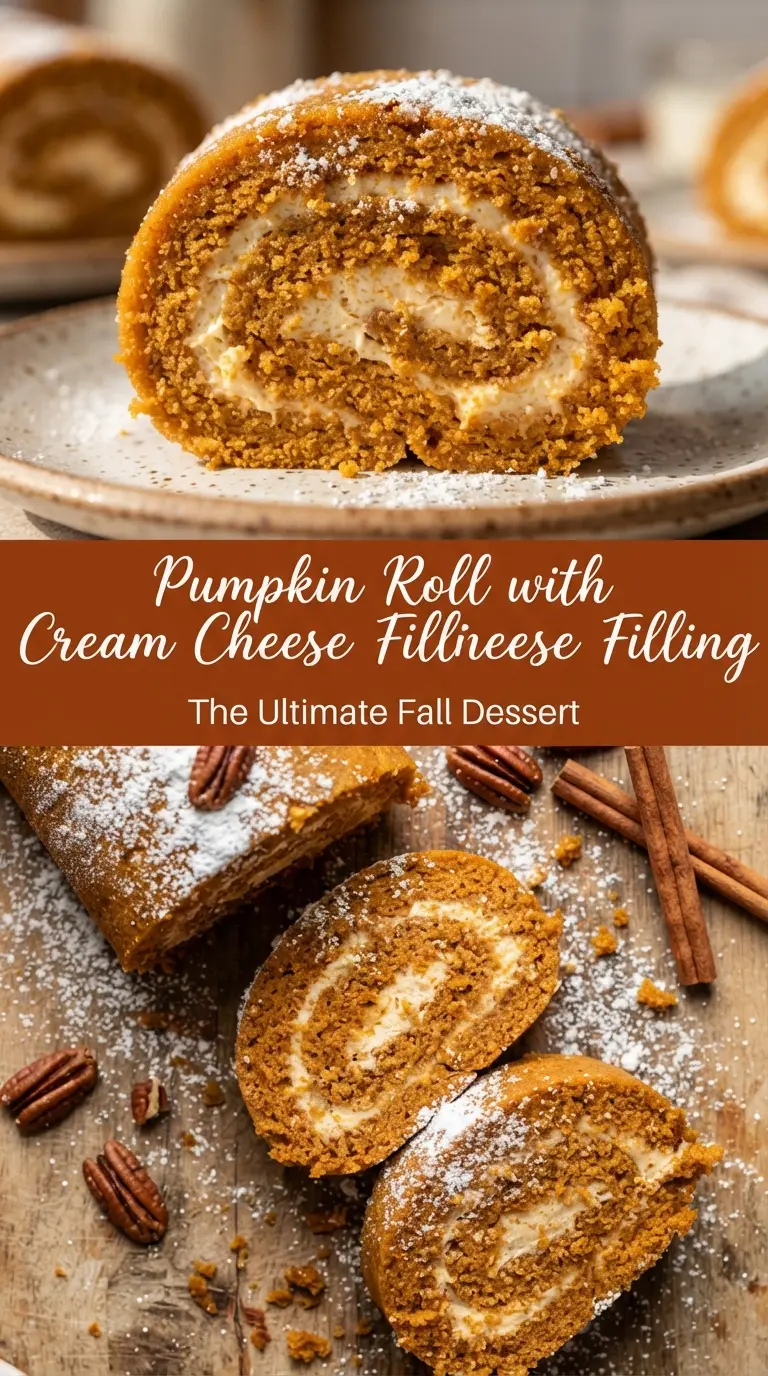
Tip: save now, cook later.Pumpkin roll slices cleanly into those neat little swirls everyone reaches for first, but the part that makes it worth making is the texture: a soft, flexible sponge cake wrapped around a cool cream cheese filling that stays smooth instead of oozing out the sides. The cake is thin on purpose. That’s what lets it roll without cracking and gives you a tidy spiral instead of a thick slab with frosting on top.
The trick is in the batter. Eggs and sugar are beaten until thick so the cake has enough structure to bend, and the warm cake gets rolled in a powdered-sugar towel right out of the pan. That first roll sets the shape while the cake is still pliable, which is why cracks happen less often. The filling is kept simple on purpose, too: cream cheese, butter, powdered sugar, and vanilla. Nothing extra to loosen it.
Below, I’ve included the small handling details that matter most, plus the substitutions that actually work when you need them. If you’ve had pumpkin rolls split or turn gummy before, the process notes here will help you avoid both.
The cake rolled up without a single crack, and the filling set up perfectly after chilling. I’ve made pumpkin rolls before that were either too dry or too soft, but this one sliced cleanly and the swirl held its shape.
Save this pumpkin roll with cream cheese filling for the holidays when you want a make-ahead dessert with clean slices and a classic swirl.
The Roll That Cracks Only When the Cake Gets Too Dry
Pumpkin roll failures usually happen for one of two reasons: the cake overbakes, or it cools flat before it gets its first roll. A pumpkin sponge needs to stay flexible, which means you’re looking for a top that springs back lightly when touched, not a dark, dry surface. If you wait until it looks fully baked in the center, it’s already on the edge of breaking.
The towel roll matters just as much as the bake time. Rolling the cake while it’s still warm trains the sponge to hold that curved shape, and the powdered sugar keeps it from sticking to the towel. If the cake sits unrolled on the counter even for a few minutes, the edges start setting in the wrong position and that’s when the cracks show up later.
What Each Ingredient Is Doing in the Swirl
- All-purpose flour — This gives the cake just enough body without turning it bready. Cake flour is too delicate here; the roll needs a little structure so it can bend and unroll cleanly.
- Eggs and sugar — Beating these together until thick builds air into the batter and helps the sponge stay flexible. If you skip that full two-minute beat, the cake bakes up denser and is more likely to crack when rolled.
- Pumpkin puree — Use plain pumpkin puree, not pumpkin pie filling. Pie filling adds sugar and spices you can’t control, and that extra moisture throws off the texture.
- Cinnamon and pumpkin pie spice — These warm the cake without making it taste heavy. If you only have one or the other, use the spice blend for depth and keep the cinnamon for a sharper, cleaner pumpkin note.
- Cream cheese and butter — Both need to be softened so the filling whips smooth. Cold cream cheese leaves little lumps, and overbeaten filling can turn loose and slide out of the roll.
- Powdered sugar — It sweetens the filling and dusts the towel, the cake, and the finished roll. Granulated sugar won’t dissolve the same way and will leave the filling gritty.
Getting the Sponge Rolled Before It Sets
Mix the dry ingredients first
Whisk the flour, baking soda, salt, cinnamon, and pumpkin pie spice together before they ever hit the eggs. That keeps the spices from clumping in one spot and helps the baking soda spread evenly, which matters because an uneven rise leads to thin spots that crack when you roll the cake.
Beat the eggs until they turn thick and pale
Use a mixer and give the eggs and sugar the full two minutes. You’re looking for a mixture that looks lighter in color and falls from the beaters in ribbons instead of splashing off in a thin stream. That extra air is what keeps the sponge tender but still bendable.
Bake just until the top springs back
Spread the batter evenly in the pan so the cake bakes at the same pace from edge to edge. Pull it when the top springs back after a light touch. If it bakes past that point, the edges dry out first and the roll starts breaking at the fold.
Roll while warm, then cool fully
Turn the hot cake onto a powdered-sugar towel, peel off the parchment, and roll it up from the short side while it’s still hot. That first roll is the insurance policy. Let it cool completely in that shape, because unrolling and filling a warm cake will melt the filling and leave you with a messy center instead of a tight spiral.
Spread the filling thin and even
When you unroll the cooled cake, don’t pile the filling too thick near the edges. Leave a small border so it doesn’t squeeze out when you roll it back up. Roll with steady pressure, not force. If the cake resists, it’s usually too cold and needs a minute to soften from sitting at room temperature.
How to Adjust the Roll Without Ruining the Spiral
Make it gluten-free with a one-to-one blend
A good cup-for-cup gluten-free flour blend can work here, but the cake may be a little more delicate when you unroll it. Don’t use almond flour or coconut flour as a direct swap; they change the structure too much and the roll won’t hold together the same way.
Use canned pumpkin, not homemade puree, for the steadiest texture
Canned pumpkin is consistent and usually thicker than homemade puree, which helps the batter bake into a reliable sponge. Homemade puree can work, but it should be drained well first or the cake can turn damp and fragile.
Add a little orange zest for a brighter finish
A teaspoon of finely grated orange zest in the filling or batter lifts the pumpkin spice without changing the texture. It’s a small change, but it keeps the dessert from tasting flat after a rich meal.
Storage and Reheating
- Refrigerator: Store tightly wrapped for up to 4 days. The filling firms up a bit, which actually helps the slices hold their shape.
- Freezer: This freezes well. Wrap the whole roll or individual slices tightly in plastic wrap, then foil, and freeze for up to 2 months. Thaw overnight in the refrigerator.
- Reheating: You don’t need to reheat it. Serve chilled or let slices sit at room temperature for 15 to 20 minutes. Microwaving softens the filling too much and can make the sponge soggy.
Answers to the Questions Worth Asking
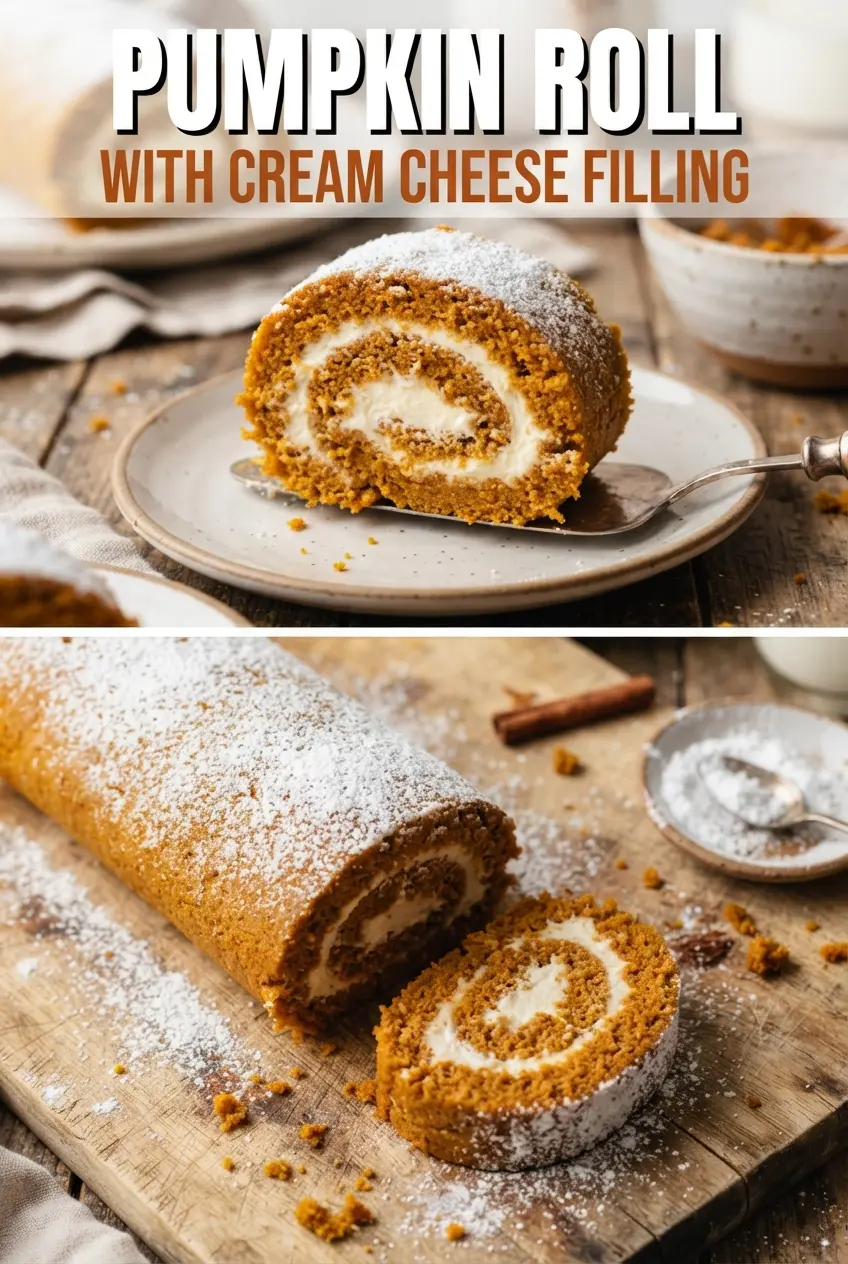
Pumpkin Roll with Cream Cheese Filling
Ingredients
Equipment
Method
- Preheat the oven to 375 F (190 C), grease a 15x10-inch jelly roll pan, line it with parchment, and grease the parchment. You should see the parchment lightly coated so the cake releases easily.
- Whisk together the all-purpose flour, baking soda, salt, ground cinnamon, and pumpkin pie spice. Mix until the spices are evenly distributed with no visible clumps.
- Beat the eggs and granulated sugar for 2 minutes until thick, then beat in the pumpkin puree. The mixture should look paler and more airy.
- Fold in the dry ingredients and spread the batter evenly in the pan. The batter layer should be uniform to bake evenly.
- Bake for 13 to 15 minutes, until the top springs back when touched. The sponge should feel set and bounce lightly under a fingertip.
- Dust a clean kitchen towel with powdered sugar, flip the warm cake onto it, and peel off the parchment. Aim for a thin, even dust so the cake won’t stick.
- Roll the cake up in the towel from the short end and cool completely, about 1 hour. The roll should hold its shape without cracking.
- Beat the cream cheese, unsalted butter, powdered sugar, and vanilla extract until smooth. Stop when the filling is glossy and free of lumps.
- Gently unroll the cake, spread the filling evenly, and roll it back up without the towel. Keep the roll tight so it slices into clean swirls.
- Wrap and chill for at least 1 hour, then slice and dust with powdered sugar. The slices should look defined and hold their spirals.
