
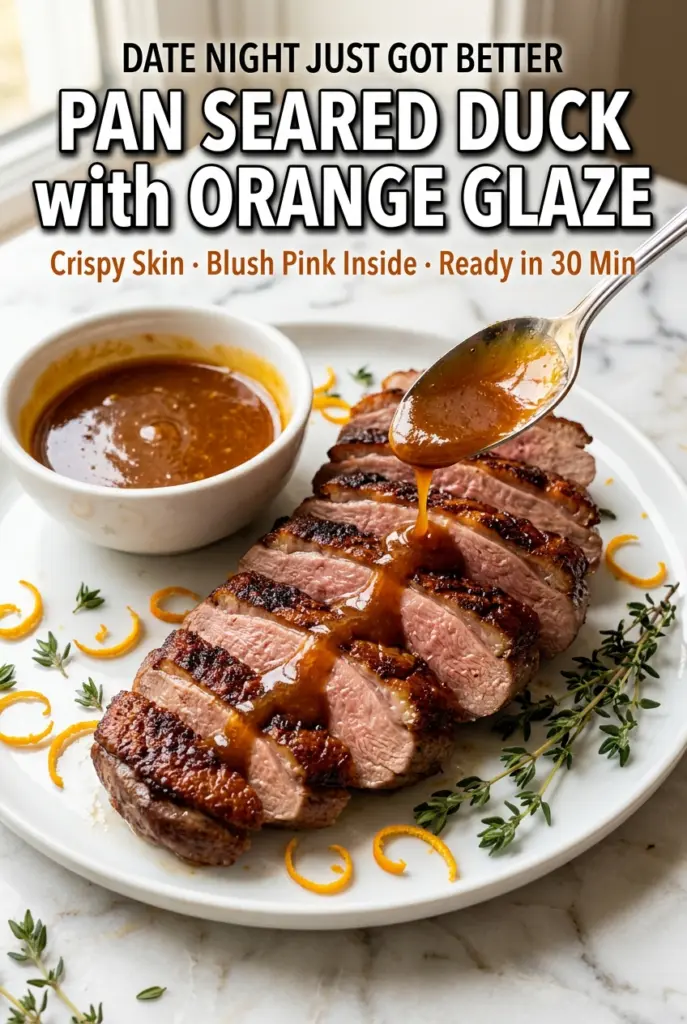
Pan Seared Duck Breast with Orange Glaze
Crispy-skinned duck breast with a glossy orange glaze has a way of feeling special without requiring a restaurant line cook’s level of fuss. The skin turns deep golden and crackly…
Tip: save now, cook later.Crispy-skinned duck breast with a glossy orange glaze has a way of feeling special without requiring a restaurant line cook’s level of fuss. The skin turns deep golden and crackly while the meat stays tender and blush-pink, and the sweet citrus glaze pulls everything together with just enough savory depth from the pan drippings. When the duck is handled the right way, it cooks with a calm, almost luxurious rhythm: slow render, quick flip, brief rest, and then that warm spoonful of glaze over the top.
The part that makes this version work is patience at the beginning. Duck breast needs a cold pan so the fat can render gradually, which is how you get crisp skin instead of greasy, rubbery skin. The orange glaze also leans on the fond left in the skillet, so it tastes layered rather than one-note sweet. Honey, Dijon, soy sauce, and butter keep the sauce balanced and glossy, while a little thyme gives it a clean finish.
Below, I’ve included the little details that matter most: how to score the skin without cutting into the meat, when to pull the duck for medium-rare, and how to keep the glaze from turning sticky in the wrong way. Once you’ve done it once, the method feels much easier than it sounds.
The skin rendered out perfectly in the cold pan, and the orange glaze was just the right balance of sweet and savory. I pulled it at 130 and it came out tender and juicy, not chewy at all.
Save this pan seared duck breast with orange glaze for the night you want crisp skin, juicy meat, and a pan sauce that tastes like it came from a bistro.
The Cold Pan Is What Gives You Crisp Duck Skin
Duck breast is one of those cuts that rewards restraint. If you start it in a hot pan, the fat on the skin seizes before it has time to render, and you end up with a thick, chewy cap instead of a crisp, almost lacquered crust. Starting cold gives the fat time to melt out slowly while the skin dries and tightens, which is the whole trick behind that crackly finish.
The other common mistake is rushing the flip. The skin needs time to turn a deep golden color and look almost dry on the surface before you turn the breasts over. If there’s still a lot of pale, soft fat left between the score marks, give it a few more minutes. That extra patience pays off in cleaner slices and better texture.
What the Duck, Orange, and Pantry Staples Each Bring to the Pan

- Duck breasts — Skin-on duck breast is the star here because the fat renders into the pan and seasons the meat as it cooks. You can’t fully substitute chicken and expect the same result; duck has richer fat and a deeper flavor. Look for breasts that are similar in size so they cook evenly.
- Orange juice and zest — Fresh orange juice gives the glaze brightness, but the zest is what makes it taste vivid instead of flat. Bottled juice works in a pinch, though it won’t have the same perfume. Zest the oranges before you juice them so you don’t end up wrestling with slippery halves.
- Honey — This is what gives the glaze its sheen and helps it cling to the duck. Maple syrup can work, but it will taste woodier and a little less bright. Keep the amount modest so the glaze stays balanced and doesn’t turn candy-sweet.
- Soy sauce and Dijon mustard — These are the quiet saviors in the pan. Soy brings salt and depth, while Dijon sharpens the sauce and keeps the citrus from tasting one-dimensional. If you need a gluten-free option, use tamari in place of soy sauce.
- Butter and thyme — Butter smooths out the glaze at the end and gives it that silky finish you want to spoon over sliced duck. Add it off the heat so it emulsifies instead of separating. Thyme adds a savory herbal note that keeps the sauce grounded.
The 20 Minutes That Actually Matter
Scoring and Seasoning the Skin
Pat the duck breasts dry until the skin feels almost tacky, then score the fat in a crosshatch pattern, stopping before you cut into the meat. Those shallow cuts help the fat render evenly and keep the skin from buckling in the pan. Season both sides well; duck can handle it, and underseasoned duck tastes dull next to the orange glaze. If the skin is damp, it won’t crisp cleanly, so don’t rush this part.
Rendering the Fat Slowly
Place the duck skin-side down in a cold, dry skillet and turn the heat to medium-low. You should hear a gentle sizzle, not a sharp sear. As the fat renders, the pan will fill with liquid gold and the skin will go from pale to deeply golden at the edges. If the breasts curl, press them lightly for a few seconds so the skin stays in contact with the pan.
Finishing the Meat Without Overcooking It
Flip the duck once the skin is crisp and the fat has rendered out well, then cook the flesh side just long enough to bring the center to medium-rare or medium. Duck breast dries out if you cook it like chicken, so use the time as a guide and watch the texture. Pull it to rest when the center still has a little give. The resting time matters because the juices settle back into the meat instead of running onto the cutting board.
Building the Orange Glaze in the Same Pan
Pour off most of the duck fat, leaving about a tablespoon behind so the sauce has flavor without turning greasy. Add the orange juice, zest, honey, soy sauce, and Dijon, then scrape the browned bits from the bottom of the pan. That fond is what gives the glaze depth. Let it simmer until it lightly coats a spoon; if it still looks thin and watery, keep going another minute or two before adding the butter.
Finishing With Butter and Slicing Cleanly
Take the pan off the heat before stirring in the butter and thyme. High heat can make the glaze break, and you want it glossy and smooth. Slice the duck on a slight angle so each piece shows a blush-pink center and a band of crisp skin. Spoon the glaze over the slices right before serving so the skin stays crisp as long as possible.
How to Adapt This for a Lighter Plate or a Bigger Crowd
Make It Gluten-Free
Swap the soy sauce for tamari or coconut aminos. Tamari gives you the closest savory depth without changing the balance of the glaze, while coconut aminos will taste a touch sweeter and lighter. The rest of the recipe already fits naturally.
Make It Dairy-Free
Leave out the butter and let the glaze reduce a little farther so it still feels silky. You’ll lose a bit of richness at the finish, but the sauce will still cling well if you simmer it until it looks slightly syrupy. A tiny splash of olive oil can soften the edges if you want a little more body.
Use Honey Mustard More Boldly
If you want a sharper glaze, increase the Dijon slightly and cut the honey back a little. That makes the sauce more savory and less sweet, which works well if you’re serving the duck with potatoes or a rich side. Don’t overdo the mustard or it can take over the orange.
Storage and Reheating
- Refrigerator: Store sliced duck and glaze separately in an airtight container for up to 3 days. The skin will soften, but the meat stays flavorful.
- Freezer: The cooked duck can be frozen for up to 2 months, though the skin won’t re-crisp after thawing. Freeze the slices tightly wrapped and the glaze in a small container.
- Reheating: Warm the duck gently in a low oven or covered skillet until just heated through. High heat will push it past medium-rare and make it dry, so reheat slowly and spoon the glaze over after warming.
Answers to the Questions Worth Asking
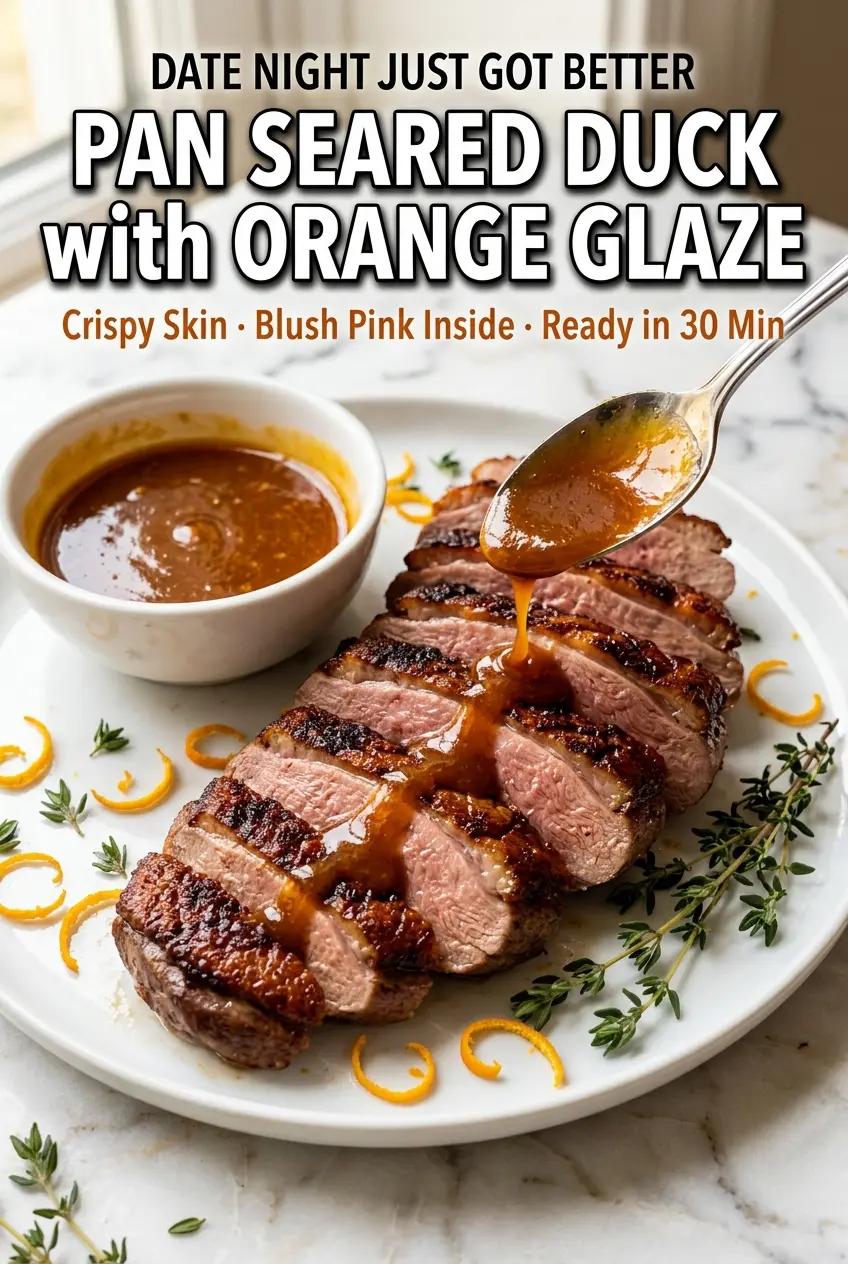
Pan Seared Duck Breast with Orange Glaze
Ingredients
Equipment
Method
- Remove the duck breasts from the fridge 20–30 minutes before cooking to bring to room temperature.
- Pat the skin completely dry with paper towels to help it crisp.
- Score the skin in a crosshatch pattern, cutting through fat but not into the meat.
- Season both sides generously with kosher salt, black pepper, and garlic powder.
- Place duck breasts skin-side down in a cold, dry cast iron skillet (no oil needed), then set heat to medium-low.
- Let the fat render for 12–15 minutes, until the skin is deep golden brown and crisp.
- Flip the breasts and cook the flesh side for 3–5 minutes, aiming for 130°F for medium-rare or 140°F for medium.
- Transfer to a plate and tent loosely with foil, then rest for 5 minutes.
- Pour off all but 1 tablespoon of duck fat from the skillet, saving the rest for roasting.
- Add orange juice, orange zest, honey, soy sauce, and Dijon mustard to the pan and stir to deglaze, scraping up the golden bits.
- Let simmer for 3–4 minutes until the glaze thickens and coats a spoon.
- Remove from heat and stir in unsalted butter and fresh thyme leaves until the glaze is silky and glossy.
- If using, sprinkle in red pepper flakes and stir to combine.
- Slice the duck breasts on a slight angle.
- Fan out on a plate and spoon the warm orange glaze generously over the top, then garnish with thyme and a curl of orange zest.
- Serve immediately.
