

Orange Teriyaki Baked Salmon
Orange teriyaki baked salmon lands on the table with glossy edges, flaky centers, and a sauce that tastes bright before it turns deeply savory. The orange juice keeps the glaze…
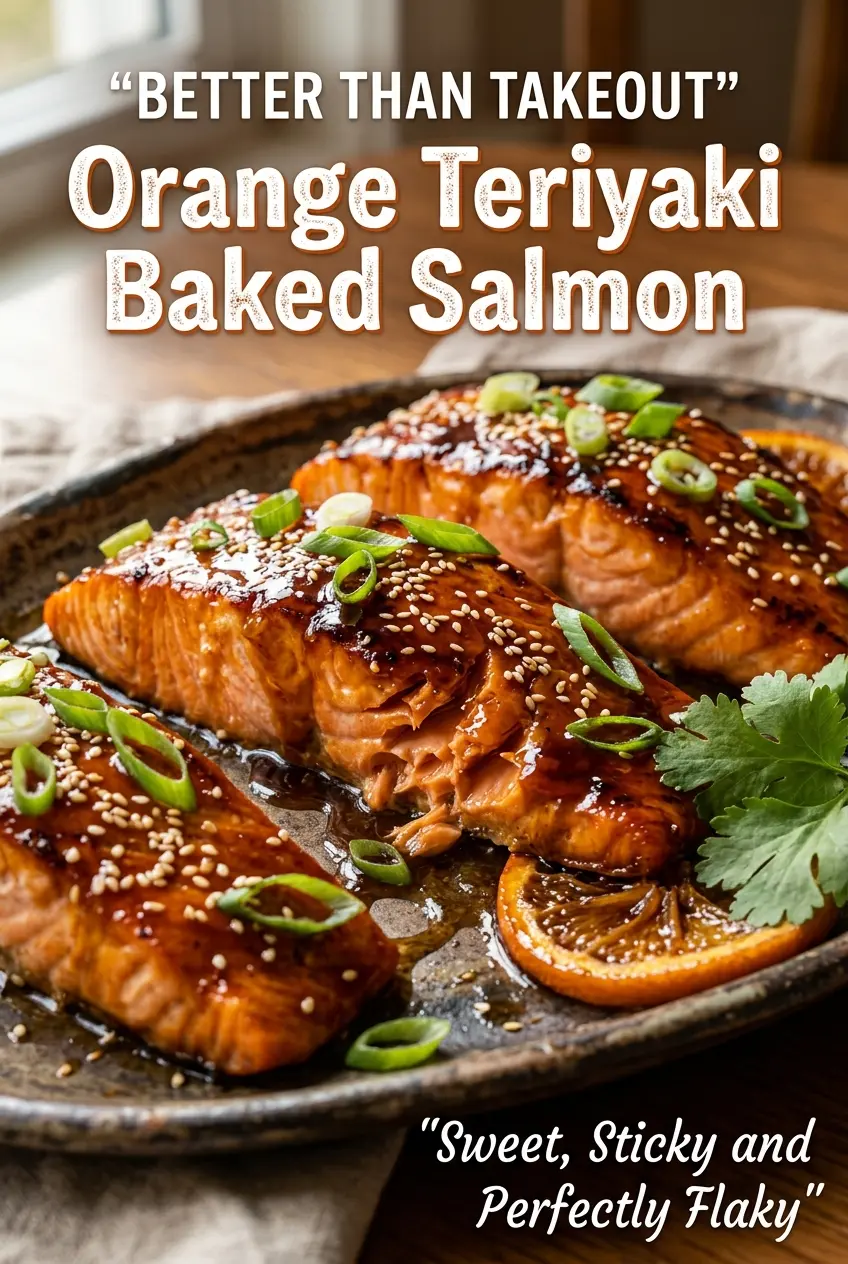
Tip: save now, cook later.Orange teriyaki baked salmon lands on the table with glossy edges, flaky centers, and a sauce that tastes bright before it turns deeply savory. The orange juice keeps the glaze lively, while the teriyaki and soy sauce bring the salty backbone that makes each bite taste complete. It’s the kind of dinner that feels polished without asking for much more than a baking dish and a small saucepan.
What makes this version work is the balance in the glaze and the way it’s built. The cornstarch slurry thickens the sauce just enough to cling to the salmon instead of running straight to the pan, and reserving a little glaze at the end keeps the finished fish tasting fresh, not overcooked or sticky-sweet. Salmon can handle a bold glaze, but it still needs a light hand with the bake time so the flesh stays tender and separates in clean flakes.
Below, I’ve included the small details that keep the sauce smooth, the salmon moist, and the finish clean. If you’ve ever had baked salmon turn dry or had a sauce that looked perfect in the pan but vanished in the oven, the process section will help.
The glaze thickened up beautifully and stayed on the salmon instead of sliding off. I baked it for 13 minutes and it came out flaky and moist, not dry at all.
Save this orange teriyaki salmon for the nights when you want a glossy glaze, flaky fish, and dinner that feels finished with almost no cleanup.
The Trick to Keeping the Orange Glaze Sticky Instead of Watery
The sauce needs to be thick before it ever touches the fish. If you brush on a thin orange mixture, the oven turns it into a puddle in the pan instead of a glaze that clings to the salmon. The cornstarch slurry does the job fast, but only after the sauce has come up to a gentle simmer so it can activate cleanly.
The other place people lose this recipe is in the final minutes of baking. Salmon continues cooking after it leaves the oven, so pulling it when the centers still look just barely opaque keeps the texture moist and silky. If you wait until the fillets look completely firm in the oven, they’ll go dry by the time you plate them.
What Each Ingredient Is Actually Doing in This Dish

- Salmon fillets — This is the whole foundation of the dish, so use fillets that are similar in size and thickness. That helps them cook at the same rate. Skin-on works fine and gives you a little protection from overbaking.
- Orange juice — Fresh juice gives the glaze a brighter top note, but store-bought juice works if that’s what you have. Don’t use a pulp-heavy version; the glaze should be smooth so it brushes on evenly.
- Teriyaki sauce — This brings the salty-sweet base and the deep color. If your teriyaki sauce is already very sweet, dial the honey back a little or the glaze can cross into sticky candy territory.
- Honey — Honey helps the glaze cling and gives it that lacquered finish in the oven. Maple syrup can stand in, but the flavor will shift and the glaze won’t taste quite as clean with the citrus.
- Cornstarch — This is what turns the sauce from thin and runny into something that coats the salmon. If you skip it, the orange mixture will slide off before it has a chance to set.
- Ginger and garlic — These two keep the glaze from tasting flat. Fresh is worth using here because the recipe is short and there isn’t much else to hide behind.
Building the Glaze, Baking the Salmon, and Finishing It Cleanly
Making the Sauce First
Start the orange juice, teriyaki sauce, honey, soy sauce, ginger, and garlic in a small saucepan and bring them to a gentle simmer. You want small bubbles around the edges, not a hard boil, because aggressive heat can make the garlic taste harsh and reduce the sauce too fast. Once the slurry goes in, stir until the glaze looks shiny and lightly thickened enough to coat a spoon.
Preparing the Salmon
Pat the fillets dry before seasoning them. Moisture on the surface keeps the glaze from grabbing the fish properly. A light coat of olive oil plus salt and pepper gives the salmon a better texture and helps the seasoning sit underneath the sauce instead of disappearing into it.
Baking to the Right Flake
Brush on most of the glaze, then bake at 400°F until the salmon flakes easily at the thickest point. For average fillets, that usually takes 12 to 15 minutes, but thickness matters more than the clock. If the top starts to darken before the center is done, tent loosely with foil for the last few minutes so the glaze doesn’t scorch.
The Final Brush and Garnish
Use the reserved sauce after baking so the finished salmon tastes bright and glossy. That last drizzle keeps the citrus from cooking off completely and gives the plate a clean, fresh finish. Sesame seeds, green onions, and orange slices add texture and make the dish look finished without extra effort.
How to Adapt This for Different Diets and Different Nights
Make It Gluten-Free
Use a certified gluten-free teriyaki sauce and gluten-free soy sauce or tamari. The texture stays the same, but you need both of those labels checked because regular teriyaki often hides wheat in the base sauce.
Lower the Sweetness
Cut the honey down to 1 tablespoon if you prefer a sharper, more savory glaze. You’ll still get shine and body from the cornstarch, but the orange and teriyaki will come through with less of a sticky finish.
Swap in Another Fish
This glaze also works on cod or steelhead trout. Cod will be a little more delicate and may need a shorter bake, while steelhead has a texture closer to salmon and can take the same timing with only minor adjustments.
Storage and Reheating
- Refrigerator: Store leftovers in an airtight container for up to 3 days. The glaze will thicken more as it chills, and the salmon will be best the first day.
- Freezer: You can freeze cooked salmon, but the texture softens after thawing. Wrap portions tightly and freeze for up to 1 month if you plan to flake the fish into rice bowls or salads later.
- Reheating: Warm it low and slow in a 300°F oven until just heated through, or use short bursts in the microwave at reduced power. High heat dries salmon out fast, and that’s the quickest way to lose the flaky texture you worked for.
Answers to the Questions Worth Asking
Orange Teriyaki Baked Salmon
Ingredients
Equipment
Method
- Preheat the oven to 400°F (200°C).
- Line a baking dish with parchment paper to prevent sticking.
- Pat the salmon dry, then season with salt and black pepper.
- Place the salmon fillets in the prepared baking dish.
- Brush the salmon with olive oil, then brush remaining glaze generously over the salmon.
- Bake for 12–15 minutes, until the salmon flakes easily, and brush with additional glaze during the last 3 minutes.
- In a saucepan, combine orange juice, teriyaki sauce, honey, soy sauce, ginger, and garlic.
- Bring the mixture to a gentle simmer over medium heat.
- Mix cornstarch with water in a small bowl to make a slurry.
- Stir the slurry into the sauce and cook until thickened.
- Reserve 1/4 cup of the sauce for serving.
- After baking, drizzle the reserved sauce over the salmon.
- Top the salmon with sesame seeds, green onions, and orange slices.
- Serve immediately with rice or steamed vegetables.
