
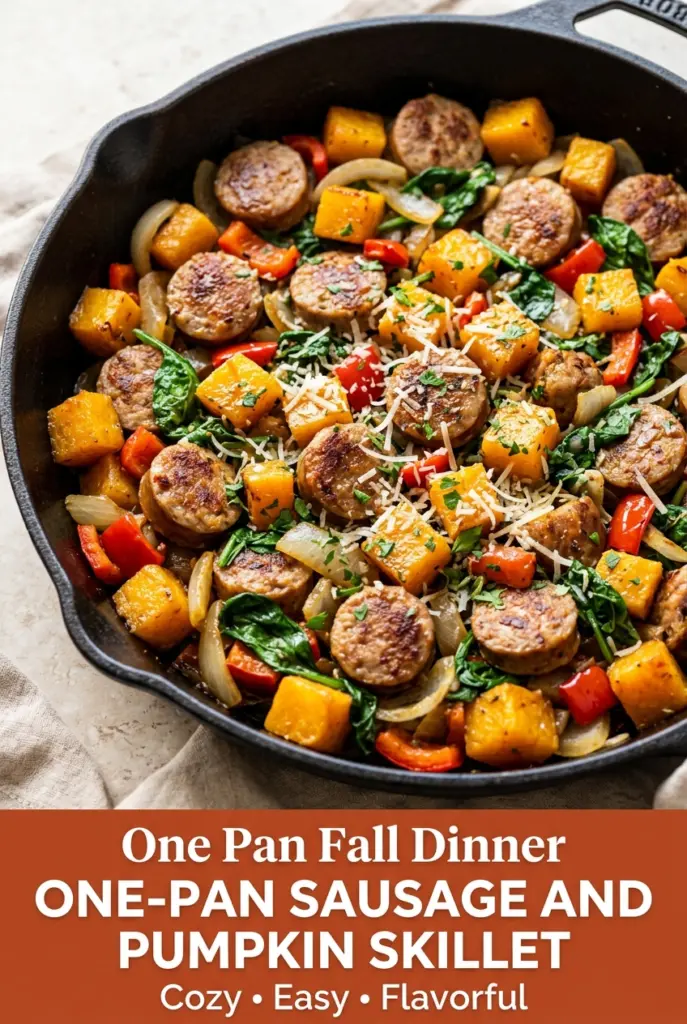
One-Pan Sausage and Pumpkin Skillet
Seared sausage, caramelized pumpkin, and wilted spinach make this skillet dinner feel much bigger than the effort it takes. The pumpkin softens at the edges and picks up a little…
Tip: save now, cook later.Seared sausage, caramelized pumpkin, and wilted spinach make this skillet dinner feel much bigger than the effort it takes. The pumpkin softens at the edges and picks up a little sweetness from the pan, while the sausage leaves behind enough browned flavor to season the whole dish without needing a separate sauce. It lands somewhere between hearty and bright, which is why it never feels heavy even though it eats like a full meal.
The trick is giving the pumpkin its own time in the pan before the onions go in. If you crowd everything together at once, the vegetables steam and turn soft in a bland way instead of picking up color. A wide skillet helps here, and so does letting the sausage brown first so you get those flavorful bits stuck to the bottom before the pumpkin starts releasing moisture.
Below, I’ve included the exact points where people usually rush this kind of skillet dinner, plus the swaps that still keep the texture right. There’s also a storage note for the leftovers, because this reheats better than you might expect if you handle the spinach at the end.
The pumpkin browned up instead of turning mushy, and the sausage drippings gave the whole pan a deep savory flavor. I used the leftovers for lunch the next day and it reheated beautifully without getting watery.
Save this sausage and pumpkin skillet for a one-pan dinner with caramelized pumpkin, savory sausage, and minimal cleanup.

The Reason the Pumpkin Gets Caramelized Instead of Watery
Pumpkin has a lot of moisture, and that’s where most skillet dinners with squash go sideways. The mistake is adding the onions, garlic, and seasonings too early, then expecting the whole pan to brown. Once the pumpkin starts releasing steam, the temperature drops and you lose the edges that make this dish taste cooked instead of just heated through.
That first stage is about contact with the pan. Let the sausage brown hard enough to leave drippings, then give the pumpkin space so it can sit against the hot surface long enough to color. Stir occasionally, not constantly. If you keep moving it, the cubes never get the chance to form those browned spots that carry the whole dish.
- Italian sausage — Use links or bulk sausage, but choose one with enough fat to leave flavor in the pan. Chicken sausage works too, though it won’t brown as deeply and the skillet will taste a little leaner.
- Pumpkin — Fresh pumpkin gives you the best caramelized edges. Sugar pumpkin or pie pumpkin is the right size and texture; carving pumpkins are stringy and bland. If you need a shortcut, peeled butternut squash behaves almost the same way.
- Onion and bell pepper — These soften into the sausage fat and round out the savory base. Slice them so they cook at the same pace; thick pieces stay crunchy while the pumpkin turns too soft.
- Smoked paprika, thyme, and rosemary — These seasonings make the dish taste deeper without turning it into a sauce. Dried herbs are fine here, but crush the rosemary between your fingers before adding it so it doesn’t stay woody.
- Spinach — Add it at the very end. If it goes in too early, it collapses into the moisture from the pumpkin and disappears. Fresh baby spinach works best because it wilts fast without watering down the skillet.
Getting the Pan Hot Enough Before the Vegetables Go In
Brown the Sausage First
Start the sausage in a hot skillet with a little oil and leave it alone long enough to take on color. You want browned edges, not just cooked-through slices. If the pan looks crowded, the sausage will steam and leak into the oil instead of searing, so use a large skillet and keep the pieces in a single layer when you can.
Caramelize the Pumpkin in Batches of Patience
Add the pumpkin after the sausage comes out and let it sit against the pan before stirring. The cubes need direct heat to start browning, and that’s impossible if they’re packed tightly or stirred every few seconds. You’re looking for pale gold spots on the cut sides and edges that just start to soften.
Finish with the Quick-Cooking Greens
Once the sausage returns to the pan and the pumpkin is fork-tender, add the spinach last. It should wilt in a minute or less. Any longer and it loses its color and texture, which makes the whole skillet taste flat. A final shower of Parmesan and parsley sharpens everything up right before serving.
How to Adapt This Skillet for Different Kitchens and Dietary Needs
Make It Dairy-Free Without Losing the Finish
Skip the Parmesan and finish with a little extra salt plus a small squeeze of lemon over the top. That gives the skillet the same last-minute lift without adding dairy. The rest of the dish already has enough fat from the sausage to stay satisfying.
Use Butternut Squash When Pumpkin Isn’t Available
Butternut squash is the easiest swap here. Cut it into the same 1-inch cubes and cook it the same way; it caramelizes beautifully and keeps its shape a little better than pumpkin. The result tastes slightly sweeter and more polished, which works well with the sausage.
Make It Gluten-Free With Zero Extra Work
This skillet is naturally gluten-free if your sausage brand is certified gluten-free. That’s the only label I’d check closely, since some sausages use fillers or seasonings that contain gluten. Everything else in the pan stays the same.
Stretch It Into a Bigger Dinner
Add cannellini beans or serve the skillet over rice, mashed potatoes, or creamy polenta if you need it to feed more people. The beans make it heartier without changing the flavor much, while starches underneath soak up the pan juices and turn the whole thing into a full meal.
Storage and Reheating
- Refrigerator: Store in an airtight container for up to 4 days. The pumpkin softens a bit more after chilling, but the flavor holds.
- Freezer: It freezes well for up to 2 months, though the spinach will lose its fresh look. Freeze in portions and cool it completely before packing it up.
- Reheating: Warm it in a skillet over medium-low heat with a splash of water if needed. The biggest mistake is blasting it in the microwave until the pumpkin turns mushy and the sausage dries out.
Questions I Get Asked About This Recipe
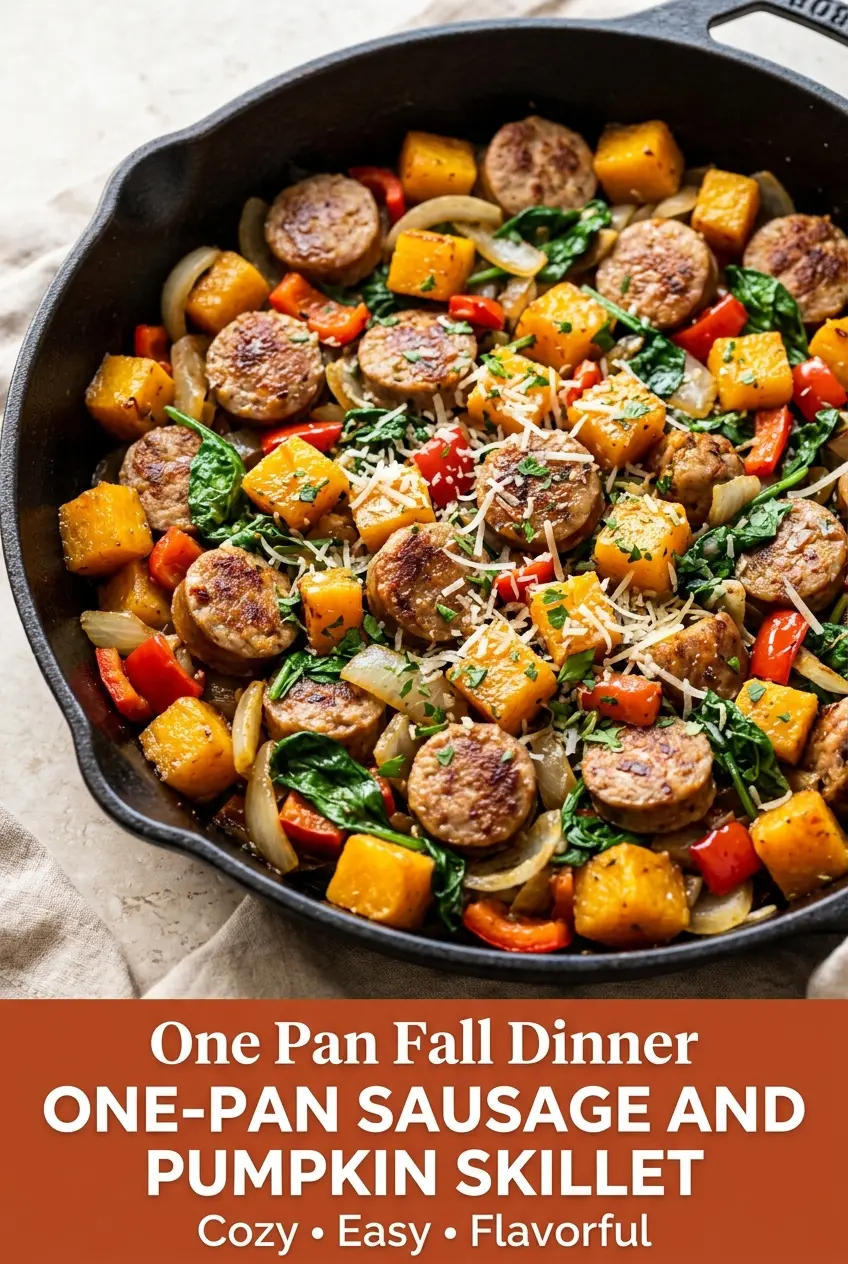
One-Pan Sausage and Pumpkin Skillet
Ingredients
Equipment
Method
- Heat 1 tbsp olive oil in a large skillet over medium-high heat. Add the sliced sausage and cook for 5–6 minutes until browned, then transfer to a plate.
- Add the remaining olive oil to the skillet. Stir in the pumpkin cubes and cook for 8–10 minutes, stirring occasionally, until lightly caramelized and beginning to soften.
- Add the yellow onion and red bell pepper to the skillet. Sauté for 4–5 minutes until the vegetables soften.
- Stir in the garlic, smoked paprika, thyme, rosemary, kosher salt, and black pepper. Cook for 1 minute until fragrant.
- Return the sausage to the skillet and stir everything together. Cook for another 3–4 minutes until the pumpkin is fork-tender and the sausage reaches 165°F.
- Add the baby spinach and stir until just wilted, about 1 minute. Sprinkle with grated Parmesan cheese and chopped fresh parsley, then serve immediately while hot.
