
Old Fashioned Vegetable Beef Soup
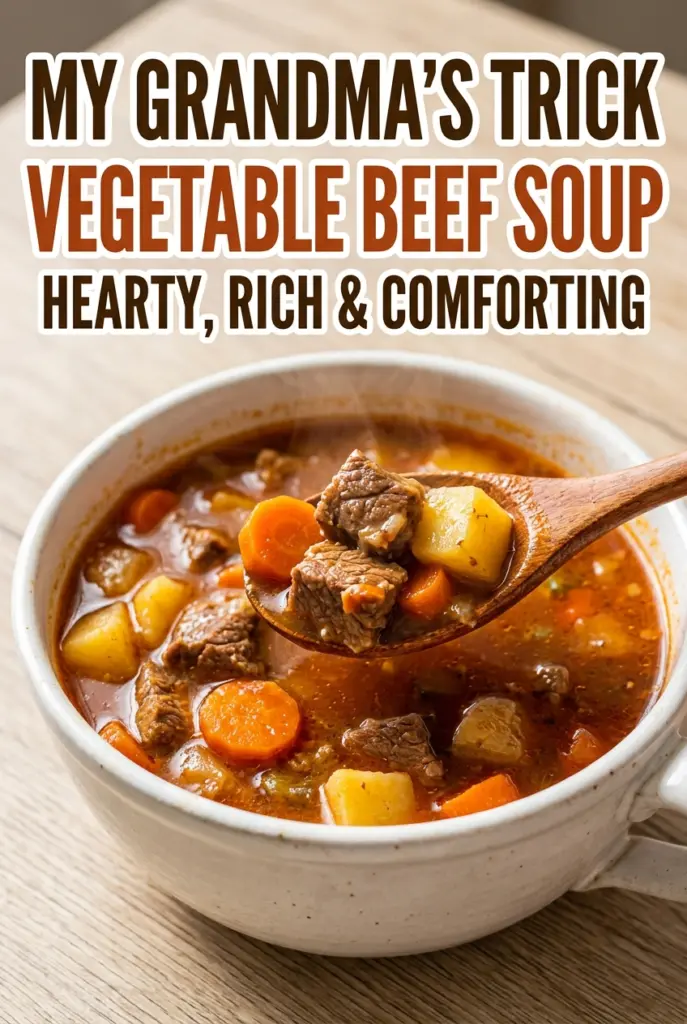
Big chunks of beef, tender vegetables, and a broth that tastes deep and slow-cooked make this vegetable beef soup the kind of meal people keep going back to all week.…
Tip: save now, cook later.Big chunks of beef, tender vegetables, and a broth that tastes deep and slow-cooked make this vegetable beef soup the kind of meal people keep going back to all week. The beef gets browned first, so the pot starts with real savory flavor instead of a flat, boiled taste. Then the vegetables go in at the right time, which keeps the potatoes from turning mushy and the green beans from fading into the background.
What makes this version worth keeping is the order. The sear builds the base, the tomatoes and Worcestershire add body and acidity, and the long simmer turns stew meat into something spoon-tender. If you’ve ever ended up with tough beef or a broth that tasted thin, it usually comes down to rushing the simmer or loading all the vegetables in too early. This pot fixes both problems.
The beef turned out fall-apart tender and the broth had so much flavor after simmering with the tomatoes and Worcestershire. Even the potatoes held their shape, which never happens when I make soup.
Save this vegetable beef soup for the nights when you want tender beef, hearty vegetables, and a broth that gets better the next day.
The Sear and Simmer Order That Keeps the Beef Tender
A good vegetable beef soup lives or dies on the first 20 minutes. If the beef doesn’t get a proper sear, the broth can still taste fine, but it won’t have that deep, savory backbone that makes the soup feel like it simmered all afternoon. Browning the meat in batches gives you color on the outside without steaming the pieces in their own liquid.
The other mistake is rushing the beef. Stew meat starts out tough, and it needs time for the connective tissue to relax. Once the broth comes to a boil, drop it back to a steady simmer and let it work slowly. A hard boil will tighten the meat and muddy the broth. A gentle simmer keeps the liquid clear and gives the beef time to turn tender instead of stringy.
What Each Ingredient Is Doing in This Soup
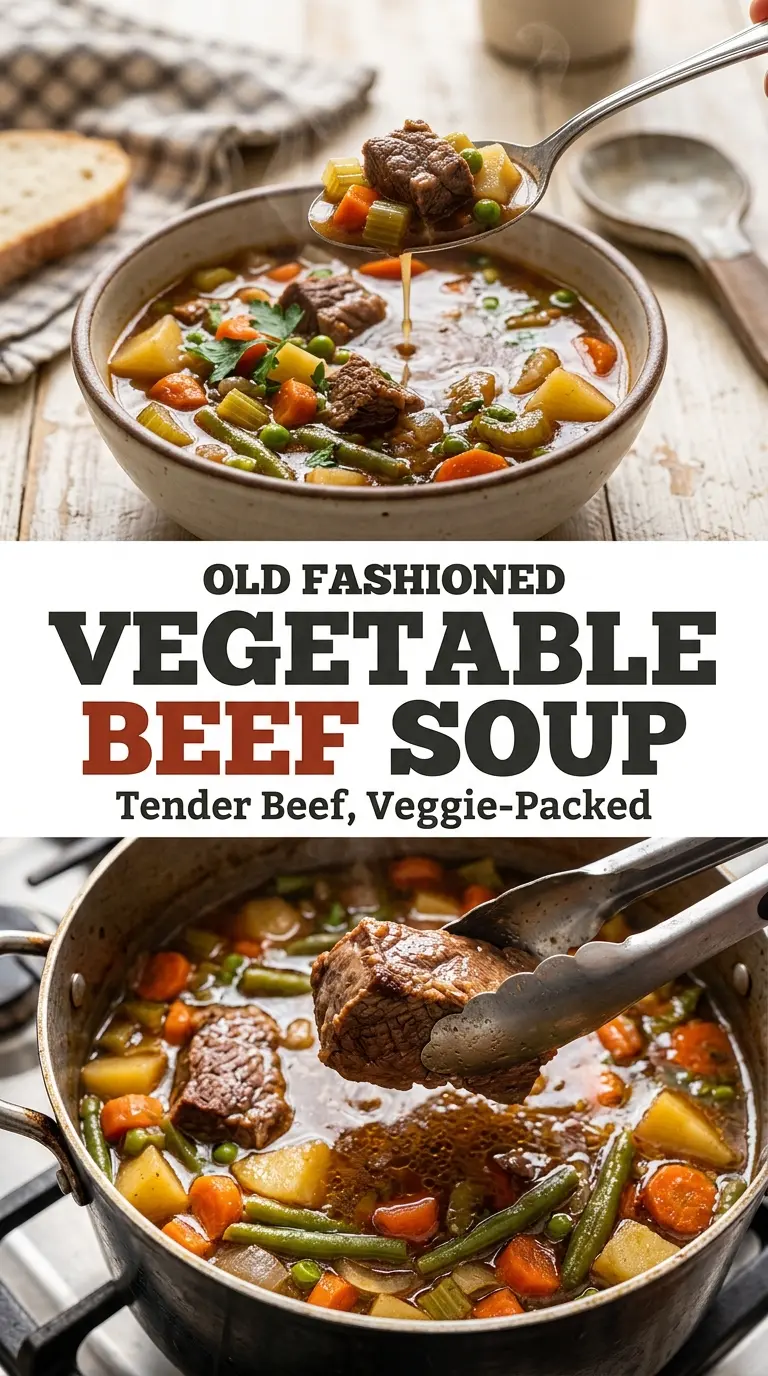
- Beef stew meat — Look for well-marbled chunks if you can. Lean cubes dry out before they get tender. If you only have chuck roast, cut it into bite-size pieces and use that instead; it usually gives you a softer, richer result than pre-cut stew meat.
- Beef broth — This is the flavor base, so use one you’d actually drink. If your broth tastes thin from the carton, add an extra spoonful of Worcestershire and a pinch more salt to build it back up.
- Diced tomatoes — They add a little acidity and body, which keeps the soup from tasting flat. Don’t skip the juice in the can; it helps the broth take on that slow-simmered color and depth.
- Potatoes — Russets break down more than waxy potatoes, which thickens the broth a little. If you want neat cubes that hold their shape longer, use Yukon Golds instead.
- Worcestershire sauce — This is one of the quiet ingredients that makes people ask what changed. It adds salt, tang, and a meaty depth that you won’t get from broth alone.
Building the Soup in Stages So the Vegetables Don’t Turn to Mush
Brown the Beef First
Heat the oil until it shimmers, then add the beef in a single layer. Let it sit long enough to develop a deep brown crust before turning it. If the pot looks crowded, brown in batches; packed beef steams, and steamed beef makes a weak broth. Pull the meat out once it’s browned on the outside but not cooked through.
Build the Broth Base
Sauté the onion in the same pot until it softens and picks up the browned bits on the bottom. Add the garlic for just a minute so it smells fragrant instead of sharp. Then stir in the broth, tomatoes, Worcestershire, bay leaves, and thyme, scraping the pot well. Those browned bits are what give the soup its slow-cooked taste.
Simmer Until the Beef Yields
Return the beef, bring the pot to a boil, then lower it to a gentle simmer and cover it. After about an hour, the meat should be close to fork-tender and the broth should smell richer and rounder. If the liquid is bubbling hard, lower the heat again. The goal is a lazy simmer, not a rolling boil.
Add the Vegetables in the Right Order
Carrots, celery, and potatoes go in before the tender vegetables because they need the extra time. Once they start softening, add the green beans, corn, and peas near the end. That keeps the beans bright and the peas from turning dull and mealy. Season at the end so the broth lands exactly where you want it after all the liquid reduction.
How to Adapt This for Different Diets and Leftover Plans
For a thicker, stew-like bowl
Simmer the soup uncovered for the last 10 to 15 minutes. That reduces the broth just enough to make it coat the spoon without turning the vegetables to paste. If it goes too far, add a splash more broth before serving.
For a gluten-free version
This soup is naturally close already, but check your Worcestershire sauce and broth labels. Some brands sneak in wheat-based ingredients. Use certified gluten-free versions and the texture stays the same.
For a different vegetable mix
Swap the green beans or peas for chopped cabbage, turnips, or sliced zucchini depending on what you have. Just add quick-cooking vegetables near the end so they keep some texture. Hard vegetables still need the full simmering time.
Storage and Reheating
- Refrigerator: Store in an airtight container for up to 4 days. The broth thickens a little as it sits, and the potatoes soak up more flavor.
- Freezer: Freezes well for up to 3 months, though the potatoes will soften a bit after thawing. For the best texture, cool it completely before freezing and leave a little space in the container for expansion.
- Reheating: Warm it slowly on the stove over medium-low heat until hot. A fast boil can break the potatoes and make the beef tougher, so go low and steady. Add a splash of broth or water if the soup has thickened too much in the fridge.
Answers to the Questions Worth Asking
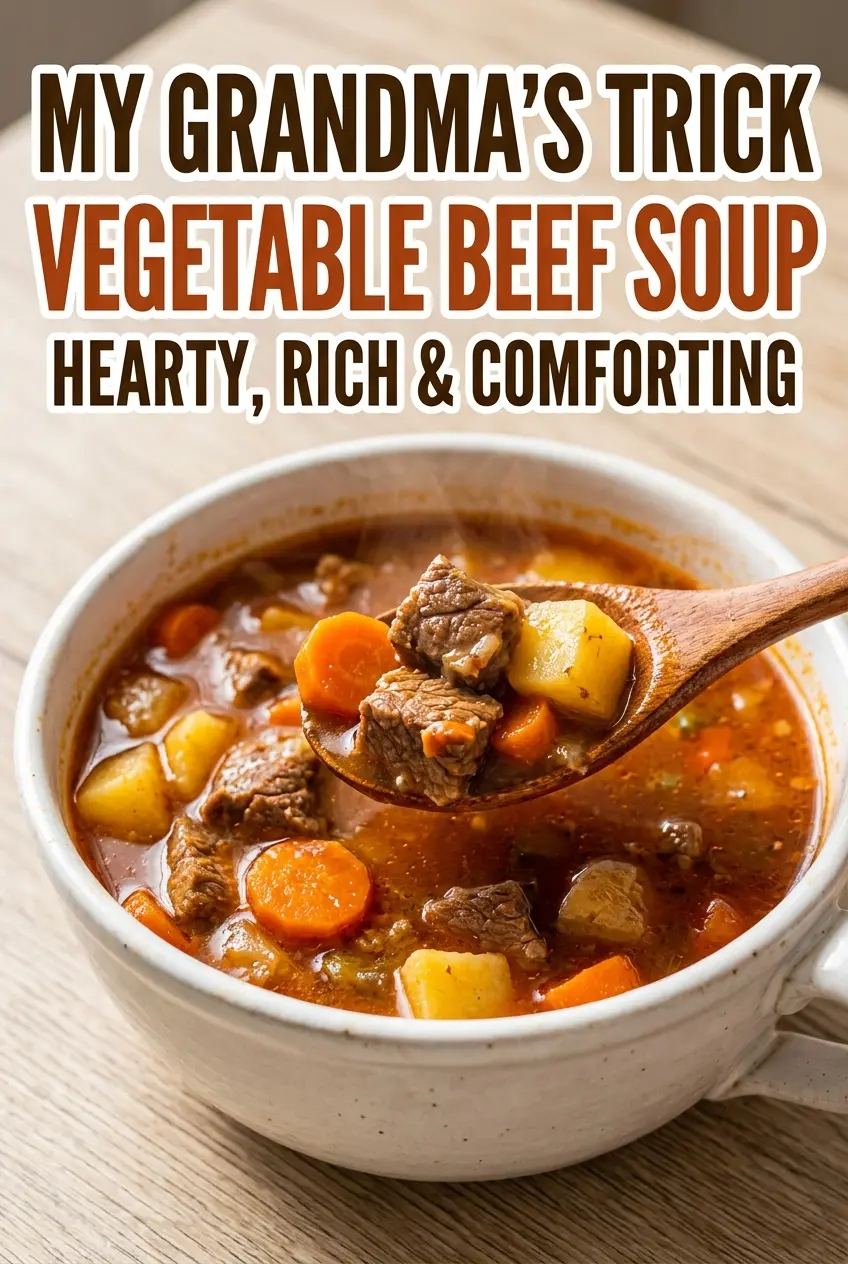
Old Fashioned Vegetable Beef Soup
Ingredients
Equipment
Method
- Heat olive oil in a large Dutch oven over medium-high heat, then sear the beef chunks on all sides until browned. You should see deep golden-brown color on the meat.
- In the same Dutch oven, sauté the diced onion until softened. Then add the minced garlic and cook 1 minute more, stirring so it stays fragrant but doesn’t brown.
- Stir in beef broth, diced tomatoes, Worcestershire sauce, bay leaves, and dried thyme, then return the beef to the pot. Bring the mixture to a boil, then reduce to a simmer and cover, cooking for 1 hour until the beef is tender.
- Add the sliced carrots, sliced celery, and cubed russet potatoes, then simmer covered for 20 minutes more. The vegetables should begin to soften and the broth should keep bubbling at a steady simmer.
- Stir in the trimmed and halved green beans, corn kernels, and peas, then simmer for 10 minutes more. When they’re tender-crisp, the soup will look vibrant and the broth will be richly colored.
- Season with salt and black pepper to taste, remove bay leaves, and serve hot. Make sure the flavor is balanced before ladling into bowls.
