
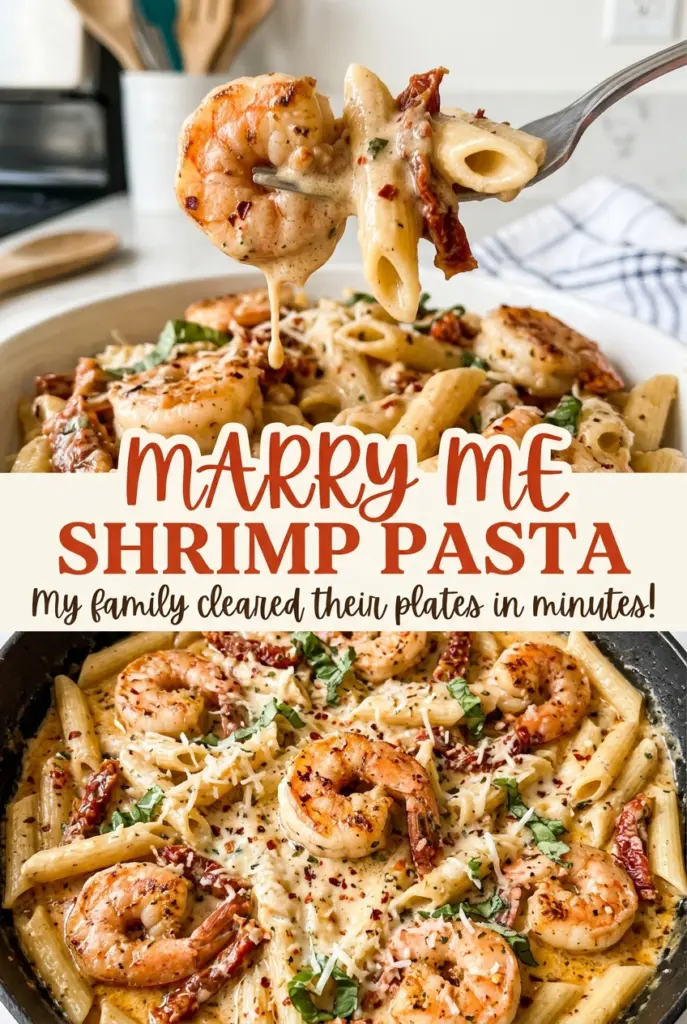
Marry Me Shrimp Pasta
When shrimp hit a hot skillet, they cook faster than you expect; I’ve learned not to turn away to drain the pasta while they’re in there. For Marry Me Shrimp…
Tip: save now, cook later.When shrimp hit a hot skillet, they cook faster than you expect; I’ve learned not to turn away to drain the pasta while they’re in there. For Marry Me Shrimp Pasta, I cook the linguine first, then give the shrimp just a couple of minutes per side before moving them to a plate. That leaves the same skillet ready for the creamy sauce, with no extra pan to wash.
The sauce gets its character from oil-packed sun-dried tomatoes, garlic, oregano, and a little red pepper. Chicken broth keeps it from feeling too heavy, while cream and freshly grated Parmesan bring it together. I add the pasta water gradually at the end, stopping when the sauce clings to the linguine instead of pooling in the skillet. The finished bowl is creamy, bright with basil, and full of tender shrimp.
Kitchen Note
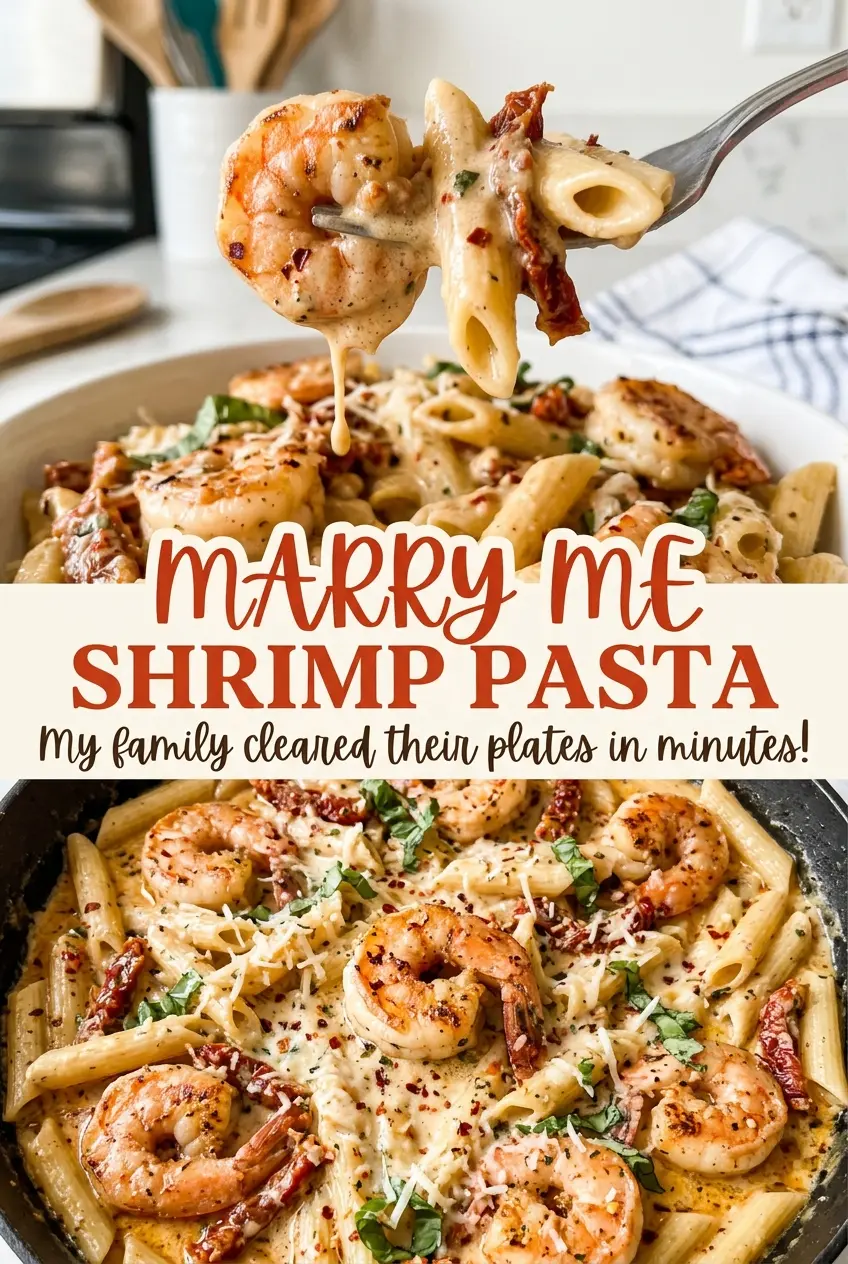
Shrimp go from tender to rubbery in a hurry, so I watch the skillet closely. Once they’re opaque and have reached 145°F, I transfer them to a plate; they’ll go back into the pan at the very end.
Save Marry Me Shrimp Pasta for a dinner that brings creamy sun-dried tomato sauce and tender shrimp together in one skillet.
Why the Pasta Water Belongs in the Sauce, Not Down the Drain
The cream and broth make a flavorful base, but the last step is what helps that sauce cling to every strand. Pasta water carries starch from the linguine. Added a little at a time, it loosens the sauce while helping it coat the noodles, rather than turning it into a thin puddle at the bottom of the bowl.
Save some before draining, even if you’re not sure you’ll need all of it. The amount the pasta absorbs and the thickness of the sauce can vary, so start with a small splash when you toss everything together. Stop as soon as the linguine looks glossy and evenly coated. Pouring in all the reserved water at once is the easiest way to make the sauce looser than you want.
The Ingredients That Give This Creamy Tomato Sauce Its Backbone
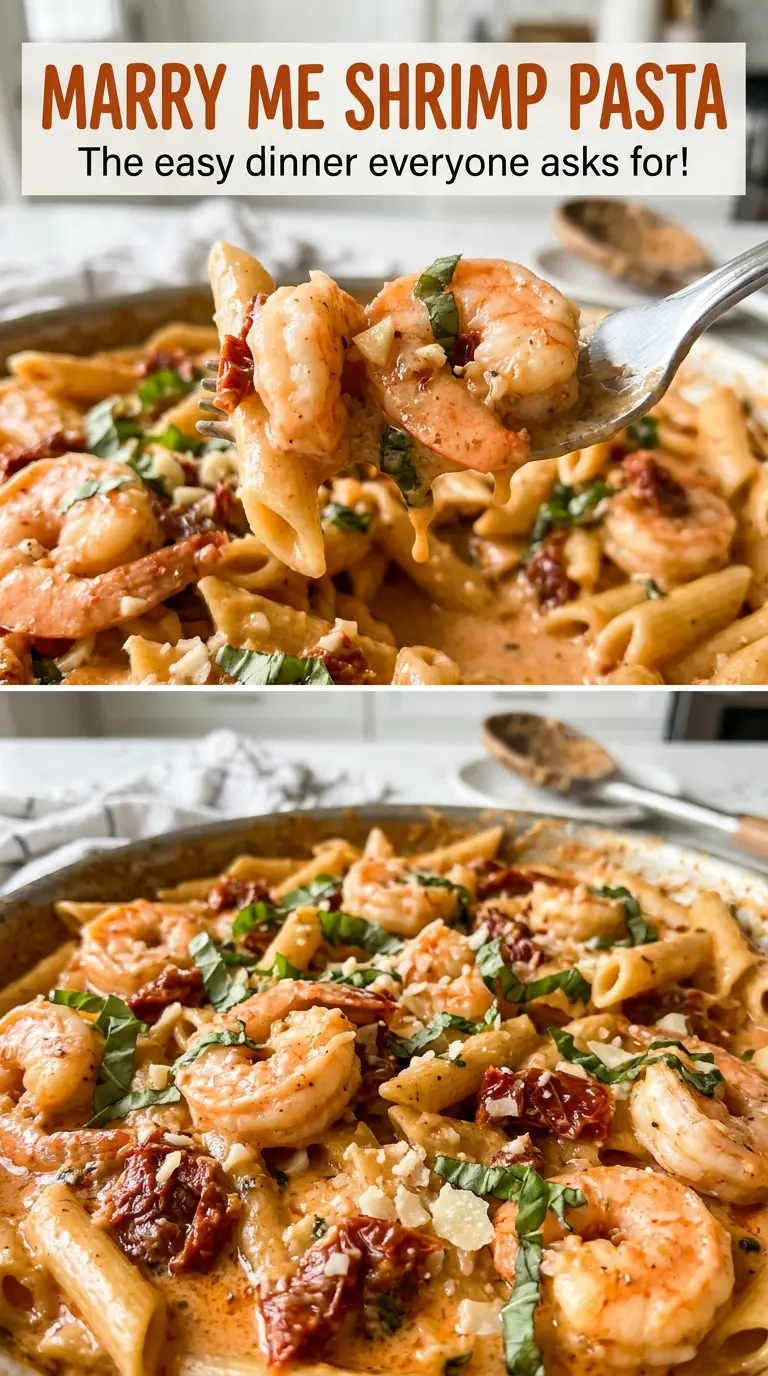
- Linguine — Its long, flat strands catch the cream sauce well. Spaghetti or fettuccine works in the same quantity; cook it according to the package directions and keep it al dente.
- Large shrimp — The 21-to-25-per-pound size cooks quickly but still feels substantial in the pasta. Frozen shrimp are a practical choice if they’re fully thawed, peeled, and deveined before cooking.
- Oil-packed sun-dried tomatoes — Draining and chopping them gives the sauce concentrated tomato flavor in small, tender bites. Dry-packed tomatoes don’t bring the same richness, so oil-packed is the better fit here.
- Heavy cream — Cream gives the sauce its body and helps it coat the linguine. Half-and-half can stand in at the same amount, but the sauce will be thinner and less lush.
- Freshly grated Parmesan — It melts smoothly into the warm sauce and adds salty, savory depth. A wedge is worth buying here; pre-grated cheese can leave the sauce less silky.
- Low-sodium chicken broth — It adds savory flavor without making the sauce overly salty alongside the Parmesan and seasoned pasta. Regular chicken broth works in its place, though the finished dish may taste saltier.
- Fresh basil — Stirring it in at the finish keeps its fresh, herbal flavor noticeable against the cream and tomatoes. Dried basil won’t give the same fresh lift, so fresh is the better choice when available.
Cook the Shrimp First, Then Finish Everything in One Skillet
Get the Linguine Ready and Save the Cooking Water
Bring a large pot of water to a boil, add the linguine and 1 tablespoon of kosher salt, and cook according to the package directions until al dente. Before draining, scoop out up to 1/2 cup of the pasta water and set it aside. Drain the linguine, but don’t rinse it; the starch on the pasta helps the sauce cling. Keep the pot handy while you cook the shrimp and sauce.
Sear the Shrimp in a Single Layer
Season the shrimp with the remaining 1/2 teaspoon kosher salt and the black pepper. Heat the olive oil in a 12-inch skillet over medium-high heat, then add the shrimp in one layer. Cook for 1 to 2 minutes per side, until opaque and 145°F, then transfer them to a plate. If the skillet is crowded, the shrimp won’t sear as evenly, so cook in batches rather than stacking them.
Build the Tomato-Cream Sauce
Reduce the heat to medium and melt the butter in the same skillet. Stir in the garlic, crushed red pepper flakes, and dried oregano for 30 seconds, then add the drained, chopped sun-dried tomatoes. Pour in the chicken broth and heavy cream, bring the mixture to a gentle simmer, and cook for 3 to 4 minutes, stirring occasionally. The sauce should look slightly thickened, not rapidly bubbling.
Toss Until the Sauce Coats the Linguine
Stir the freshly grated Parmesan into the sauce until it melts. Add the drained linguine and cooked shrimp, then toss to coat. Add reserved pasta water a little at a time, up to 1/2 cup, until the sauce clings to the pasta without collecting heavily underneath it. Stir in the chopped fresh basil and serve.
A Few Smart Ways to Adjust This Shrimp Pasta
Make It Gluten-Free
Use 12 ounces of gluten-free linguine and gluten-free chicken broth. Cook the pasta according to its package directions, since gluten-free noodles can soften at a different rate. The sauce stays creamy, though the pasta may have a softer bite than wheat linguine.
Turn Down the Heat
Leave out the crushed red pepper flakes for a milder sauce. The garlic, oregano, and sun-dried tomatoes still give it plenty of savory character, just without the warm finish from the pepper.
Make the Tomato Flavor More Pronounced
Use 3/4 cup of drained, chopped oil-packed sun-dried tomatoes instead of 1/2 cup. The sauce will have more chewy tomato pieces and a more concentrated, tangy flavor, so keep the rest of the sauce ingredients unchanged.
Storage and Reheating
- Refrigerator: Store leftovers in an airtight container for up to 3 days. The pasta will absorb some sauce as it sits, so it won’t be quite as loose when chilled.
- Freezer: I don’t recommend freezing the finished pasta. The cream sauce can separate after thawing, and the shrimp can turn tough.
- Reheating: Warm leftovers gently in a skillet over low heat with a small splash of water, stirring until loosened and heated to 165°F. Avoid a hard boil, which can make the shrimp rubbery and the sauce oily.
Questions That Come Up While Making Marry Me Shrimp Pasta
Marry Me Shrimp Pasta
Ingredients
Equipment
Method
- Bring a large pot of water to a boil, add the linguine and 1 tablespoon kosher salt, and cook according to the package directions until al dente; reserve up to 1/2 cup pasta cooking water, then drain.
- Season the shrimp with the remaining 1/2 teaspoon kosher salt and the black pepper.
- Heat the olive oil in a 12-inch skillet over medium-high heat, add the shrimp in a single layer, and cook for 1 to 2 minutes per side, until opaque and 145°F; transfer to a plate.
- Reduce the heat to medium and melt the butter in the same skillet. Add the garlic, red pepper flakes, and oregano and cook for 30 seconds, stirring, then add the sun-dried tomatoes.
- Pour in the chicken broth and heavy cream, bring to a gentle simmer, and cook for 3 to 4 minutes, stirring occasionally, until slightly thickened.
- Stir in the Parmesan until melted, then add the drained linguine and shrimp. Toss with pasta cooking water a little at a time, up to 1/2 cup, until the sauce coats the pasta; stir in the basil and serve.
