

Low-Carb Chicken and Cauliflower Casserole
Tender chicken, roasted cauliflower, and a creamy cheese sauce turn this low-carb chicken and cauliflower casserole into the kind of dinner people go back for before the dish even cools.…
Tip: save now, cook later.Tender chicken, roasted cauliflower, and a creamy cheese sauce turn this low-carb chicken and cauliflower casserole into the kind of dinner people go back for before the dish even cools. The cauliflower stays soft but not watery, the chicken stays juicy, and the top bakes into a bubbling cheddar-mozzarella crust that scoops up in thick, satisfying spoonfuls. It tastes like comfort food, just without the heaviness that usually comes with it.
The part that makes this casserole work is simple: the cauliflower gets roasted first, which keeps it from steaming into the sauce and watering everything down. The chicken is seared before it goes into the pan, so it picks up color and stays tender after baking. Then the sauce is built low and slow with cream cheese, sour cream, and broth so it turns silky instead of grainy.
Below, I’ll walk through the small details that matter here, from how to keep the sauce smooth to the best way to swap the cheese or make it ahead. If casseroles have ever come out thin, broken, or bland, this one fixes those problems at the source.
The cauliflower stayed tender instead of turning mushy, and the sauce thickened up perfectly in the oven. I also loved that the chicken was still juicy after baking — my husband went back for seconds before I even sat down.
Save this low-carb chicken and cauliflower casserole for the nights when you want a creamy, cheesy bake that still feels light enough for seconds.
The Small Step That Keeps This Casserole Creamy Instead of Watery
Cauliflower is the thing that can make or break this dish. If it goes straight into the baking dish raw, it gives off moisture as it cooks and the sauce thins out underneath the cheese. Roasting it first changes that. The florets lose some water, pick up a little color, and hold their shape when they hit the sauce.
The chicken needs the same kind of attention. A fast sear gives it flavor and protects it from turning bland in the oven. You’re not trying to cook it through on the stove; you’re building the base so the final bake finishes it gently without drying it out.
What Each Ingredient Is Actually Doing in This Dish
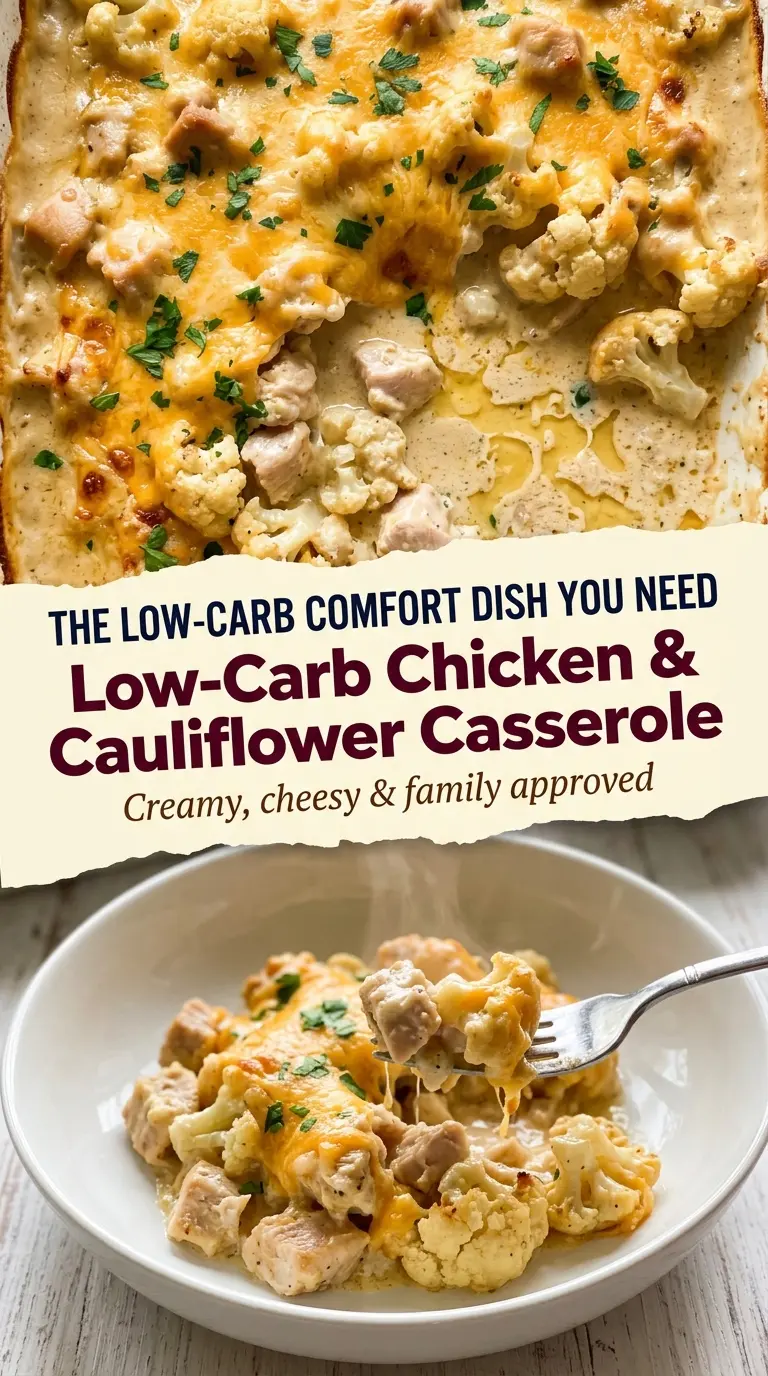
- Chicken breast — Cutting it into 1-inch cubes helps it cook quickly and stay tender. Breast meat works well here because the sauce protects it, but if you prefer a little more richness, boneless thighs work too.
- Cauliflower — Roasting is the key step. It keeps the florets from collapsing into the sauce, and that little bit of browning gives the casserole more depth than steaming ever could.
- Cream cheese and sour cream — These create the base of the sauce and give it body. Don’t swap both for milk; you’ll lose the thickness that lets the casserole cling instead of pooling.
- Chicken broth — Just enough liquid to loosen the sauce before baking. Use a low-sodium broth if yours is salty, because the cheese and seasoning already bring plenty of salt to the pan.
- Dijon and Worcestershire — These don’t make the dish taste like mustard or steak sauce. They sharpen the creamy sauce and keep it from tasting flat.
- Sharp cheddar and mozzarella — Cheddar gives the top real flavor; mozzarella adds the melt and stretch. If you use only mozzarella, the casserole tastes softer and milder on top.
Building the Sauce So It Stays Smooth in the Oven
Roast the Cauliflower Until the Edges Color
Toss the florets with oil, salt, and pepper, then spread them out in a single layer. Crowding the pan traps steam, and steam is what gives you pale cauliflower and a watery casserole. Pull it from the oven when the edges just start to turn golden and the centers are still firm enough to hold their shape.
Sear the Chicken for Color, Not Full Doneness
Season the chicken before it hits the skillet so every piece gets covered evenly. Let it sit in the pan long enough to take on a deep golden edge before turning it. If the pieces stick for the first minute, leave them alone; once the crust forms, they release cleanly.
Build the Cream Sauce on Low Heat
Lower the heat before the garlic goes in, then add the cream cheese and stir until it melts into the pan drippings. High heat is what makes cream cheese grainy and sour cream split. Once the broth goes in, stir until the sauce looks glossy and smooth, then pull it off the heat before adding it to the casserole dish.
Finish Under a Blanket of Cheese
Spread the sauce over the chicken and cauliflower, then cover the top all the way to the edges with cheddar and mozzarella. Bake until the cheese is bubbling and the center of the casserole is hot all the way through, with the chicken at 165°F. Let it rest for five minutes before serving so the sauce settles and doesn’t run everywhere when you scoop it.
Three Ways to Make This Casserole Fit Your Kitchen
Dairy-Free Version That Still Feels Creamy
Use dairy-free cream cheese, unsweetened coconut yogurt or a thick dairy-free sour cream, and your favorite meltable vegan cheese on top. The sauce won’t be quite as rich as the original, but roasting the cauliflower and searing the chicken still give it plenty of body.
Thighs Instead of Breast
Boneless chicken thighs bring more flavor and stay a little juicier if you’re worried about overbaking. They need about the same prep, but the final casserole tastes deeper and a touch richer.
Extra Cheesy, Lower-Carb Finish
Replace part of the mozzarella with provolone or Monterey Jack if you want a more melty top without changing the structure of the dish. Keep the cheddar in the mix so the casserole still has that sharp, baked-in flavor.
Make-Ahead Assembly
You can roast the cauliflower, cook the chicken, and build the sauce a day ahead, then assemble and bake when you’re ready. Hold back the cheese topping until right before baking so it melts fresh instead of turning greasy in the fridge.
Storage and Reheating
- Refrigerator: Store covered for up to 4 days. The cauliflower softens a little, but the flavors stay good.
- Freezer: It freezes well after baking. Cool completely, wrap tightly, and freeze for up to 2 months.
- Reheating: Reheat covered at 350°F until hot in the center, or use the microwave in short bursts. The mistake to avoid is blasting it uncovered, which dries out the chicken and makes the cheese turn rubbery.
Answers to the Questions Worth Asking

Low-Carb Chicken and Cauliflower Casserole
Ingredients
Equipment
Method
- Preheat the oven to 400°F (200°C), lightly grease a 9×13-inch baking dish, and set aside as your bake-ready base. This keeps the casserole from sticking once assembled.
- In a large bowl, toss the cauliflower florets with 1 tbsp olive oil, 1/2 tsp salt, and 1/4 tsp black pepper until evenly coated. Spread the florets on a sheet pan in a single layer so they roast instead of steam.
- Roast the cauliflower for 15 minutes at 400°F (200°C) until the edges are just beginning to turn golden. Remove and set aside to help remove excess moisture.
- In a large bowl, season the chicken cubes with garlic powder, onion powder, smoked paprika, dried thyme, 1/2 tsp salt, and 1/4 tsp black pepper until every piece is coated. This builds flavor on the surface before baking.
- Heat the remaining 1 tbsp olive oil in a large skillet over medium-high heat. Add the chicken in a single layer and sear for 3–4 minutes per side until golden on the outside but not fully cooked through.
- Remove the chicken from the skillet and set aside off the heat. Leaving it slightly undercooked helps it finish in the oven with the cauliflower.
- In the same skillet, reduce heat to medium-low and add the minced garlic. Cook for 30 seconds until fragrant.
- Add the softened cream cheese to the skillet and stir until melted and smooth. Keep stirring until no lumps remain.
- Pour in the chicken broth and stir until smooth. Use steady stirring to fully dissolve the melted base.
- Add the sour cream, Dijon mustard, Worcestershire sauce, 1/2 tsp salt, and 1/4 tsp black pepper. Stir until the sauce is creamy and fully combined for about 2 minutes, then remove from heat.
- In the prepared baking dish, combine the seared chicken and roasted cauliflower. Pour the creamy sauce over everything and toss gently to coat evenly.
- Sprinkle the shredded cheddar and mozzarella evenly over the top, covering all the way to the edges. This creates a melted, golden crust across the whole surface.
- Bake uncovered at 400°F (200°C) for 20–25 minutes until the cheese is melted, bubbly, and golden-brown on top, and the chicken reaches an internal temperature of 165°F. Let the casserole bake until it visibly bubbles in the center for doneness.
- Remove from the oven and let rest for 5 minutes. Garnish with fresh chopped parsley and serve hot straight from the dish.
