
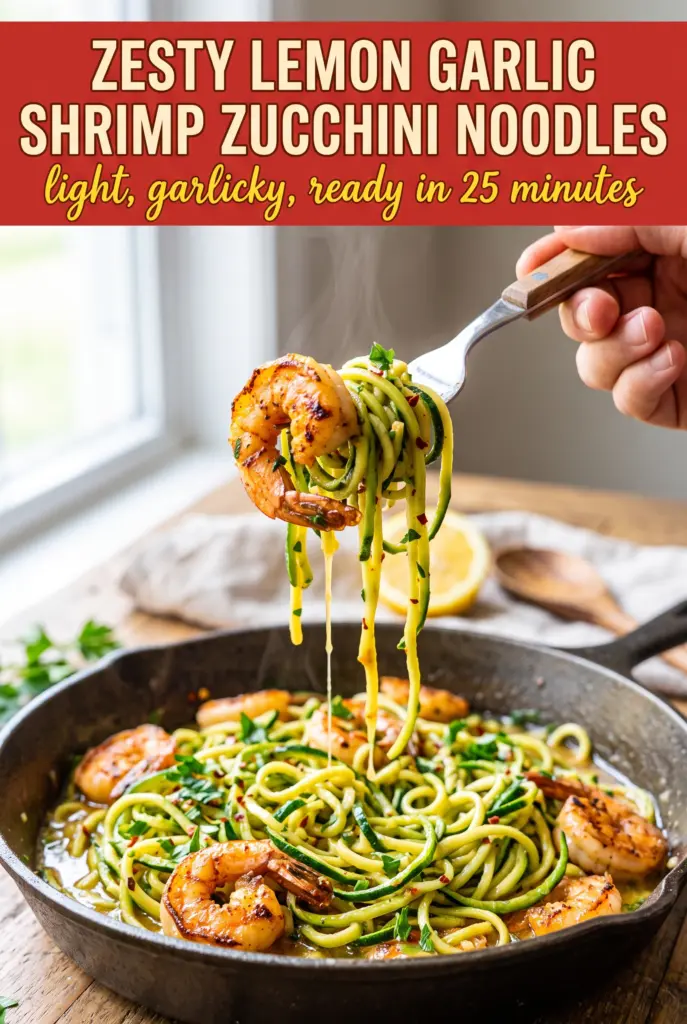
Lemon Garlic Shrimp Zucchini Noodles
Golden shrimp, tender zucchini ribbons, and a bright lemon-butter sauce make this one of those dinners that disappears fast and never feels heavy. The shrimp stay juicy because they’re cooked…
Tip: save now, cook later.Golden shrimp, tender zucchini ribbons, and a bright lemon-butter sauce make this one of those dinners that disappears fast and never feels heavy. The shrimp stay juicy because they’re cooked first and pulled off the heat before the sauce goes in, and the zucchini keeps its bite instead of turning watery when you salt and drain it first.
The sauce is where this dish earns its keep. Garlic goes into butter only long enough to turn fragrant, then the lemon juice and broth simmer for a minute or two so the sharpness softens and the pan picks up every bit of flavor from the shrimp. A handful of parmesan at the end gives the sauce just enough body to cling to the noodles without turning it into a cream sauce.
Below you’ll find the one prep step that keeps zucchini noodles from flooding the skillet, plus a few smart swaps for when you want to make this dairy-free or turn it into a fuller meal.
The zucchini noodles stayed firm and the lemon garlic sauce coated everything without turning soupy. I was worried the shrimp would overcook, but pulling them out first worked perfectly and dinner was on the table in under 25 minutes.
Save these lemon garlic shrimp zucchini noodles for the nights when you want a bright, buttery skillet dinner that stays light but still feels complete.
The Reason Zucchini Noodles Stay Crisp Instead of Turning Watery
Zucchini carries a lot of moisture, and the difference between a glossy skillet dinner and a thin puddle at the bottom of the pan comes down to what happens before the heat even turns on. Salting the noodles and letting them drain draws out some of that excess water so they don’t steam themselves into softness the second they hit the sauce. Patting them dry afterward matters just as much as the salting step.
The other key is timing. Zucchini noodles need only a short toss in the pan, just long enough to warm through and pick up flavor. If they cook too long, they slump, go slick, and start leaking water back into the sauce.
- Salted zucchini: Helps pull moisture out before cooking so the final dish stays concentrated instead of diluted.
- High-heat shrimp sear: Creates color fast and keeps the shrimp tender. Overcooking is the main reason shrimp turn rubbery.
- Short noodle toss: Keeps the zucchini with a light bite. The sauce should coat it, not soak into it.
What Each Ingredient Is Actually Doing in This Dish
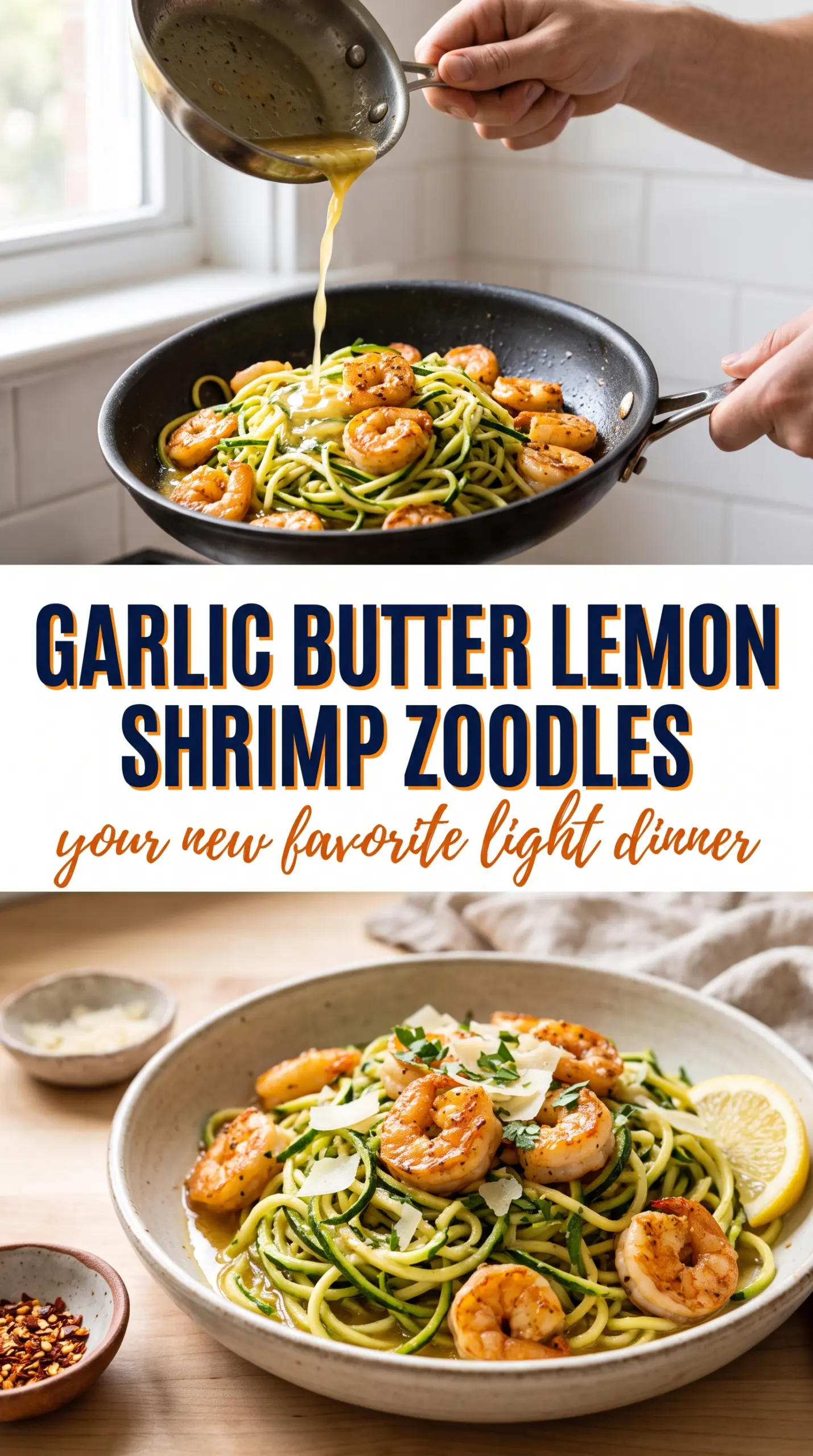
- Shrimp: Large shrimp give you a better sear and stay juicy longer than smaller ones. If you use frozen shrimp, thaw them fully and pat them dry so they brown instead of steaming.
- Zucchini: Medium zucchini are best because they spiralize into noodles that hold up without getting limp. Smaller zucchini have less water, which is fine, but large ones can be spongy and seedy.
- Butter and olive oil: The oil raises the heat tolerance for searing, while butter gives the sauce its round, rich finish. Using all butter here makes it easier to burn the garlic.
- Lemon juice and zest: Juice brings the brightness, zest brings the aromatic lemon oil that makes the sauce taste fresh instead of flat. Fresh lemon is worth it here; bottled juice tastes harsher and less layered.
- Parmesan: Adds salt and a little body at the end. Grate it finely so it melts into the sauce instead of clumping on top.
- Chicken broth: Loosens the sauce just enough to coat the noodles without turning it oily. If you only have water, the dish will still work, but the sauce will taste less complete.
How to Build the Sauce Without Overcooking the Shrimp
Dry and sear the shrimp first
Pat the shrimp dry before they hit the pan. Moisture is the enemy of browning, and wet shrimp will steam before they color. Cook them just until pink and opaque around the edges, then pull them out even if they don’t look fully finished yet. They’ll go back into the sauce for a final warm-through, which keeps them succulent.
Use the residual heat for the garlic
Once the shrimp are out, lower the heat before adding the butter and garlic. Garlic burns fast, and burnt garlic turns bitter in seconds. You want it fragrant and pale gold, not browned. The broth, lemon juice, and zest go in right after so the pan cools slightly and the flavors stay clean.
Toss the zucchini at the very end
Add the zucchini noodles only after the sauce has reduced a little. They need a short toss, not a simmer, or they’ll lose their shape and water down the pan. If the skillet looks wet, keep the toss moving so the liquid stays on the noodles instead of pooling underneath them.
Finish off the heat
Parmesan and parsley go in once the pan is off the burner. That keeps the cheese from turning stringy and the herbs from fading. Taste at the end and adjust with a pinch of salt or an extra squeeze of lemon if the sauce needs more lift.
Three Ways to Make This Work at Your Table
Dairy-Free Version
Swap the butter for more olive oil and leave out the parmesan. The sauce will taste brighter and a little leaner, but the lemon and garlic still carry the dish. A spoonful of nutritional yeast can stand in for some of the savory depth if you want it.
Lower-Carb, Higher-Protein Bowl
Keep the shrimp and zucchini as written, then serve the finished dish over a handful of baby spinach or cauliflower rice. The heat from the pan wilts spinach fast, and cauliflower rice gives you more volume without changing the lemon-garlic sauce.
If You Don’t Have Shrimp
Scallops or bite-size pieces of chicken both work, but they change the timing. Scallops need the same quick sear as shrimp, while chicken needs to cook through before the sauce goes in. Either way, don’t crowd the pan, or you’ll lose the browned edges that make the dish taste finished.
Storage and Reheating
- Refrigerator: Store leftovers for up to 2 days. The zucchini will soften a little, but the flavor stays good.
- Freezer: I don’t recommend freezing this dish. Zucchini turns mushy after thawing and the sauce loses its fresh texture.
- Reheating: Warm gently in a skillet over low heat with a splash of broth or water. High heat will overcook the shrimp and push even more moisture out of the zucchini.
Answers to the Questions Worth Asking
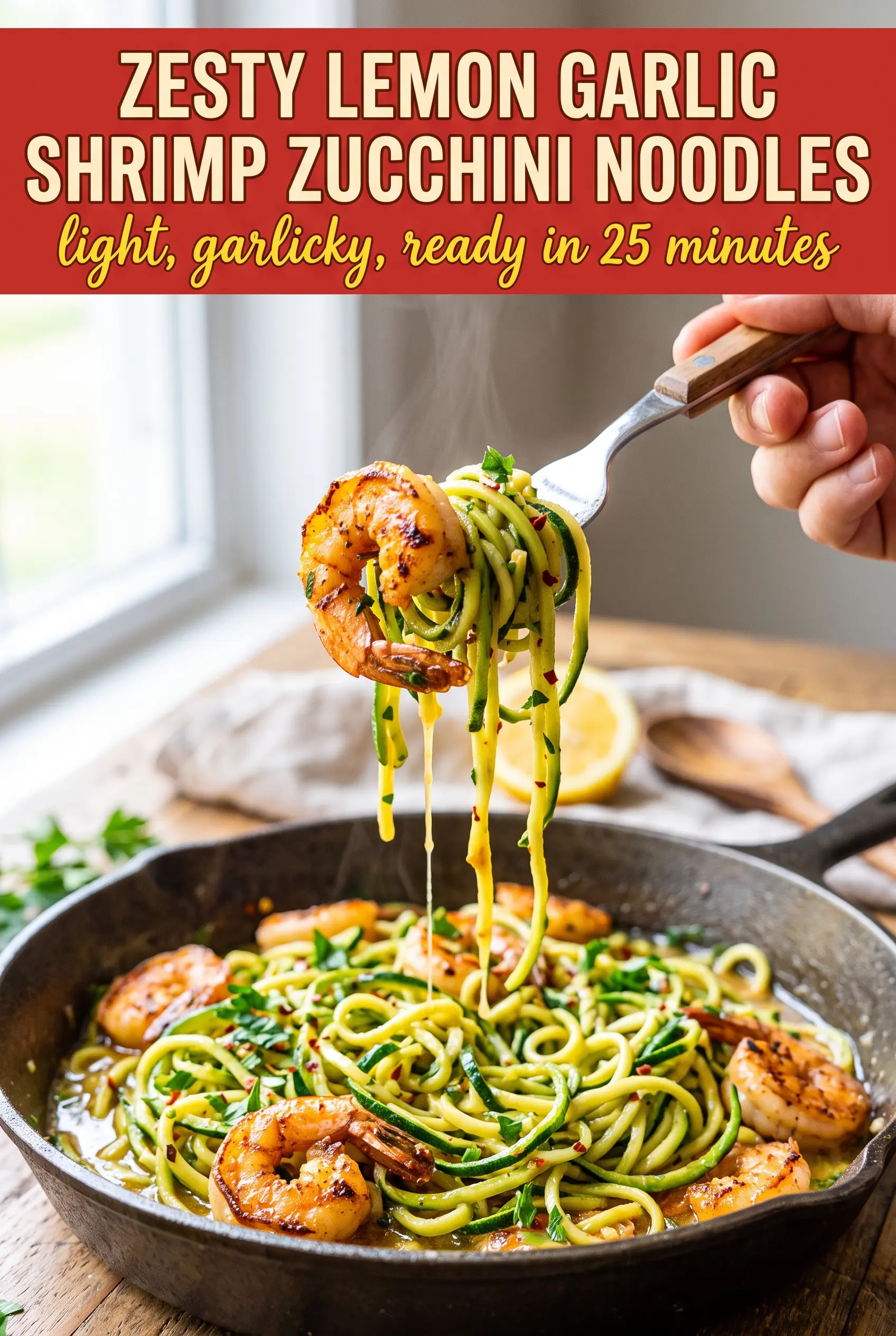
Lemon Garlic Shrimp Zucchini Noodles
Ingredients
Equipment
Method
- Place spiralized zucchini in a colander, toss with 1/2 tsp salt, and let drain for 10 minutes to pull out excess moisture. Pat dry with paper towels before cooking so the noodles don’t steam.
- Heat the olive oil and 2 tbsp butter in a large skillet over medium-high heat. Pat shrimp dry, season with salt and black pepper, then sear 1–2 minutes per side until pink and just opaque; transfer to a plate.
- Lower heat to medium, add the remaining 2 tbsp butter and garlic, and cook for 30 seconds until fragrant but not browned. Stir in red pepper flakes, chicken broth, lemon juice, and lemon zest, then simmer for 2 minutes until slightly reduced.
- Add the zucchini noodles to the skillet and toss gently in the sauce for 1–2 minutes until warmed through and barely tender, with a little bite remaining. Keep tossing to coat and prevent sogginess.
- Add shrimp back to the skillet along with any juices and toss for 30–60 seconds until heated through and well coated, until shrimp reach 145°F. Remove from heat, stir in parmesan and parsley, then taste and adjust salt, pepper, and lemon juice for balance.
- Serve immediately with extra parmesan and lemon wedges, and add more red pepper flakes if you want extra heat. A quick toss right before serving keeps the zucchini noodles bright and tender.
