

Instant Pot Buffalo Chicken
Tender shredded chicken soaked in buttery buffalo sauce earns a permanent spot in the weeknight rotation because it does the one thing every good chicken dinner should do: stay juicy…
Tip: save now, cook later.Tender shredded chicken soaked in buttery buffalo sauce earns a permanent spot in the weeknight rotation because it does the one thing every good chicken dinner should do: stay juicy and hold onto flavor. The pressure cooker takes chicken breasts from plain to fork-tender without babysitting, and the sauce clings to every strand instead of running off into the pot.
The key here is the balance between buffalo wing sauce, broth, and butter. The broth gives the Instant Pot enough liquid to come to pressure cleanly, while the butter rounds out the heat and turns the sauce glossy after cooking. A small amount of ranch seasoning adds that familiar tang without making the whole dish taste like salad dressing.
Below, I’ll walk you through the pressure-cook timing, the optional cornstarch finish, and a few ways to serve it that keep dinner interesting all week.
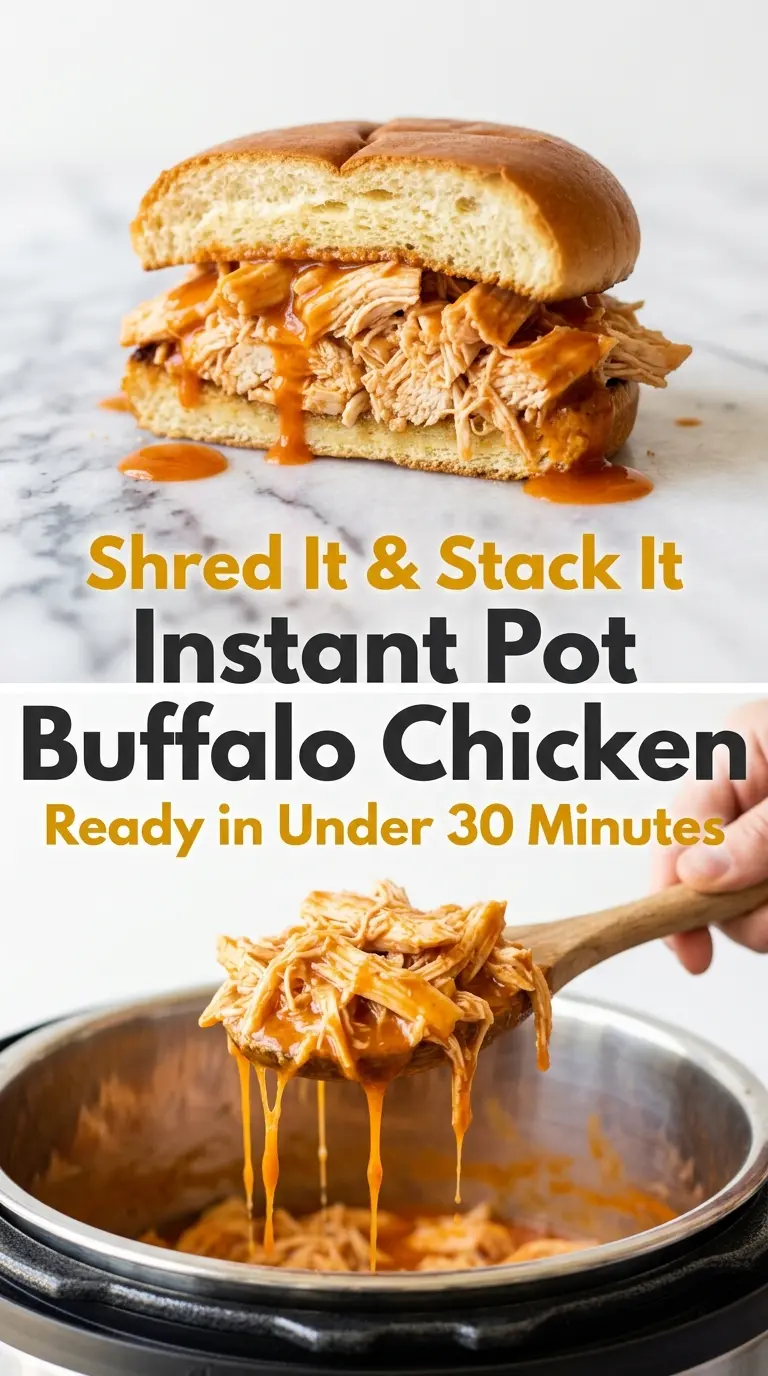
The chicken shredded beautifully after the 10-minute natural release, and the sauce was thick enough to coat every bite. I served it on buns with blue cheese and my husband asked if I could make it again the next night.
Save this Instant Pot Buffalo Chicken for the nights when you want juicy shredded chicken with a glossy, spicy sauce and almost no cleanup.
The Trick to Juicy Buffalo Chicken Without Overcooking the Breasts
Chicken breasts are easy to dry out in the Instant Pot because they keep cooking during the pressure release. The 12-minute cook time works here because the chicken is surrounded by sauce and broth, then given a 10-minute natural release so the fibers relax before you open the lid. Skip the long natural release and the meat can go from tender to stringy fast.
The other mistake is piling on too much liquid. You need enough broth for the pot to come to pressure, but the buffalo sauce carries the flavor, and the butter keeps the final sauce from tasting thin or sharp. If your chicken breasts are very thick, give them a quick pound to even thickness so they finish at the same time instead of leaving one piece tight and another overdone.
What Each Ingredient Is Actually Doing in This Dish
- Buffalo wing sauce — This is the backbone of the dish, so use a brand you already like eating. Frank’s-style sauce gives you that sharp vinegar heat that stands up well to pressure cooking; milder hot sauces can taste flat after cooking.
- Butter — The butter softens the heat and gives the sauce body. It matters here because buffalo sauce on its own can taste thin once it’s been diluted with broth.
- Ranch seasoning — This adds salt, dill, onion, and a little tang in one shot. If you don’t have a packet, a mix of dried dill, garlic powder, onion powder, and salt gets you close, though the flavor won’t be as rounded.
- Chicken broth — This is there for pressure cooking, not for flavor dominance. Low-sodium broth is the better choice because the buffalo sauce and ranch seasoning already bring plenty of salt.
- Cornstarch slurry — This is optional, but it’s the cleanest way to turn the sauce into something that clings to sandwiches or bowls. Whisk it in after pressure cooking on sauté mode; if you add it before cooking, it can settle and thicken unevenly.
How the Pressure Cooker Builds the Sauce and the Chicken at the Same Time
Seasoning the chicken first
Lay the chicken breasts in a single layer in the Instant Pot insert and season them before the sauce goes in. The garlic powder, smoked paprika, and black pepper stick better to the meat this way, and they season the chicken itself instead of only the liquid. If you dump everything together too fast, the spices can clump on the surface of the sauce and never really distribute.
Layering in the liquid and butter
Pour the buffalo sauce and broth over the chicken, then scatter the cubed butter on top. That top layer of butter melts slowly and emulsifies into the sauce during cooking, which is why the finished sauce tastes richer than if you stirred melted butter in afterward. Don’t stir before pressure cooking unless your model requires it; keeping the chicken mostly submerged and the butter on top gives the best texture.
Cooking, resting, and shredding
Seal the lid, cook on high pressure for 12 minutes, then let the pot sit for a 10-minute natural release before venting the rest. That short rest matters because it keeps the meat from snapping tight as soon as the pressure drops. When you shred it, the chicken should pull apart in moist ribbons, not dry chunks; if it resists, it needs another minute or two under the lid, not a longer boil after the fact.
Finishing the sauce
Once the chicken is out, switch to sauté if you want a thicker coating sauce and whisk in the cornstarch slurry. Let it bubble for 2 to 3 minutes until it turns shiny and lightly nappe-like, meaning it coats the back of a spoon instead of looking watery. Return the shredded chicken to the pot only after the sauce has thickened, or the meat will water it down again.
Three Ways to Make This Work for Sandwiches, Bowls, and Different Diets
For buffalo chicken sandwiches
Use the cornstarch finish so the chicken stays saucy without soaking the buns. A toasted roll gives you enough structure to handle the heat and moisture, and a little blue cheese or ranch on top cools the vinegar bite without hiding it.
For lettuce wraps or low-carb bowls
Skip the thickening step and keep the sauce a little looser so it coats greens, cauliflower rice, or chopped celery without turning heavy. This version tastes brighter and less rich, which is exactly what you want when the toppings are doing some of the work.
For dairy-free buffalo chicken
Swap the butter for a dairy-free butter substitute or a little olive oil, knowing the sauce will be slightly less silky. The chicken still comes out tender and flavorful, but the finish won’t have quite the same round, glossy richness.
For a milder version
Use a mild buffalo sauce or cut the wing sauce with a little extra broth. That lowers the heat without changing the texture, but the flavor will be less punchy, so keep the ranch seasoning in place to preserve balance.
Storage and Reheating
- Refrigerator: Store in an airtight container for up to 4 days. The sauce thickens a bit as it chills, which actually helps it cling to the chicken.
- Freezer: It freezes well for up to 2 months. Cool it completely first, then freeze in portioned containers with a little sauce so the chicken doesn’t dry out on thawing.
- Reheating: Warm gently on the stove or in the microwave with a splash of broth or water. High heat dries out shredded chicken fast, so stop as soon as it’s hot and steamy.
Answers to the Questions Worth Asking

Instant Pot Buffalo Chicken
Ingredients
Equipment
Method
- Place the chicken breasts in the Instant Pot insert and sprinkle with garlic powder, smoked paprika, and black pepper.
- Pour the buffalo wing sauce and low-sodium chicken broth over the chicken, then sprinkle the ranch seasoning mix evenly over the top.
- Scatter the cubed unsalted butter over the top so it melts during pressure cooking.
- Seal the lid, set the valve to sealing, and cook on high pressure for 12 minutes.
- Let the Instant Pot do a 10-minute natural release, then quick release any remaining pressure.
- Remove the chicken to a bowl or cutting board and shred with two forks until it pulls apart easily and looks moist rather than stringy.
- If a thicker sauce is desired, set the Instant Pot to Sauté, whisk in the cornstarch slurry, and simmer for 2–3 minutes until glossy and thick enough to coat a spoon.
- Return the shredded chicken to the pot and toss to coat it thoroughly in the buffalo sauce.
- Serve warm on buns, in lettuce wraps, or over rice, topped with blue cheese and green onion (and celery if using).
