
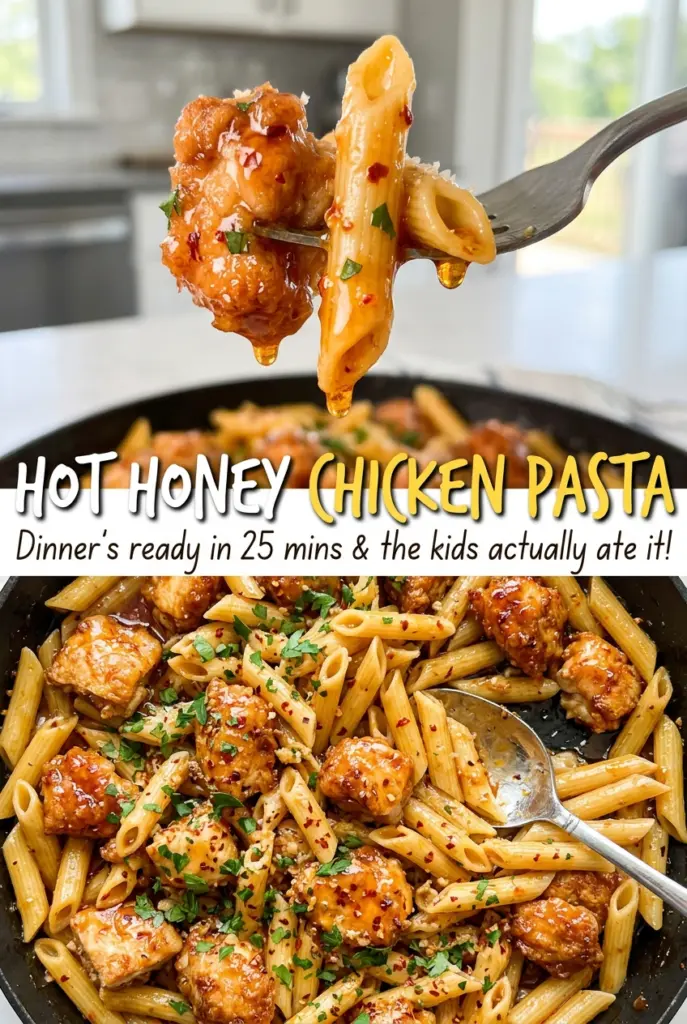
Hot Honey Chicken Pasta
The honey starts bubbling around the chicken, then turns glossy as it clings to the edges of each piece. That’s the moment I know this Hot Honey Chicken Pasta is…
Tip: save now, cook later.The honey starts bubbling around the chicken, then turns glossy as it clings to the edges of each piece. That’s the moment I know this Hot Honey Chicken Pasta is coming together: sweet heat on the chicken, with a creamy Parmesan sauce waiting underneath.
I like this method because the chicken gets its own quick glaze in the skillet, while the pasta sauce comes together in the pot you used to cook the noodles. The reserved pasta water helps the cream coat the pasta without turning the sauce heavy. And taking the pot off the heat before adding the Parmesan keeps the cheese smooth instead of clumpy. Every forkful has tender chicken, a little heat, and silky noodles.
Kitchen Note
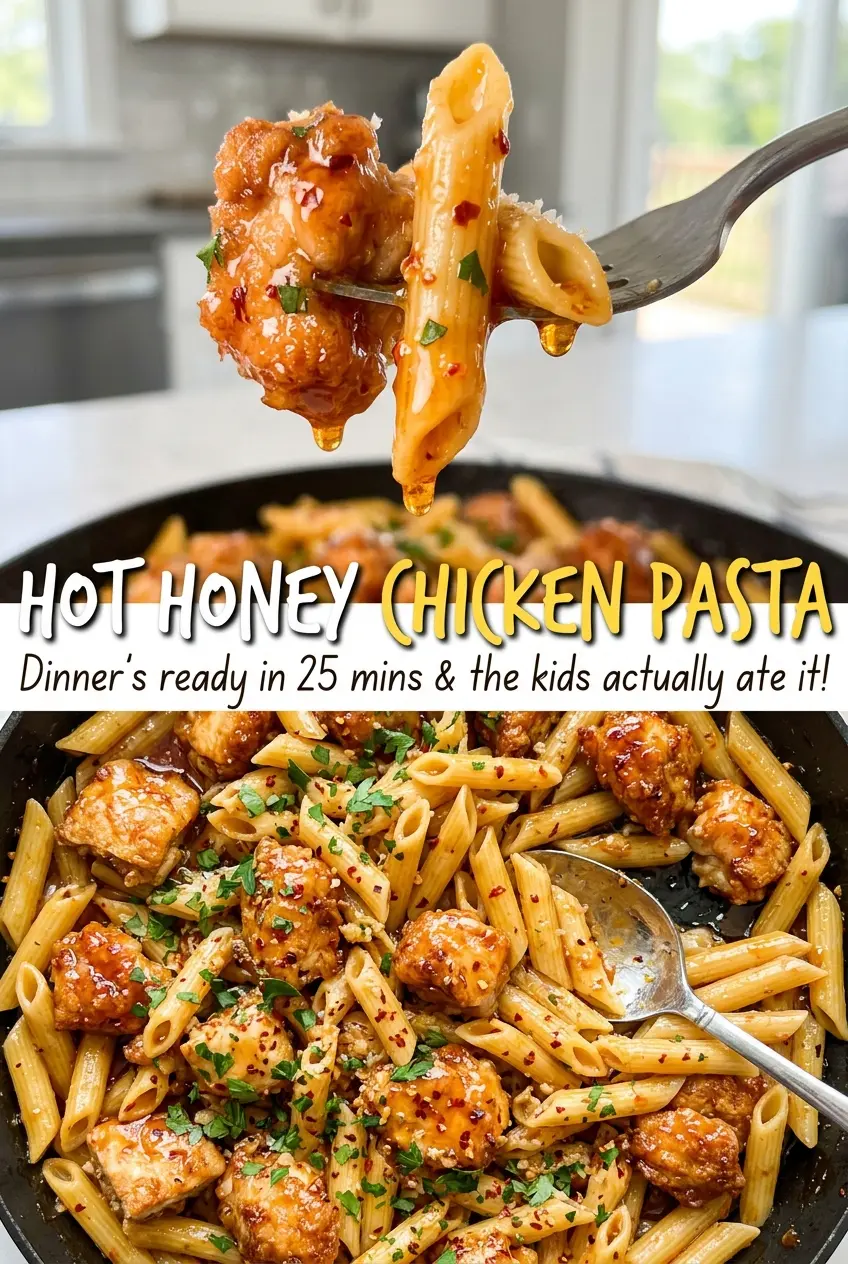
Take the pot off the heat before stirring in the Parmesan. The residual heat melts it gently, so the sauce turns smooth instead of grainy.
Save this Hot Honey Chicken Pasta for a weeknight when you want glossy, spicy-sweet chicken with creamy Parmesan noodles.
Why the Cream Sauce Should Look Loose Before the Parmesan Goes In
It’s easy to keep simmering a cream sauce because it doesn’t look thick enough yet. For this pasta, that’s the wrong cue. The cream and reserved pasta water should reach a gentle simmer, but the sauce is meant to stay loose when you take the pot off the heat. The pasta will take up some of that liquid as you toss everything together.
Pasta water brings a little starch with it, which helps the cream cling to the noodles instead of pooling at the bottom of the pot. It also gives you a bit of room to work: you don’t have to reduce the sauce until it’s thick, or add more cream to compensate. Save the water before draining, then stir it into the sauce with the cream. Once the Parmesan melts and the pasta is coated, the sauce settles into a creamy consistency without needing a flour-based thickener.
That loose stage matters most if dinner doesn’t go straight from pot to plate. The pasta keeps absorbing sauce as it sits, so starting with a spoonable mixture gives you a better finish than cooking it down too far.
What the Honey, Cream, and Parmesan Each Bring to the Pan
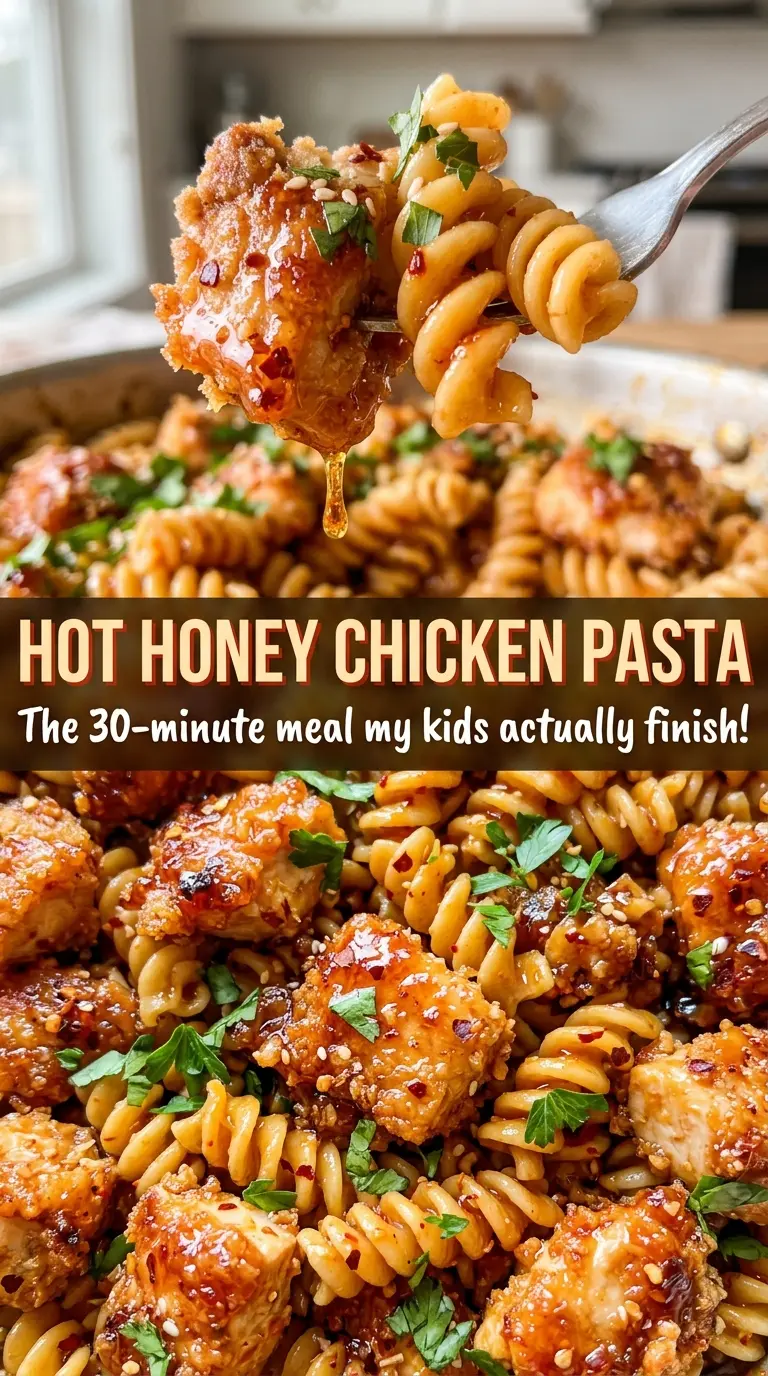
- Chicken breast — Cutting it into even 1-inch pieces helps the chicken cook at a similar pace and gives the glaze plenty of edges to cling to. Boneless, skinless breast is lean and stays tender when you stop cooking as soon as it reaches the proper temperature.
- Honey and hot sauce — Honey gives the skillet glaze its shine and sweetness; hot sauce brings the sharp, spicy counterpoint. The honey doesn’t need to be a specialty variety, but choose a hot sauce whose heat and tang you enjoy on their own because both come through in the glaze.
- Heavy cream — Its higher fat content makes a richer, more stable sauce than milk would. I wouldn’t swap in a thinner dairy product here; it won’t give the same creamy coating once the pasta and cheese are tossed in.
- Parmesan — Finely grated cheese melts quickly into the warm sauce. A wedge grated just before cooking gives the smoothest result, while coarsely grated pieces take longer to melt and can leave little clumps.
- Pasta — Choose a shape you like eating with a creamy sauce, and cook it just to al dente so it holds together when tossed. The pasta water is useful for more than thinning: the starch helps bring the sauce and noodles together.
How to Get the Glaze Glossy and the Pasta Properly Coated
Cook the pasta and save its starchy water
Bring a large pot of water to a boil, add 2 teaspoons of the kosher salt and the pasta, and cook according to the package directions until al dente, usually 8–12 minutes. Before draining, reserve 1/2 cup of the cooking water. Drain the pasta and keep it nearby while you make the chicken and sauce; if you forget to save the water, you lose the starch that helps the sauce coat the noodles.
Season and brown the chicken in one layer
Toss the chicken pieces with the remaining 1 teaspoon kosher salt, smoked paprika, and black pepper. Heat the olive oil in a 12-inch skillet over medium-high heat, then arrange the chicken in a single layer. Cook for 6–8 minutes, turning occasionally, until the pieces are golden and the thickest ones reach 165°F. If the skillet is crowded, the chicken won’t brown as evenly.
Bubble the honey glaze until it turns shiny
Add 1 tablespoon of the butter, the honey, and the hot sauce to the skillet, then stir over medium heat for 1–2 minutes. Watch for the glaze to bubble and turn glossy; it should look syrupy enough to cling to the chicken rather than watery. Toss the chicken through the glaze, then transfer it to a plate. Scrape the glaze from the skillet onto the chicken so none of that sweet heat stays behind.
Finish the sauce in the pasta pot
Melt the remaining 1 tablespoon butter in the empty pasta pot over medium heat. Add the minced garlic and cook for 30 seconds, just until fragrant, then stir in the heavy cream and reserved pasta water. Bring the mixture to a gentle simmer over medium heat and cook for 2–3 minutes. Remove the pot from the heat, stir in the Parmesan until smooth, then add the drained pasta and toss to coat; serve with the chicken and any glaze from the plate on top.
Two Pasta Swaps That Keep the Hot Honey Chicken in Focus
Make it gluten-free with a pasta swap
Use gluten-free pasta in place of regular pasta, keeping the same amount. Its cooking time and texture vary by brand, so use the package timing and taste for doneness; the chicken, glaze, and creamy sauce stay the same.
Try whole-wheat pasta for a heartier bite
Whole-wheat pasta works in the same amount, and its nuttier taste stands up nicely to the honey and hot sauce. Follow the package timing and reserve the cooking water before draining; the noodles will have a firmer, more robust texture than standard pasta.
Storage and Reheating
- Refrigerator: Store leftovers in an airtight container for 3 to 4 days. The pasta will absorb sauce and soften as it sits.
- Freezer: Freeze airtight portions for up to 2 months. The cream sauce may separate a little and the pasta will soften after thawing, so the texture won’t be quite as silky as freshly made.
- Reheating: Warm gently in a covered skillet or microwave, stirring in a small splash of water to loosen the sauce. Heat until steaming throughout; high heat can make the sauce separate.
Questions That Come Up While Making Hot Honey Chicken Pasta
Hot Honey Chicken Pasta
Ingredients
Equipment
Method
- Bring a large pot of water to a boil.
- Add 2 teaspoons of the kosher salt and the pasta.
- Cook according to package directions until al dente, usually 8–12 minutes.
- Reserve 1/2 cup pasta cooking water.
- Drain the pasta.
- Toss the chicken with the remaining 1 teaspoon kosher salt, smoked paprika and black pepper.
- Heat the olive oil in a 12-inch skillet over medium-high heat.
- Add the chicken in a single layer and cook for 6–8 minutes, turning occasionally, until golden and the thickest pieces reach 165°F.
- Add 1 tablespoon of the butter, the honey and hot sauce to the skillet.
- Stir over medium heat for 1–2 minutes until bubbling and glossy.
- Toss the chicken in the glaze and transfer it to a plate, scraping the glaze from the skillet with it.
- Melt the remaining 1 tablespoon butter in the empty pasta pot over medium heat.
- Add the garlic and cook for 30 seconds until fragrant.
- Stir in the heavy cream and reserved pasta water.
- Bring to a gentle simmer over medium heat and cook for 2–3 minutes.
- Remove the pot from the heat and stir in the Parmesan until smooth.
- Add the drained pasta and toss to coat.
- Serve the pasta topped with the hot honey chicken and any glaze from the plate.
