
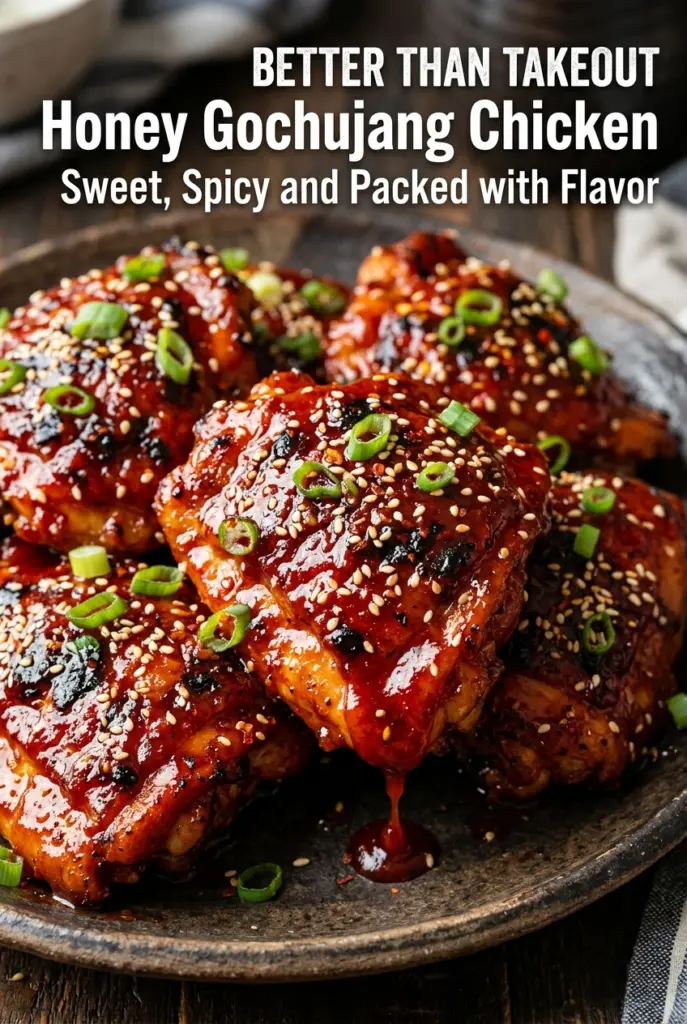
Honey Gochujang Chicken
Sticky, glossy Honey Gochujang Chicken earns a permanent place in the dinner rotation because it hits that sweet spot between bold flavor and low effort. The sauce clings to every…
Tip: save now, cook later.Sticky, glossy Honey Gochujang Chicken earns a permanent place in the dinner rotation because it hits that sweet spot between bold flavor and low effort. The sauce clings to every piece of chicken in a lacquered coating that tastes sweet first, then smoky, spicy, and garlicky on the finish. Serve it over rice and it disappears fast.
What makes this version work is the balance in the sauce and the order you cook it. Gochujang brings heat and depth, honey gives the glaze its shine and rounded sweetness, and rice vinegar keeps the whole thing from tasting heavy. Browning the chicken before the sauce goes in builds flavor in the pan, then a short simmer reduces everything into that sticky coating people keep spooning over the rice.
The sauce thickened up into this perfect sticky glaze, and the chicken stayed juicy even after simmering. My husband kept going back for more, and the leftovers were even better the next day over rice.
This Honey Gochujang Chicken makes a sticky, sweet-spicy glaze that coats the chicken beautifully.
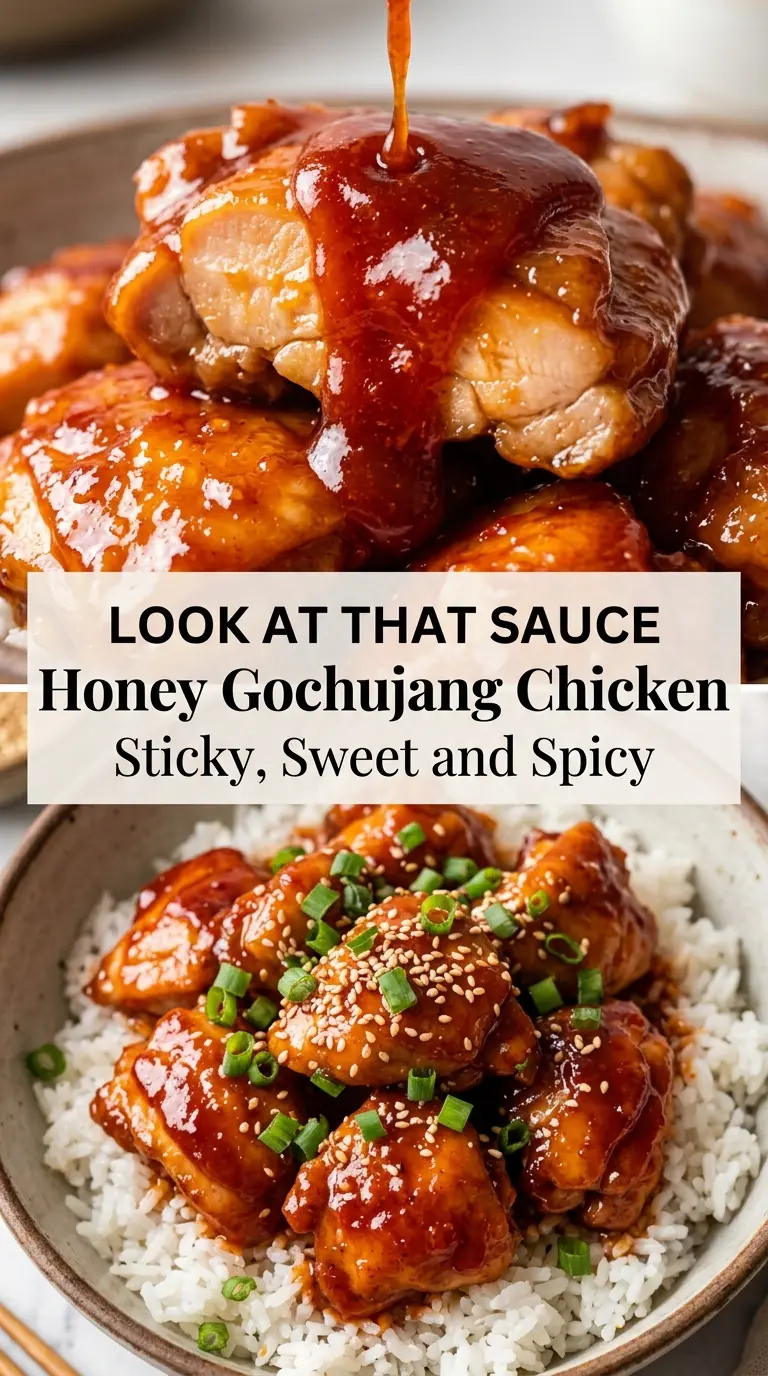
The Trick to Getting Honey Gochujang Sauce Sticky Instead of Thin
The sauce only turns glossy when the pan is hot enough to reduce it, but not so hot that the honey scorches or the garlic turns bitter. That middle ground matters here. If the chicken is cooked through before the sauce goes in, the final simmer is short enough to thicken the glaze without drying out the meat.
Most thin sauces happen because the heat drops too low once the liquid is added. Keep the skillet at a steady medium after the chicken browns, and turn the pieces as the sauce bubbles so every side gets coated. You want the sauce to go from loose and shiny to spoon-coating and sticky at the edges of the pan.
- Gochujang paste — This is the backbone of the recipe. It brings fermented chile heat, salt, and a deep savory note that ordinary hot sauce can’t match. If yours is especially spicy, start with a little less and add more after tasting the finished sauce.
- Honey — Honey is what gives the sauce its lacquered finish. Sugar can work in a pinch, but it won’t round out the heat the same way and the glaze won’t feel as smooth on the tongue.
- Soy sauce — This deepens the sauce and keeps the sweetness from taking over. Use low-sodium soy sauce if that’s what you keep in the pantry; the sauce still tastes full and balanced.
- Rice vinegar — A small amount wakes up the sauce and keeps it from tasting one-note. If you don’t have it, use apple cider vinegar, but keep the amount modest so the acidity doesn’t shout over the honey.
- Chicken thighs — Thighs stay juicy through the browning and simmering time, which matters in a sticky sauce like this. Chicken breasts can be used, but they’ll need less simmer time and more attention so they don’t turn dry.
- Sesame oil — Use the real stuff here, not a neutral oil substitute. It adds the nutty finish that makes the sauce taste complete. A little goes a long way, so measure it rather than pouring by instinct.
Brown the Chicken First, Then Let the Sauce Finish the Job
Dry the chicken and season it well
Pat the chicken thighs dry before they hit the pan. Moisture on the surface slows browning, and browned chicken gives the sauce something deeper to cling to. Salt and pepper on both sides are enough, since the sauce brings plenty of seasoning later. If the chicken goes in damp, it will steam before it sears.
Whisk the sauce until it looks smooth and loose
Stir the gochujang, honey, soy sauce, vinegar, garlic, ginger, and sesame oil together before you turn on the heat. The mixture should look thick but pourable, with no streaks of chili paste hiding at the bottom of the bowl. That even blend matters because once it hits the pan, the sauce starts reducing fast and there won’t be time to fix uneven seasoning.
Build color in the skillet
Cook the chicken in the oil over medium-high heat until it develops a deep golden crust and releases cleanly from the pan. If it sticks hard, it needs another minute. Pulling it too early tears the surface and leaves the pan with less flavor to work with. The goal is browned edges, not pale, rubbery chicken.
Reduce the sauce until it clings
Once the heat drops to medium and the sauce goes in, let it bubble steadily around the chicken. Turn the pieces occasionally so the glaze thickens evenly and doesn’t burn in one spot. When it’s ready, the sauce will look shiny and syrupy, and it will coat the back of a spoon instead of running off like broth. If it still looks thin, keep simmering for another minute or two; if it starts getting too dark, pull the pan off the burner right away.
Make it dairy-free and gluten-free
This recipe is already dairy-free. For gluten-free cooking, use a certified gluten-free gochujang and swap the soy sauce for tamari or gluten-free soy sauce. The flavor stays bold, but the sauce may taste a touch cleaner and less salty depending on the brand you use.
Use chicken breast without drying it out
Chicken breast works, but cut it into even pieces so it cooks at the same rate. Sear just until cooked through, then add the sauce and simmer briefly. Breast meat tightens up faster than thighs, so shorter simmering keeps it tender.
Swap in shrimp for a faster dinner
Shrimp works well if you want a shorter cooking time and a lighter texture. Cook the shrimp first until just pink, then lower the heat and toss them in the sauce for only a minute or two. If you simmer shrimp as long as chicken thighs, they turn tough fast.
Storage and Reheating
- Refrigerator: Store in an airtight container for up to 4 days. The sauce will thicken as it chills.
- Freezer: It freezes well for up to 2 months. Freeze in a shallow container with a little extra sauce so the chicken doesn’t dry out when reheated.
- Reheating: Warm gently in a skillet over medium-low heat with a splash of water to loosen the glaze. High heat can make the sauce seize and can overcook the chicken before the center is hot.
Questions I Get Asked About This Recipe
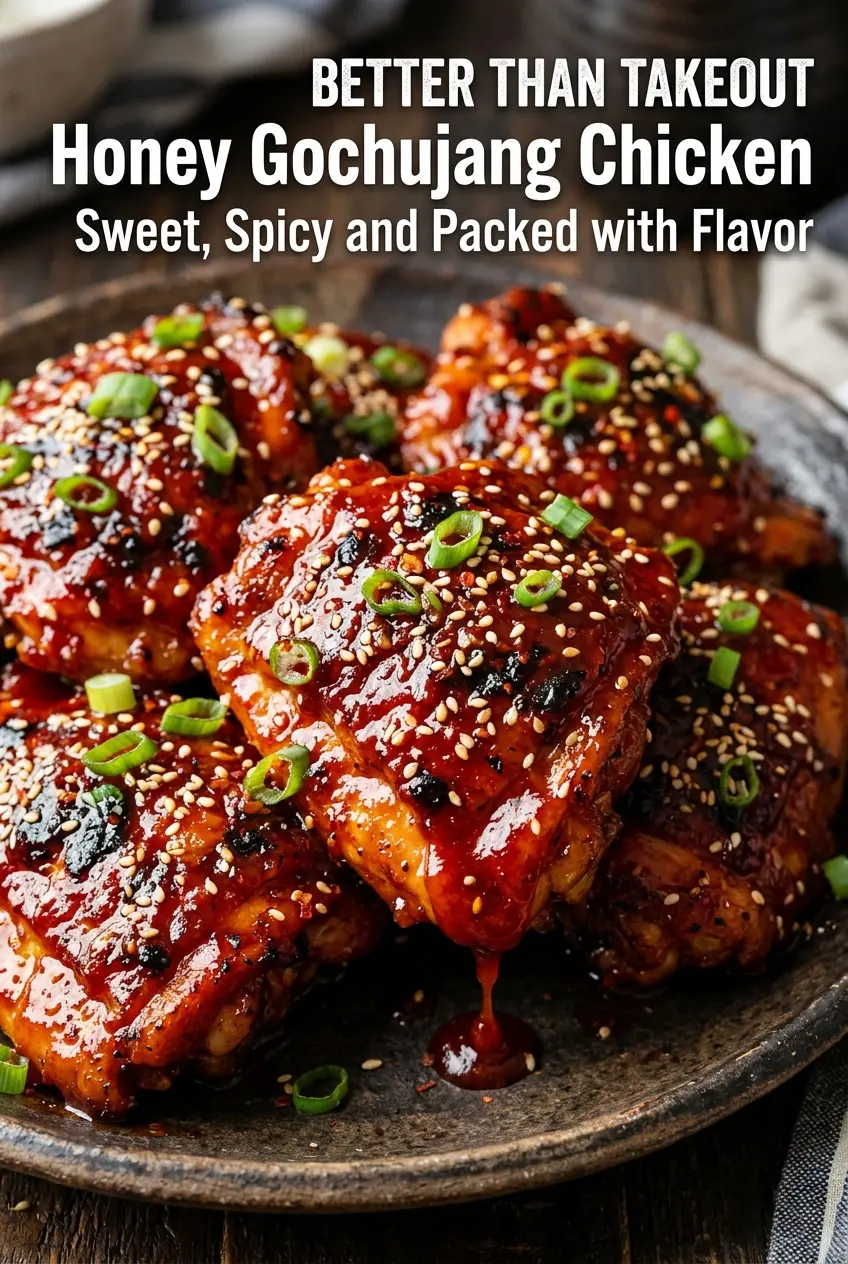
Honey Gochujang Chicken
Ingredients
Equipment
Method
- Pat the chicken dry and season with salt and black pepper so the surface browns evenly. Transfer the thighs to a plate while you make the sauce, and let any excess moisture steam off briefly.
- Whisk gochujang paste, honey, soy sauce, rice vinegar, garlic, ginger, and sesame oil until smooth. The mixture should look thick and dark with honey streaks fully blended.
- Heat vegetable oil in a large skillet over medium-high heat until shimmering, about 1 minute. Add the chicken thighs in a single layer, then cook for 5–6 minutes per side until golden brown and caramelized on the edges.
- Reduce heat to medium, then pour the sauce over the browned chicken. Turn the thighs occasionally and simmer for 5–7 minutes, until the sauce thickens and coats the chicken with a glossy glaze.
- Remove from heat and rest briefly so the glaze sets and clings to the meat. Sprinkle with sliced green onions and sesame seeds, then serve over steamed rice with vegetables.
