

Honey Glazed Salmon Bowls
Sticky, glossy salmon over a bowl of warm rice hits that sweet spot between fast dinner and actual dinner. The glaze clings to the fish instead of sliding off, the…
Tip: save now, cook later.Sticky, glossy salmon over a bowl of warm rice hits that sweet spot between fast dinner and actual dinner. The glaze clings to the fish instead of sliding off, the salmon stays tender in the center, and the crisp vegetables keep each bite from feeling heavy. It’s the kind of bowl that looks put-together without asking for much more than a skillet and a few pantry staples.
The trick is getting the honey glaze into the pan only after the salmon has already picked up some color. If you add it too early, the honey scorches before the fish is cooked through. A quick sear, then a short simmer in the glaze, gives you that lacquered finish without drying out the fillets. Rice vinegar keeps the sauce from turning cloying, and ginger plus garlic give it enough edge to balance the sweetness.
Below, I’ll walk you through the little details that matter here: how to keep the glaze glossy, how to avoid overcooking salmon that’s headed into a bowl, and the swaps that still give you a good result when your fridge looks a little different.
The glaze thickened up in just a couple of minutes and coated the salmon beautifully instead of burning. I loved the balance with the cucumber and avocado, and my husband asked if we could put this into the regular dinner rotation.
Honey Glazed Salmon Bowls with that sticky-savory glaze and crisp veggie crunch are perfect for a quick dinner that still feels special.
The Part That Makes the Glaze Stick Instead of Burn
Honey is the problem and the solution here. It gives you that shiny coating, but it also burns fast if it hits a hot pan too soon. The salmon needs a head start so it can pick up color before the glaze reduces. Once the fish is mostly cooked, the sauce can bubble for just a couple of minutes and turn syrupy without going bitter.
The other piece that matters is the acid. Rice vinegar cuts the sweetness and keeps the glaze lively, which is especially important once it’s paired with rice and avocado. If your pan is smoking hard before the glaze goes in, the heat is too high. You want a steady sizzle, not a scorched pan.
What Each Ingredient Is Doing in These Bowls
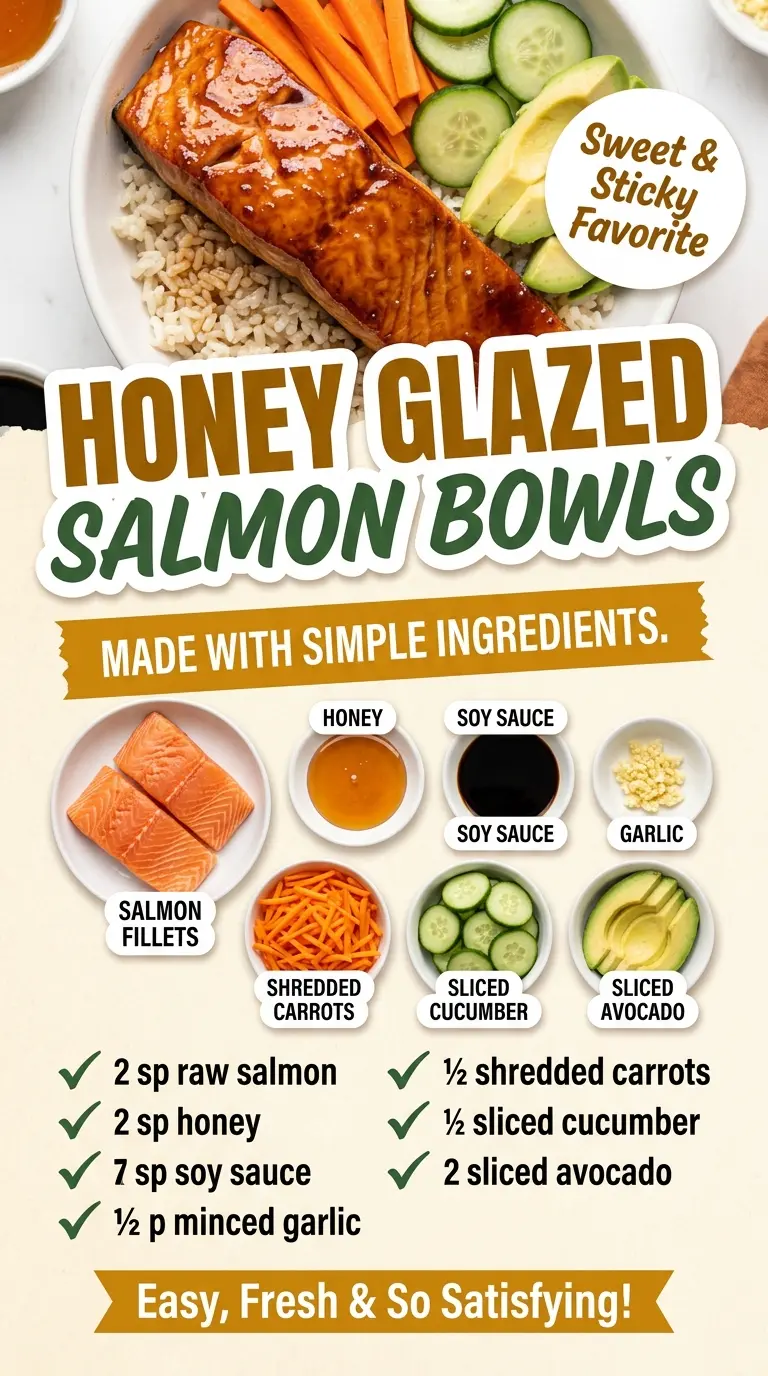
- Salmon fillets — Use fillets that are similar in thickness so they cook at the same pace. Skinless salmon works best for a bowl like this because the glaze can coat the fish evenly, but skin-on fillets work too if you sear the skin side first and serve around it.
- Honey — This is what gives the sauce its shine and stickiness. There isn’t a clean substitute that behaves exactly the same, but maple syrup can stand in if you want a deeper, less floral sweetness; the glaze will be a touch looser and darker.
- Soy sauce — It brings the salt and the savory backbone. Low-sodium soy sauce is the better choice here if you’re sensitive to salt, since the glaze reduces and the flavor concentrates fast.
- Rice vinegar — That small splash keeps the glaze from tasting flat. Lime juice can work in a pinch, but it reads brighter and sharper, so add it after the glaze comes off the heat if you use it.
- Jasmine rice — The soft, fragrant grains catch the sauce in a way that firmer rice doesn’t. Cold leftover rice works too; just steam it until it’s fluffy again so the bowls don’t feel dry.
- Avocado, cucumber, and carrots — These are there for contrast, not decoration. The cool crunch balances the sticky salmon and gives the bowl a better texture from the first bite to the last.
The Short Window Where the Salmon Goes From Good to Glazed
Searing the Fish First
Heat the oil until it shimmers, then lay the salmon in the pan and leave it alone long enough to form a real crust. If you move it too early, it sticks and tears instead of releasing cleanly. You’re looking for golden edges and an opaque band creeping up from the bottom before you flip it. That’s your sign the pan is hot enough and the fish is ready for the second side.
Turning the Honey Into a Sauce
Whisk the glaze ingredients together before they hit the heat so the garlic and ginger are evenly distributed. When you pour it into the skillet, it should bubble around the fish and start to thicken almost immediately. Keep the simmer short. If it goes too long, the honey tightens into a sticky paste and the salmon can go dry while you’re waiting for the sauce to look glossy.
Building the Bowls Without Soggy Layers
Start with rice, then add the vegetables, then the salmon on top. That order keeps the cucumbers crisp and the avocado from disappearing under the sauce. Spoon the remaining glaze over the fish, not across the whole bowl, so the rice catches just enough without turning mushy. A final squeeze of lime sharpens everything and wakes up the glaze.
How to Make These Bowls Fit What You’ve Got
Make It Gluten-Free
Use tamari or certified gluten-free soy sauce in place of regular soy sauce. The glaze keeps the same sticky finish, and you won’t lose the savory depth that makes the sauce work.
Swap the Grain
Brown rice, sushi rice, or quinoa all work here. Quinoa gives you a lighter bowl with more bite, while sushi rice turns the whole thing creamier and more compact under the salmon.
Use a Different Protein
This glaze also works on shrimp or chicken thighs. Shrimp cooks in minutes and needs the glaze pulled off the heat sooner, while chicken thighs need more time in the pan before the sauce goes in so they cook through without drying out.
Storage and Reheating
- Refrigerator: Store the salmon, rice, and vegetables separately for up to 3 days. The salmon stays good, but the cucumber and avocado are best fresh.
- Freezer: The glazed salmon freezes okay for up to 2 months, though the texture softens a little after thawing. Freeze the fish without the vegetables, then build fresh bowls later.
- Reheating: Reheat the salmon gently in a skillet over low heat with a splash of water, or cover it and warm it in the microwave in short bursts. High heat dries out the glaze and turns the fish firm before the center warms.
Answers to the Questions Worth Asking

Honey Glazed Salmon Bowls
Ingredients
Equipment
Method
- In a small bowl, whisk together honey, soy sauce, minced garlic, grated ginger, rice vinegar, and red pepper flakes until smooth.
- Season salmon fillets with salt and pepper on both sides.
- Heat olive oil in a large skillet over medium-high heat until shimmering.
- Sear the salmon for 3–4 minutes per side until golden.
- Pour the honey glaze into the skillet and simmer for 2–3 minutes, spooning over the salmon, until glossy and slightly thickened.
- Divide cooked jasmine rice among bowls.
- Top each bowl with shredded carrots, thinly sliced cucumber, and sliced avocado.
- Place a glazed salmon fillet in each bowl and drizzle with any remaining glaze from the skillet.
- Garnish with sliced green onions, sesame seeds, and a lime wedge, then serve immediately.
