
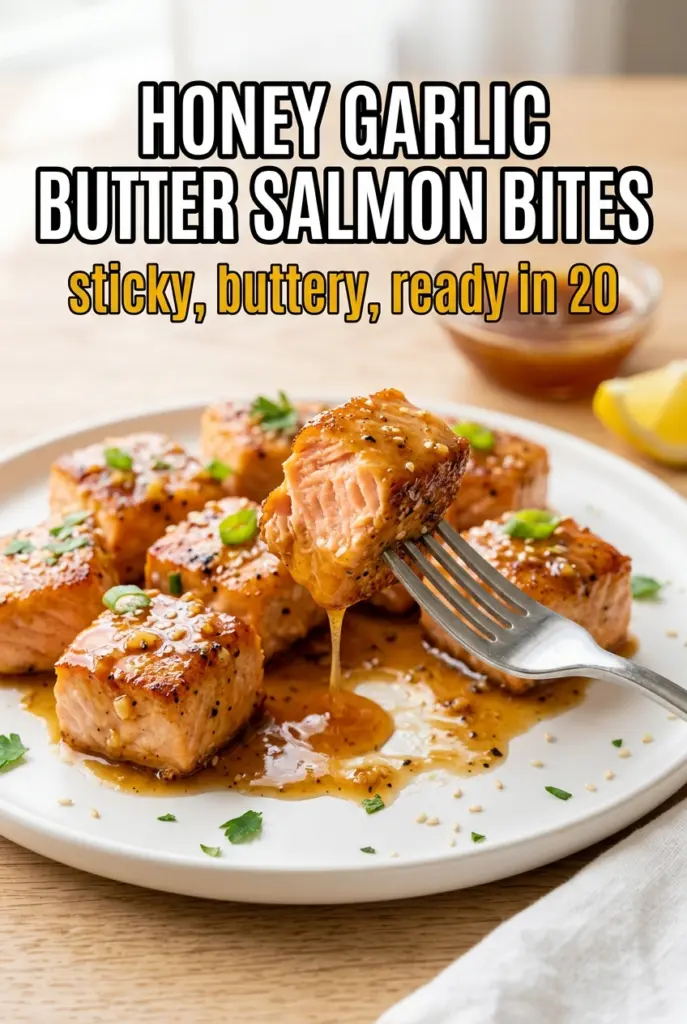
Honey Garlic Butter Salmon Bites
Bite-sized salmon with crisp, bronzed edges and a sticky honey garlic butter glaze has a way of disappearing fast. The best part is the contrast: the outside gets a little…
Tip: save now, cook later.Bite-sized salmon with crisp, bronzed edges and a sticky honey garlic butter glaze has a way of disappearing fast. The best part is the contrast: the outside gets a little caramelized in the skillet while the inside stays tender and flaky, and the sauce clings to every piece instead of sliding off the pan. It feels restaurant-style, but it cooks in one skillet in about the time it takes to set the table.
What makes this version work is the light cornstarch coating and the way the salmon gets seared before the glaze goes in. That tiny bit of starch helps the surface brown and gives the sauce something to grab onto. Then the butter, garlic, honey, soy sauce, and lemon juice cook down just long enough to turn glossy without burning the garlic or turning the fish mushy.
Below, I walk through the exact sear that keeps the salmon crisp, the sauce texture you’re looking for, and a few smart swaps if you need to adjust the recipe for what’s already in your kitchen.
The salmon stayed crisp on the edges even after tossing it in the glaze, and the sauce thickened into this shiny, sticky coating without getting syrupy. I served it over rice and my husband asked if we could have it again the next night.
Save these honey garlic butter salmon bites for a fast skillet dinner with crisp edges and a glossy sweet-savory glaze.
The Trick to Crisp Salmon Without Overcooking the Center
Salmon bites cook fast, which is exactly why they go wrong fast. The most common mistake is crowding the pan or moving the pieces too soon. If the cubes are packed together, they steam instead of sear, and you lose the crisp edges that make this dish worth making. Give the fish space and let it sit long enough to develop a deep golden crust before turning it.
The other mistake is carrying the glaze too far before the salmon goes back in. Honey burns quickly, and garlic goes bitter if it spends too long in a hot pan. The solution is simple: sear the fish first, pull it out, then build the sauce in the same skillet over medium heat so the browned bits from the salmon become part of the glaze.
- Cut salmon into even cubes — Pieces that are close in size cook at the same rate, which keeps some from drying out while others are still underdone.
- Use cornstarch lightly — It helps the outside crisp and gives the glaze a little body. You want a thin coating, not a pasty one.
- Keep the heat controlled — Medium-high is right for the sear, but the sauce needs medium once the butter goes in. Too much heat turns the garlic dark before the honey thickens.
What Each Ingredient Is Doing in the Glaze

- Salmon fillet — A fattier salmon, like Atlantic or a well-marbled wild fillet, stays juicier and gives you better browning. Skin is removed here so the cubes can sear evenly on all sides.
- Cornstarch — This is what helps the exterior set up with a light crust. Flour won’t give the same clean, crisp finish.
- Olive oil — Use a neutral-tasting oil you’re comfortable heating. It just needs to keep the salmon from sticking during the first sear.
- Butter — This gives the glaze its round, rich finish. Unsalted butter is the right call because the soy sauce already brings salt.
- Fresh garlic — This matters. Jarred garlic often tastes flat and can make the sauce muddy. Mince it finely so it softens quickly in the butter.
- Honey — It provides the sticky body of the glaze and helps it caramelize around the salmon. If you reduce the amount, the sauce gets thinner and less glossy.
- Soy sauce and lemon juice — Soy gives depth and salt; lemon cuts the sweetness so the glaze doesn’t taste heavy. If you only have bottled lemon juice, use a little less because it can be sharper.
- Red pepper flakes — Optional, but even a small pinch wakes up the sauce without making it hot.
Cooking the Salmon First, Then Building the Sticky Glaze
Drying and Seasoning the Salmon
Pat the salmon cubes dry before anything else. Moisture on the surface is the enemy of browning, and wet fish will always release steam before it sears. Toss the cubes with salt, pepper, garlic powder, and cornstarch until the coating looks light and even. If you see clumps of starch, there’s too much on the fish, so shake off the excess before it hits the skillet.
Getting the Sear Without Crowding
Heat the oil until it shimmers, then add the salmon in a single layer. You should hear an immediate sizzle. Let the pieces sit undisturbed for 1 to 2 minutes so the underside can turn golden before you flip them. If the pan looks crowded, work in batches; a crowded pan steals heat and leaves you with pale salmon and watery juices.
Turning Butter and Garlic Into a Glaze
Lower the heat before the butter goes in. That’s what keeps the garlic from scorching in the fat. Stir the garlic just until fragrant, about 30 to 45 seconds, then add the honey, soy sauce, lemon juice, and red pepper flakes. The sauce should simmer into a glossy coating that lightly thickens in the pan; if it smells sharp or the garlic browns, the heat is too high.
Coating the Salmon at the End
Return the salmon bites to the skillet and gently turn them through the glaze. You’re not cooking them from raw here, just warming them through and letting the sauce cling. A minute or two is enough. Any longer and the salmon goes from tender to chalky, especially if the cubes were already on the smaller side.
How to Adapt These Salmon Bites for Different Nights
Make It Gluten-Free
Use gluten-free soy sauce or tamari. The glaze still comes out glossy and balanced, and you won’t lose the salty depth that makes the sauce work.
Add More Heat
Double the red pepper flakes or add a small squeeze of sriracha to the glaze. That gives the sauce a sharper edge, which works well against the honey and butter without changing the texture.
Use Maple Instead of Honey
Maple syrup can stand in for honey, but the glaze will be a little less sticky and a touch more mellow. Reduce it just slightly longer in the skillet so it still clings to the salmon.
Storage and Reheating
- Refrigerator: Store in an airtight container for up to 2 days. The glaze stays flavorful, though the salmon loses some of its crisp edges.
- Freezer: I don’t recommend freezing this one. The sauce can separate and the salmon texture turns soft after thawing.
- Reheating: Warm gently in a skillet over low heat with a tiny splash of water if the glaze has tightened up. High heat is the fastest way to dry out the fish and make the honey scorch.
Answers to the Questions Worth Asking
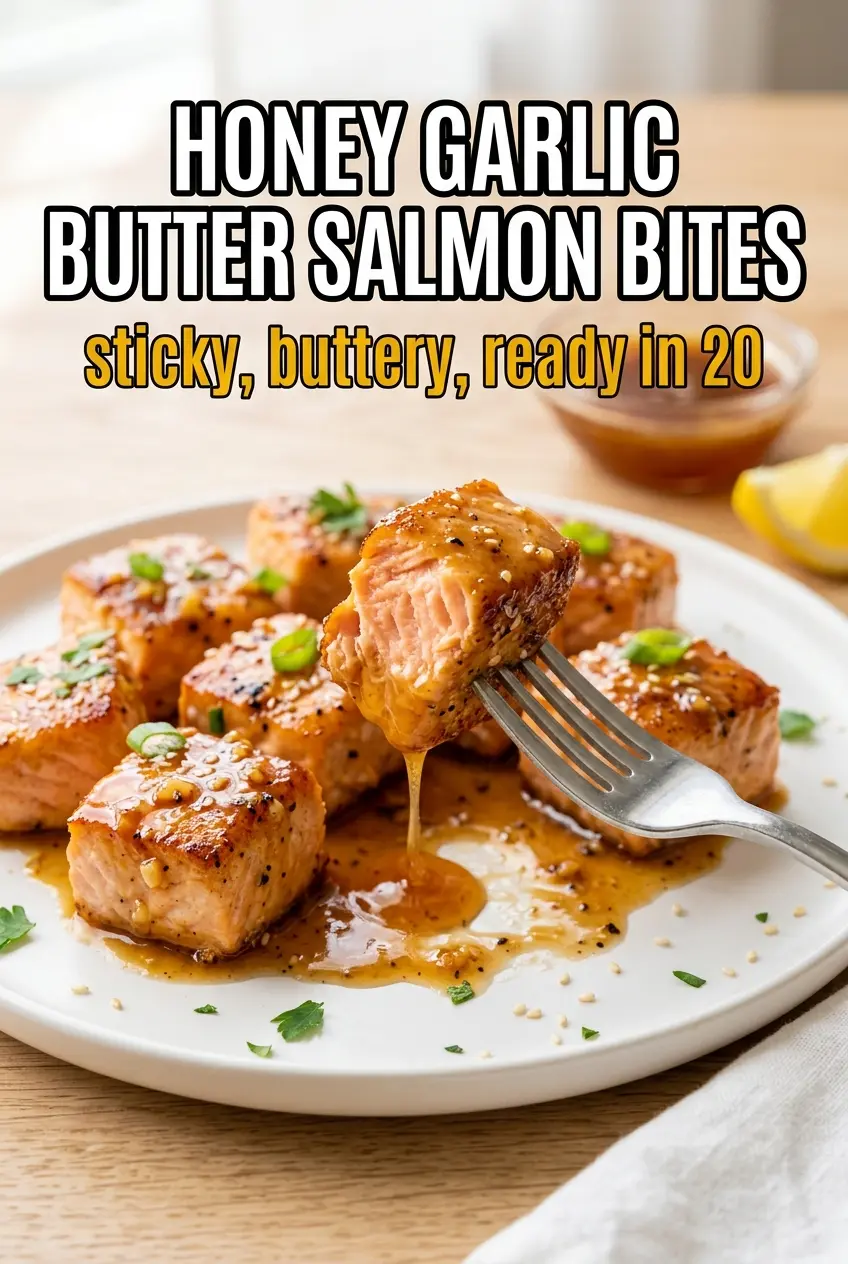
Honey Garlic Butter Salmon Bites
Ingredients
Equipment
Method
- Pat the salmon cubes dry, then toss with salt, black pepper, garlic powder, and cornstarch until lightly coated.
- Heat olive oil in a large cast iron skillet over medium-high heat, then add salmon in a single layer and sear 1–2 minutes per side until golden and crisp-edged but still tender inside.
- Remove the salmon bites and set aside.
- Lower heat to medium and melt the butter in the same skillet, then add garlic and sauté 30–45 seconds until fragrant but not browned.
- Stir in honey, soy sauce, lemon juice, and red pepper flakes, then simmer 2 minutes until glossy and slightly thickened.
- Return salmon bites to the skillet and gently toss to coat evenly in the glaze, then simmer 1–2 minutes more while spooning sauce over top.
- Garnish with chopped fresh parsley, sesame seeds, and sliced green onion before serving.
