

Honey Garlic Butter Chicken Bites
The chicken should give a quick sizzle when it hits the skillet, not sit quietly in a puddle of liquid. That sound is a good sign that the pieces have…
Tip: save now, cook later.The chicken should give a quick sizzle when it hits the skillet, not sit quietly in a puddle of liquid. That sound is a good sign that the pieces have room to cook and the pan is hot enough. These honey garlic butter chicken bites get their glossy finish from a quick stovetop sauce, so there’s no need to bake a separate glaze or dirty another pan.
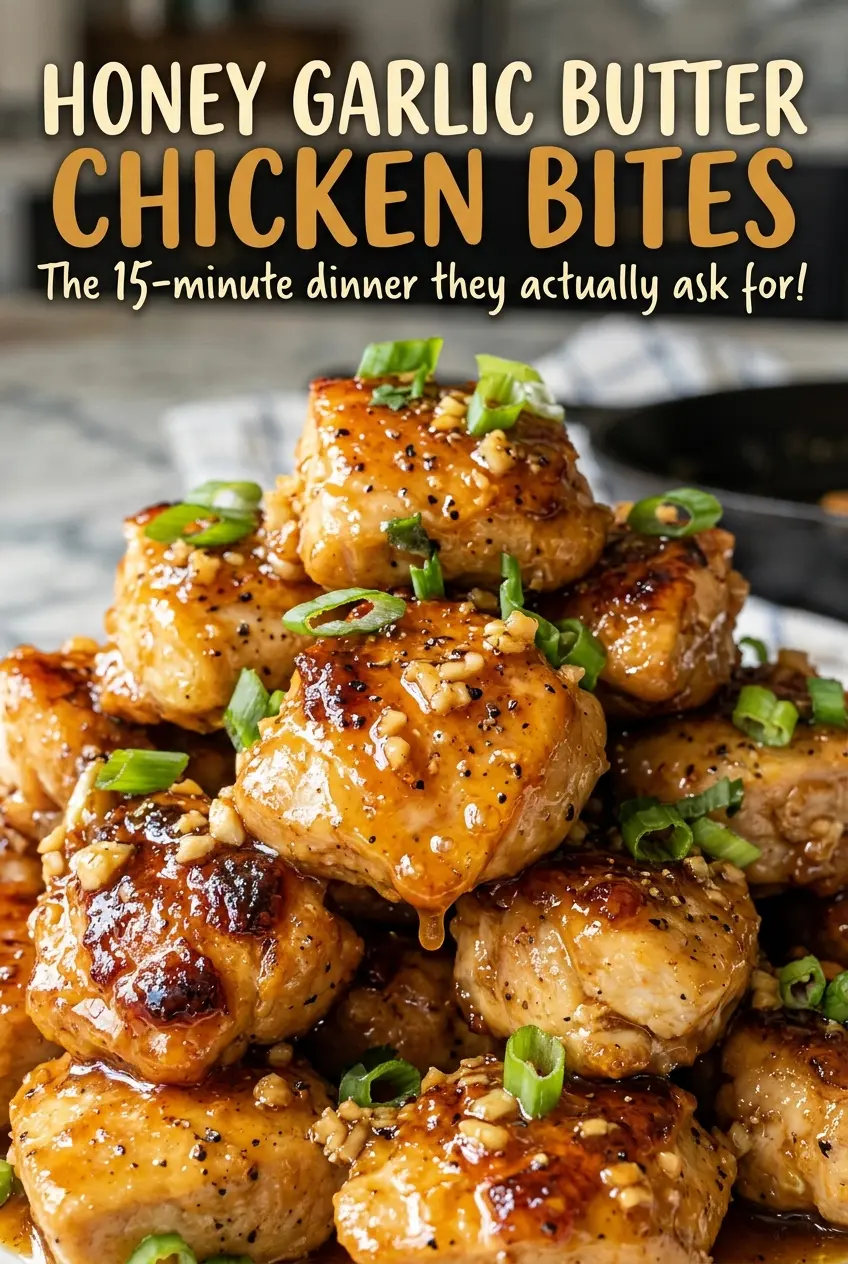
I cut the chicken into even 1-inch pieces so they cook at a similar pace, then let butter soften the garlic before honey and soy sauce go in. The sauce takes only a couple of minutes to turn glossy, and the butter rounds out the honey’s sweetness while soy sauce brings a savory edge. Toss the chicken back through that warm coating, and each bite comes away sticky, buttery, and full of garlic.
Kitchen Note
I measure the honey and soy sauce before the chicken comes out of the skillet. Once the garlic is fragrant, those two ingredients need to go in without a pause, so I don’t leave them for the last minute.
Save these honey garlic butter chicken bites for a skillet dinner with a glossy, buttery-sweet coating and tender chicken.
Why Crowding the Skillet Keeps These Chicken Bites From Browning
Chicken releases moisture as it cooks. When too many pieces are pressed together, that moisture has nowhere to go, and the chicken steams instead of getting the chance to brown. The result can still be cooked through, but the bites look pale and the pan misses out on the browned bits that make a skillet sauce taste fuller.
A 12-inch skillet gives the chicken room, but the batch size matters just as much as the pan. I cook the pieces in two batches and leave a little space between them; stirring occasionally helps them cook on more than one side without packing them tightly together. If the first batch looks crowded, split it again rather than trying to rush it. The extra few minutes are worth it for chicken that tastes seared instead of boiled.
That space also makes the cooking more predictable. A crowded pan cools down when the chicken goes in, and the pieces can finish at different rates. Separate batches keep the skillet working at medium-high heat and make it easier to judge when each batch is ready to leave the pan.
What the Butter, Honey, and Soy Sauce Each Bring to the Glaze

- Chicken breasts — Boneless, skinless breasts give you lean, neat bites that take on the glaze easily. Even 1-inch pieces matter more than buying the largest breasts; pieces of similar size finish closer together.
- Unsalted butter — Butter gives the sauce its rounded, rich texture and carries the garlic through every bite. Unsalted butter is useful here because soy sauce already brings saltiness, and it keeps the seasoning easier to control.
- Garlic — Fresh minced garlic gives the short-cooked sauce its sharp, fragrant aroma. Mince it finely so it disperses through the butter instead of leaving large, raw-tasting pieces.
- Honey — Honey gives the glaze its sweetness and helps it cling to the chicken. A mild, everyday honey works well; a strongly flavored honey will be more noticeable beside the garlic.
- Soy sauce — Soy sauce balances the honey with a savory, salty note. A standard soy sauce is all you need, so there’s no reason to use a specialty bottle for this quick pan sauce.
- Paprika and neutral oil — Paprika adds gentle warmth to the chicken seasoning without making it hot. The oil is there for the medium-high skillet; a neutral canola, vegetable, or avocado oil works in its place without competing with the butter and honey.
The Five-Minute Skillet Sequence That Keeps the Glaze Glossy
Dry and Season the Chicken
Pat the chicken dry before tossing it with kosher salt, black pepper, and paprika. A dry surface helps the pieces cook in the oil rather than releasing extra moisture into the pan. Keep the pieces close to 1 inch so they cook at a similar rate. Set the seasoned chicken near the stove while the skillet heats.
Cook the Chicken in Two Batches
Heat the oil in a 12-inch skillet over medium-high heat. Add half the chicken, leaving space between the pieces, and cook for 5–7 minutes, stirring occasionally; transfer it to a plate when it reaches 165°F. Repeat with the remaining chicken. If the pan is crowded, the pieces will steam, so give them room rather than piling them in.
Let the Garlic Turn Fragrant in Butter
Reduce the heat to medium, then add the butter and minced garlic to the same skillet. Stir for about 30 seconds, just until the garlic smells fragrant. Keep it moving so the small pieces don’t sit against the hot pan. The butter should be melted and aromatic, not browned.
Simmer the Sauce, Then Coat the Chicken
Stir in the honey and soy sauce and let the mixture simmer for 1–2 minutes, until it looks glossy. A steady simmer is enough; a hard boil can make the honey reduce too quickly around the edges. Return the chicken and any juices from the plate, then toss for 1–2 minutes so the sauce coats the pieces. Stop once the chicken is evenly glazed.
Easy Swaps for a Different Take on These Chicken Bites
Make the glaze gluten-free with tamari
Replace the soy sauce with the same amount of gluten-free tamari. It keeps the glaze savory and works in the same quick simmer, though some tamari brands taste a little more intense, so the sauce may come across saltier.
Use smoked paprika for a deeper edge
Swap the regular paprika for the same amount of smoked paprika. It gives the chicken a gentle smoky note under the honey and garlic without changing the skillet method.
Switch to boneless chicken thighs
Use boneless, skinless thighs in place of the breasts and cut them into 1-inch pieces. The result is a richer, slightly more tender bite. Thigh pieces can cook at a different pace than breast pieces, so use a thermometer to judge doneness instead of relying only on the breast timing.
Storage and Reheating
- Refrigerator: Store leftovers in a covered container for 3–4 days. The butter in the sauce will firm up when chilled, then loosen as it warms.
- Freezer: Freeze the cooled chicken and sauce in an airtight freezer-safe container for up to 2–3 months. Thaw it in the refrigerator before reheating; the sauce may look less glossy after freezing but will coat the chicken again as it warms.
- Reheating: Warm portions gently in a skillet over medium-low heat, stirring and turning the chicken so the glaze heats evenly. Avoid high heat, which can scorch the honey before the chicken is hot through.
Questions That Come Up While Making Honey Garlic Chicken Bites
Honey Garlic Butter Chicken Bites
Ingredients
Equipment
Method
- Pat the chicken dry and toss it with the salt, pepper, and paprika.
- Heat the oil in a 12-inch skillet over medium-high heat; cook the chicken in two batches for 5–7 minutes per batch, stirring occasionally, until it reaches 165°F, then transfer it to a plate.
- Reduce the heat to medium, add the butter and garlic to the skillet, and cook for about 30 seconds, stirring, until fragrant.
- Stir in the honey and soy sauce and simmer for 1–2 minutes, until the sauce is glossy.
- Return the chicken and any juices to the skillet and toss for 1–2 minutes to coat it in the sauce.
