
Holiday Spiced Pecans
When the cinnamon and cloves start to smell warm and toasty, the pecans may still look a little pale. That’s normal. These Holiday Spiced Pecans get their crisp coating from…
Tip: save now, cook later.When the cinnamon and cloves start to smell warm and toasty, the pecans may still look a little pale. That’s normal. These Holiday Spiced Pecans get their crisp coating from a thin layer of egg white and sugar that dries in a low oven, not from a dark caramel shell. I like that the process gives you time to stir and check the coating before it goes too far.
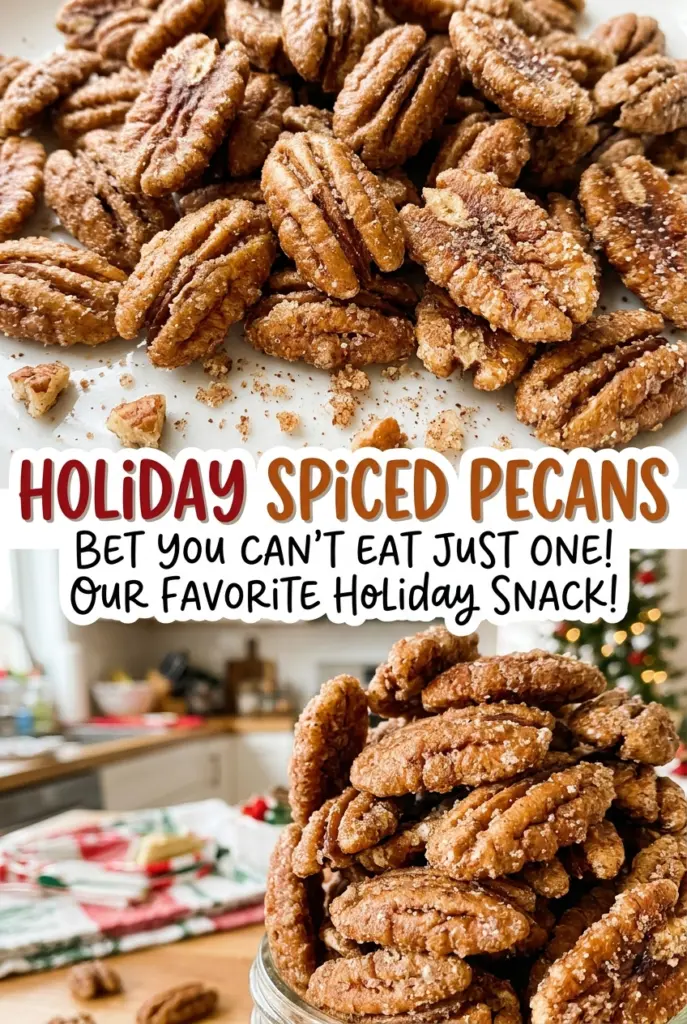
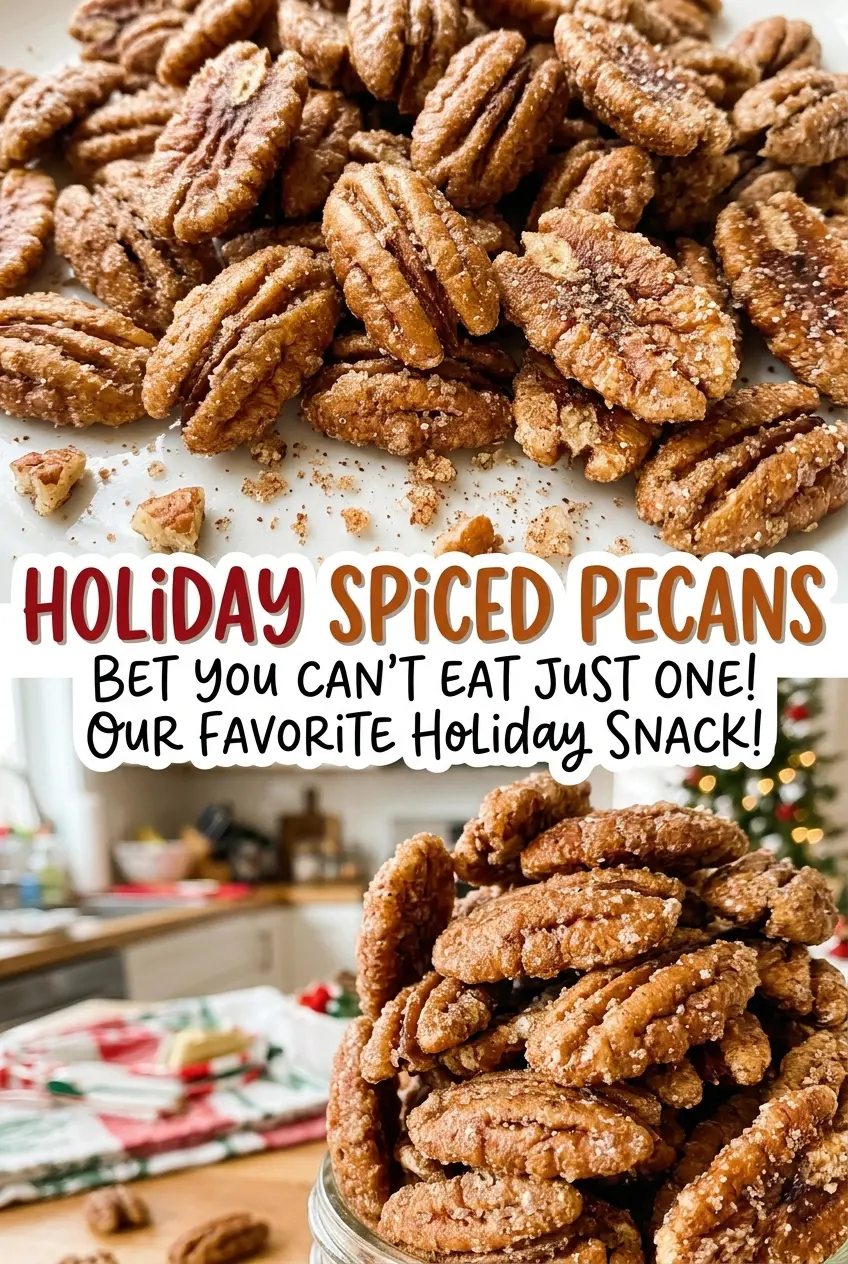
The first thing I pay attention to is how evenly the pecans are coated. Foamy egg white helps the sugar and spices cling to the curved surfaces, and stirring during baking keeps the nuts from sitting in one damp, sugary patch. After cooling, the coating settles into a light, crisp shell around each pecan, with cinnamon up front and just enough clove and nutmeg in the background.
Kitchen Note
Let the pecans cool completely on the baking sheet before you judge their crunch. Warm coating can feel slightly tacky, but it firms as it cools; putting them back in the oven at that point can take them past fragrant and into over-toasted.
Save these Holiday Spiced Pecans for a crisp, cinnamon-scented snack with a gentle clove finish. They’re easy to make ahead and keep well in an airtight container.
Why a Damp Pile of Pecans Turns Sticky Instead of Crisp
Spiced pecans don’t need a thick candy coating to taste special. Here, the goal is a thin layer of sugar and spice that dries onto the nuts. Egg white acts as the binder, while the oven gently removes moisture from the coating. It’s a different result from pecans cooked in a bubbling sugar syrup: lighter, less glassy, and easier to separate once cool.
Two things can get in the way of that dry finish. If the nuts overlap, the covered spots hold onto moisture while the exposed ones dry, so some pecans turn crisp before others. And if the seasoning sits in a mound instead of being tossed through the foamy coating, you can end up with sweet clumps and plain patches. A single layer and an even toss aren’t fussy details; they give the whole batch the same chance to dry.
The sugar also needs time to set after baking. The coating may not look deeply browned when it’s ready, and chasing color can over-toast the pecans. Use the dry coating and fragrant smell as your cues, then let the pan do the final work while the nuts cool.
What the Egg White and Spice Blend Each Contribute
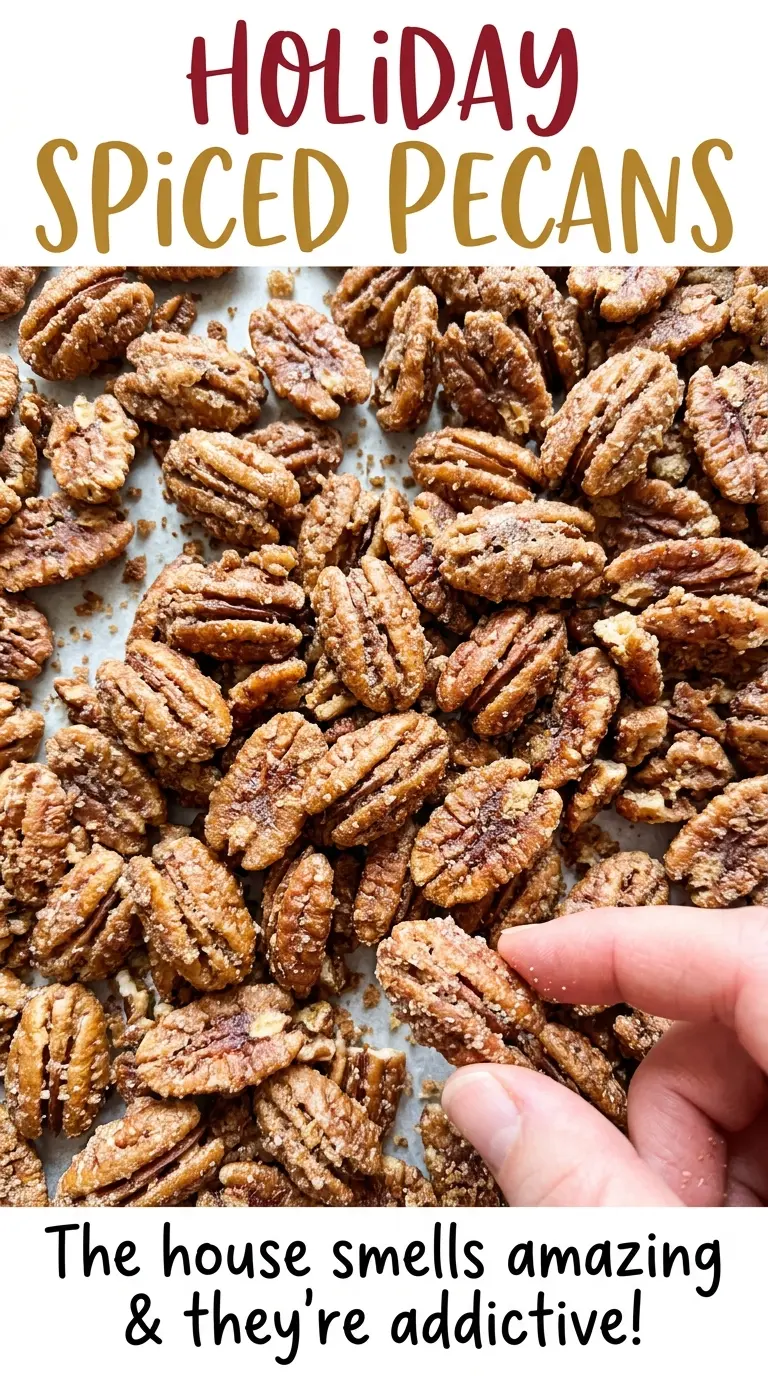
- Pecan halves — Their broad, curved surfaces hold onto the coating, and the rich, buttery taste stands up to the spices. Choose fresh, plain pecans; a stale or rancid smell won’t disappear in the oven. Walnut halves can replace them by weight, though the finished nuts will taste less buttery.
- Egg white and water — Whisking them until foamy creates a light coating that helps the sugar and spices cling without turning into a heavy shell. The egg white should be foamy, not whipped into stiff peaks. For a vegan version, aquafaba works as the binder; the exact swap is in the variations below.
- Granulated sugar — Its dry crystals coat the pecans and bake into a delicate shell. Brown sugar brings more moisture and a molasses note, so it won’t give quite the same dry, crisp finish. The standard granulated kind is a good fit here.
- Cinnamon, nutmeg, and cloves — Cinnamon gives the blend its familiar warmth, while the smaller amounts of nutmeg and cloves add depth. Ground spices lose their aroma with age, so use jars that still smell fragrant when opened; there’s no need for specialty brands.
- Kosher salt — A little salt keeps the sugar from tasting one-note and sharpens the spice. If you use a fine-grain salt instead, measure carefully because fine salt packs more tightly than kosher salt.
The Four Stages That Keep the Coating Even
Get the oven and pan ready first
Heat the oven to 300°F and line a large rimmed baking sheet with parchment paper before mixing. Having the pan ready means the coated pecans can go straight into an even layer instead of sitting in the bowl. The rim helps keep nuts from sliding off as you stir. Parchment also makes it easier to move the pecans around without scraping the coating away.
Foam the binder, then coat the pecans
Whisk the egg white and water until foamy; you’re looking for bubbles across the surface, not stiff peaks. Add the pecans and toss until the surfaces look lightly coated. If you see a puddle of egg white at the bottom of the bowl, keep tossing so it reaches the nuts rather than pooling beneath them. This even first coat gives the dry mixture something to cling to.
Distribute the cinnamon sugar
Stir the sugar, cinnamon, salt, nutmeg, and cloves together in a separate small bowl before adding them to the pecans. Sprinkle the blend over the nuts, then toss until there are no obvious bare pecans or piles of spice at the bottom. Adding the mixture after the egg-white toss helps it spread over the damp surfaces. Take a moment to scrape the bottom of the bowl as you mix.
Bake, stir, and let the coating set
Spread the pecans in a single layer and bake for 35 to 45 minutes, stirring every 15 minutes. When you stir, turn the nuts over and move those at the edges toward the middle so the coating dries evenly. They’re ready when the coating is dry and the pecans smell fragrant; use those signs rather than waiting for a dark color. Leave them on the baking sheet until completely cool before serving.
Three Flavor Changes That Still Let the Pecans Shine
Add a little heat
Stir a pinch of cayenne into the sugar and spices before coating the pecans. It gives the sweet cinnamon coating a gentle kick without changing the method; keep the pinch small so the cloves and pecan flavor still come through.
Make the spice blend ginger-forward
Replace the ground nutmeg with ground ginger in the same measure. Ginger gives the coating a brighter, sharper warmth, while the cinnamon and cloves keep it recognizably spiced. Mix it with the other dry ingredients so it disperses evenly.
Make an egg-free batch with aquafaba
For a vegan version, replace the egg white and water with 3 tablespoons of aquafaba, the liquid from a can of chickpeas. Whisk it until foamy, then use it to coat the pecans before adding the spice mixture. The coating may be a little less sturdy, but it still gives the sugar and spices a surface to cling to.
Storage and Reheating
- Refrigerator: Not recommended; moisture can soften the coating. An airtight container at room temperature is a better choice.
- Freezer: Freeze completely cooled pecans in an airtight freezer container for up to 2 months. Thaw them in the closed container so condensation forms on the container, not the coating.
- Reheating: They don’t need reheating. If the coating has softened, spread the pecans on a baking sheet and warm them briefly in a low oven, then cool completely before serving.
Questions That Come Up While the Pecans Bake
Holiday Spiced Pecans
Ingredients
Equipment
Method
- Heat the oven to 300°F.
- Line a large rimmed baking sheet with parchment paper.
- In a large bowl, whisk the egg white and water until foamy.
- Add the pecans and toss until coated.
- In a small bowl, stir together the sugar, cinnamon, salt, nutmeg, and cloves.
- Sprinkle the mixture over the pecans.
- Toss the pecans until evenly coated.
- Spread the pecans in a single layer on the prepared baking sheet.
- Bake for 35 to 45 minutes, stirring every 15 minutes, until the coating is dry and the pecans smell fragrant.
- Let the pecans cool completely on the baking sheet before serving.
