
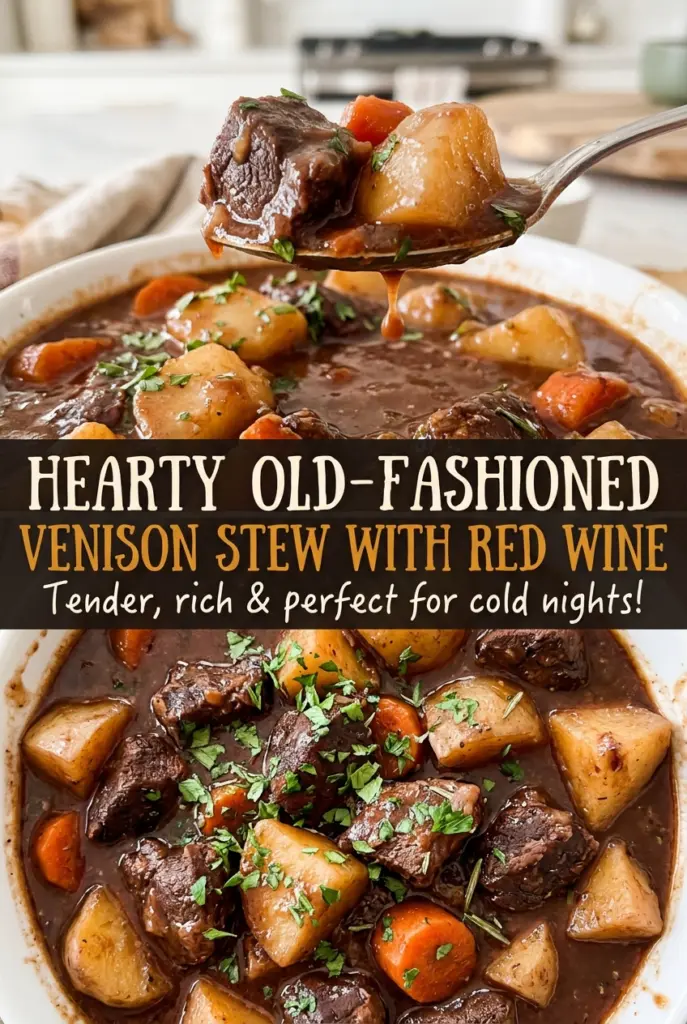
Hearty Old-Fashioned Venison Stew with Red Wine
The oil should shimmer before the venison goes into the Dutch oven; if the pieces are wet or crowded together, they’ll steam instead of browning. I pat the meat dry…
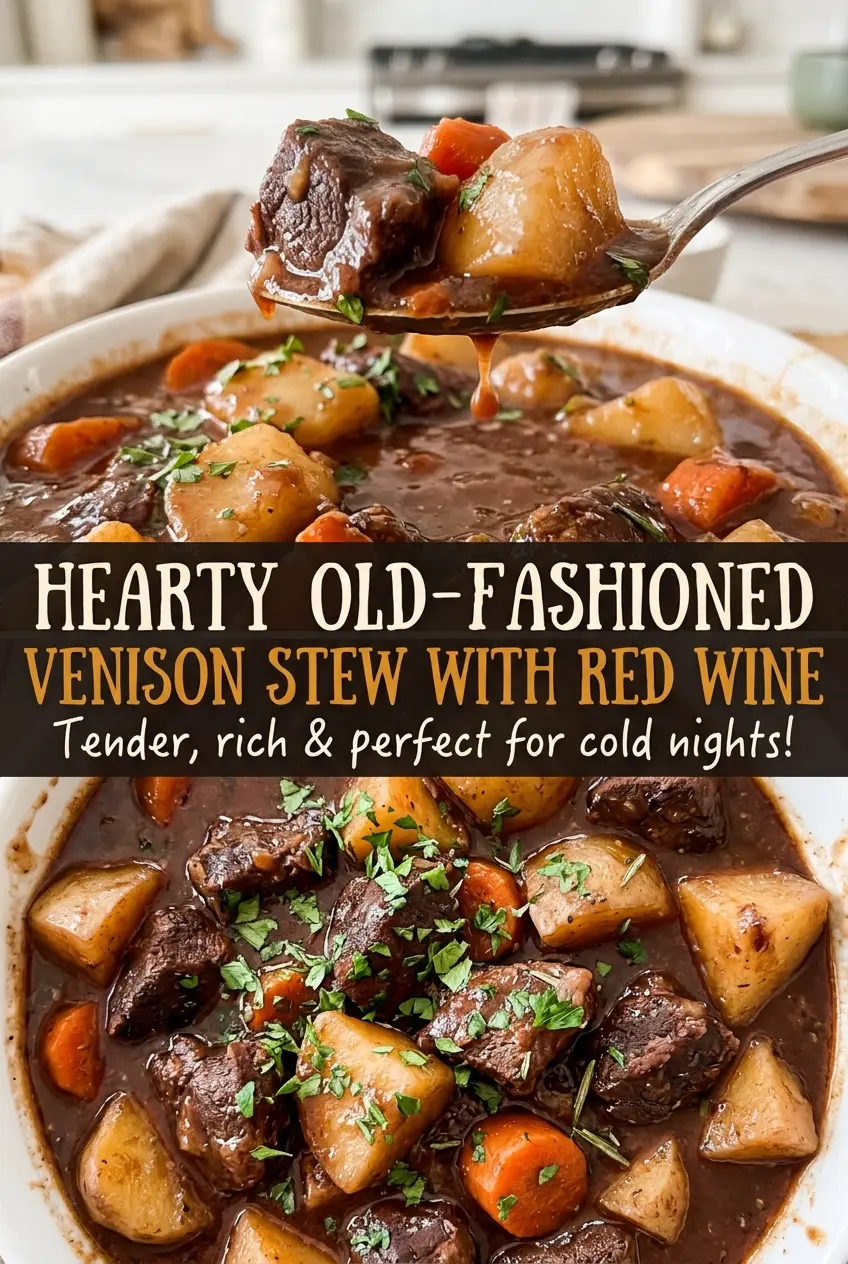
Tip: save now, cook later.The oil should shimmer before the venison goes into the Dutch oven; if the pieces are wet or crowded together, they’ll steam instead of browning. I pat the meat dry and work in batches, turning each piece until it has color on several sides. That first sear gives this hearty old-fashioned venison stew with red wine a deeper, more savory base than a pot where everything goes in at once.
Dry red wine lifts the browned bits from the bottom of the pot, while tomato paste and flour help turn the broth into a rich, spoon-coating gravy. The venison braises covered before the potatoes go in, so they have time to become tender without disappearing into the stew. After the last stretch in the oven, the meat should give easily to a fork and the Yukon Gold potatoes should be tender at the center.
Kitchen Note
Let the stew rest uncovered for 10 minutes after it comes out of the oven. I use that time to remove the bay leaves, and the broth settles into a thicker, less splashy gravy.
Save this red wine venison stew for a slow-braised dinner with fork-tender meat, chunky potatoes, and a rich, savory gravy.
Why a Good Sear Matters More Than a Long Simmer
Venison is lean, so browning is about building savory flavor rather than rendering a layer of fat. If the pieces go into the pot damp or packed too tightly, moisture collects around them and they pale instead of taking on color. Drying the meat and browning it in batches gives each piece contact with the hot pot. Don’t worry about cooking the centers through; the covered braise takes care of that.
The brown coating left on the pot is part of the stew’s flavor. Onion, carrots, and celery soften in that same pot, then the wine loosens those browned bits so they end up in the broth instead of stuck to the bottom. Scrape well as the wine goes in. That’s how a modest amount of tomato paste, broth, and dried herbs becomes a deep, savory gravy without needing a separate sauce pan or extra seasoning.
Keep the heat at a simmer after adding the wine, not a hard boil. A brief simmer lets its sharp raw aroma mellow before the longer oven braise. Once the stew is covered and in the oven, the gentle heat gives the venison time to soften while the liquid stays around the meat and vegetables.
What the Wine, Flour, and Potatoes Bring to This Stew
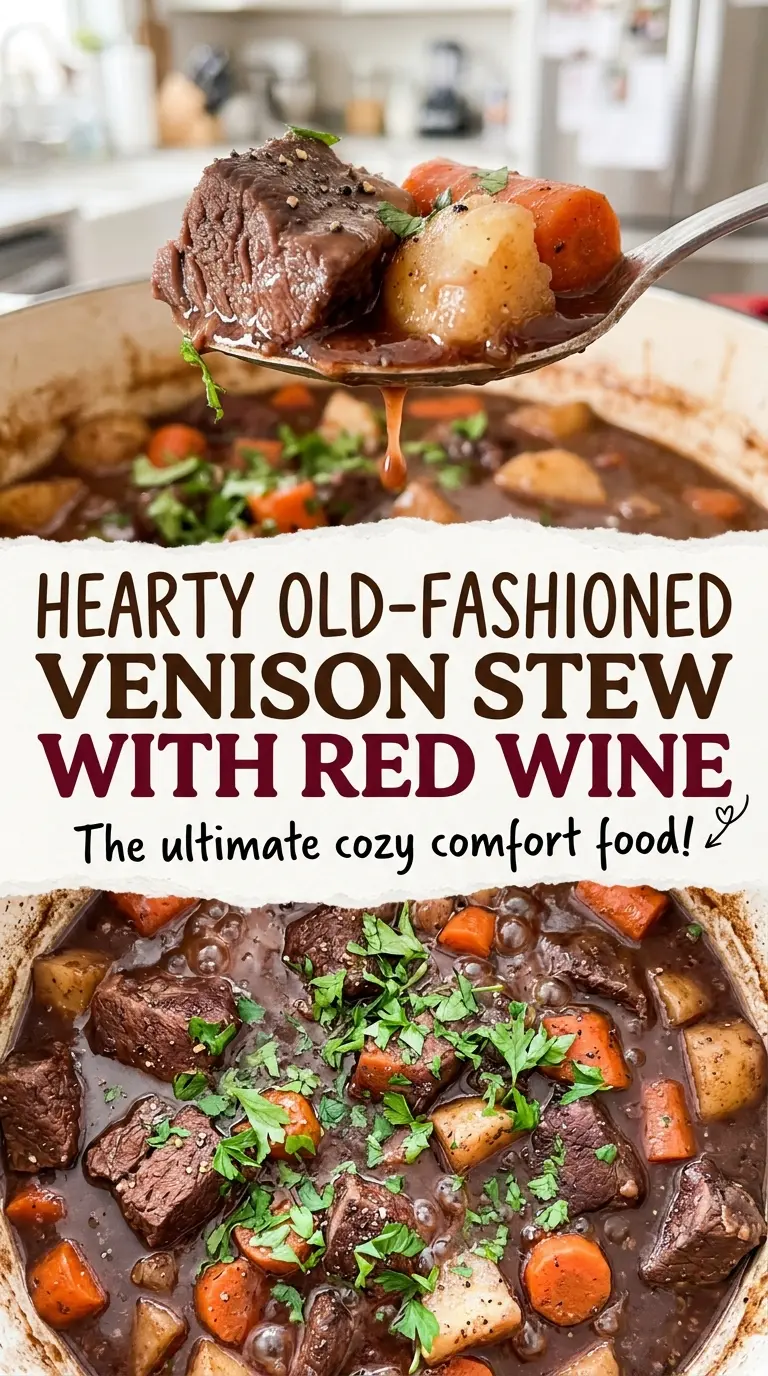
- Venison stew meat — Choose pieces that are already cut for braising, then pat them dry before seasoning. The 1½-inch pieces are substantial enough to stay recognizable through the long cook while becoming tender; much smaller chunks are more likely to break apart as you stir in the potatoes.
- Dry red wine — The wine contributes acidity and depth, not just liquid. Use a dry bottle with a flavor you enjoy drinking; a sweet wine can make the gravy taste noticeably sweeter. There’s no need for an expensive bottle, but avoid anything labeled sweet.
- All-purpose flour and tomato paste — Flour thickens the liquid, while tomato paste adds concentrated savory flavor and helps coat the vegetables. Stir both through the vegetables before adding liquid so the flour is distributed rather than left in dry clumps.
- Beef broth and Worcestershire sauce — Broth supplies the stew’s savory backbone, and Worcestershire adds a tangy, fermented depth that plain broth doesn’t have on its own. A good everyday broth works well here; the herbs and browned meat build plenty of flavor around it.
- Yukon Gold potatoes — Their creamy centers and waxier texture make them a useful choice for a stew where the potatoes need to hold their shape. Scrub them and cut them into even chunks so they become tender at roughly the same rate.
- Onion, carrots, celery, and garlic — These vegetables create the aromatic base. Cut the carrots into the specified 1-inch pieces so they can stand up to the oven time; the onion, celery, and garlic can be diced or minced as listed.
Build the Gravy Before the Covered Oven Braise
Season and Brown the Venison in Batches
Heat the oven to 325°F, then season the patted-dry venison with half of the salt and pepper. Heat the vegetable oil in a 6-quart Dutch oven over medium-high heat. Brown the meat in batches, turning the pieces so several sides take on color, and transfer each batch to a plate. If the pot starts looking wet instead of sizzling, give the current batch room rather than adding more meat.
Soften the Vegetables and Coat Them
Add the onion, carrots, and celery to the same pot and cook, stirring occasionally, until the onion begins to soften, about 5 minutes. Stir in the garlic and cook for 30 seconds; it should smell fragrant, not browned. Mix in the flour and tomato paste until the vegetables are coated, then cook for 1 minute. That short cook gives the flour a chance to blend into the base before the liquid is added.
Deglaze and Start the Braise
Pour in the dry red wine and scrape the bottom of the pot to release the browned bits. Let it simmer for 3 to 4 minutes. Stir in the beef broth, Worcestershire sauce, thyme, bay leaves, and the remaining salt and pepper, then return the venison and any juices from the plate. Bring the pot to a simmer, cover it, and bake for 1 hour 15 minutes.
Add the Potatoes and Cook Until Fork-Tender
Stir in the Yukon Gold potatoes, cover the pot again, and return it to the oven. Bake for 45 to 60 minutes, checking that the potatoes are fork-tender and the venison yields when pierced with a fork. If either still feels firm, give the stew more time in the oven rather than serving it by the clock alone. Remove the bay leaves before serving.
Two Thoughtful Ways to Adapt the Wine and Thickener
Choose a Lighter or Fuller Dry Red
A lighter-bodied dry red such as Pinot Noir keeps the wine’s fruit more subtle, while a fuller dry red such as Cabernet Sauvignon gives the gravy a deeper, firmer wine character. Either stays within the dry red wine called for here; skip sweet reds, which can leave the finished broth tasting too sweet.
Make the Stew Gluten-Free
Replace the all-purpose flour with the same amount of a gluten-free 1:1 flour blend, stirring it into the vegetables with the tomato paste as usual. Check that the Worcestershire sauce is labeled gluten-free, too. The gravy may be a little less smooth depending on the blend, but the stew keeps its hearty texture.
Storage and Reheating
- Refrigerator: Cool and refrigerate the stew within 2 hours. It keeps for 3 to 4 days; the potatoes soften a little as they sit.
- Freezer: Freeze in airtight containers for up to 2 to 3 months. Thaw overnight in the refrigerator; the potatoes may be softer after thawing.
- Reheating: Warm it gently in a covered pot over low heat, stirring carefully, until it reaches 165°F. Avoid a hard boil, which can break up the potatoes and meat.
Questions That Come Up While Making Venison Stew
Hearty Old-Fashioned Venison Stew with Red Wine
Ingredients
Equipment
Method
- Heat the oven to 325°F.
- Season the venison with 1/2 teaspoon of the salt and 1/4 teaspoon of the pepper.
- Heat the oil in a 6-quart Dutch oven over medium-high heat, then brown the venison in batches, turning to brown the pieces on several sides; transfer the browned meat to a plate.
- Add the onion, carrots, and celery to the pot and cook, stirring occasionally, until the onion begins to soften, about 5 minutes.
- Add the garlic and cook for 30 seconds.
- Stir in the flour and tomato paste until the vegetables are coated, then cook for 1 minute.
- Pour in the wine and scrape up the browned bits from the bottom of the pot; simmer for 3 to 4 minutes.
- Stir in the broth, Worcestershire sauce, thyme, bay leaves, and remaining salt and pepper.
- Return the venison and any accumulated juices to the pot, bring to a simmer, and cover.
- Bake for 1 hour 15 minutes.
- Stir in the potatoes and cover.
- Bake for 45 to 60 minutes, until the potatoes are fork-tender and the venison is tender when pierced with a fork.
- Remove the bay leaves and let the stew rest, uncovered, for 10 minutes before serving.
