

Ham and Cheese Hashbrown Casserole
Ham and cheese hashbrown casserole bakes into exactly the kind of breakfast pan you want when people are hungry and the coffee isn’t enough yet. The edges turn crisp and…
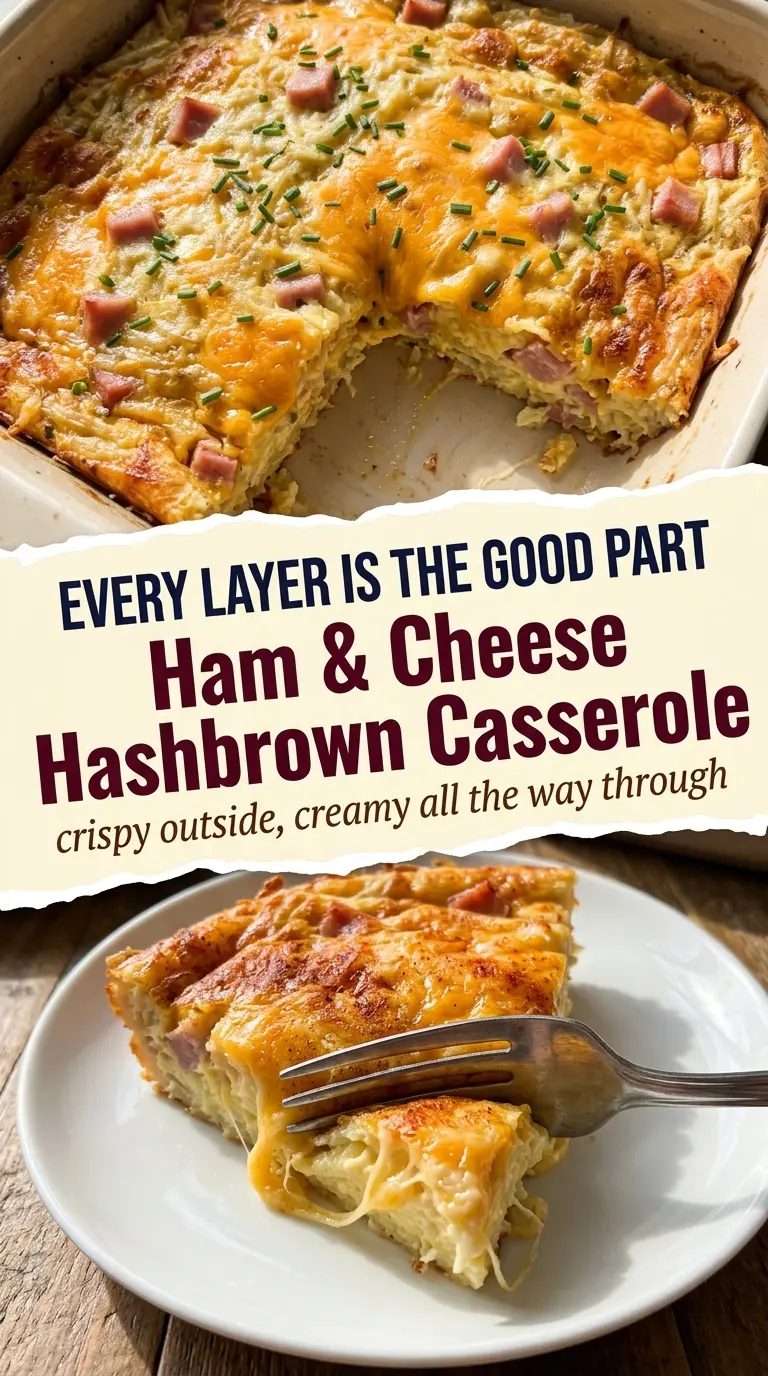
Tip: save now, cook later.Ham and cheese hashbrown casserole bakes into exactly the kind of breakfast pan you want when people are hungry and the coffee isn’t enough yet. The edges turn crisp and deeply browned, the center stays creamy and set, and every bite gives you salty ham, sharp cheddar, and tender potatoes in the same forkful. It’s hearty without feeling heavy, and it slices cleanly once it rests, which is the difference between a nice breakfast casserole and a pan that falls apart on the cutting board.
The trick is building enough structure before the eggs go in. Thawed hashbrowns need to be mixed with butter and pressed into the dish so they can turn into a base instead of steaming into a loose pile. The custard also matters: whole milk and sour cream give it enough richness to stay soft without turning greasy, and the egg mixture needs to be poured evenly so the corners don’t dry out while the middle stays wet.
Below, I’ve included the small details that keep the casserole from going soggy, plus a few swaps that still give you that golden, cheesy finish. If you’ve ever had a breakfast bake that looked right but tasted flat, this version fixes that.
The hashbrowns got crisp around the edges, and the middle stayed creamy instead of turning watery. I made it for brunch and it disappeared before I even got a second slice.
Love the crispy hashbrown edges and cheesy ham filling? Save this casserole for your next brunch or holiday breakfast.
The Secret to Crispy Hashbrowns Instead of a Soggy Bake
Most hashbrown casseroles fail because the potatoes start out too wet or the filling gets layered in a way that traps steam. Thawed hashbrowns are fine, but they need to be loose and lightly coated, not sitting in puddles from defrosting. If the potatoes are icy or dripping, the casserole steams before it ever has a chance to brown.
Pressing the hashbrowns into the dish matters just as much as the ingredients themselves. You’re not packing them down like concrete; you’re giving them enough contact with the hot pan to form a base that can hold the ham, cheese, and custard without collapsing into a soft pile.
The other thing people miss is the rest time. Straight from the oven, the custard is still moving. Give it those 8 to 10 minutes and it settles into clean slices with a creamy center instead of running across the plate.
What Each Ingredient Is Actually Doing in This Dish
- Frozen shredded hashbrowns — These give you the potato base without any extra shredding or squeezing. Thawed is important, but dry is better; if they look wet after thawing, spread them on a towel for a few minutes so the casserole doesn’t turn watery.
- Diced cooked ham — Use a ham that already has good seasoning. Leftover holiday ham works beautifully here because the edges get salty and savory as the casserole bakes. If you only have deli ham, cut it thicker so it doesn’t disappear into the eggs.
- Sharp cheddar and mozzarella — Cheddar brings the flavor; mozzarella brings the melt. You can swap the mozzarella for Monterey Jack if that’s what you have, but keep the sharp cheddar in place or the casserole tastes flat.
- Eggs, whole milk, and sour cream — This is the custard that holds everything together. Whole milk gives body, sour cream adds a little tang and a softer texture, and together they keep the casserole creamy instead of rubbery. Low-fat milk works in a pinch, but the finished bake won’t be as rich.
- Onion, bell pepper, and seasoning — The onion and pepper cook right in the casserole and keep the filling from tasting one-note. The smoked paprika gives the whole dish a little depth without making it taste smoky in an obvious way.
Getting the Layers Right Before the Oven Does the Rest
Mix the Potatoes Before They Go Down
Toss the thawed hashbrowns with the melted butter, onion, and bell pepper before they hit the pan. That small step keeps the vegetables distributed evenly and helps every bite cook at the same rate. If you skip it, the top can brown while the bottom stays bland and soft.
Build the Base, Then Add the Filling
Press the potato mixture into the baking dish and work it slightly up the sides. That edge gives the custard something to hold onto and keeps the center from floating. Add the ham and cheese in even layers so you don’t end up with one dry corner and one overloaded corner.
Pour the Custard Slowly and Evenly
Whisk the eggs, milk, sour cream, and seasonings until no streaks remain, then pour it over the whole pan in passes. Press down gently with the back of a spoon so the custard sinks into the potatoes. If the top looks dry in spots before baking, those areas will bake up chalky.
Watch for the Set, Not Just the Color
Bake until the top is golden and the center only gives a slight wobble when the pan is nudged. A casserole can look done before the middle has actually set, and cutting too early is how you get a loose, wet slice. Let it rest before serving so the eggs finish settling and the cheese thickens back up.
Three Ways to Make This Casserole Work for Your Table
Make it gluten-free without changing the texture
This recipe is naturally gluten-free as written, so you don’t need any special flour swaps. Just check the ham and seasonings for hidden gluten if you’re serving someone with celiac disease. The texture stays the same because the structure comes from eggs and potatoes, not a thickener.
Skip the ham and turn it vegetarian
Leave out the ham and add sautéed mushrooms, spinach, or extra bell pepper for a meatless version. You’ll lose some salt and savoriness, so add a pinch more salt and keep the cheddar sharp. The casserole will still slice well because the eggs and potatoes carry the structure.
Use bacon instead of ham for a smokier pan
Cooked crumbled bacon works if you want a sharper, smokier flavor. Drain it well first so you don’t add extra grease to the casserole, or the filling can taste heavy. Bacon changes the dish from soft and savory to crisp and salty, which is great if that’s the direction you want.
Make it ahead for a busy morning
Assemble the casserole the night before, cover it tightly, and refrigerate it unbaked. In the morning, let it sit on the counter while the oven heats so the dish isn’t ice-cold in the center. You may need a few extra minutes in the oven since it’s starting cold.
Storage and Reheating
- Refrigerator: Store leftovers covered for up to 4 days. The hashbrowns soften a little, but the flavor holds up well.
- Freezer: It freezes well in portions. Wrap tightly and freeze for up to 2 months, then thaw in the refrigerator before reheating.
- Reheating: Warm slices in a 325°F oven, covered loosely with foil, until hot in the center. The biggest mistake is blasting it in the microwave, which makes the eggs tough and the potatoes rubbery.
Answers to the Questions Worth Asking

Ham and Cheese Hashbrown Casserole
Ingredients
Equipment
Method
- Preheat the oven to 375°F (190°C) and grease a 9×13 inch baking dish with butter or cooking spray.
- In a large bowl, combine thawed hashbrowns, melted butter, diced onion, and diced bell pepper, then toss until evenly coated.
- Press the hashbrown mixture into the bottom and slightly up the sides of the prepared baking dish in an even layer.
- Scatter the diced ham evenly over the hashbrown layer.
- Sprinkle 1½ cups of the cheddar and all of the mozzarella over the ham.
- In a separate bowl, whisk the eggs, whole milk, sour cream, garlic powder, onion powder, smoked paprika, salt, and black pepper until smooth.
- Pour the egg custard evenly over the casserole, pressing down gently so it saturates the hashbrowns.
- Sprinkle the remaining ½ cup cheddar over the top.
- Bake uncovered at 375°F (190°C) for 45–55 minutes, until the top is golden brown, the edges are bubbling, and the center is set when gently shaken.
- Remove the casserole from the oven and let it rest for 8–10 minutes before slicing, so the custard firms up.
- Garnish with chopped fresh chives or green onion and serve warm.
