
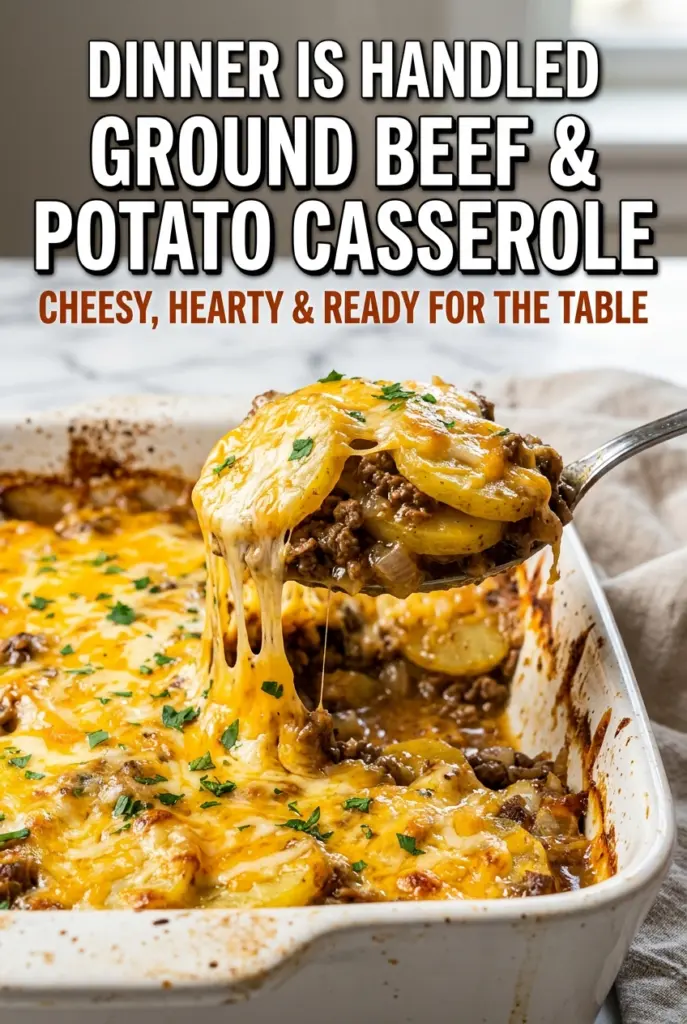
Ground Beef and Potato Casserole
Ground beef and potato casserole is the kind of dinner that lands on the table hot, bubbling, and satisfying enough that nobody starts negotiating for snacks an hour later. Thin-sliced…
Tip: save now, cook later.Ground beef and potato casserole is the kind of dinner that lands on the table hot, bubbling, and satisfying enough that nobody starts negotiating for snacks an hour later. Thin-sliced potatoes turn tender underneath a savory beef layer, and the creamy mushroom sauce ties everything together without turning the casserole greasy or bland. The cheese on top finishes with a browned, melty lid that makes each scoop feel like the best part of a diner-style comfort meal.
What makes this version work is the way the potatoes are sliced thin enough to soften in the same bake as the beef, while the sauce gets spread in two layers so every bite stays moist. Browning the onion with the beef builds a deeper base, and the Worcestershire plus thyme give the sauce a little backbone so it tastes seasoned all the way through instead of just creamy. If your casserole has ever come out watery or underdone in the center, the layering and foil timing here fix both problems.
Below you’ll find the small details that matter: how to keep the potatoes tender, how to avoid a broken sauce, and a few smart swaps if you need to work with what’s already in the kitchen.
The potatoes were tender all the way through and the sauce stayed creamy instead of turning watery. I added the cheese at the end like you said and got that browned top without drying out the middle. My husband went back for seconds before I even sat down.
Save this ground beef and potato casserole for the nights when you want a bubbling, cheesy pan dinner with pantry ingredients and almost no cleanup.
The Reason the Potatoes Turn Tender Instead of Stubborn
The most common failure in a casserole like this is thinking the potatoes will soften just because they’re sitting in a hot oven. Thin slicing matters, but the bigger issue is moisture access. The sauce has to reach the potatoes on both layers, and the foil has to stay on long enough to trap steam without overbrowning the top too early.
Russet potatoes are the right choice here because they break down into that soft, comforting texture without staying waxy or firm. If you slice them thicker than 1/4 inch, they’ll still be crunchy when the cheese is ready. If you rinse them after slicing, dry them well so the sauce doesn’t slide off the surface.
- The bottom layer of potatoes cooks in direct contact with the saucy beef, which helps it soften faster.
- The top layer needs the foil-covered bake to steam through before the cheese goes on.
- Overlapping the slices slightly keeps gaps from drying out or cooking unevenly.
What Each Ingredient Is Actually Doing in This Dish
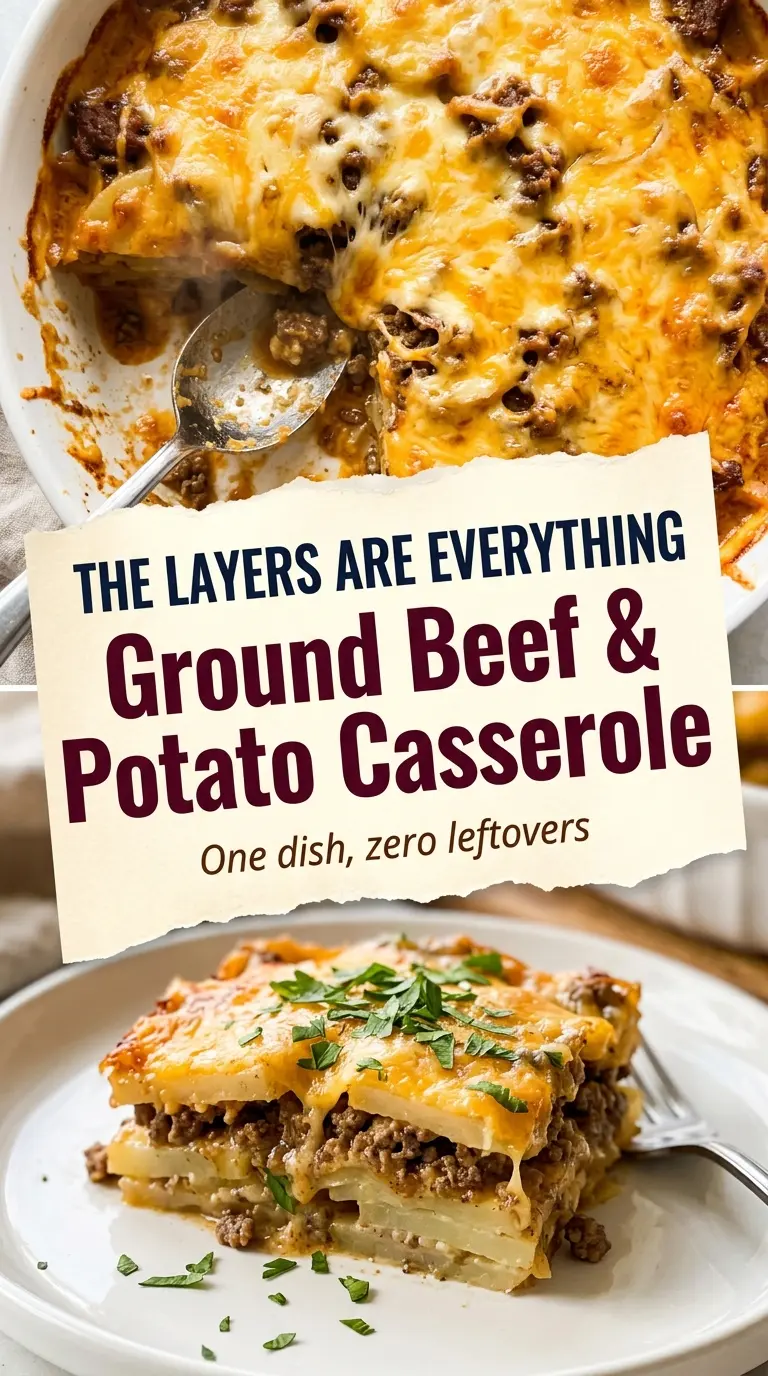
- Ground beef — An 80/20 blend gives you enough fat for flavor without making the casserole greasy. If you use leaner beef, keep an eye on the pan and don’t skip draining the excess fat after browning.
- Russet potatoes — These hold up to long baking and turn soft in the center. Yukon Golds work in a pinch, but they stay a little firmer and give a slightly creamier bite.
- Cream of mushroom soup — This is the shortcut that gives the casserole body and a savory, earthy base. If you swap it, use another condensed cream soup, not a thin homemade sauce, or the casserole can turn loose and watery.
- Sour cream — It adds tang and keeps the sauce from tasting flat. Full-fat is best because it stays smooth under heat.
- Sharp cheddar and mozzarella — Cheddar brings the flavor, mozzarella gives you that stretchy melt. If you only have cheddar, the top will still work; it just won’t have quite as much pull.
Building the Layers So the Center Cooks Through
Brown the beef with the onion first
Cook the onion until it turns translucent and the edges start to soften, then add the garlic for just 30 seconds before the beef goes in. That short head start keeps the onion from staying crunchy in the finished casserole and keeps the garlic from tasting raw. Once the beef is browned, drain off excess fat if the pan looks glossy or pooled; too much fat makes the sauce separate.
Mix the sauce until it’s completely smooth
Whisk the soup, broth, sour cream, Worcestershire, and thyme until the mixture looks even and creamy. If you see streaks of sour cream, keep whisking before it goes into the pan because uneven sauce can bake into pockets instead of coating the potatoes. This sauce should pour easily, not sit in thick clumps.
Layer with purpose, not just order
Spread half the potatoes in an even layer, add all of the beef, then spoon on half the sauce before finishing with the remaining potatoes and sauce. That split keeps the upper and lower potato layers from drying out. Cover the dish tightly with foil and bake until a fork slides into the potatoes without resistance; if the center still feels firm, give it another 10 minutes before adding cheese.
Finish with cheese after the potatoes are tender
Cheese goes on only after the potatoes are cooked through. If you add it too early, the top can brown before the center softens and the whole casserole loses moisture. Bake uncovered just until the cheese melts into bubbly spots with a little color at the edges, then let it rest so the sauce settles and slices cleanly.
Three Ways to Work This Casserole Around What’s in Your Kitchen
Make it gluten-free without losing the creamy texture
Use a certified gluten-free condensed cream of mushroom soup and check the Worcestershire sauce label. The casserole still bakes up thick and rich because the potatoes provide plenty of body.
Swap in ground turkey or chicken for a lighter pan dinner
Lean poultry works, but it needs a little help. Keep the olive oil in the skillet, don’t overcook the meat before baking, and add a pinch more salt because turkey and chicken taste milder than beef.
Use Yukon Gold potatoes for a softer, creamier bite
Yukon Golds hold their shape a little better than russets and give the casserole a buttery finish. They still need to be sliced thin, but they’re a good swap if you want a denser texture instead of a fluffy one.
Storage and Reheating
- Refrigerator: Store covered for 3 to 4 days. The potatoes soften a little more after chilling, but the flavor holds up well.
- Freezer: It freezes best after baking and cooling completely. Wrap tightly and freeze for up to 2 months, though the potatoes will be a bit softer after thawing.
- Reheating: Reheat covered in a 325°F oven until hot in the center, about 20 to 30 minutes for a pan portion. The biggest mistake is blasting it in the microwave, which dries the beef out before the middle heats through.
Answers to the Questions Worth Asking
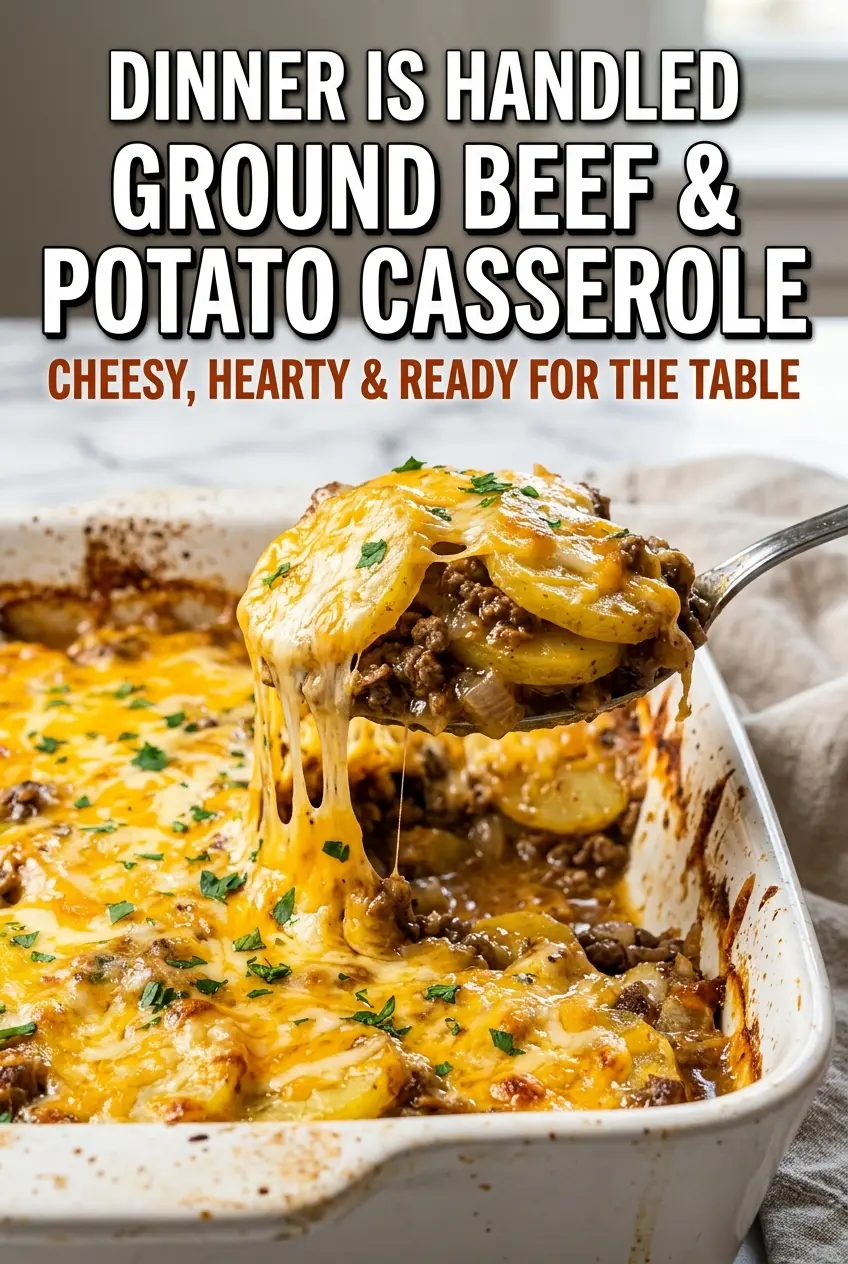
Ground Beef and Potato Casserole
Ingredients
Equipment
Method
- Preheat your oven to 375°F (190°C) and lightly grease a 9×13-inch baking dish for even release.
- Pour the sliced potatoes into a large bowl and toss with 1 tbsp olive oil, 1 tsp salt, and 1/2 tsp black pepper until evenly coated, then set aside.
- Heat 1 tbsp olive oil in a large skillet over medium-high heat, then add the diced yellow onion and cook 3–4 minutes until softened and translucent.
- Add the minced garlic and cook for 30 seconds until fragrant, then add the ground beef and break it apart with a spatula.
- Cook the beef 7–8 minutes until no pink remains, then drain any excess fat.
- Season the beef with smoked paprika, garlic powder, onion powder, salt, and pepper, stir to coat, and remove from heat.
- In a medium bowl, whisk together condensed cream of mushroom soup, beef broth, sour cream, Worcestershire sauce, and dried thyme until smooth.
- Layer half the sliced russet potatoes in the bottom of the prepared baking dish in an even overlapping layer.
- Spread the entire seasoned ground beef mixture evenly over the potato layer, covering it to the edges.
- Pour half the sauce over the beef layer and gently spread with a spoon to level the surface.
- Add the remaining potato slices in another overlapping layer on top of the beef.
- Pour the remaining sauce over the top layer of potatoes and spread to the edges for full coverage.
- Cover the dish tightly with aluminum foil and bake 50–55 minutes at 375°F (190°C) until the potatoes are fork-tender.
- Remove the foil, scatter shredded sharp cheddar cheese and shredded mozzarella cheese evenly over the top, then bake uncovered 15–18 minutes until the cheese is melted, bubbly, and golden in spots.
- Let the casserole rest 10 minutes, then scatter fresh parsley over the top and serve hot.
