
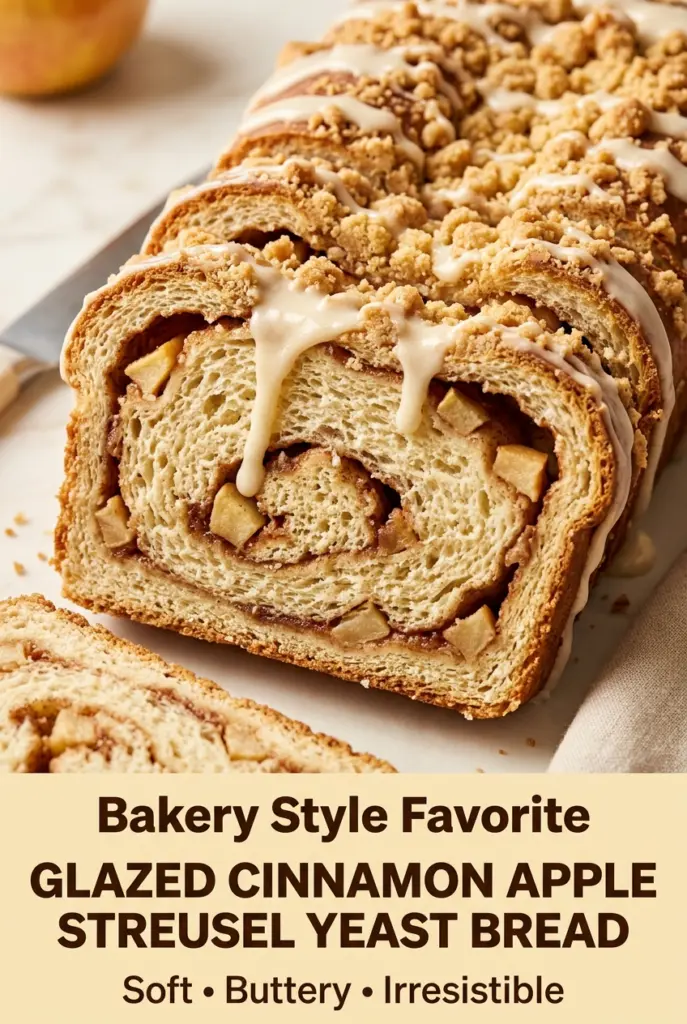
Glazed Cinnamon Apple Streusel Yeast Bread
Glazed Cinnamon Apple Streusel Yeast Bread bakes up like the best kind of bakery loaf: soft and buttery inside, swirled with cinnamon apples, and capped with a crunchy streusel that…
Tip: save now, cook later.Glazed Cinnamon Apple Streusel Yeast Bread bakes up like the best kind of bakery loaf: soft and buttery inside, swirled with cinnamon apples, and capped with a crunchy streusel that stays crisp long enough to matter. The vanilla glaze sinks into the ridges just enough to add sweetness without turning the top soggy, so every slice gives you a little bit of everything in one bite.
What makes this loaf work is that the apple filling gets cooked first. That extra step keeps the fruit from releasing too much juice in the oven, which would otherwise turn the swirl heavy and leave you with a gummy center. The cornstarch helps the filling tighten up as it cools, and the loaf pan does the rest by supporting the dough as it rises a second time.
Below, I walk through the parts that matter most: how to keep the dough tender, how to cool the filling so it doesn’t melt into the bread, and why the streusel should go on just before the second rise. Those small details are what keep this from baking up like an overworked cinnamon roll in loaf form.
The apples stayed tucked in the swirl instead of leaking everywhere, and the streusel baked up crisp even after the glaze went on. I followed the cooling step and the loaf sliced cleanly after 20 minutes.
Bookmark this Glazed Cinnamon Apple Streusel Yeast Bread for the mornings when you want a soft, swirled loaf with crisp topping and a vanilla glaze.
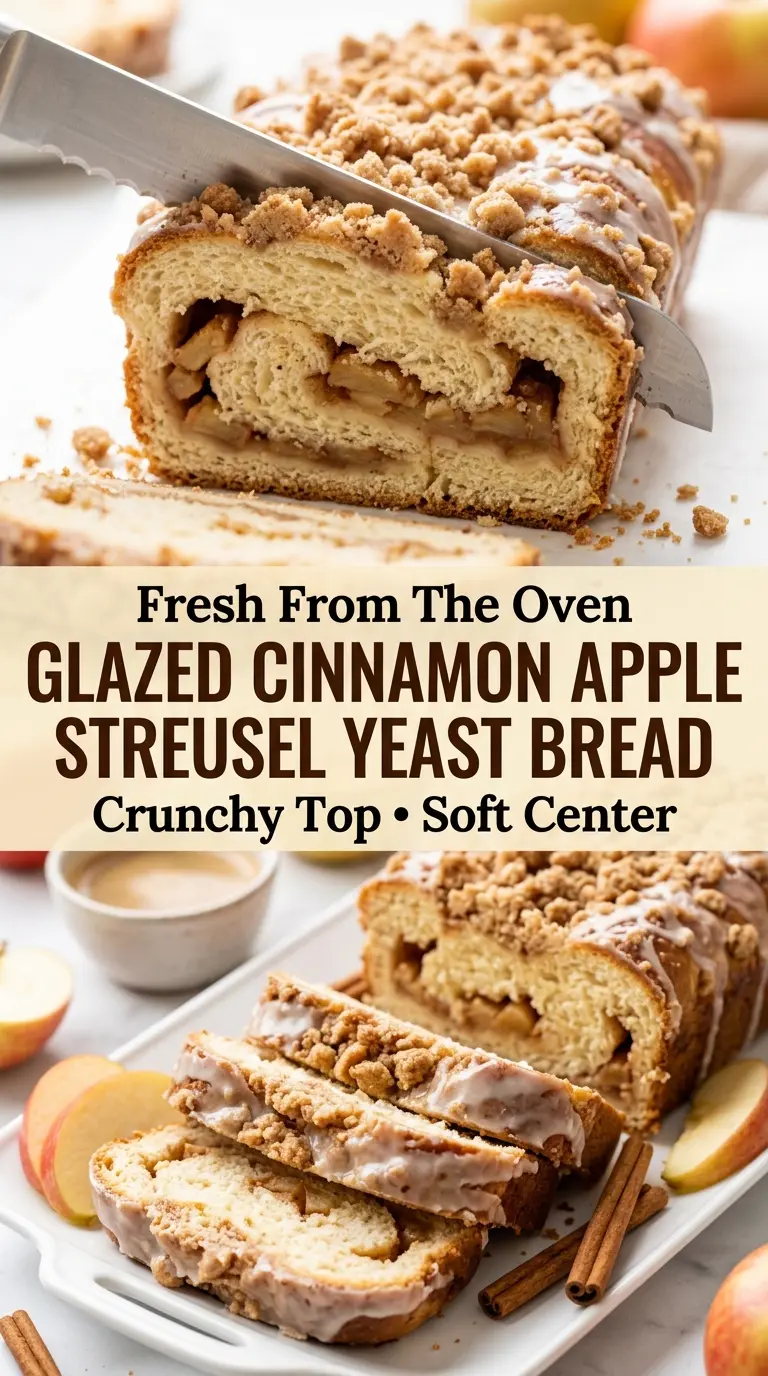
The reason the apple filling gets cooked before it goes anywhere near the dough
Raw apples seem convenient, but they’re the fastest way to end up with a wet spiral and a loaf that bakes up dense in the middle. Cooking the filling first softens the fruit just enough, draws out some moisture, and lets the cinnamon, nutmeg, and brown sugar coat every piece before it gets rolled up. That gives you a filling that tastes finished instead of like diced apples hidden in bread.
The other key detail is cooling. Warm filling can melt the dough before the second rise and make rolling a mess, which is where most sweet yeast loaves go sideways. Let the filling cool completely so it spreads cleanly and stays put while the bread bakes.
- Honeycrisp apples — They hold their shape well and give you tender chunks instead of applesauce. Granny Smith also works if you want a sharper edge, but they bake up a little firmer and less sweet.
- Cornstarch — This is what keeps the filling from running out of the loaf. Flour can work in a pinch, but it leaves the filling cloudy and not quite as tidy when sliced.
- Brown sugar — It deepens the apple flavor and makes the filling taste caramel-like once it bakes. Light or dark brown sugar both work; dark brown sugar gives a stronger molasses note.
- Whole milk — The fat in whole milk helps the dough stay soft and rich. Lower-fat milk will work, but the loaf won’t have the same tender crumb.
Building the loaf so the swirl stays tight and the crumb stays soft
Wake up the yeast first
Start by mixing the warm milk, yeast, and a little of the sugar until the surface looks foamy and alive. If nothing happens after 10 minutes, the milk was likely too hot or the yeast is old, and the dough won’t rise the way it should. The milk should feel warm, not hot, when you dip a finger into it.
Work the dough until it turns smooth
Add the remaining dough ingredients and knead until the dough becomes elastic and only slightly tacky. If it clings hard to your hands, it needs more kneading before it needs more flour. Too much extra flour is one of the quickest ways to make this loaf dry and tight.
Cook the filling until it thickens, then cool it flat
Cook the apples in the skillet until they look glossy and the juices at the bottom turn syrupy. The filling should thicken enough to mound on a spoon, not run like pie filling. Spread it on a plate or shallow bowl so it cools fast; a deep bowl holds heat longer and can soften the dough later.
Roll with confidence, then let the pan do the rest
Roll the dough into a rectangle, spread the cooled filling evenly, and roll it up tightly from the long side. A loose roll leaves gaps, and those gaps become holes after baking. Set the log seam-side down in the pan, then let the second rise happen until the dough crowns just above the rim.
Bake until the center is set, not just the top
The streusel should look sandy and golden, and the loaf should sound a little hollow when tapped. The top browns before the middle is done, so use the internal temperature as your real clue. Pull it when the center reaches about 190°F and the loaf feels set when pressed lightly in the middle.
Make it dairy-free
Use an unsweetened non-dairy milk with some body, like oat milk, and swap in plant-based butter for both the dough and the filling. The loaf will still rise and slice well, though the crumb won’t taste quite as rich as the original.
Use pears instead of apples
Firm pears like Bosc or Anjou work nicely if you want a softer, more floral filling. Cook them the same way, but check them a minute or two early because pears collapse faster than apples and can turn mushy if you overdo the skillet step.
Skip the glaze for a less sweet loaf
The bread still tastes complete without the glaze because the streusel brings enough sweetness and texture on its own. Brush the top with a little melted butter after baking if you want a softer finish without adding more sugar.
Storage and Reheating
- Refrigerator: Store in an airtight container for up to 4 days. The streusel softens a little, but the loaf stays moist.
- Freezer: Freeze the unglazed loaf, tightly wrapped, for up to 2 months. Glaze after thawing so the top doesn’t get sticky in the freezer.
- Reheating: Warm slices in a 300°F oven for 8–10 minutes or microwave briefly. Long microwave bursts make the crumb rubbery and the glaze melt away.
Answers to the questions worth asking
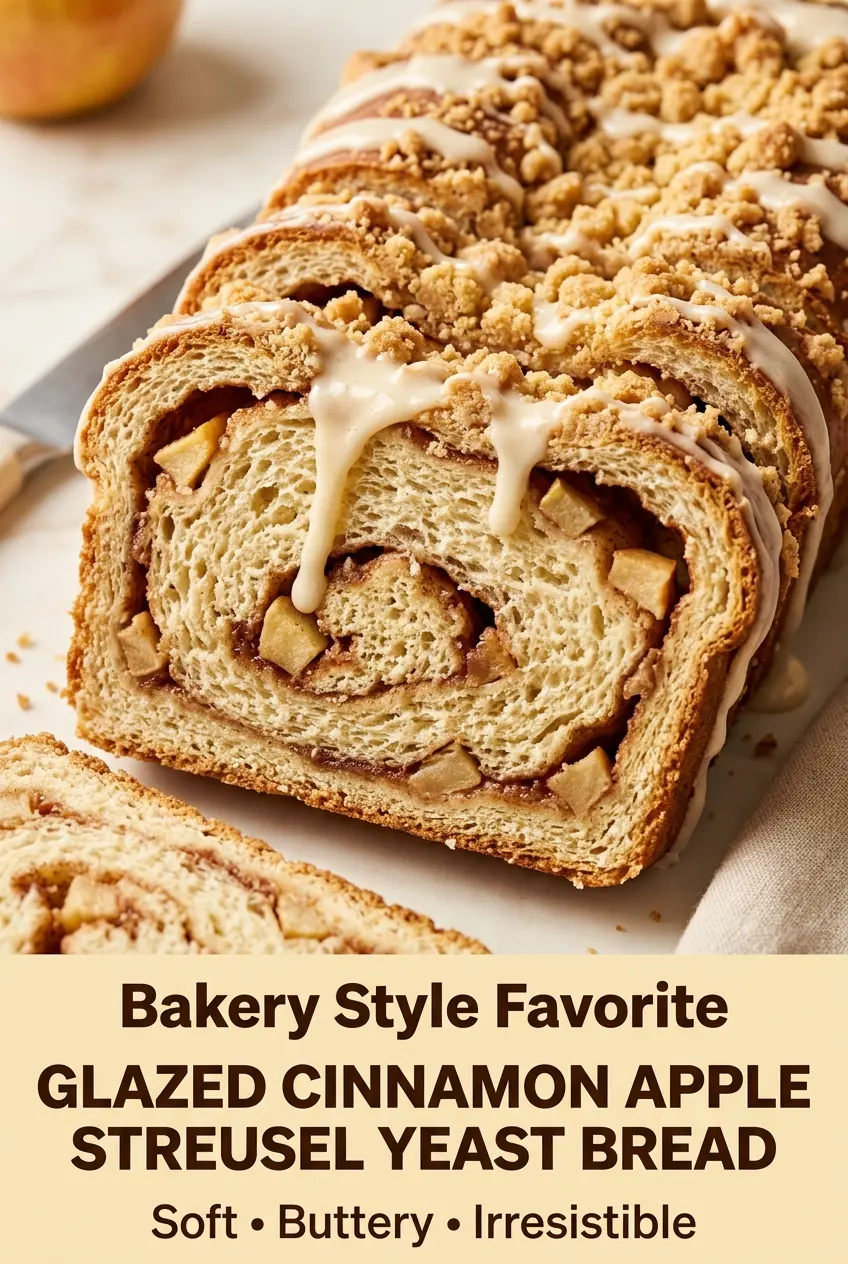
Glazed Cinnamon Apple Streusel Yeast Bread
Ingredients
Equipment
Method
- Combine warm milk, active dry yeast, and 1 teaspoon of the granulated sugar. Let stand for 5–10 minutes until foamy (a thick, bubbly surface should appear).
- Mix in the remaining granulated sugar, melted unsalted butter, large egg, vanilla extract, salt, and all-purpose flour. Knead for 8–10 minutes until smooth and elastic, using the dough window/elastic stretch as your cue.
- Place dough in a greased bowl, cover, and let rise for about 1 hour until doubled in size. The dough should look puffy and nearly double, with an airy texture.
- Melt unsalted butter in a skillet over medium heat, then add Honeycrisp apples, brown sugar, ground cinnamon, ground nutmeg, and cornstarch. Cook for 5–7 minutes until slightly softened, then cool completely for clean spreading.
- Mix all-purpose flour, brown sugar, and ground cinnamon for the streusel. Cut in cold cubed unsalted butter until coarse crumbs form, looking like damp sand.
- Roll the dough into a 9×14-inch rectangle, keeping the thickness even for consistent baking. Spread the cooled apple filling evenly over the surface, leaving a thin border to prevent leakage.
- Roll the dough tightly into a log and place seam-side down in a greased 9×5-inch loaf pan. Position the seam so it stays closed as the loaf rises.
- Sprinkle streusel evenly over the loaf. Cover and let rise for 35–45 minutes until slightly puffy and the dough springs back slowly when gently pressed.
- Bake at 350°F (175°C) for 40–45 minutes until golden brown and the internal temperature reaches about 190°F (88°C). Look for deep caramel edges and a set center as the visual cue.
- Cool in the pan for 15 minutes, then transfer to a wire rack to cool further. This prevents the glaze from melting or sliding off.
- Whisk powdered sugar, milk, and vanilla extract until smooth, then drizzle generously over the cooled loaf before slicing. Use a steady zigzag so the glaze stays on top and sets.
