
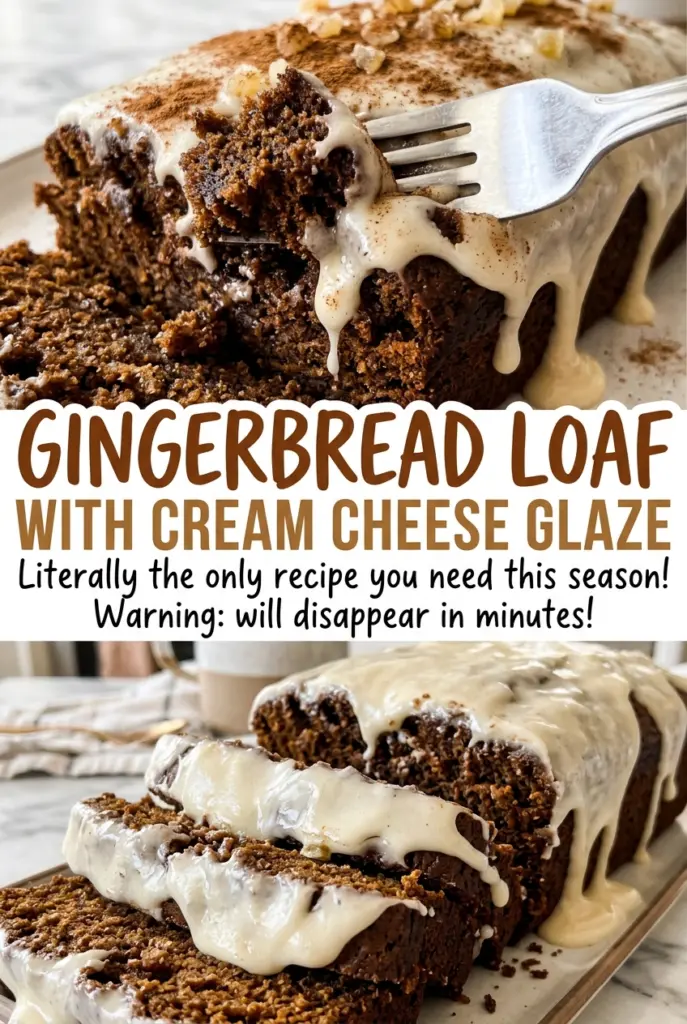
Gingerbread Loaf with Cream Cheese Glaze
When the hot water hits the molasses, the batter loosens and turns glossy; it can look thinner than a typical loaf batter, but that’s exactly what helps the spices spread…
Tip: save now, cook later.When the hot water hits the molasses, the batter loosens and turns glossy; it can look thinner than a typical loaf batter, but that’s exactly what helps the spices spread through every slice. I worked the mixing order out so the Gingerbread Loaf with Cream Cheese Glaze stays tender instead of coming out dense or streaked with dry flour.
The flour goes in around the hot water, beginning and ending with flour, and each addition gets mixed only until it disappears. That keeps the batter together without beating it more than it needs. Room-temperature egg blends more smoothly into the creamed butter and sugar, too; a cold egg can make that mixture look curdled before the molasses goes in.
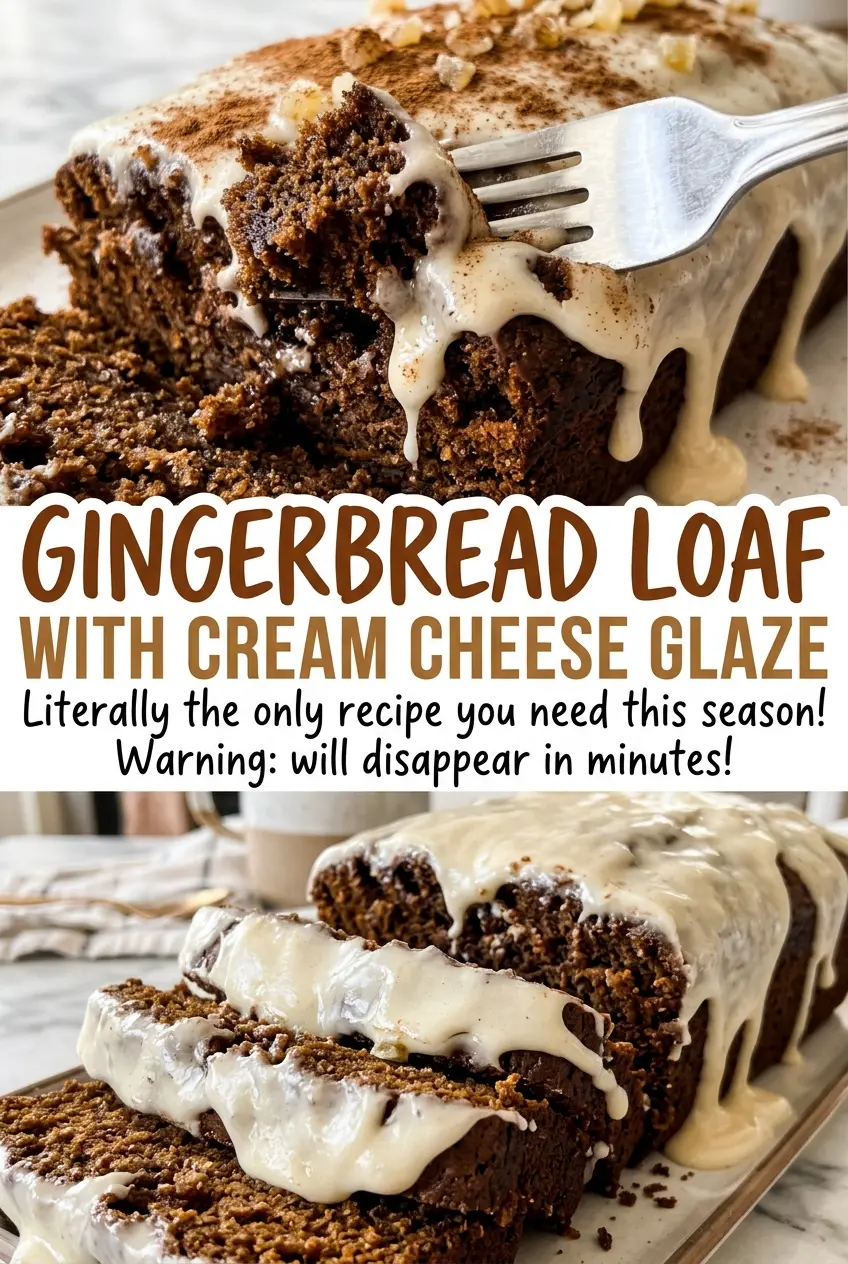
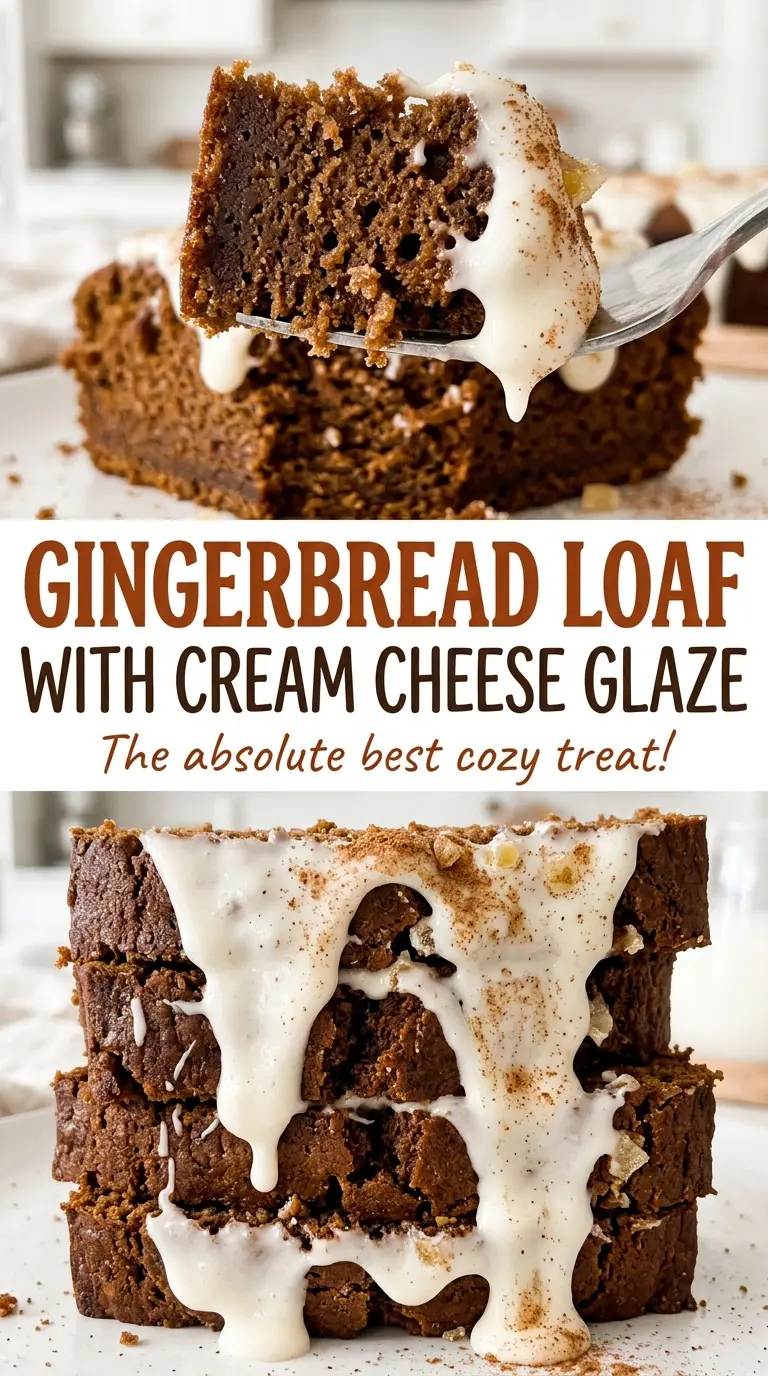
Once the loaf is completely cool, the cream cheese glaze drizzles over the top in soft ribbons. The first slice has a moist, spiced crumb under a tangy, sweet finish.
Kitchen Note
Let the egg come to room temperature before it goes into the butter and brown sugar. It blends in cleanly instead of making the creamed mixture look curdled, which gives you a smooth start before the molasses is added.
Save this gingerbread loaf with its tangy cream cheese glaze for a bake that stays soft beneath a sweet, spiced finish.
Why the Hot Water Goes In Between the Flour, Not All at Once
Molasses is thick and sticky, so pouring hot water straight into it before the dry ingredients are ready can leave you with a loose, uneven mixture. Adding the flour mixture in three additions, alternating with the hot water, gives the batter a chance to come together gradually. Starting and ending with flour matters: the final flour addition brings the batter back to a cohesive consistency instead of leaving it watery.
There’s no need to beat the batter until it looks perfectly silky. Once the last flour streaks disappear, stop mixing. A few seconds too long can develop more gluten in the flour and make the loaf tight rather than tender. The finished batter should be thick enough to scrape into the pan, with a smooth, glossy look from the molasses and hot water.
Molasses and Cream Cheese: What Gives This Loaf Its Character
- Unsulphured molasses — It brings the deep, slightly bitter sweetness and moisture that distinguish gingerbread from a plain spice loaf. A fresh bottle matters more than an expensive one; if it has been open for a long time, taste it before baking because stale molasses can taste harsh. Dark unsulphured molasses works in place of a lighter one, though the finished loaf will taste more robust.
- Ground ginger, cinnamon, and cloves — Ginger leads, cinnamon rounds it out, and cloves add a small, earthy note in the background. Fresh spices make a noticeable difference here, especially the ginger; if yours smell faint when you open the jar, the loaf will taste less lively. Keep the proportions together for the intended balance rather than swapping one spice for an equal measure of another.
- Unsalted butter and brown sugar — Softened butter traps air as it’s beaten with the sugar, while the sugar adds moisture and a gentle caramel note. Dark brown sugar can replace light brown sugar in the same amount for a deeper, more molasses-forward taste. The butter doesn’t need to be a specialty brand, but it should be soft enough to beat smoothly without looking oily.
- Cream cheese and powdered sugar — Cream cheese gives the glaze its slight tang and body; block-style cream cheese is the better choice because spreadable tub cream cheese can leave the glaze too loose. Powdered sugar dissolves smoothly, unlike regular granulated sugar. If you’re out of milk, a little cream can loosen the glaze, though it will make the topping richer.
Building a Smooth Batter and a Drizzleable Glaze
Whisk the Dry Ingredients Evenly
Whisk the flour, baking soda, kosher salt, ginger, cinnamon, and cloves in a medium bowl until the spices are spread evenly through the flour. Break up any clumps of baking soda or spice as you go; a concentrated pocket can leave one bite bitter or oddly salty. Set the bowl aside before you start creaming, so the wet mixture isn’t left waiting once it’s ready.
Cream the Butter, Then Add the Molasses
Beat the softened butter and packed light brown sugar in a large bowl for about 2 minutes, until creamy. Beat in the room-temperature egg until it’s combined, then add the molasses. The mixture may look dark and thick at this point, which is expected; scrape the bowl if molasses is clinging to the sides before you start adding flour.
Alternate Flour and Hot Water
Add the flour mixture in three additions, alternating with the hot water, and begin and end with flour. Mix just until each addition is incorporated, scraping the bowl once if dry flour is hiding at the bottom. The batter should look glossy and uniform, not foamy from prolonged beating. Scrape it into a greased 9×5-inch loaf pan and smooth it into the corners.
Bake, Cool, and Finish with Glaze
Bake at 350°F for 50 to 60 minutes. A toothpick inserted in the center should come out with a few moist crumbs; wet batter means it needs more time, while waiting for a completely clean toothpick can dry the loaf out. Cool it in the pan for 15 minutes, turn it onto a wire rack, and let it cool completely. Beat the softened cream cheese and butter until smooth, then beat in the powdered sugar, vanilla, and milk until the glaze is smooth and drizzleable; pour it over the cool loaf and give it about 15 minutes to set before slicing.
Two Easy Ways to Adapt the Loaf Without Losing Its Gingerbread Feel
Make It Gluten-Free with a Cup-for-Cup Blend
Replace the all-purpose flour with a cup-for-cup gluten-free baking blend that contains xanthan gum. The loaf may be a little more delicate, so let it cool fully before turning it out and slicing; the warm molasses and spice still come through clearly.
Use Dark Brown Sugar for a Deeper Loaf
Swap the light brown sugar for the same amount of dark brown sugar. The extra molasses in dark brown sugar gives the crumb a deeper, less delicate sweetness without changing the mixing method.
Storage and Reheating
- Refrigerator: Keep the glazed loaf covered in the refrigerator for up to 4 days. The crumb firms when chilled, so let a slice sit briefly before eating.
- Freezer: Freeze the unglazed loaf, tightly wrapped, for up to 2 months. Thaw it in the refrigerator, then make and add the glaze after it’s fully thawed.
- Reheating: There’s no need to heat this loaf; warm slices can make the cream cheese glaze run. For a softer crumb, bring a slice toward room temperature, and don’t leave the glazed loaf out for more than 2 hours.
Questions That Come Up When Baking Gingerbread Loaf
Gingerbread Loaf with Cream Cheese Glaze
Ingredients
Equipment
Method
- Preheat the oven to 350°F.
- Grease a 9x5-inch loaf pan.
- Whisk the flour, baking soda, salt, ginger, cinnamon, and cloves together in a medium bowl.
- Beat the butter and brown sugar in a large bowl until creamy, about 2 minutes.
- Beat in the egg until combined.
- Beat in the molasses.
- Mix in the flour mixture in three additions, alternating with the hot water and beginning and ending with the flour mixture; mix just until combined.
- Scrape the batter into the prepared pan and bake for 50 to 60 minutes, until a toothpick inserted in the center comes out with a few moist crumbs.
- Cool the loaf in the pan for 15 minutes.
- Turn it out onto a wire rack and cool completely.
- Beat the cream cheese and butter in a medium bowl until smooth.
- Beat in the powdered sugar, vanilla, and milk until smooth and drizzleable.
- Drizzle the glaze over the completely cooled loaf.
- Let it set for about 15 minutes before slicing.
