
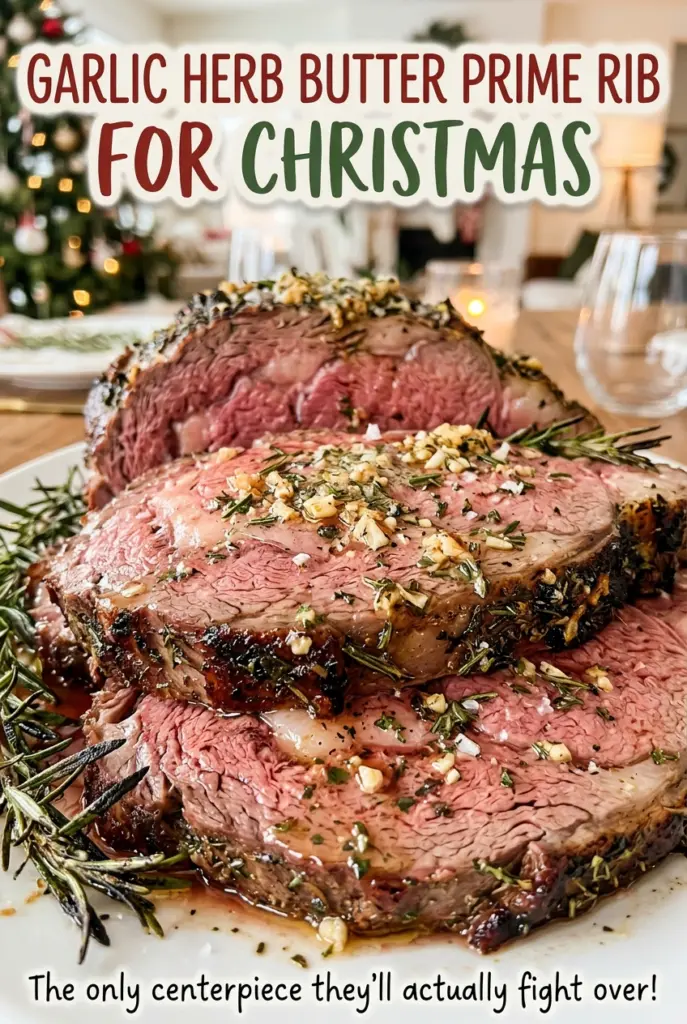
Garlic Herb Butter Prime Rib for Christmas
The first blast of heat gives a prime rib its browned outside, but the garlic and herbs are what make the kitchen smell like Christmas dinner. With this roast, the…
Tip: save now, cook later.The first blast of heat gives a prime rib its browned outside, but the garlic and herbs are what make the kitchen smell like Christmas dinner. With this roast, the butter melts over the surface while the meat finishes cooking more gently, so each slice gets a savory, fragrant edge. I like this garlic herb butter prime rib for Christmas because the prep is simple, and the thermometer—not guesswork—tells me when the center is ready.
A bone-in roast has a lot of presence, and it deserves a little planning before it goes into the oven. The salt needs time on the meat, and the butter needs to be soft enough to spread evenly. Those small details help the roast come out seasoned throughout, with a coating of garlic, rosemary, and thyme over the top.
Kitchen Note
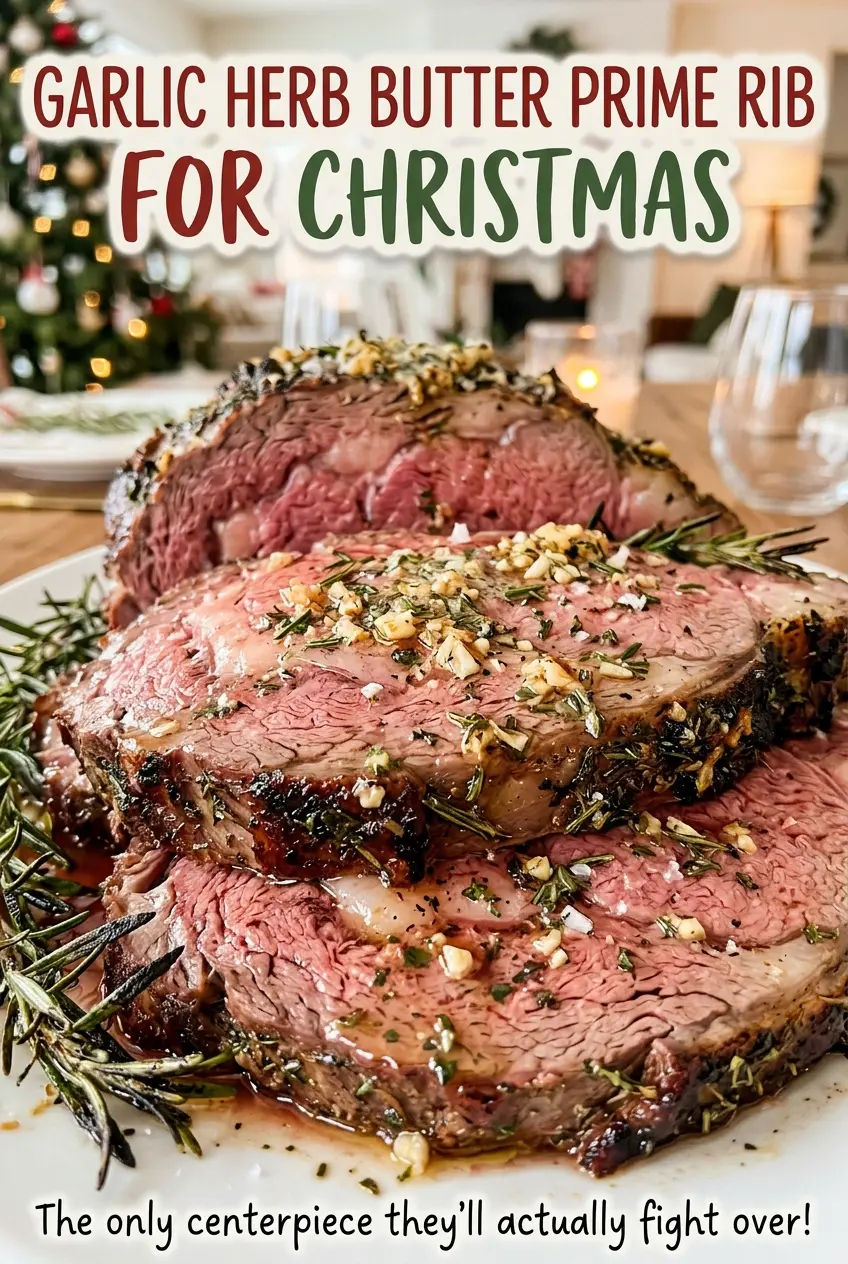
Let the roast rest for the full 20 minutes before you carve it. Cutting too soon sends the juices onto the board instead of keeping the slices moist.
Save this Christmas prime rib for a holiday meal with a golden roast and a rosemary-thyme butter crust.
Why salting the roast uncovered changes the crust
A roast can look deeply browned on the outside and still taste underseasoned through the middle. Salting the surface well ahead of roasting gives the salt time to move beyond the very outside of the meat. The uncovered refrigerator rest also lets the surface dry, which helps it brown instead of releasing extra moisture into the pan.
That dry surface matters even more here because the herb butter goes on after the first hot roast. If the meat is damp, the butter can melt and run off before it has a chance to coat the outside evenly. The long, uncovered chill gives you a drier starting point; the butter then stays where you spread it as the roast continues cooking.
Use the full 12-to-24-hour window for this step when you can plan ahead. The shorter end still gives the salt time to work, while a longer rest gives the surface more time to dry. Keep the roast uncovered and bone-side down in its roasting pan, rather than covering it and trapping moisture against the meat.
Why unsalted butter keeps the garlic and herbs in balance
- Bone-in prime rib: The bones give you the classic rack shape and make it easy to carve between the ribs after roasting. Keep the roast whole for this cooking time; a different cut or shape won’t cook at the same rate.
- Kosher salt: Its coarse crystals are easy to distribute over the whole roast. I use kosher salt here rather than swapping in fine table salt measure-for-measure, since the smaller crystals pack more densely and can make the surface too salty.
- Unsalted butter: Butter carries the garlic and herbs across the roast and adds richness to the browned exterior. Unsalted butter lets the kosher salt remain the only added salt, so salted butter isn’t a direct swap without changing the seasoning.
- Fresh garlic, rosemary, and thyme: The fresh herbs bring a fragrant, leafy aroma that dried herbs won’t replicate in the same way. Mince the garlic and strip the thyme leaves from their stems before stirring them into the softened butter so the mixture spreads smoothly.
- Freshly ground black pepper: Pepper adds a warm, sharp note that stands up to the rich meat and butter. Grind it fresh for the most fragrant result; the coarse grind also gives the butter mixture a little texture.
From the overnight salt rest to a thermometer-ready roast
Dry-salting the bone-in roast
Pat the roast dry, then rub the kosher salt over all sides. Set it bone-side down in a 9×13-inch roasting pan and refrigerate it uncovered for 12 to 24 hours. Take it out 45 minutes before roasting while the oven preheats to 450°F. This gives the chill time to ease before the roast meets the hot oven.
Stirring together the garlic herb butter
Combine the softened unsalted butter, minced garlic, chopped rosemary, thyme leaves, and freshly ground black pepper in a small bowl. Stir until the herbs and garlic are distributed evenly through the butter. Soft butter spreads more easily than cold butter, so you can coat the roast without tugging at its surface.
Starting hot, then lowering the oven
Roast at 450°F for 15 minutes to start browning the outside. Take the pan out and spread the garlic herb butter over the roast, covering the top and sides. Reduce the oven to 325°F, return the roast to the oven, and begin checking after 1 hour. The remaining roast time is 1 1/2 to 2 1/2 hours; use a thermometer in the thickest part, away from the bone, and cook until it reads 145°F.
Resting and carving cleanly
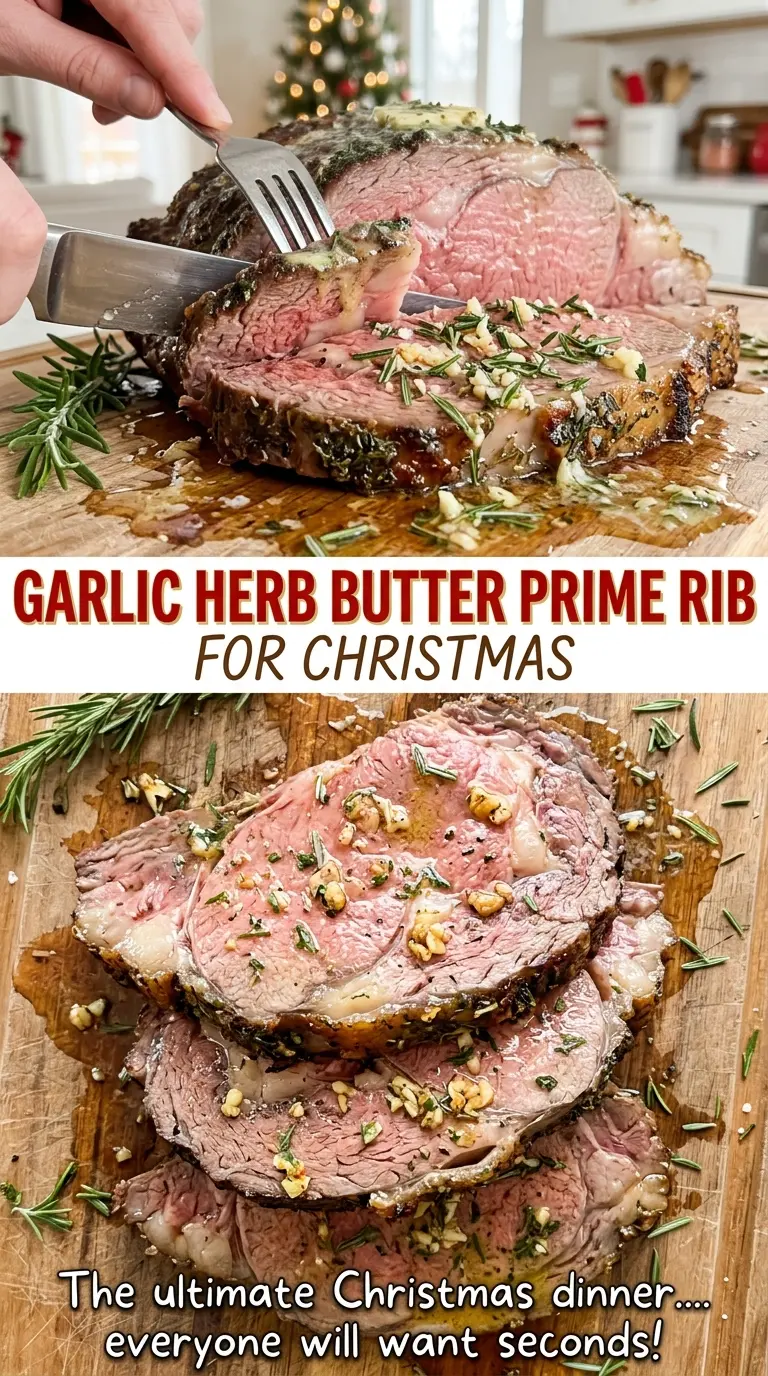
Move the roast to a carving board when it reaches 145°F and let it rest for 20 minutes. The pause gives the juices time to settle through the meat, so they don’t all spill out when you start slicing. Carve between the ribs, then slice the roast for serving.
Two ways to soften the garlic-herb edge
A garlic-free butter coating
Leave the garlic out of the butter and keep the rosemary, thyme, and black pepper. The roast still gets the aromatic herb coating, but the flavor is milder and less pungent.
A pepper-free version
Omit the black pepper from the butter for a gentler finish. The garlic, rosemary, and thyme still give the coating plenty of savory character without pepper’s sharper bite.
Storage and Reheating
- Refrigerator: Store carved leftovers in an airtight container for 3 to 4 days. The chilled meat will be firmer than freshly carved slices.
- Freezer: Freeze slices in a tightly sealed container or freezer bag for up to 2 to 3 months. Thaw them in the refrigerator before reheating.
- Reheating: Warm only the portions you plan to eat, using gentle heat so the slices don’t dry out. Reheat leftovers to 165°F; high heat can make the meat tough before the center warms through.
Questions that come up when roasting prime rib
Garlic Herb Butter Prime Rib for Christmas
Ingredients
Equipment
Method
- Pat the roast dry and rub the kosher salt over all sides.
- Set the roast bone-side down in a 9x13-inch roasting pan.
- Refrigerate uncovered for 12 to 24 hours.
- Remove the roast from the refrigerator 45 minutes before roasting while the oven preheats to 450°F.
- Stir the softened butter, garlic, rosemary, thyme, and black pepper together in a small bowl until evenly combined.
- Roast the prime rib at 450°F for 15 minutes.
- Remove the pan from the oven and spread the garlic herb butter over the roast.
- Reduce the oven temperature to 325°F and return the roast to the oven.
- Roast for 1 1/2 to 2 1/2 hours, beginning to check after 1 hour, until a thermometer inserted into the thickest part away from the bone reads 145°F.
- Transfer the roast to a carving board and rest for 20 minutes.
- Carve between the ribs and slice.
