
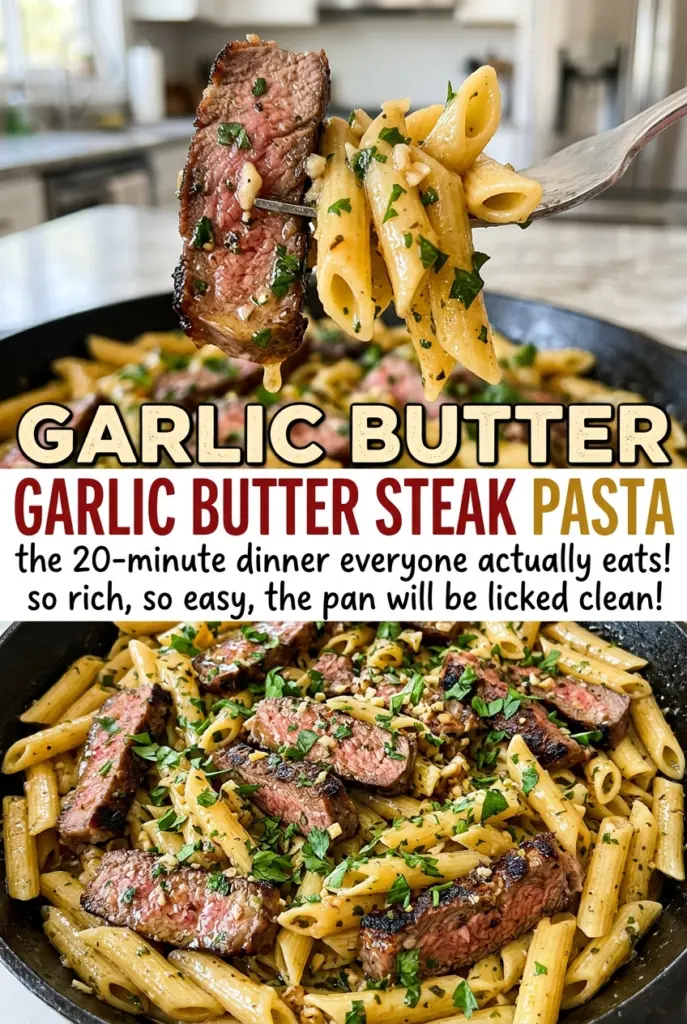
Garlic Butter Steak Pasta
The garlic starts to sizzle in the butter just as the steak rests, and that’s when this skillet smells like dinner is almost ready. I make this garlic butter steak…
Tip: save now, cook later.The garlic starts to sizzle in the butter just as the steak rests, and that’s when this skillet smells like dinner is almost ready. I make this garlic butter steak pasta when I want a creamy fettuccine dinner with a proper seared steak on top, but don’t want to juggle a separate pan for the sauce. The steak gets a quick rest while the cream simmers, and the pasta is ready to catch every bit of it.
Reserved pasta water is what helps the sauce cling to the fettuccine instead of settling into a puddle at the bottom of the bowl. It goes into the skillet with the cream, then the Parmesan gets stirred in after the pan comes off the heat. That order keeps the sauce smooth, with enough body to coat the noodles and a fresh, savory finish from the parsley.
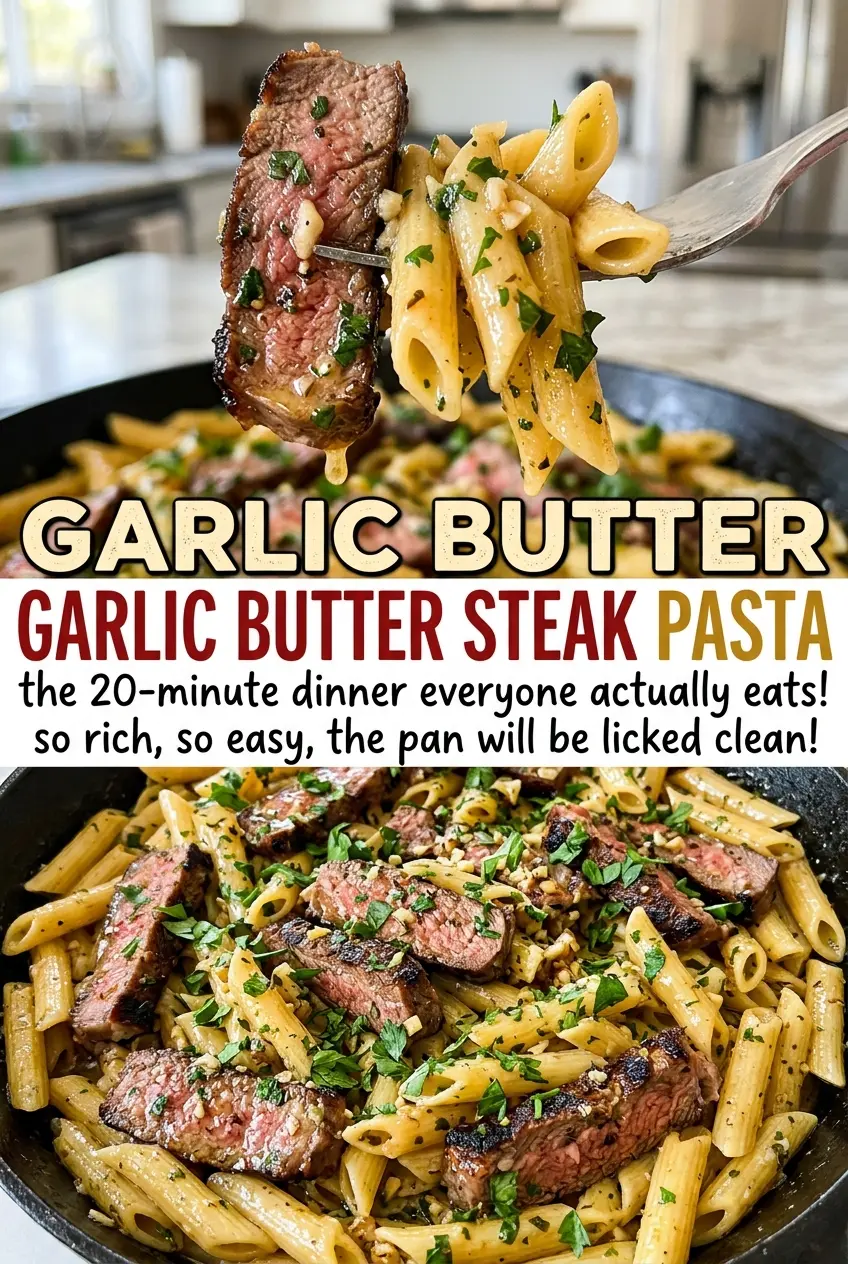
Kitchen Note
Slice the steak across the grain, not along it. Those shorter slices are easier to chew and make each serving feel tender.
Save this garlic butter steak pasta for a night when you want tender sirloin, creamy fettuccine, and a sauce that clings to every bite.
Why This Cream Sauce Needs the Pasta Water Before the Parmesan
A cream sauce can taste rich and still slide right off the noodles. The reserved pasta water helps solve that: the starch in it gives the cream sauce a little more body, so it coats the fettuccine rather than pooling underneath. It also lets you bring the sauce and pasta together without relying on extra cream to make the skillet feel full.
The order matters. Let the cream and pasta water reach a gentle simmer together, then give them a couple of minutes to thicken before taking the skillet off the burner. Parmesan melts more smoothly when it goes in away from direct heat; add it while the sauce is bubbling and it’s more likely to clump instead of turning silky. Save the pasta water before draining, since you’ll need it in the sauce. The result should look glossy and cling to the noodles, not sit thickly in the pan.
What Makes the Steak, Pasta, and Parmesan Work Together
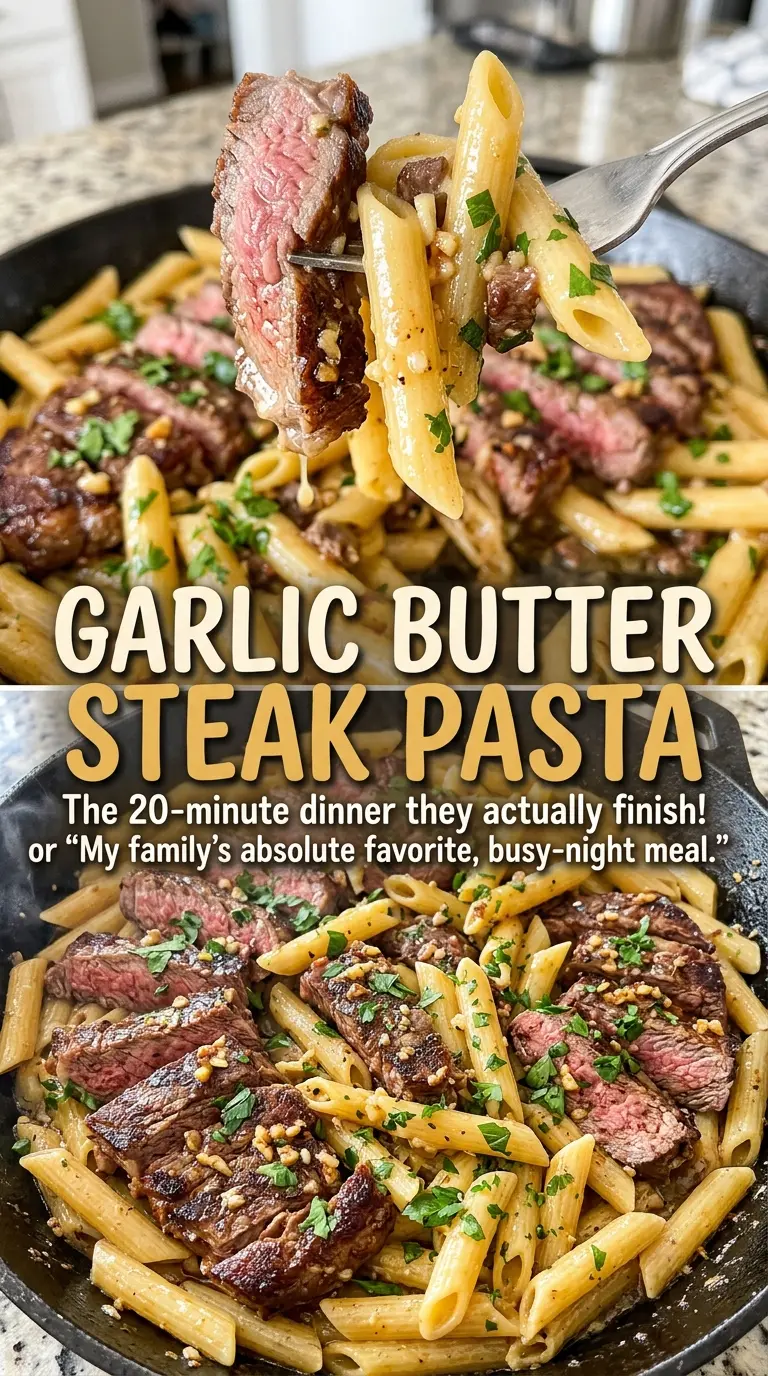
- Fettuccine — Its broad ribbons give the creamy sauce plenty of surface to cling to. Cook it just to al dente so it still has some bite after you toss it in the warm sauce.
- Sirloin steak — A steak about 1 inch thick gives you a substantial slice to serve over the pasta and suits the skillet sear. Patting it dry before seasoning helps the surface brown instead of releasing moisture into the pan.
- Heavy cream and butter — These build the rich, smooth base. The cream is doing more than thinning the sauce, so a lower-fat liquid won’t give the same texture.
- Garlic — Mince it finely so it cooks quickly in the butter and spreads through the sauce. It only needs about 30 seconds in the skillet; longer cooking can make it taste bitter.
- Finely grated Parmesan — Fine shreds melt into the sauce more readily than thick shavings. Freshly grated cheese is a good choice here because the goal is a smooth finish, not distinct strands of cheese.
- Fresh parsley — Chopped parsley adds a clean, green finish to the rich sauce. Chop it shortly before serving for the freshest color.
How to Time the Steak and Creamy Fettuccine in One Skillet
Cook the Fettuccine and Save Its Starchy Water
Bring a large pot of water to a boil, add the fettuccine and 1 tablespoon of kosher salt, and cook according to the package directions until al dente, usually 9–11 minutes. Before draining, scoop out 1/2 cup of the pasta water and set it aside. Drain the noodles once they’re tender with a slight bite; soft pasta will lose its texture when tossed in the warm sauce.
Sear the Sirloin Until It Reaches Temperature
Season both sides of the patted-dry steak with the remaining 1 teaspoon of salt and the black pepper. Heat the olive oil in a 12-inch skillet over medium-high heat, then sear the steak for 4–6 minutes per side. Use an instant-read thermometer to check the center; it should reach 145°F. Transfer the steak to a cutting board and let it rest for at least 3 minutes while you make the sauce.
Simmer the Cream, Then Finish the Sauce Off the Heat
Reduce the skillet heat to medium, add the butter and minced garlic, and stir for about 30 seconds, just until fragrant. Stir in the heavy cream and reserved pasta water, bring the mixture to a gentle simmer, and cook for 2–3 minutes until slightly thickened. Take the skillet off the heat before stirring in the Parmesan; the sauce should turn smooth. Add the drained fettuccine and toss until it’s coated, then slice the rested steak across the grain and arrange it over the pasta with the parsley.
Two Ways to Serve the Same Steak-and-Pasta Dinner
Fold the steak through for pasta bowls
Instead of arranging the slices on top, cut the rested steak across the grain and fold it gently through the coated fettuccine just before serving. The beef gets distributed through the bowls, though the slices won’t keep their seared edges as distinct against the creamy sauce.
Plate the steak alongside the fettuccine
For a more separated plate, portion the sauced fettuccine first and arrange the sliced sirloin beside it instead of directly over the noodles. This keeps the steak’s browned surface more noticeable and lets you pick up pasta and steak in separate bites.
Storage and Reheating
- Refrigerator: Refrigerate leftovers within 2 hours and use within 3–4 days. The fettuccine will absorb some sauce as it sits.
- Freezer: Freezing isn’t recommended; the cream sauce can separate and the pasta softens after thawing.
- Reheating: Warm a portion in the microwave in short bursts, stirring between each, until it reaches 165°F. Avoid heating it until the sauce boils, which can make the texture oily or uneven.
Questions That Come Up While Making Garlic Butter Steak Pasta
Garlic Butter Steak Pasta
Ingredients
Equipment
Method
- Bring a large pot of water to a boil.
- Add the fettuccine and 1 tablespoon of the salt.
- Cook according to package directions until al dente, usually 9–11 minutes.
- Reserve 1/2 cup pasta water, then drain the pasta.
- Season the steak on both sides with the remaining 1 teaspoon salt and the black pepper.
- Heat the olive oil in a 12-inch skillet over medium-high heat.
- Sear the steak for 4–6 minutes per side, until the center reaches 145°F on an instant-read thermometer.
- Transfer the steak to a cutting board and let it rest for at least 3 minutes.
- Reduce the skillet heat to medium, then add the butter and garlic.
- Cook for about 30 seconds, stirring, until fragrant.
- Stir in the heavy cream and reserved pasta water, then bring to a gentle simmer.
- Cook for 2–3 minutes, stirring, until slightly thickened.
- Remove the skillet from the heat and stir in the Parmesan until smooth.
- Add the drained pasta and toss to coat.
- Slice the steak across the grain and arrange it over the pasta.
- Sprinkle with the parsley.
