

Garlic Butter Chicken Meatballs
Garlic butter chicken meatballs hit that sweet spot between weeknight easy and the kind of dinner people hover around the skillet for. The meatballs stay tender instead of dense, and…
Tip: save now, cook later.Garlic butter chicken meatballs hit that sweet spot between weeknight easy and the kind of dinner people hover around the skillet for. The meatballs stay tender instead of dense, and the sauce clings to every browned edge with enough garlic and lemon to keep the butter from feeling heavy. Served over mashed potatoes, rice, pasta, or just with bread for swiping the pan, they disappear fast.
What keeps this version working is the balance inside the meatballs and the way the sauce is built. Ground chicken needs help staying juicy, so the egg, breadcrumbs, and Parmesan all pull their weight without making the texture pasty. The other key move is simmering the broth and butter just long enough for the sauce to tighten slightly before the meatballs go back in. That gives you a glossy coating instead of a greasy puddle at the bottom of the pan.
Below, I’m walking through the small things that matter here: how gently to mix the meat, how to keep the garlic from scorching, and what to do if you want these a little spicier or a little lighter.
The meatballs came out so tender, and the garlic butter sauce thickened just enough to coat everything instead of running all over the plate. My kids usually pick around parsley, but they ate these without a complaint.
Save these garlic butter chicken meatballs for a fast dinner with a silky sauce that clings to pasta, potatoes, or bread.
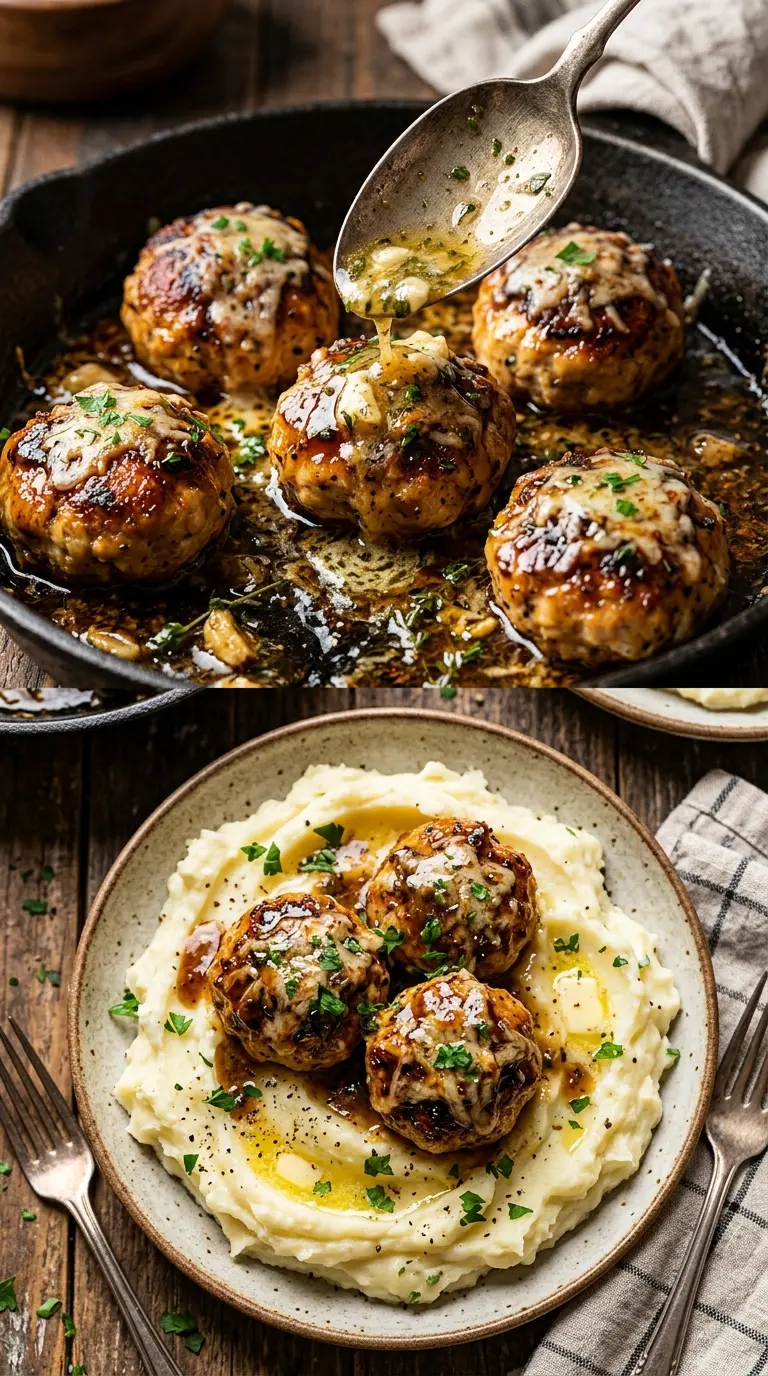
The Secret to Tender Chicken Meatballs Is Not Overworking the Mixture
Ground chicken can go from soft and juicy to tight and bouncy with just a few extra turns of the spoon. That’s the main trap with this recipe. Once the breadcrumbs, Parmesan, egg, and seasonings are evenly distributed, stop mixing. A loose mixture is a good thing here; it gives the meatballs a lighter bite after they cook.
The second thing that matters is browning. You’re not trying to cook these hard and fast until the outside looks dark. You want steady medium heat so the meatballs develop color without drying out before the center is done. If the pan is smoking or the garlic starts to taste sharp and bitter later, the heat was too high from the start.
- Breadcrumbs — Italian breadcrumbs bring both structure and seasoning. Plain breadcrumbs work too, but add an extra pinch of Italian seasoning if that’s what you use.
- Parmesan — This adds saltiness and helps the meatballs hold together. Freshly grated Parmesan melts into the mixture better than the shelf-stable kind, though either will work in a pinch.
- Parsley — Fresh parsley keeps the meatballs from tasting flat. Dried parsley won’t give the same clean finish, so if you skip it, the dish tastes heavier.
- Lemon juice — The sauce needs that little hit of acid at the end. It cuts through the butter and keeps the whole pan from tasting one-note.
Building the Sauce in the Same Skillet Keeps Every Bit of Flavor
Mixing the Meatballs Gently
Combine the chicken, breadcrumbs, Parmesan, egg, garlic, parsley, seasoning, onion powder, salt, and pepper in a large bowl, then stop as soon as it looks evenly mixed. If you keep going, the proteins tighten and the meatballs cook up dense. The mixture should hold its shape when you roll it, but it doesn’t need to feel stiff.
Browning Without Drying Out
Heat the oil in a large skillet over medium heat and add the meatballs with a little space between them. Turn them often so the color builds on several sides instead of forming one hard crust. If they’re sticking, give them another minute; they’ll release once that first browned layer forms.
Making the Garlic Butter Sauce
Take the cooked meatballs out, then melt the butter in the same pan and add the garlic for just about 30 seconds. Garlic goes from fragrant to bitter fast, so don’t walk away here. Pour in the broth and scrape up the browned bits from the pan, because those bits carry the roasted chicken flavor into the sauce. Let it simmer long enough to look slightly glossy and a touch reduced before the lemon, herbs, and red pepper go in.
Finishing the Meatballs in the Sauce
Return the meatballs to the skillet and spoon the sauce over them for a couple of minutes. This last step matters because it lets the meatballs absorb some of the sauce instead of just sitting under it. The sauce should coat the spoon lightly and cling to the meatballs instead of pooling thinly at the bottom.
How to Adapt These Meatballs Without Losing What Makes Them Work
Dairy-Free Version
Use a dairy-free butter substitute and skip the Parmesan, or replace it with a dairy-free hard-style cheese if you have one that melts well. The sauce still comes together, but it will taste a little lighter and less savory, so the broth and lemon matter even more.
Gluten-Free Swap
Use certified gluten-free breadcrumbs in place of the Italian breadcrumbs. The texture stays nearly the same, especially if the crumbs are fine rather than coarse. If your gluten-free crumbs are unseasoned, add a small extra pinch of Italian seasoning.
Turning Up the Heat
The red pepper flakes are optional, but if you want more bite, add a little extra to the sauce instead of the meatball mixture. That keeps the heat on the surface of the dish, where it brightens the butter, instead of making every bite spicy.
Making It Ahead
You can shape the meatballs up to a day in advance and keep them covered in the refrigerator. That rest actually helps them firm up, which makes them easier to brown evenly. If they sit too long, though, the breadcrumbs soften and the mixture gets stickier, so cook them within 24 hours.
Storage and Reheating
- Refrigerator: Store leftovers in an airtight container for up to 4 days. The sauce thickens as it chills, but the meatballs stay tender.
- Freezer: These freeze well. Freeze the cooked meatballs and sauce together in a sealed container for up to 2 months, then thaw overnight in the refrigerator.
- Reheating: Warm gently in a covered skillet over low heat with a splash of broth or water. High heat will push the chicken past tender and can make the sauce separate.
Answers to the Questions Worth Asking

Garlic Butter Chicken Meatballs
Ingredients
Equipment
Method
- In a large bowl, combine the ground chicken, Italian breadcrumbs, grated Parmesan cheese, egg, minced garlic, chopped fresh parsley, Italian seasoning, onion powder, salt, and black pepper.
- Mix gently until just combined so the meatballs stay tender.
- Shape the mixture into 18–20 meatballs, keeping the size even for consistent cooking.
- Heat the olive oil in a large skillet over medium heat until shimmering.
- Cook the meatballs for 8–10 minutes, turning often, until browned and cooked through.
- Transfer the meatballs to a plate.
- Reduce the heat to medium and melt the butter in the same skillet.
- Add the minced garlic and sauté for about 30 seconds until fragrant, stirring to prevent browning.
- Pour in the chicken broth and stir well to loosen the browned bits.
- Add the lemon juice, Italian seasoning, and crushed red pepper flakes (optional), then simmer for 2–3 minutes.
- Return the meatballs to the skillet.
- Spoon the garlic butter sauce over the meatballs for 2 minutes to coat.
- Sprinkle with Parmesan and fresh parsley, then serve immediately over pasta, mashed potatoes, rice, or roasted vegetables.
