
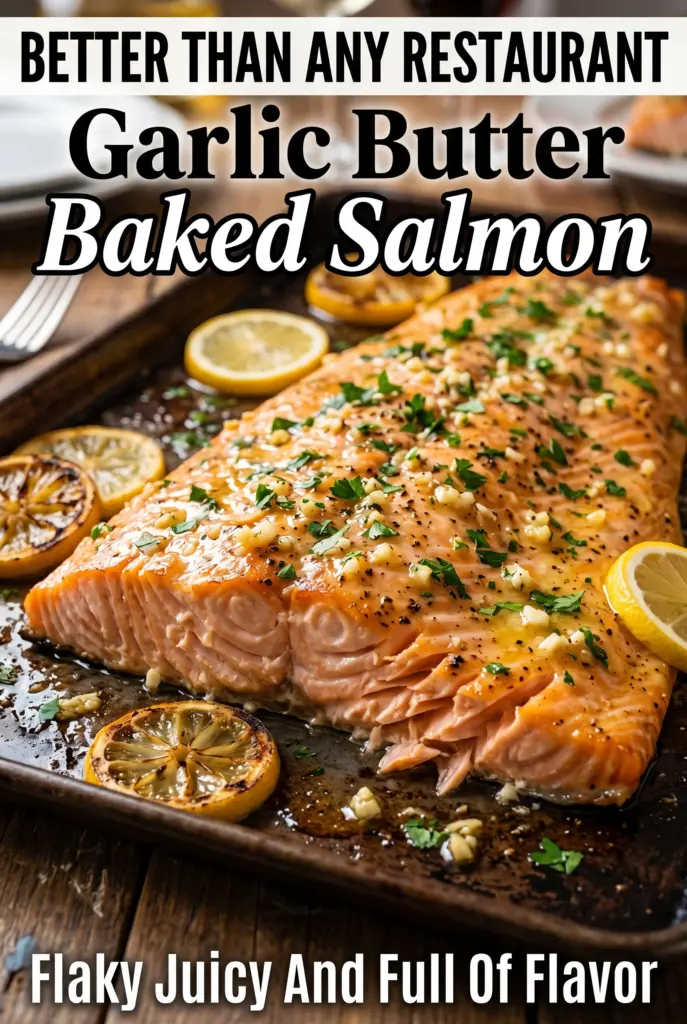
Garlic Butter Baked Salmon
Garlic butter baked salmon comes out tender, flaky, and full of rich, savory flavor without needing a complicated sauce or a long list of ingredients. The butter keeps the fish…
Tip: save now, cook later.Garlic butter baked salmon comes out tender, flaky, and full of rich, savory flavor without needing a complicated sauce or a long list of ingredients. The butter keeps the fish moist in the oven, while the garlic, lemon, and paprika build enough punch to make every bite taste finished. It’s the kind of dinner that feels polished when it hits the table, even though it’s built from a handful of pantry staples and one sheet pan.
What makes this version work is the balance. The salmon gets coated in melted butter before it goes into the oven, which helps the seasonings cling and protects the surface from drying out. Lemon juice and zest keep the butter from tasting heavy, and the short bake at a hot oven temperature gives you flakes without overcooking the center. If your salmon has a mix of thick and thin ends, tuck the thinner tail under a little so it doesn’t overdo while the thickest part finishes.
Below, I’ve included the small details that matter most: how to tell when the salmon is done, which substitutions hold up, and how to keep leftovers from turning dry the next day. It’s a simple method, but a few smart choices make a big difference.
The butter-garlic mixture browned just a little around the edges and the salmon stayed so moist. I baked mine for 13 minutes and it flaked perfectly without falling apart.
Garlic Butter Baked Salmon deserves a save for those nights when you want a fast, flaky seafood dinner with almost no cleanup.
The Reason the Salmon Stays Moist Instead of Drying Out
Salmon dries out fast when it spends too long in the oven, and the mistake usually starts with timing, not seasoning. A hot oven at 400°F gives the exterior enough heat to cook through quickly before the center turns chalky. The butter coating matters here too, because it adds moisture and helps the surface finish with a glossy, lightly basted look instead of a dull, dry one.
The other thing that protects the texture is cooking the fillet skin-side down on parchment. That keeps the bottom from sticking and lets the salmon release cleanly when it’s done. If you’re tempted to keep baking because the thickest part still looks a little translucent, stop and check with a fork; salmon keeps cooking from residual heat after it leaves the oven, and that carryover finish matters more than an extra minute or two in the pan.
What Each Ingredient Is Doing in the Pan
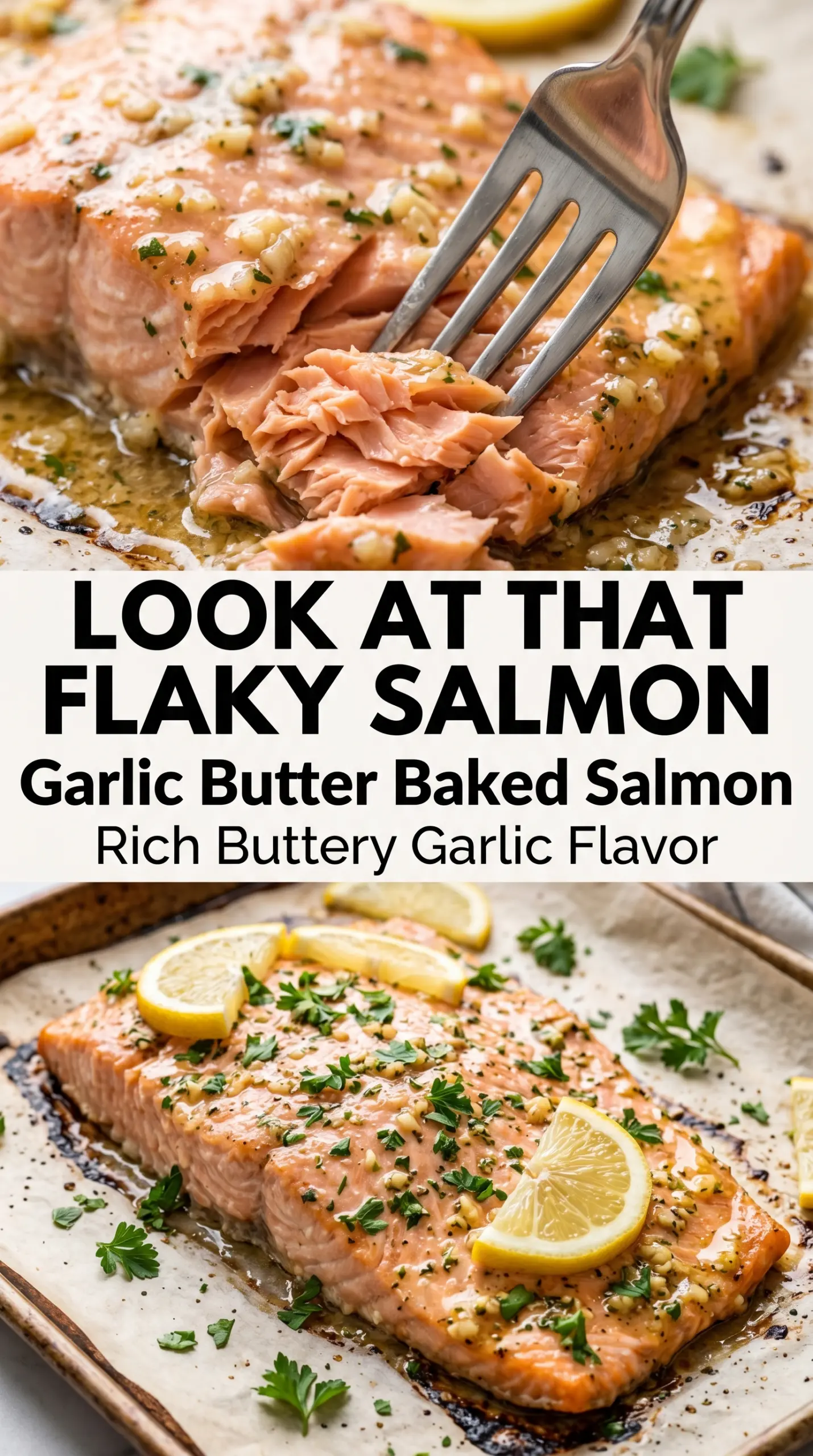
- Salmon fillet — A center-cut fillet cooks more evenly than thin tail sections, but any good salmon works. If one end is much thinner, fold it under slightly so the whole piece finishes at the same time.
- Unsalted butter — Butter is the base of the sauce and the reason the seasonings coat the fish instead of sliding off. Unsalted is better here because it lets you control the salt level yourself.
- Garlic — Fresh minced garlic gives the dish its main savory backbone. Jarred garlic can work in a pinch, but it’s sharper and less sweet, so the flavor will be a little less rounded.
- Lemon juice and zest — Juice lightens the butter, while zest adds the brighter lemon flavor that juice alone can’t deliver. Don’t skip the zest if you want the salmon to taste fresh instead of just buttery.
- Paprika and Italian seasoning — Paprika adds warmth and a touch of color, while the herb blend keeps the seasoning from tasting flat. If you don’t have Italian seasoning, use dried oregano with a little thyme.
- Fresh parsley — Parsley isn’t just garnish here; it adds a clean finish that cuts through the butter at the end. If you only have dill, that also works well with salmon and leans a little more classic.
The Short Bake That Gives You Flakes, Not Dry Edges
Getting the Pan Ready
Heat the oven to 400°F and line your pan with parchment. That temperature is hot enough to cook the salmon quickly without leaving it pale and soft, but not so hot that the butter burns before the center is done. Parchment keeps the fish from sticking and helps the butter stay on the salmon instead of welding itself to the pan.
Mixing the Garlic Butter
Whisk the melted butter with the garlic, lemon juice, zest, paprika, Italian seasoning, salt, and pepper until the mixture looks evenly speckled. If the butter starts to separate, give it another quick whisk before brushing it on the fish. The goal is a loose, spoonable sauce that spreads easily and carries the seasoning across the whole surface.
Baking Until Just Flaky
Brush the salmon generously, then bake for 12 to 15 minutes depending on thickness. The fish is done when the top looks opaque and the thickest part flakes with a fork but still feels moist in the center. If you want a little color, broil for 1 to 2 minutes at the end, but watch it closely — garlic butter can go from lightly browned to bitter fast under the broiler.
Finishing with the Fresh Notes
Scatter the parsley over the top and add lemon slices right before serving. That last hit of fresh herb and citrus keeps the salmon from tasting one-note. Serve it immediately while the butter is still glossy and the flakes separate cleanly at the fork.
How to Adjust It Without Losing the Texture
Dairy-Free Version
Swap the butter for olive oil or a good plant-based butter. Olive oil gives you a lighter finish and a little less richness, while vegan butter keeps the same glossy coating and closer flavor to the original.
Lower-Carb Serving Idea
Serve the salmon over roasted asparagus, cauliflower mash, or a simple cucumber salad instead of rice or potatoes. The salmon is rich enough to carry a lighter side, and the crisp vegetables keep the meal from feeling heavy.
Using Frozen Salmon
Thaw the salmon completely and pat it dry before adding the butter mixture. Extra moisture on the surface keeps the seasoning from sticking well and can make the fish steam instead of roast.
Adding More Heat
A pinch of red pepper flakes or a little cayenne gives the butter a gentle kick without changing the method. Add it to the butter mixture so the heat spreads evenly instead of landing in random spots.
Storage and Reheating
- Refrigerator: Store leftovers in an airtight container for up to 3 days. The salmon will firm up a little after chilling, but it should still stay moist if you don’t overbake it the first time.
- Freezer: It freezes, but the texture softens a bit after thawing. Wrap portions tightly and freeze for up to 2 months if needed, then thaw overnight in the fridge.
- Reheating: Reheat gently in a 300°F oven, covered loosely with foil, until just warm. The biggest mistake is blasting it in the microwave, which dries the edges before the center warms through.
Answers to the Questions Worth Asking
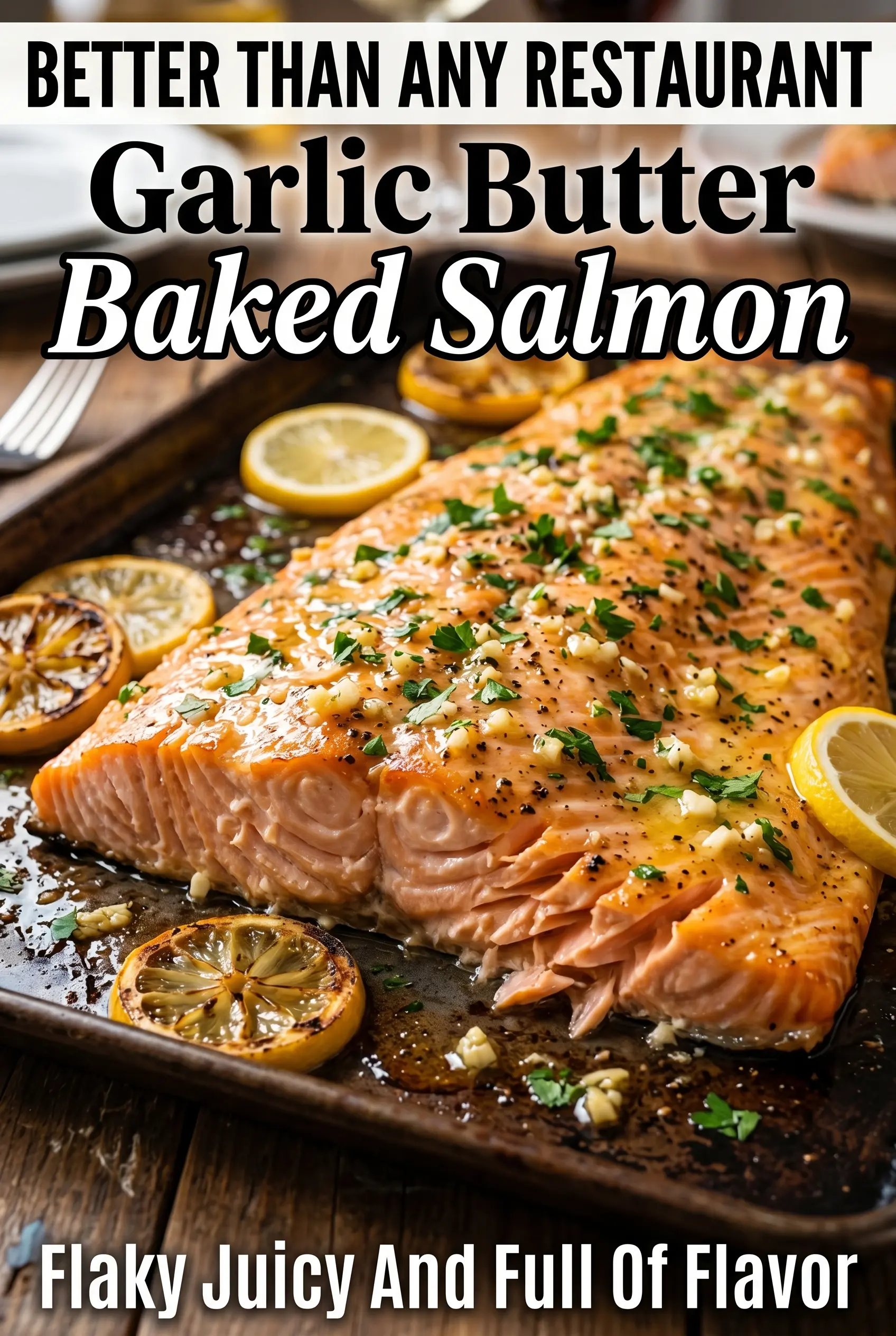
Garlic Butter Baked Salmon
Ingredients
Equipment
Method
- Preheat oven to 400°F (200°C). This ensures the salmon bakes quickly and stays moist.
- Line a baking sheet with parchment paper. Place it ready so the salmon goes in as soon as it’s assembled.
- Place salmon skin-side down on the prepared pan. Arrange fillets in a single layer so they bake evenly.
- Whisk together melted butter, garlic, lemon juice, lemon zest, paprika, Italian seasoning, salt, and pepper. Mix until the seasonings are evenly distributed.
- Brush the garlic butter mixture generously over the salmon. Make sure the surface is well coated for rich flavor.
- Bake for 12–15 minutes at 400°F (200°C), until the salmon flakes easily with a fork. For best texture, avoid overbaking past the flake point.
- Broil for 1–2 minutes if desired for a golden finish. Watch closely so the top browns without drying out.
- Garnish with parsley and lemon slices. Add right before serving for fresh aroma and brightness.
- Serve immediately. The salmon is best while it’s still hot and tender.
