
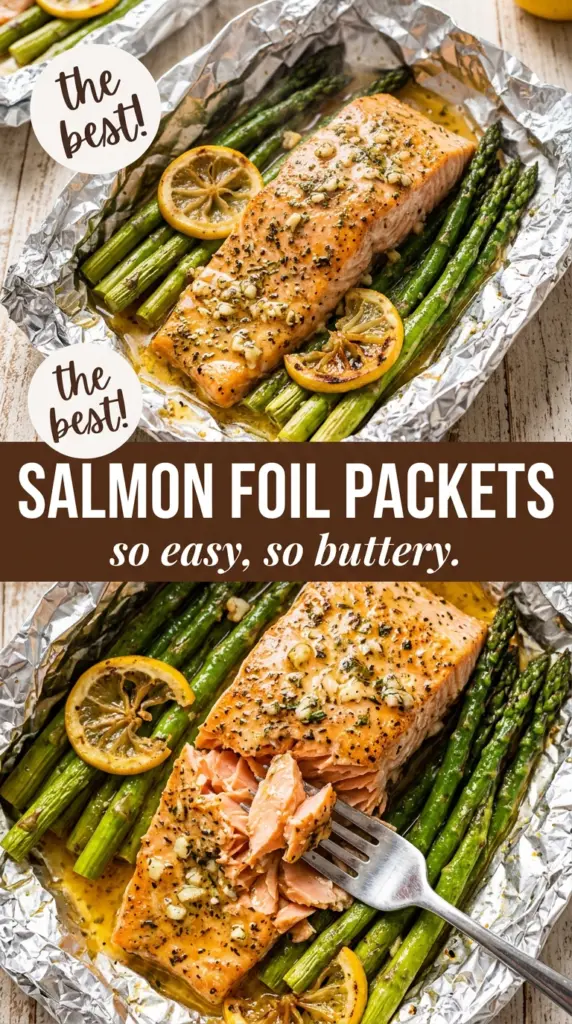
Garlic Butter Baked Salmon in Foil with Asparagus
Tender salmon and crisp asparagus make a great foil packet dinner on their own, but the garlic lemon butter is what turns this into a repeat meal. The butter melts…
Tip: save now, cook later.Tender salmon and crisp asparagus make a great foil packet dinner on their own, but the garlic lemon butter is what turns this into a repeat meal. The butter melts down into the fish and vegetables as they bake, so every bite tastes seasoned from the inside out instead of just sitting on top. You get flaky salmon, asparagus that still has some snap, and a pan-free dinner that lands on the table looking polished without any extra work.
The trick here is keeping the butter mixture simple and balanced. Garlic brings the punch, lemon cuts through the richness, and dill ties the whole thing together with a fresh finish that works especially well with salmon. Foil packets also help the fish cook gently, which matters more than people think — salmon goes from silky to dry fast once the heat gets too aggressive.
Below, I’ll walk you through the packet setup that keeps the asparagus crisp-tender instead of mushy, plus a few swaps if you want to change the herbs or make the dish dairy-free.
The salmon stayed so moist and the asparagus cooked perfectly in the foil packets. I loved that the lemon butter soaked into everything without making it greasy, and cleanup was basically nothing.
Garlic butter baked salmon in foil with asparagus is the kind of dinner you’ll want to keep in your back pocket for busy nights.
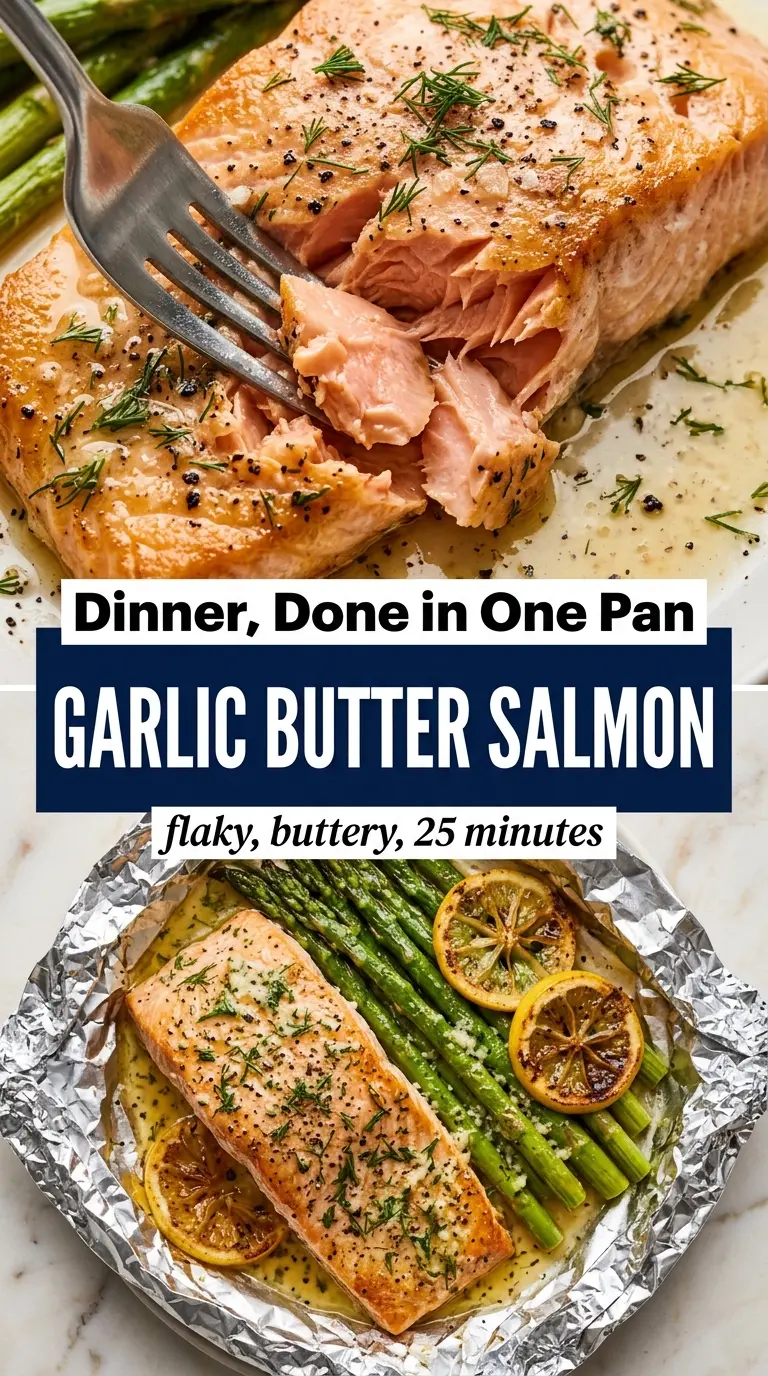
The Foil Packet Trick That Keeps Salmon Moist Instead of Dry
Foil packets do more than save cleanup. They trap a little steam, which lets the asparagus cook at the same pace as the salmon without blasting either one with direct heat. That gentle environment is what keeps the fish from drying out before the vegetables are done.
The biggest mistake is overpacking the foil or sealing it too tightly with no room for the heat to circulate. Give each fillet its own packet and leave a little space above the fish so the butter can bubble and the steam can move. If the packet is cramped, the asparagus softens before the salmon finishes, and the texture goes flat.
- Salmon fillets — Center-cut fillets cook the most evenly, but any fillet around 6 ounces works. Skin-on or skinless both work here, though skin-on gives you a little more insurance against overcooking.
- Asparagus — Use medium spears if you can. Thin asparagus can turn limp before the salmon is ready, and very thick spears need a little extra trim on the woody ends.
- Lemon slices and juice — Fresh lemon matters. The juice brightens the butter, while the slices slowly perfume the salmon as it bakes. Bottled juice tastes harsher here and doesn’t round out the same way.
- Unsalted butter — Melted butter carries the garlic and dill into every bite. Unsalted is the better choice because you can control the seasoning yourself, and salted butter can push the finished dish too far.
- Dill — Fresh dill is the herb that makes this taste clean and classic. Dried dill works in a pinch, but use less because it reads sharper and less delicate once baked.
Building the Packets Without Losing the Texture
Layer the asparagus first
Spread the asparagus in a loose pile on each sheet of foil, then set the salmon on top. That keeps the fish slightly elevated so the juices and butter can run down over the vegetables instead of pooling under the fillet. If the asparagus is scattered in a single layer too far from the center, it tends to overcook at the edges and stay under-seasoned in the middle.
Brush on the butter, don’t drown the fish
Whisk the melted butter with garlic, lemon juice, dill, salt, and pepper until the garlic is evenly distributed. Spoon it over each fillet instead of dumping it all in one place so the seasoning stays balanced and the packet doesn’t turn watery. You want the fish coated and the asparagus lightly dressed, not swimming in liquid.
Seal for steam, not pressure
Fold the foil into a tight packet with a little air space inside. A fully crushed packet traps moisture too aggressively and can make the asparagus soft before the salmon is done. When the oven heat works the way it should, the packet will puff slightly and the foil will sound hot and steamy when you open it.
Cook until the salmon just flakes
Bake at 400°F until the salmon flakes easily with a fork and the center looks opaque but still juicy, usually 15 to 18 minutes depending on thickness. If the fillets are thin, check early. Overbaking is the fastest way to lose the silky texture that makes this dish worth making.
Dairy-Free Garlic Lemon Salmon Packets
Swap the butter for olive oil or a plant-based butter that melts cleanly. Olive oil gives a lighter finish and lets the lemon stand out more, while vegan butter keeps the same rich feel but can taste a little softer. Either way, the packet method still gives you moist salmon and well-seasoned asparagus.
Using Different Herbs
Dill is the classic choice, but parsley, tarragon, or chives all work. Parsley keeps things fresh and neutral, tarragon brings a mild anise note, and chives add a gentle onion edge. If you swap herbs, keep the amount close to the original so the sauce doesn’t get muddy.
Making It Work with Other Vegetables
Broccolini or thin green beans can stand in for asparagus if that’s what you have. Cut vegetables should match the salmon’s cook time, or you’ll end up with fish that’s done before the vegetables are tender. Hearty vegetables like carrots need a head start, so they’re not the best swap for this quick packet method.
Storage and Reheating
- Refrigerator: Store leftovers in an airtight container for up to 2 days. The salmon stays tasty, but the asparagus softens a bit after chilling.
- Freezer: Freezing isn’t ideal for this dish. The fish can freeze, but the asparagus turns mushy once thawed and reheated.
- Reheating: Warm gently in a 300°F oven, covered loosely with foil, until just heated through. High heat dries out salmon fast, so skip the microwave if you want to keep the texture close to the original.
Questions I Get Asked About This Recipe
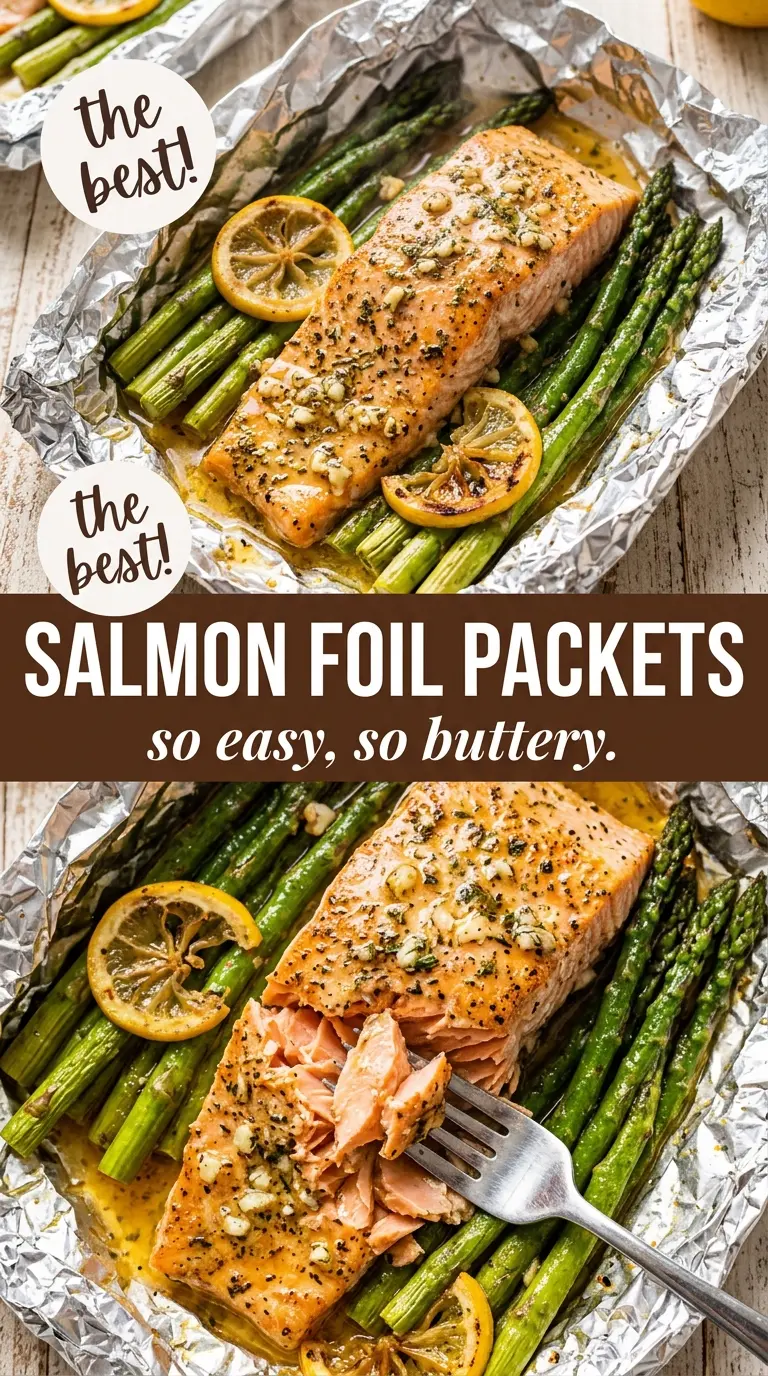
Garlic Butter Baked Salmon in Foil with Asparagus
Ingredients
Equipment
Method
- Preheat the oven to 400°F (200°C) and line up 4 large sheets of foil on a sheet pan. Keep the foil ready so you can assemble packets quickly.
- Divide the asparagus among the foil sheets, then place 1 salmon fillet on top of each pile. Arrange the fish so it sits evenly over the asparagus.
- Whisk the melted butter, garlic, lemon juice, dill, salt, and black pepper until combined. The mixture should look uniform with visible garlic and herbs.
- Spoon the garlic-lemon butter evenly over each salmon fillet so it coats the top. Make sure some sauce also flows toward the edges of the foil.
- Top each fillet with 2–3 lemon slices, then fold the foil into sealed packets. Press the seams firmly to prevent steam leaks.
- Bake the foil packets for 15–18 minutes at 400°F (200°C). Check doneness when the salmon flakes easily and the asparagus is crisp-tender.
- Carefully open the packets and garnish with extra dill. Serve straight from the foil while the salmon is hot and steamy.
