
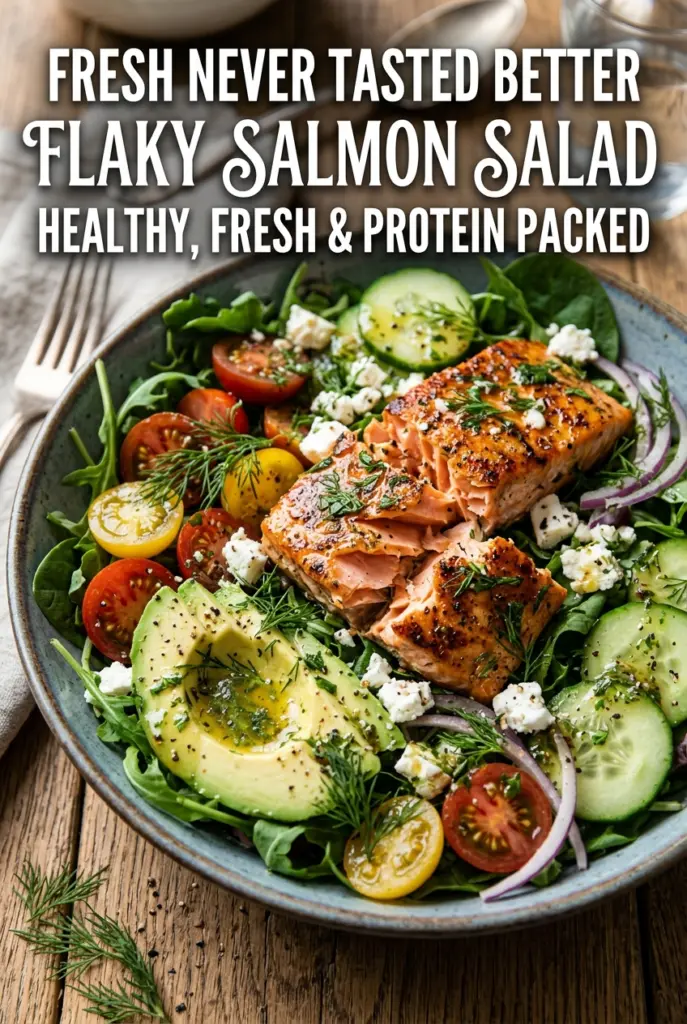
Flaky Salmon Salad
Flaky salmon over crisp greens is the kind of meal that feels light without leaving you hungry an hour later. The salmon stays tender in the center, the vegetables keep…
Tip: save now, cook later.Flaky salmon over crisp greens is the kind of meal that feels light without leaving you hungry an hour later. The salmon stays tender in the center, the vegetables keep their crunch, and the lemon-herb dressing ties everything together with enough brightness to wake up every bite. It eats like a proper lunch or dinner, not a side salad pretending to be enough.
What makes this version work is the balance. The salmon is seasoned before baking so it brings its own flavor instead of relying on the dressing, and the dressing itself is sharp enough to cut through the richness of the avocado and feta. Baking the fish at a fairly high temperature keeps it moist while still giving you those clean flakes that break apart easily over the greens.
Below, I’ll walk through the small details that matter most, including how to keep the salmon from overcooking and how to build the salad so it stays crisp if you’re making it ahead.
The salmon stayed super moist and flaked into big pieces, and the lemon dressing was just tart enough to pull everything together. I packed the leftovers for lunch the next day and the greens still held up better than I expected.
Save this flaky salmon salad for the days when you want something fresh, filling, and fast with a bright lemon dressing.
The Trick to Keeping Salmon Salad Crisp Instead of Soggy
The biggest mistake with a salmon salad like this is assembling everything too early. Warm salmon is great on greens, but warm salmon plus dressing plus avocado sitting around for ten minutes turns the bowl soft fast. The fix is simple: bake the fish, let it cool just enough to flake, then build the salad and add the dressing right before serving.
The other detail that matters is texture contrast. Mixed greens give you a soft base, but cucumber, tomatoes, and red onion keep the salad lively, while feta adds salty richness without weighing the bowl down. If your greens tend to wilt quickly, dry them well after washing and keep the dressing separate until the last minute.
What Each Ingredient Is Actually Doing in This Dish
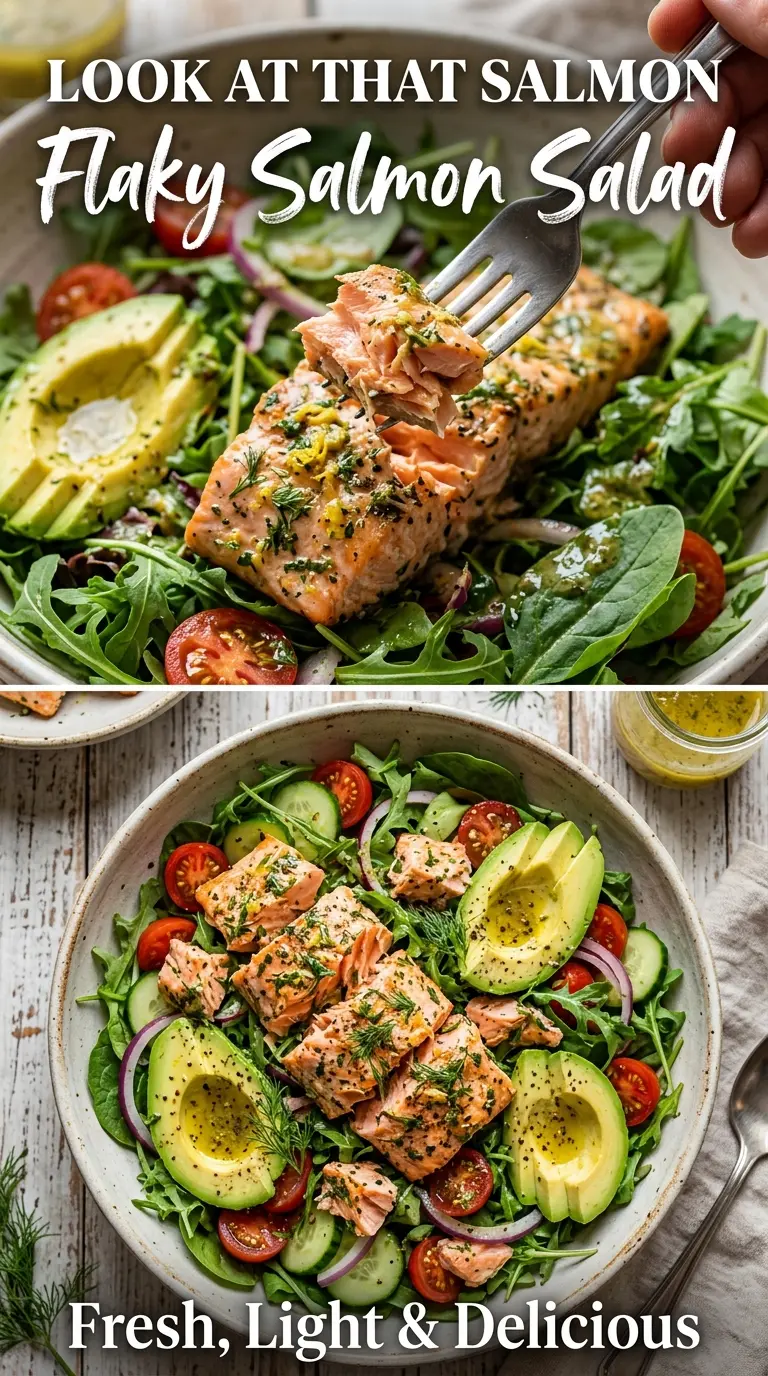
- Salmon fillets — This is the main event, so use fillets that look moist and smell clean, not fishy. Fresh or thawed frozen salmon both work; if you use frozen, dry it well before seasoning so the spices stick and the surface browns instead of steaming.
- Olive oil — A little oil helps the seasoning cling and keeps the salmon from drying out in the oven. The dressing also uses olive oil, and that shared flavor gives the salad a smooth, rounded finish.
- Garlic powder, paprika, and onion powder — These seasonings build a savory crust without burning the way fresh garlic can at high heat. Paprika also gives the salmon a warm color, which makes the finished salad look as good as it tastes.
- Lemon juice and Dijon mustard — This is the backbone of the dressing. Lemon brings the brightness, while Dijon helps the dressing emulsify so it coats the greens instead of pooling at the bottom of the bowl.
- Avocado and feta — Avocado adds creaminess, and feta adds salt and tang. If you skip the feta, add a little extra salt to the dressing; otherwise the salad can taste flat against the rich salmon.
How to Bake the Salmon So It Flakes, Not Dries Out
Seasoning the fillets
Brush the salmon with olive oil first, then coat it with the garlic powder, paprika, onion powder, salt, and pepper. That thin layer of oil helps the spices adhere and keeps the surface from looking dusty after baking. If the fillets are uneven in thickness, tuck the thinner ends under slightly so they finish closer to the same time as the thicker center.
Baking to the right point
Put the salmon in a 400°F oven and start checking around 12 minutes. You’re looking for opaque edges and a center that still looks just a little glossy; it will finish carrying over after it comes out. If you wait until the whole fillet looks completely firm in the oven, it usually ends up dry by the time you flake it.
Building the bowl
Whisk the dressing until it looks smooth and slightly thickened, then arrange the greens, cucumber, tomatoes, avocado, onion, and feta in a bowl. Flake the salmon into large pieces instead of shredding it fine; bigger pieces keep the salad from eating like tuna salad. Drizzle the dressing over the top and finish with dill right before serving so the herbs stay bright.
Three Smart Ways to Adapt This Salmon Salad
Dairy-Free Version Without Losing the Punch
Leave out the feta and add a few extra pinches of salt to the dressing, plus a little more lemon if you want sharper contrast. The salad gets lighter and cleaner, though you lose the salty creaminess that feta brings.
How to Make It More Filling
Add cooked quinoa, farro, or roasted potatoes under the greens. That turns it into a sturdier meal, but keep the dressing amount in check so the bowl doesn’t lose its crisp, salad-like feel.
Using Leftover Salmon
Cooked leftover salmon works well here. Break it into large chunks and bring it to room temperature before adding it to the salad so it doesn’t chill the whole bowl and so the dressing stays fluid instead of tightening up.
Meal Prep That Still Tastes Fresh
Pack the salmon, greens, chopped vegetables, and dressing separately, then slice the avocado just before eating. That keeps the greens from collapsing and the avocado from browning before lunch.
Storage and Reheating
- Refrigerator: Store the components separately for up to 2 days. The salmon keeps well, but the greens and avocado are best assembled just before eating.
- Freezer: The cooked salmon can be frozen, but the salad itself cannot. Wrap the salmon tightly and thaw it in the fridge before using.
- Reheating: Warm the salmon gently in a low oven or in short bursts in the microwave. High heat dries it out fast, and overcooking at this stage will make the flakes turn chalky.
Answers to the Questions Worth Asking
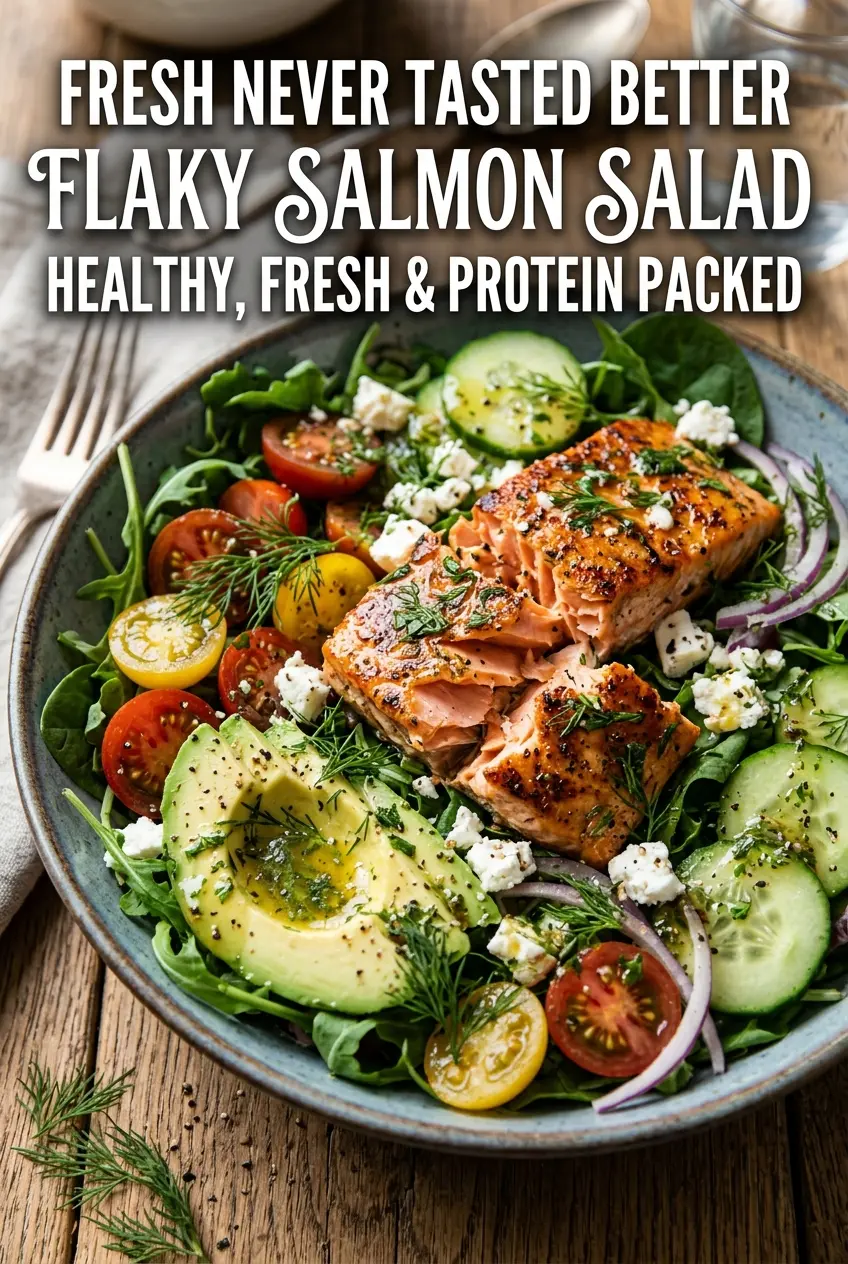
Flaky Salmon Salad
Ingredients
Equipment
Method
- Preheat the oven to 400°F (200°C). Set a sheet pan inside the oven while it heats so the salmon browns faster.
- Brush the salmon with olive oil and season with garlic powder, paprika, onion powder, salt, and black pepper. Coat evenly so the spices adhere during baking.
- Bake for 12–15 minutes, or until the salmon flakes easily. Look for opaque, flaky flesh that separates with a fork.
- Whisk together olive oil, fresh lemon juice, Dijon mustard, honey, minced garlic, salt, and pepper until smooth. Stop whisking once the dressing looks fully emulsified and glossy.
- Arrange the mixed greens, cucumber, cherry tomatoes, avocado, red onion, and feta in a large serving bowl. Spread ingredients so every bite gets greens, crunch, and creamy avocado.
- Flake the cooked salmon into large pieces and place over the salad. Distribute evenly without crushing the flakes.
- Drizzle with the lemon herb dressing and sprinkle with fresh dill. Serve immediately so the greens stay crisp.
