

Dry Brine Turkey
The skin tells you a lot before the turkey even goes into the oven. After a day uncovered in the refrigerator, it should feel dry to the touch instead of…
Tip: save now, cook later.The skin tells you a lot before the turkey even goes into the oven. After a day uncovered in the refrigerator, it should feel dry to the touch instead of damp, which gives the butter and heat a better surface to work with. That’s the detail I pay attention to when I make this dry brine turkey: the salt seasons the meat while the uncovered rest prepares the skin for roasting.
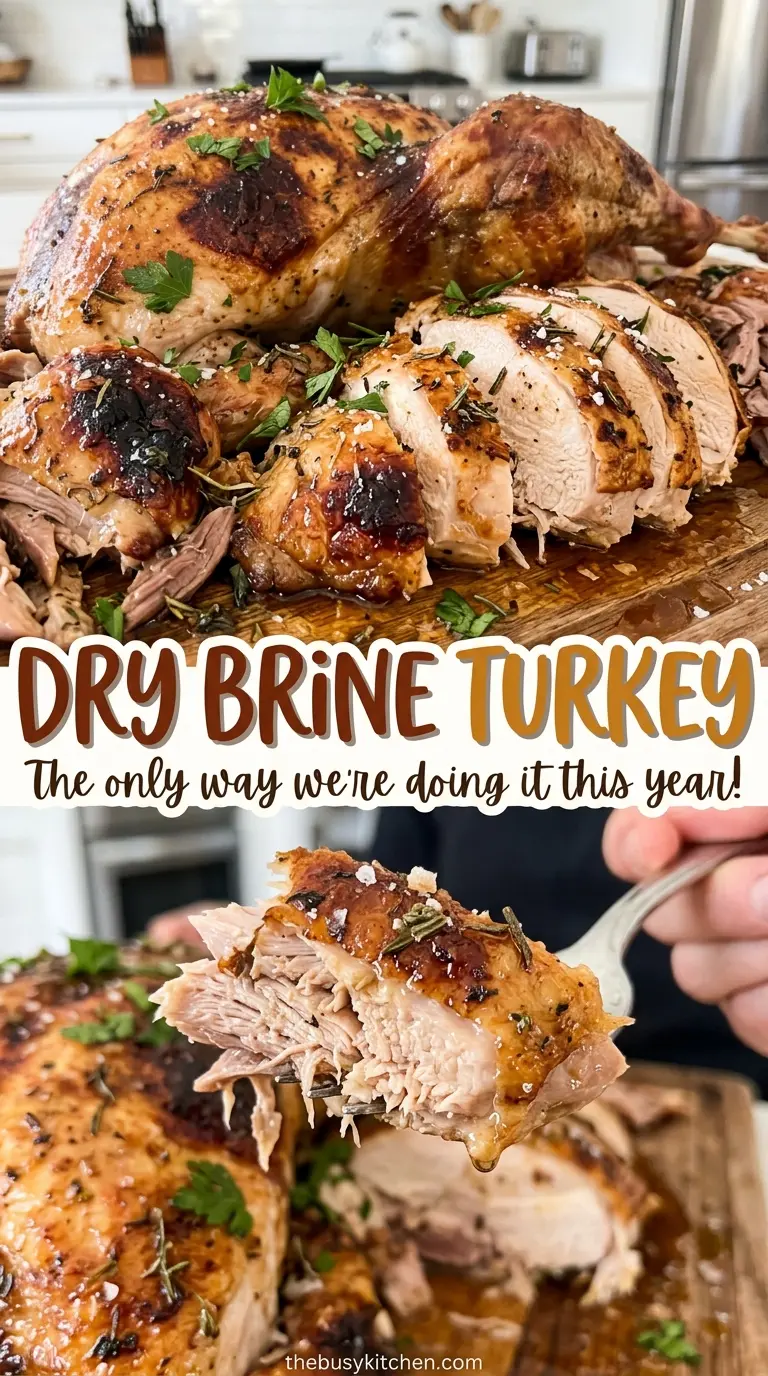
Use a fully thawed, 12-pound turkey that hasn’t been injected or pre-brined. I rub the salt beneath the loosened skin as well as over the outside, then let the bird sit uncovered for 24 to 48 hours. There’s no wet brine to mix or drain, and the turkey goes from its rack to the oven with butter and black pepper. The result is a deeply seasoned roast with golden skin and tender slices.

Kitchen Note
When you loosen the skin, work slowly with your fingertips and stop if it starts to tear. You only need enough room to get the salt and softened butter underneath; keeping the skin intact makes that part much easier.
Save this dry brine turkey for a roast with well-seasoned meat, crisp-looking skin, and an easy make-ahead brine.
Why Leaving the Turkey Uncovered Changes the Skin
A covered turkey or a damp surface can work against the browned skin you want. Leaving this bird uncovered in the refrigerator lets moisture on the skin evaporate during the dry-brining rest. It also means the salt isn’t sitting in a pool of liquid. The surface has time to dry while the salt seasons the turkey.
Salt beneath the loosened skin matters for a different reason: it puts seasoning close to the breast and thigh meat rather than only on the exterior. A little salt inside the cavity rounds out the seasoning without turning this into a wet brine. The turkey isn’t rinsed or soaked; it goes from its refrigerator rest to the buttering step.
That’s why the turkey needs to be fully thawed and unseasoned before you begin. A bird that’s already injected or pre-brined has salt in it before you start, so adding the measured dry brine risks making the finished meat too salty. With an unseasoned bird, the uncovered rest does two useful jobs at once: it seasons the meat and dries the skin for roasting.
Why Diamond Crystal Salt and Softened Butter Matter Here
- Whole turkey — Start with a fully thawed bird with the neck and giblets removed. The unseasoned label matters: injected and pre-brined turkeys already contain salt, so they aren’t a good match for this measured brine.
- Diamond Crystal kosher salt — The salt brand is part of the measurement, not an interchangeable detail. Kosher salt crystals vary in size and density, so a different brand measured by the same spoonful can season more heavily. Use Diamond Crystal for this amount rather than swapping by volume.
- Unsalted butter — Softened butter spreads under the skin without needing to melt it first. Unsalted butter keeps the measured salt in control, and an everyday grocery-store butter works well here; there’s no need for a specialty brand.
- Freshly ground black pepper — Fresh grinding gives the skin a more fragrant, peppery finish. The butter should be soft enough to rub over the surface, not melted and poured on.
How to Dry-Brine, Butter, and Roast the Turkey
Prepare the Bird on Its Brining Rack
Pat the fully thawed turkey thoroughly dry with paper towels, including around the legs and wings. Carefully loosen the skin over the breast and thighs, keeping it intact so you can season beneath it. Set the bird breast-side up on a wire rack over an 18×13-inch rimmed baking sheet. The rack lets air circulate around the turkey during its uncovered refrigerator rest.
Season Beneath the Skin and Chill Uncovered
Rub the Diamond Crystal kosher salt evenly over the outside, beneath the loosened skin, and a little inside the cavity. Try to spread it across the turkey rather than leaving a dense patch in one spot. Refrigerate the bird uncovered for 24 to 48 hours. The skin should feel dry when you’re ready to roast.
Butter the Turkey and Roast Until the Thermometer Is Ready
Heat the oven to 325°F. Spread 2 tablespoons of softened butter under the skin over the breast and thighs, then rub the remaining 2 tablespoons over the skin and season the skin with black pepper. Transfer the bird to a rack in a 16×13-inch roasting pan. Roast for 2 3/4 to 3 1/4 hours, checking the thickest part of the breast and the innermost thigh away from the bone; both should read 165°F on a thermometer. If the breast browns too quickly, tent it loosely with foil.
Rest Before Carving
Move the roasted turkey to a carving board and let it rest for 30 minutes before carving. That pause gives the juices time to settle instead of running across the board as soon as you cut. Carve after the rest, and keep the slices together if you’re serving the bird in batches.
Two Small Changes to Suit the Table
A dairy-free, butter-free roast
For a dairy-free version, leave out the butter and roast the seasoned turkey without it. The turkey will still roast, though the skin won’t have the same buttery finish and may brown less evenly. This version doesn’t use a replacement fat.
Put the pepper under the skin
For a pepper flavor closer to the meat, rub the listed black pepper beneath the loosened skin instead of over the exterior. The turkey still gets its butter under the skin and over the surface, but you’ll lose the pepper-speckled look on top.
Storage and Reheating
- Refrigerator: Refrigerate carved leftovers in a covered container and use within 3 to 4 days. The skin softens after storage, but the meat stays easy to slice.
- Freezer: Freeze carved portions in an airtight container or freezer bag for up to 3 months for best quality. Thaw them in the refrigerator before reheating.
- Reheating: Warm slices covered in a low oven until hot throughout. Leaving the meat uncovered or reheating it for too long dries out the slices.
Questions That Come Up Before the Turkey Goes in the Oven
Dry Brine Turkey
Ingredients
Equipment
Method
- Pat the turkey thoroughly dry with paper towels.
- Loosen the skin over the breast and thighs, then place the turkey breast-side up on a wire rack set over an 18x13-inch rimmed baking sheet.
- Rub the salt evenly over the turkey, including beneath the loosened skin and a little inside the cavity.
- Refrigerate the turkey uncovered for 24 to 48 hours.
- Heat the oven to 325°F.
- Spread 2 tablespoons butter under the skin over the breast and thighs, then rub the remaining 2 tablespoons over the skin.
- Season the skin with black pepper.
- Transfer the turkey to a rack in a 16x13-inch roasting pan and roast for 2 3/4 to 3 1/4 hours, until a thermometer inserted in the thickest part of the breast and the innermost thigh, away from bone, reads 165°F; tent the breast loosely with foil if it browns too quickly.
- Rest the turkey on a carving board for 30 minutes before carving.
