
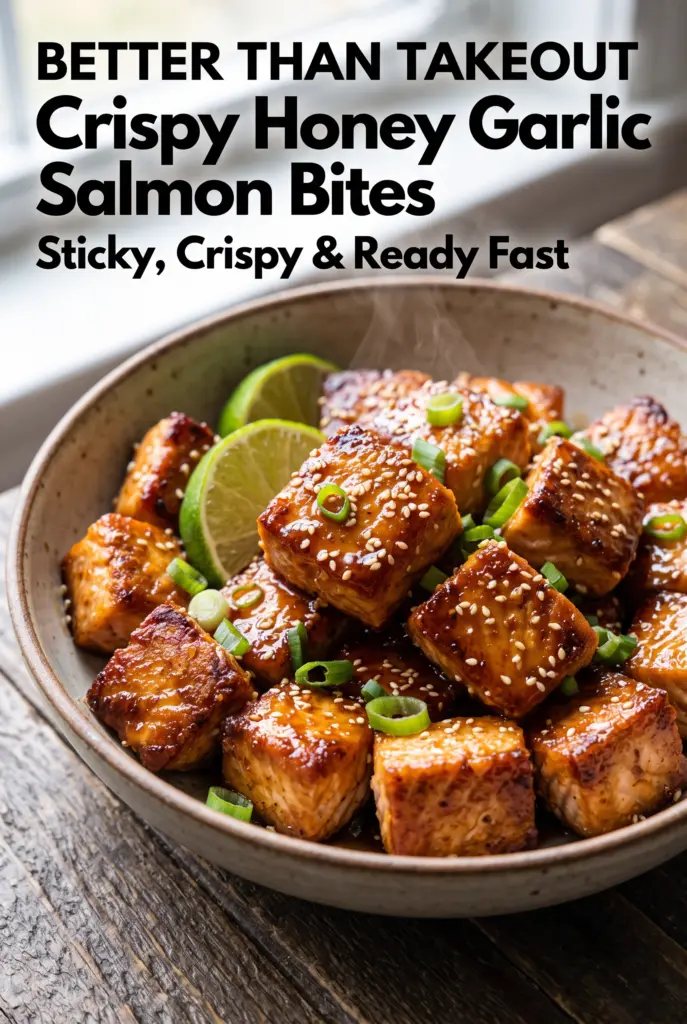
Crispy Honey Garlic Salmon Bites
Crispy Honey Garlic Salmon Bites hit that sweet spot between fast and worth repeating: crisp-edged salmon, a sticky glaze that clings instead of sliding off, and just enough garlic and…
Tip: save now, cook later.Crispy Honey Garlic Salmon Bites hit that sweet spot between fast and worth repeating: crisp-edged salmon, a sticky glaze that clings instead of sliding off, and just enough garlic and ginger to keep the honey from tasting flat. The salmon stays tender in the middle while the outside picks up a light crust from the cornstarch, so every bite gives you a little crunch before the sauce comes in.
The trick is starting with dry salmon and a hot skillet. Moisture is the enemy of browning, and if the pan isn’t hot enough, the coating softens before it ever crisps. The sauce also needs a short simmer before the slurry goes in; that gives the garlic and ginger time to bloom and keeps the glaze from tasting raw or watery.
Below you’ll find the exact timing that keeps the salmon from overcooking, plus a few smart swaps if you need this dairy-free, gluten-free, or a little less sweet. The sauce comes together in the same pan, which means you get a lot of flavor without extra cleanup.
The salmon got that crisp edge I usually only get in a restaurant, and the glaze thickened up perfectly without turning sticky-hard. My husband kept sneaking bites from the pan before I could even serve it.
Save these Crispy Honey Garlic Salmon Bites for the nights when you want a fast skillet dinner with crisp edges and a glossy sweet-savory glaze.
The Trick to Keeping Salmon Crispy Before the Glaze Goes On
Salmon bites can go soft fast if the pan is crowded or the fish goes into the skillet damp. The surface needs room to sear, and the cornstarch needs direct contact with the heat to form that thin, crisp shell. If the salmon steams, it still cooks through, but you lose the contrast that makes this dish work.
The other place people trip up is the sauce. If you add the honey mixture and toss immediately, it can thin out and pool in the pan instead of coating the fish. Let it simmer long enough for the garlic and ginger to perfume the sauce, then add the slurry and watch for the moment it turns glossy and lightly syrupy.
What Each Ingredient Is Actually Doing in This Dish

- Salmon — Use fillets that feel firm and smell clean. Skinless pieces are easiest here because every side can brown evenly, and cutting the fish into 1-inch cubes gives you quick cooking without drying out the center.
- Cornstarch — This is what creates the light crust. Flour won’t give you the same delicate snap, and too much cornstarch can turn pasty, so a thin coating is all you need.
- Smoked paprika and garlic powder — These season the salmon itself so it doesn’t taste flat under the glaze. Fresh garlic belongs in the sauce, not on the fish, because it would burn in the hot skillet.
- Honey, soy sauce, ginger, and rice vinegar — This is the balance point: sweet, salty, warm, and bright. If you swap the honey for maple syrup, the glaze will be a little less sticky and a little darker in flavor, which still works.
- Sesame oil — You only need a small amount, but it adds the toasted finish that makes the sauce taste complete. Don’t use it as the main cooking oil; it’s too strong for that.
- Cornstarch slurry — This is what turns the sauce from thin to glossy. Mix it before you add it, because dry starch dropped straight into the pan can clump the second it hits heat.
Building the Glaze Without Overcooking the Salmon
Dry the salmon first
Pat the salmon dry with paper towels until the surface looks matte instead of slick. That step matters more than people think, because any leftover moisture keeps the cornstarch from sticking and slows browning in the pan. Toss the cubes gently so they’re coated on all sides without breaking them apart.
Seared edges, not steamed fish
Heat the oil in a large skillet over medium-high heat until it shimmers. Add the salmon in a single layer and leave space between the pieces; if the pan is crowded, the fish releases moisture and the coating softens instead of crisping. Turn the bites when the first side has a deep golden crust and they release easily from the pan, which usually takes 2 to 3 minutes.
Turn the sauce glossy at the last minute
Once the salmon is out, pour in the honey, soy sauce, garlic, ginger, rice vinegar, and sesame oil. Let it simmer briefly so the garlic loses its raw edge, then stir in the cornstarch slurry and cook just until the sauce looks shiny and lightly thickened. Return the salmon and toss gently; hard stirring can break the bites before the glaze coats them.
How to Adapt This for Different Diets and Different Nights
Gluten-Free Version
Use a certified gluten-free soy sauce or tamari. The rest of the recipe already works naturally, and the glaze will still come out glossy and balanced. This is the easiest swap in the whole dish.
Less Sweet, More Savory
Cut the honey back to 1/4 cup and add an extra teaspoon of rice vinegar. The sauce will cling a little less thickly, but the salmon flavor comes through more clearly and the glaze tastes sharper.
Swap in Chicken for a Different Protein
Boneless chicken breast or thigh cubes work well with the same seasoning and glaze, but they need longer in the skillet. Cook until the chicken is fully done before adding the sauce, and expect a slightly less delicate texture than salmon.
Storage and Reheating
- Refrigerator: Store leftovers in an airtight container for up to 2 days. The coating softens, but the flavor holds up well.
- Freezer: I don’t recommend freezing the finished salmon bites. The sauce separates and the salmon texture turns crumbly after thawing.
- Reheating: Warm gently in a skillet over low heat with a splash of water to loosen the glaze. Microwaving too long makes the fish dry and the sauce sticky in the wrong way.
Answers to the Questions Worth Asking
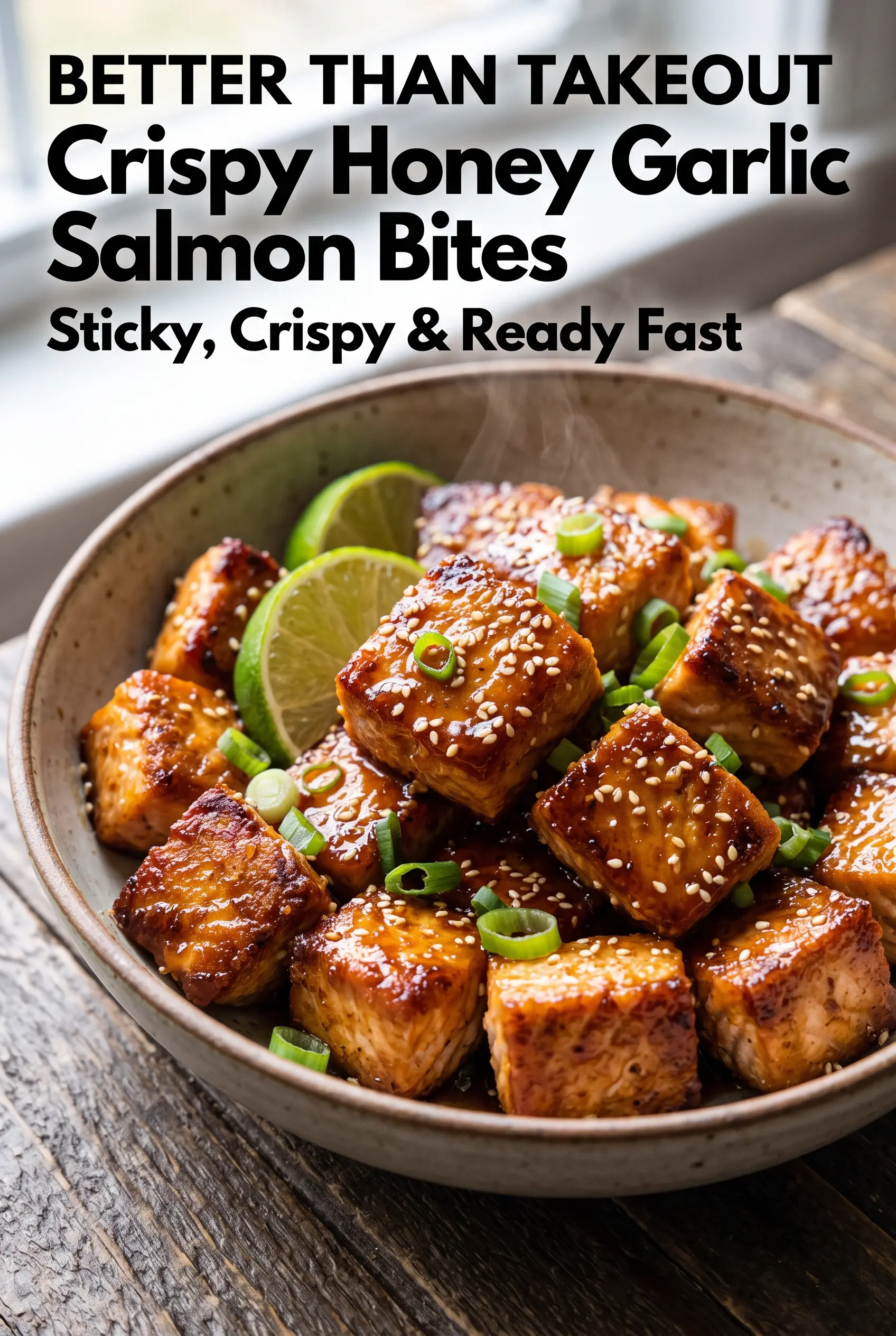
Crispy Honey Garlic Salmon Bites
Ingredients
Equipment
Method
- Pat the salmon dry with paper towels so the coating sticks and sears crisp.
- Toss the salmon with cornstarch, garlic powder, smoked paprika, salt, and black pepper until evenly coated.
- Heat olive oil in a large skillet over medium-high heat until shimmering.
- Cook the salmon bites for 2–3 minutes per side until golden and crispy, then remove to a plate.
- Add honey, low-sodium soy sauce, garlic, fresh grated ginger, rice vinegar, and sesame oil to the skillet.
- Simmer for 2 minutes to meld the flavors.
- Stir in the cornstarch slurry and cook until the sauce thickens, coating the back of a spoon.
- Return the salmon to the skillet and gently toss until evenly coated.
- Garnish with sesame seeds, sliced green onions, and lime wedges.
- Serve immediately over steamed rice or vegetables.
