
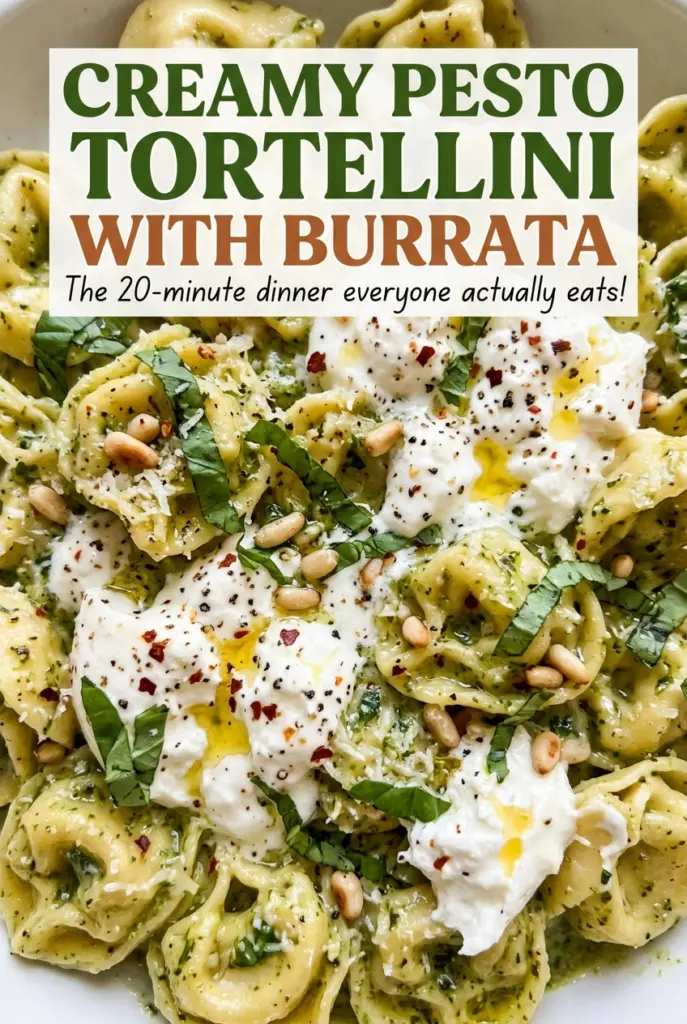
Creamy Pesto Tortellini with Burrata
The cream should barely simmer, not bubble hard, before the pesto and Parmesan go in. I learned that this little pause matters: a gentle sauce turns smooth and coats the…
Tip: save now, cook later.The cream should barely simmer, not bubble hard, before the pesto and Parmesan go in. I learned that this little pause matters: a gentle sauce turns smooth and coats the tortellini, while rushing the heat makes the finish feel heavier than it needs to. Creamy pesto tortellini with burrata is built around that contrast—warm, saucy pasta underneath and soft, cool burrata on top.
I use refrigerated cheese tortellini because it cooks quickly and its tender pasta pockets work well with a sauce that comes together in the skillet. The reserved pasta water helps the cream and pesto cling instead of pooling at the bottom. Tear the burrata over the pan only after it comes off the heat, and serve while the cheese is still soft and the tortellini are warm.
Kitchen Note
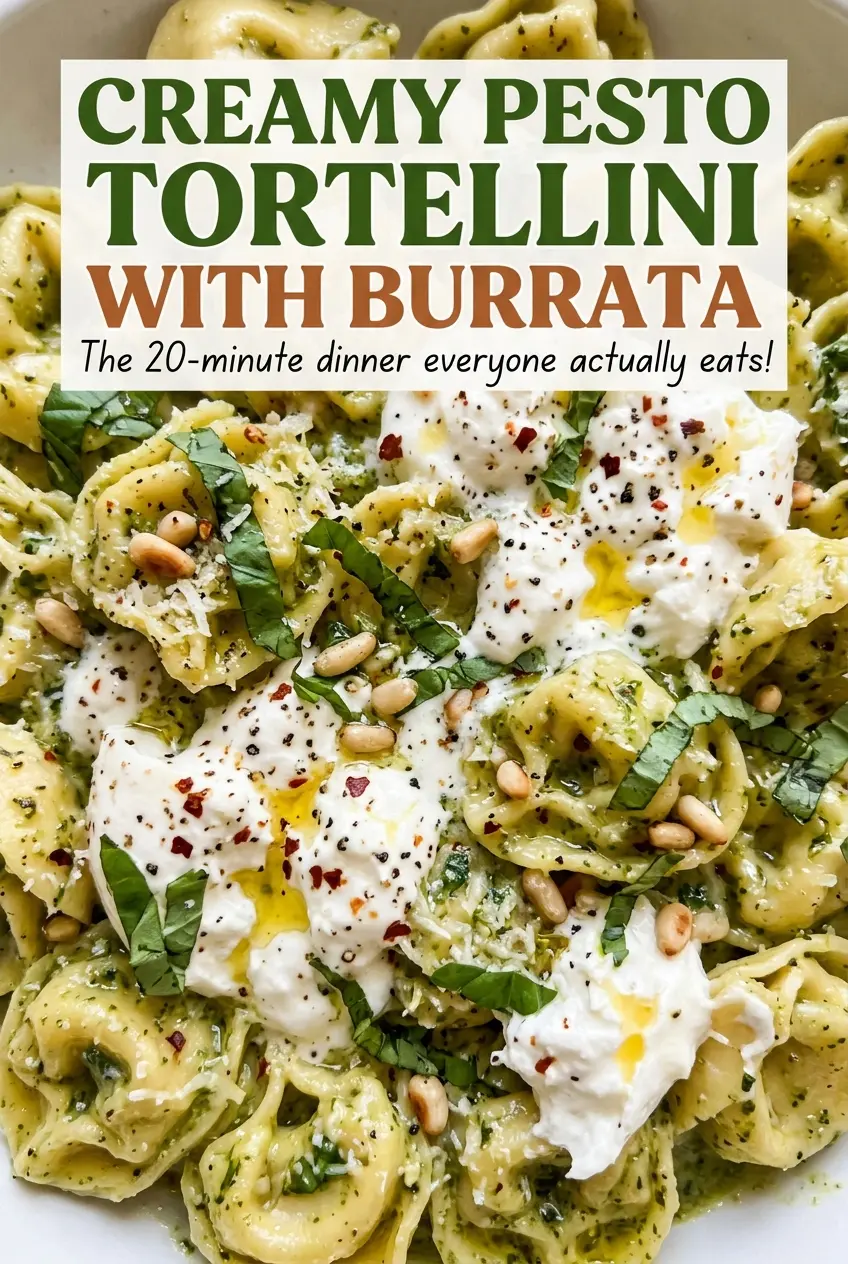
Tear the burrata into pieces rather than cutting it into neat slices. The soft center falls over the warm pasta in creamy pockets, and adding it after the skillet leaves the heat keeps it from disappearing into the sauce.
Save creamy pesto tortellini with burrata for a quick dinner when you want a silky pesto sauce and soft cheese in every serving.
Why Pasta Water Makes This Creamy Pesto Sauce Cling
A cream sauce can look smooth in the skillet and still slide right off tortellini. The difference here is a little reserved cooking water. As the tortellini boils, some starch moves into the water; a measured splash in the skillet helps the sauce coat the pasta rather than collect underneath it.
There’s no need to turn the sauce into a thick blanket. Heavy cream gives it body, while the pesto brings the basil flavor and the Parmesan adds savory depth. The pasta water loosens that combination just enough to cling to the curved edges and seams of the tortellini. Add it with the drained pasta, then toss gently until the surface looks evenly glossy.
Keep the heat low once the pesto and Parmesan are in. The sauce only needs enough warmth to melt the cheese and coat the pasta; a hard boil isn’t doing useful work. If the skillet looks a little loose before you add the tortellini, don’t keep reducing it—pasta and the reserved water finish the sauce together.
What Cream, Pesto, Parmesan, and Burrata Each Bring
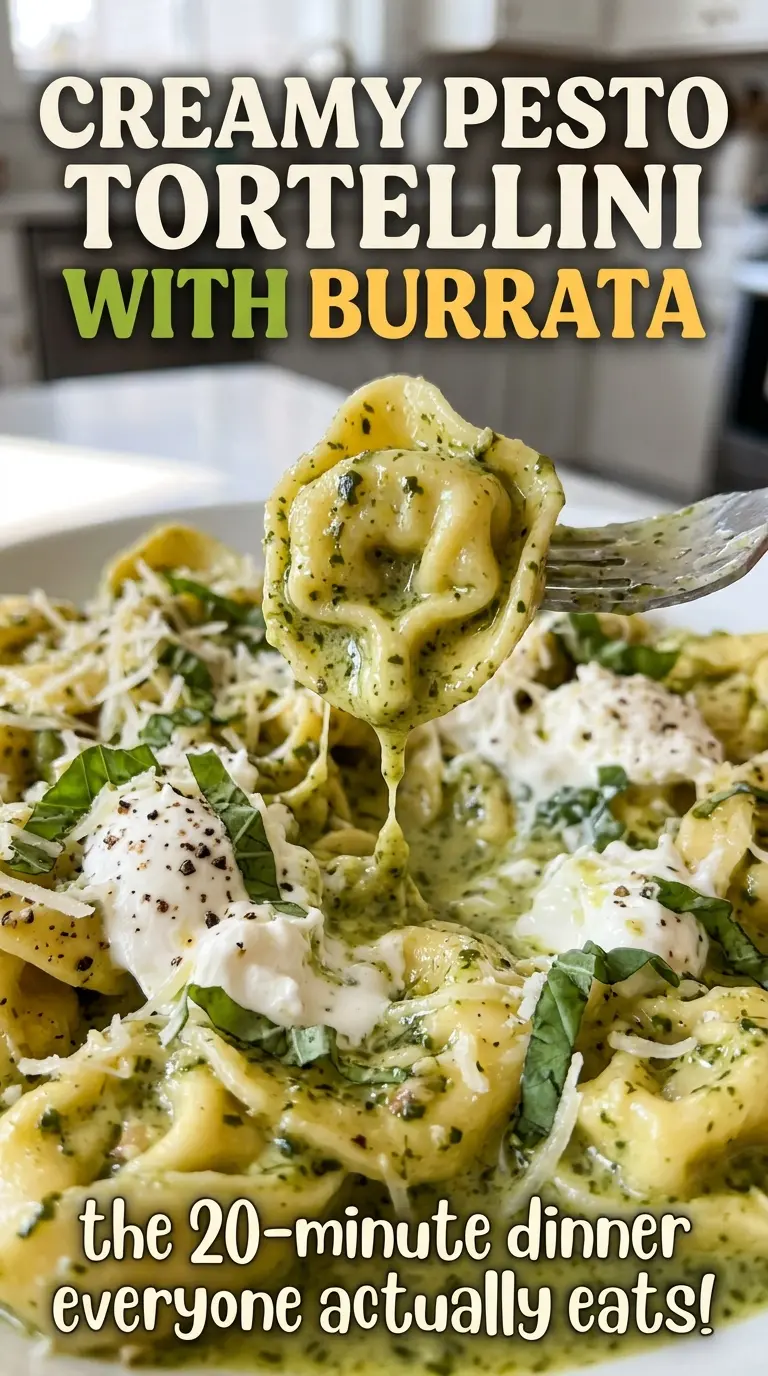
- Refrigerated cheese tortellini — This cooks fast and supplies a tender, filled bite that holds up to the creamy sauce. Pick a refrigerated cheese tortellini you enjoy eating on its own; the package timing is the guide because brands and sizes vary. Dried pasta isn’t a direct swap here, since it won’t have the same filling or cook in the same short window.
- Heavy cream — It gives the sauce enough richness to carry the pesto without turning watery. A thinner dairy product won’t behave the same way over heat, so I wouldn’t replace it with milk in this method. Warm it gently and let the pasta water do the loosening once the tortellini is added.
- Basil pesto — Pesto supplies the concentrated basil flavor and its own seasoning, so brand differences show up clearly in the finished sauce. Use a basil pesto you like; there isn’t another ingredient in this list that can replace its particular flavor. Stir it into the cream over low heat rather than cooking it at a rolling simmer.
- Finely grated Parmesan — Fine shreds melt into the sauce more readily than thick pieces. The quality matters most in how well it melts and how salty the finished sauce tastes, so taste your pesto and Parmesan together before adding extra seasoning. No extra salt is needed in the sauce by default.
- Burrata — Its creamy center gives the dish a softer, richer finish than the sauce alone. Tear it over the pasta instead of stirring it through the skillet. If burrata isn’t available, leave it off; the tortellini will still have creamy pesto sauce, just without that cool, milky topping.
Keep the Cream Gentle, Then Finish the Tortellini in the Skillet
Boil the Tortellini and Save the Starchy Water
Bring the water to a boil in a large pot, stir in the kosher salt, and add the refrigerated cheese tortellini. Cook it according to the package directions, usually 3–5 minutes, until tender. Before draining, reserve 1/4 cup of the cooking water; it’s easy to forget once the tortellini is ready. Drain the pasta without rinsing it.
Warm the Cream to a Bare Simmer
While the tortellini cooks, pour the heavy cream into a 12-inch skillet and warm it over medium heat. It takes about 2–3 minutes to just begin simmering. Look for small bubbles around the edge rather than a vigorous boil across the whole surface. If it starts bubbling hard, lower the heat before the pesto goes in.
Melt the Parmesan Into the Pesto
Reduce the heat to low, then stir in the basil pesto, finely grated Parmesan, and black pepper. Keep stirring until the cheese melts and the sauce looks smooth, with no visible clumps of Parmesan. If the sauce is grainy, the heat is too high for the cheese; move the skillet off the burner briefly and stir until it smooths out. The sauce should be warm and loose enough to toss with pasta.
Toss, Take the Pan Off the Heat, and Add Burrata
Add the drained tortellini and reserved pasta water to the skillet. Toss gently for about 1 minute, stopping when each piece is coated and the sauce clings instead of pooling. Remove the skillet from the heat, then arrange the torn burrata over the pasta. Bring it to the table right away, while the tortellini is warm and the burrata still holds soft pieces.
Two Ways to Change the Finish Without Losing the Pesto Sauce
Make it burrata-free
Leave off the burrata and serve the tortellini with the creamy pesto sauce on its own. The result is less rich at the finish and lets the basil and Parmesan come through more directly. There isn’t a dairy-free version using the ingredients in this dish: the cream, Parmesan, cheese tortellini, and burrata all contain dairy.
Keep the burrata in larger pieces
Tear the ball into a few generous pieces instead of lots of small ones, then arrange them across the skillet. Each serving gets a more distinct bite of burrata, with creamy center against the sauced tortellini, rather than having the cheese spread across the top.
Storage and Reheating
- Refrigerator: Refrigerate leftovers in a covered container within 2 hours and use them within 3–4 days. The burrata softens into the sauce and won’t keep its fresh, separate texture.
- Freezer: Freezing isn’t a good fit. The cream sauce can separate and the tortellini can turn soft after thawing, while burrata loses its delicate texture.
- Reheating: Warm leftovers gently in a skillet over low heat, stirring until hot; a small splash of water can loosen the sauce. Avoid high heat, which can make the cream sauce separate. Reheat leftovers to 165°F.
Questions That Come Up While Making Creamy Pesto Tortellini
Creamy Pesto Tortellini with Burrata
Ingredients
Equipment
Method
- Bring 4 quarts water to a boil in a large pot.
- Stir in 1 tablespoon kosher salt.
- Add the tortellini to the boiling water.
- Cook the tortellini according to the package directions, usually 3–5 minutes, until tender.
- Reserve 1/4 cup of the cooking water.
- Drain the pasta.
- While the tortellini cooks, warm the heavy cream in a 12-inch skillet over medium heat until it just begins to simmer, about 2–3 minutes.
- Reduce the heat to low and stir in the pesto, Parmesan, and black pepper until the cheese melts and the sauce is smooth.
- Add the drained tortellini and reserved pasta water to the skillet.
- Toss gently until the pasta is evenly coated and the sauce clings to it, about 1 minute.
- Remove the skillet from the heat.
- Arrange the burrata over the tortellini and serve immediately.
