
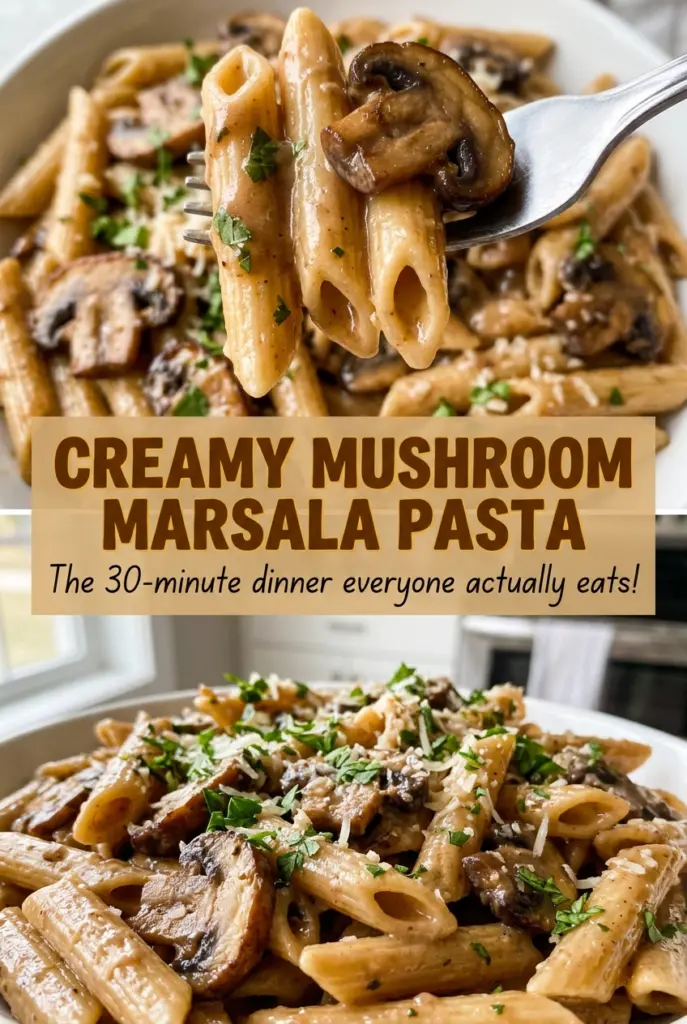
Creamy Mushroom Marsala Pasta
The mushrooms hit the hot skillet and start to sizzle, then a minute later they release their moisture and turn pale. Giving them space and cooking them in two batches…
Tip: save now, cook later.The mushrooms hit the hot skillet and start to sizzle, then a minute later they release their moisture and turn pale. Giving them space and cooking them in two batches is what gets those browned edges back, and those savory bits become the backbone of this creamy mushroom Marsala pasta.
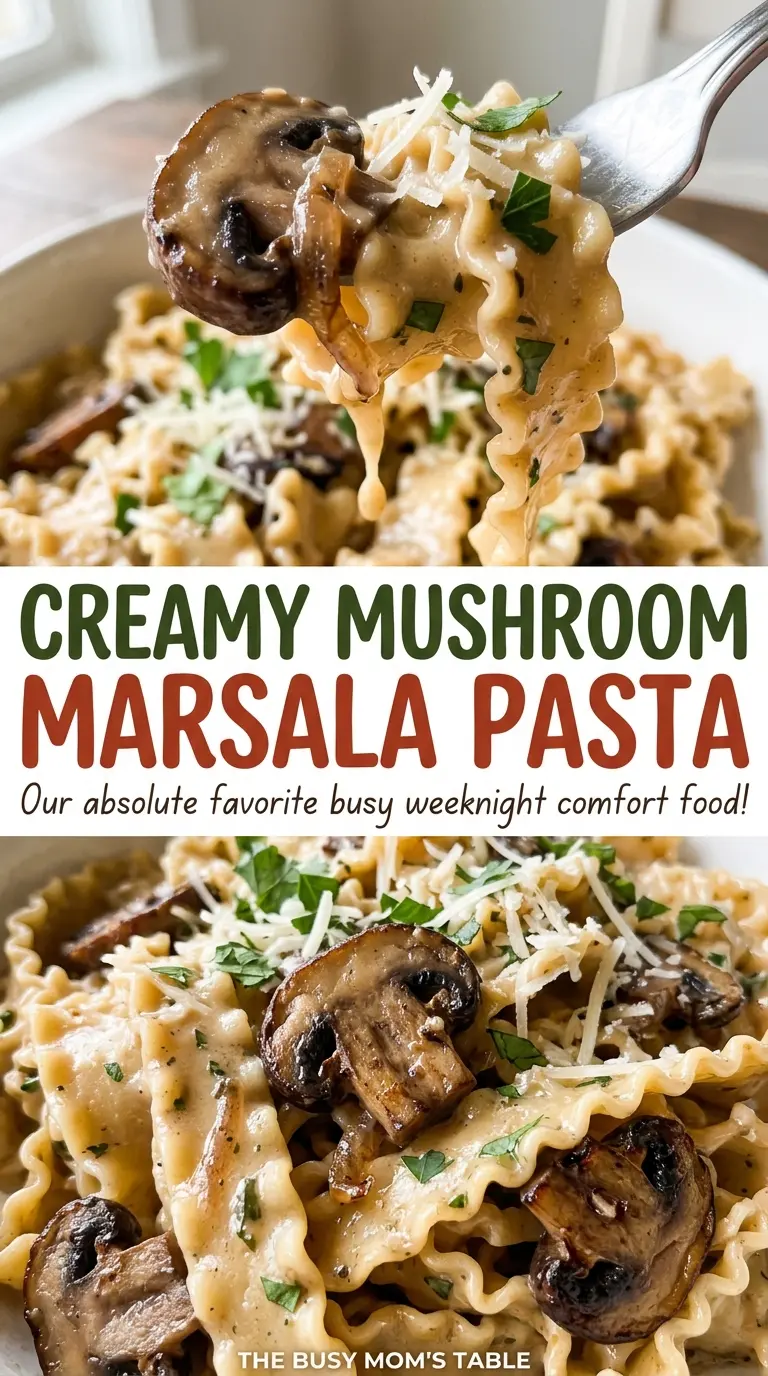
I like how the dry Marsala brings a rounded, woodsy note without making the sauce taste like wine. It simmers down with the browned bits from the skillet, then broth and cream turn it into a sauce that clings to fettuccine. A little Parmesan brings everything together, while parsley keeps the finish fresh. Each forkful has silky noodles, tender mushrooms, and a sauce that tastes like it took far longer than it did.
Kitchen Note
Keep the cup of pasta water beside the stove until the noodles are coated. Add it a few tablespoons at a time; a small splash loosens the sauce without washing away its creamy texture.
Save this creamy mushroom Marsala pasta for a night when you want silky fettuccine and deeply browned mushrooms in one skillet.
Why the Mushrooms Need Their Own Room in the Skillet
Cremini mushrooms contain plenty of moisture, and a crowded skillet traps that moisture around them. Instead of browning, the mushrooms soften and steam. That’s a common reason a mushroom sauce tastes flat: the mushrooms never got the chance to develop the savory, browned flavor that makes the sauce taste full.
Cooking half the mushrooms at a time in a 12-inch skillet gives them more contact with the hot pan. Let each batch cook for 4 to 5 minutes, stirring occasionally, until you see browned surfaces. The mushrooms shrink as they cook, but don’t pile the second half on top of the first batch to save time; that extra crowding works against the browning you’re after.
Once both batches are browned, they can share the skillet while the shallot and garlic cook. That order also means the butter and aromatics go in after the mushrooms have had their turn in the pan, rather than softening them before they brown. The result is a sauce with a deep mushroom base instead of a cream-forward taste that needs extra seasoning to feel complete.
What Marsala, Cream, and Parmesan Each Bring to the Sauce
- Cremini mushrooms — Their earthy flavor holds its own against cream and wine. White button mushrooms work if that’s what you have, though the finished sauce will taste a little milder. Wipe away visible dirt with a damp towel and slice them evenly so they cook at a similar pace.
- Dry Marsala — Dry Marsala gives the sauce a savory, gently sweet depth. A dry sherry is the closest practical swap, though the flavor will be different and less distinctly Marsala-like. Sweet Marsala will make the sauce noticeably sweeter, so choose dry for the balanced result here.
- Fettuccine — These broad ribbons give the creamy sauce plenty of surface to cling to. Linguine is a good stand-in if needed; follow its package timing and stop when it’s al dente. Gluten-free fettuccine also works, but its texture and cooking time depend on the brand.
- Heavy cream and finely grated Parmesan — Cream gives the sauce its smooth, rich body, while finely grated Parmesan melts into the pasta instead of leaving large salty bits. Freshly grated cheese melts more evenly than coarse shreds. Half-and-half can replace the cream, but the sauce will be thinner and less rich.
- Low-sodium chicken broth — Broth extends the sauce without competing with the Marsala. Low-sodium broth gives you more control over seasoning, especially because the pasta water and Parmesan are already salty. Vegetable broth is the useful swap for a meat-free version.
From Al Dente Fettuccine to a Sauce That Clings
Cook the pasta and save its cooking water
Bring the water to a boil in a large pot, stir in 1 tablespoon of kosher salt, and cook the fettuccine for 8 to 10 minutes, or according to package directions, until al dente. Check a strand near the lower end of the time range; it should have a slight bite rather than a soft center. Before draining, reserve 1 cup of the cooking water. Drain the pasta, but don’t rinse it—the starchy surface helps the sauce cling.
Brown the mushrooms in two batches
Heat 1 tablespoon of the olive oil in a 12-inch skillet over medium-high heat, then add half the sliced mushrooms. Cook for 4 to 5 minutes, stirring occasionally, until browned, and transfer them to a plate. Add the remaining oil and mushrooms and repeat. If the skillet looks crowded or the mushrooms are releasing liquid, keep the batches separate rather than stacking more into the pan.
Build the Marsala base
Return all the mushrooms to the skillet and add the remaining 1/2 teaspoon of kosher salt and the black pepper. Stir in the butter, finely chopped shallot, and minced garlic, and cook for 1 to 2 minutes, until fragrant. Pour in the dry Marsala and simmer for 4 to 5 minutes, scraping the browned bits from the bottom of the skillet as it reduces by about half. Those loosened bits should blend into the wine rather than remain stuck to the pan.
Finish the cream sauce with the pasta
Stir in the chicken broth and heavy cream, bring the sauce to a gentle simmer, and cook for 3 to 5 minutes, until it lightly coats a spoon. A hard boil can make a cream sauce less smooth, so keep the heat at a gentle simmer. Add the drained fettuccine, Parmesan, and chopped parsley, then toss until the noodles are coated. If the sauce feels too tight, loosen it with a few tablespoons of the reserved pasta water at a time.
Easy Changes That Still Let the Mushroom Sauce Shine
Make it gluten-free
Use gluten-free fettuccine in place of regular fettuccine, cooking it according to its package directions. The sauce stays the same, but gluten-free pasta can turn soft quickly, so taste it as it cooks and reserve the pasta water before draining.
Make a vegetarian version
Replace the chicken broth with vegetable broth and use Parmesan made with vegetarian rennet. You’ll keep the creamy mushroom-and-Marsala character, with a slightly different savory note from the broth.
Use dry sherry instead of Marsala
Swap in dry sherry for the Marsala if that’s what you have. Reduce it in the same way, scraping up the browned bits; the finished sauce will still be savory and rounded, but it won’t have Marsala’s particular flavor.
Storage and Reheating
- Refrigerator: Refrigerate leftovers within 2 hours and keep them in an airtight container for 3 to 4 days. The fettuccine will absorb some sauce as it sits.
- Freezer: Freezing isn’t recommended. The cream sauce can separate after thawing, and the pasta tends to turn soft.
- Reheating: Warm leftovers gently in a skillet over low heat, stirring until hot. Add a small splash of broth or water if the sauce has thickened; high heat can make the cream sauce separate.
Questions I Get Asked About Creamy Mushroom Marsala Pasta
Creamy Mushroom Marsala Pasta
Ingredients
Equipment
Method
- Bring the water to a boil in a large pot.
- Stir in 1 tablespoon of the salt.
- Cook the fettuccine for 8 to 10 minutes, or according to package directions, until al dente.
- Reserve 1 cup of the pasta cooking water, then drain the pasta.
- Heat 1 tablespoon of the olive oil in a 12-inch skillet over medium-high heat, add half the mushrooms, and cook for 4 to 5 minutes, stirring occasionally, until browned.
- Transfer the mushrooms to a plate and repeat with the remaining oil and mushrooms.
- Return all the mushrooms to the skillet and add the remaining 1/2 teaspoon salt and the pepper.
- Stir in the butter, shallot, and garlic and cook for 1 to 2 minutes, until fragrant.
- Pour in the Marsala and simmer for 4 to 5 minutes, scraping up browned bits, until reduced by about half.
- Stir in the broth and cream and bring to a gentle simmer.
- Cook for 3 to 5 minutes, until the sauce lightly coats a spoon.
- Add the drained pasta, Parmesan, and parsley and toss until coated, adding reserved pasta water a few tablespoons at a time as needed to loosen the sauce.
