
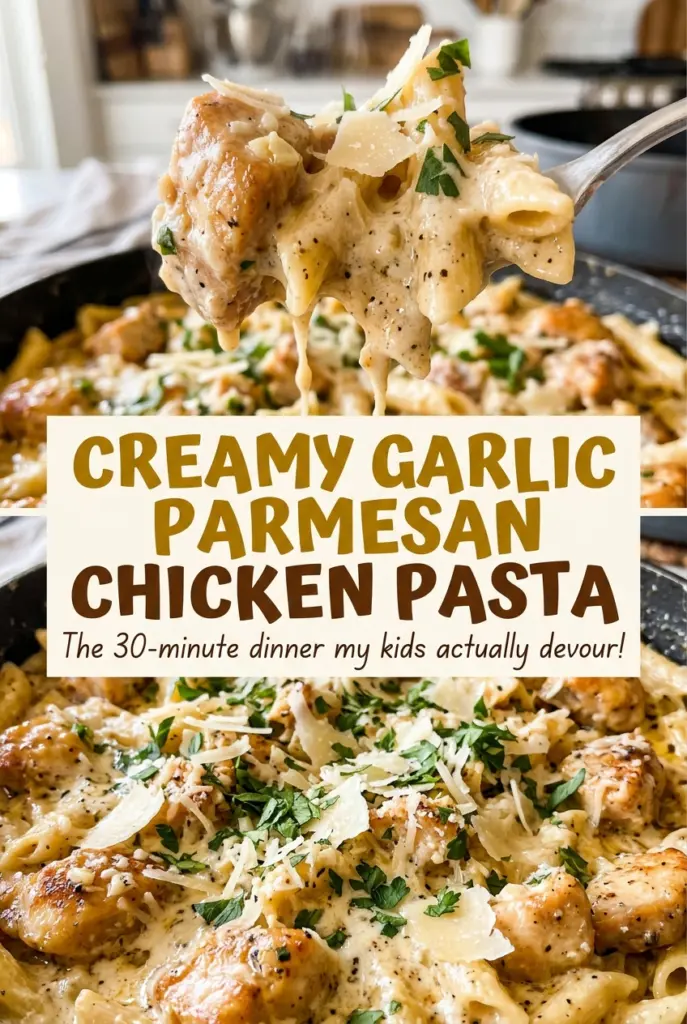
Creamy Garlic Parmesan Chicken Pasta
The first thing you hear when the chicken hits the skillet is a sharp sizzle. That sound matters: the pieces need room to brown instead of steaming together, and that…
Tip: save now, cook later.The first thing you hear when the chicken hits the skillet is a sharp sizzle. That sound matters: the pieces need room to brown instead of steaming together, and that browned surface gives the creamy garlic Parmesan sauce a deeper, savory start. I build this Creamy Garlic Parmesan Chicken Pasta in the same skillet, so the sauce picks up all those little bits left behind.
For the sauce, butter and garlic cook briefly before flour goes in to thicken the broth and cream. Whisking the liquids in gradually keeps the base smooth, while a little reserved pasta water helps it coat the fettuccine rather than sit in a puddle at the bottom of the bowl. The finished pasta is creamy without being heavy, with tender chicken tucked through every ribbon.
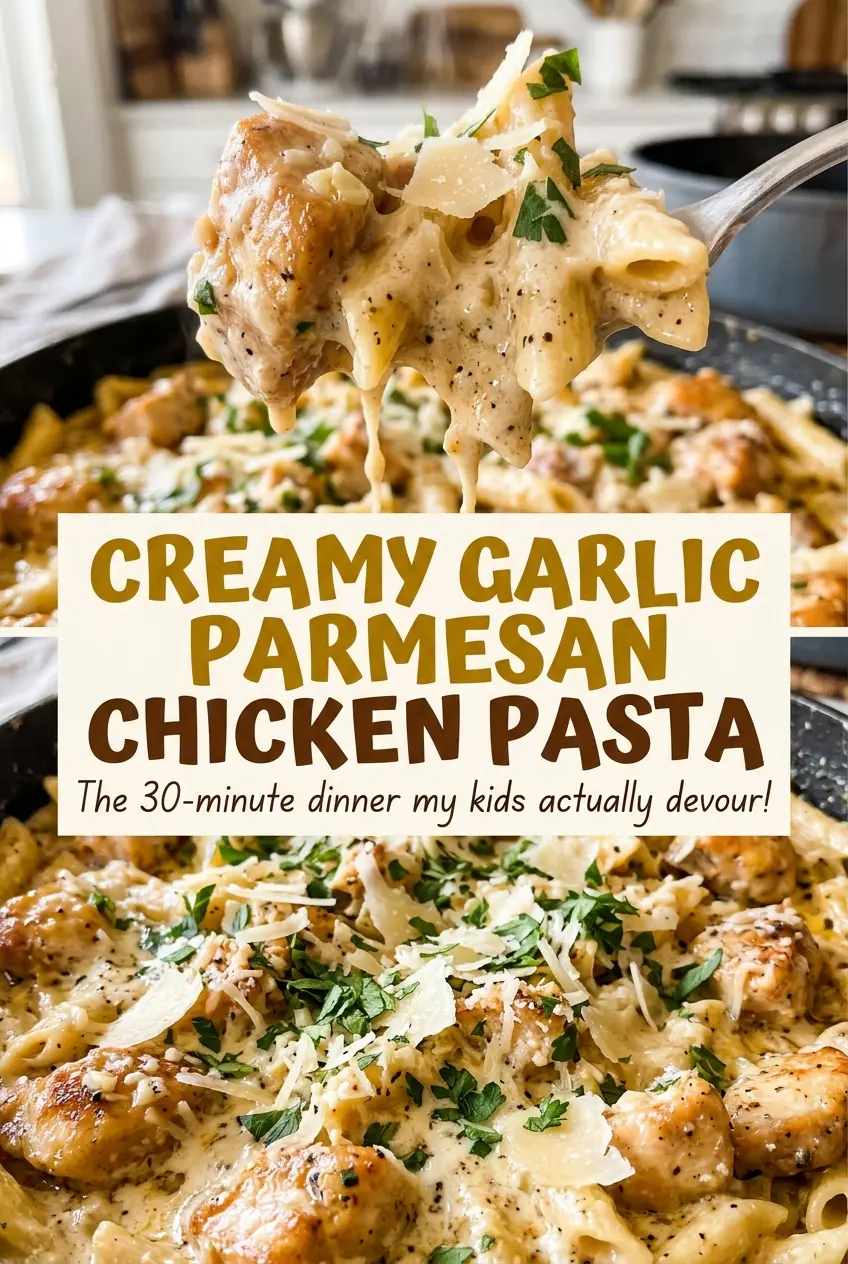
Kitchen Note
Set a measuring cup beside the colander before you drain the fettuccine. I’ve learned that the reserved pasta water is easy to forget once the pot is empty and the sauce is already on the stove.
Save this Creamy Garlic Parmesan Chicken Pasta for a weeknight dinner with silky sauce and browned chicken in every bowl.
Why the Chicken Needs Two Trips Through the Skillet
Browned chicken is more than a pretty finish here. It gives the sauce a savory backbone, and the skillet keeps those browned bits where they can become part of the meal. When too many pieces hit the pan at once, they release moisture into a crowded surface and start to steam. You lose the golden edges that make each bite taste like it was seared, not just cooked through.
Working in two batches gives the pieces space to make contact with the hot skillet. Keep the first batch on a plate while the second cooks; there’s no need to rush them back into the pan. The chicken doesn’t have to be deeply crusted, but look for visible browning on several sides. Those browned spots bring more flavor to the butter, garlic, and flour that follow, and the whole sauce tastes fuller without adding anything extra.
What Each Ingredient Adds to the Creamy Parmesan Sauce
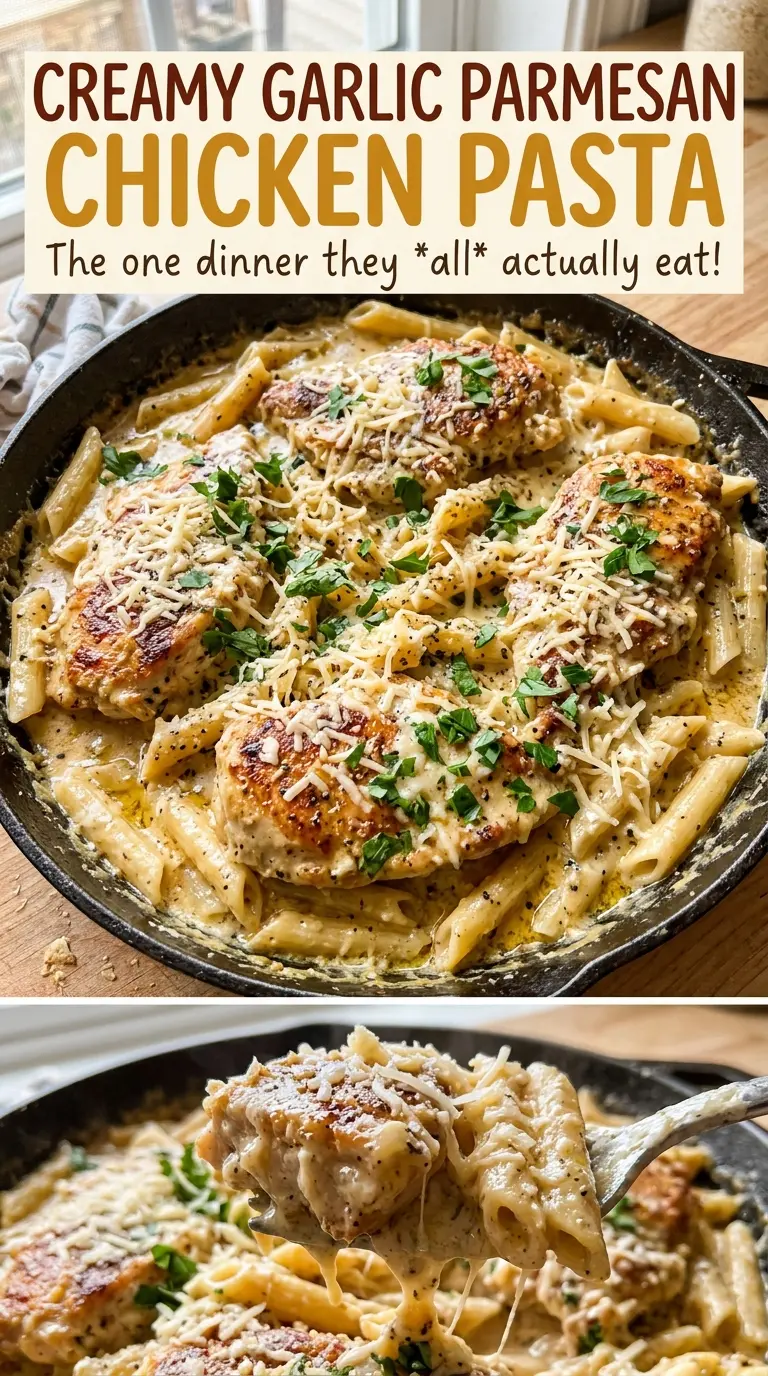
- Fettuccine — Its broad ribbons hold onto the cream sauce, so each forkful gets pasta and sauce together. Linguine is the closest easy swap if that’s what’s in your pantry; cook it to the package’s al dente timing.
- Chicken breasts — Cutting the meat into evenly sized pieces helps them cook at a similar pace. Boneless, skinless thighs work in their place for a richer, slightly more tender bite, though their cooking time can differ.
- Garlic — Fresh cloves give the butter a bright, fragrant garlic flavor in the short cooking time. Mince them finely so they soften quickly instead of leaving large, sharp pieces in the sauce.
- All-purpose flour — Flour thickens the broth and cream into a sauce that clings to pasta. For a gluten-free version, use a cup-for-cup gluten-free flour blend in its place; the sauce may have a slightly different texture depending on the blend.
- Heavy cream — Its fat makes the sauce feel silky and helps it stay cohesive. Half-and-half can stand in for a lighter sauce, but the finished coating will be less rich and a little thinner.
- Parmesan — Finely grated cheese melts into the sauce more evenly than coarse shreds. A wedge grated just before cooking gives the smoothest result; Pecorino Romano can replace it for a sharper, saltier finish.
- Low-sodium chicken broth — It adds savory depth while leaving room for the salt already used to season the pasta and chicken. Regular chicken broth works, but the finished dish will taste saltier.
From Al Dente Fettuccine to a Smooth, Clinging Sauce
Cook the Pasta and Save Its Starchy Water
Bring the water to a boil in a large pot, add the tablespoon of salt, and cook the fettuccine according to the package directions until al dente. Taste a strand near the end of the package’s suggested cooking time; it should be tender with a slight bite in the center. Before draining, reserve a quarter cup of the pasta water. Drain the noodles and keep them nearby while you make the sauce.
Brown the Chicken in Batches
Season the chicken pieces with the remaining salt and the black pepper. Heat the olive oil in a 12-inch skillet over medium-high heat, then cook the chicken in two batches, turning occasionally. Each batch takes about 5–7 minutes, and the thickest pieces should reach 165°F. Transfer the cooked chicken to a plate so the skillet is ready for the sauce.
Build the Garlic Cream Base
Melt the butter in the same skillet over medium heat, then add the minced garlic and cook for 30 seconds. Stir in the flour and cook for 1 minute, stirring so it’s incorporated with the butter rather than sitting in dry pockets. Gradually whisk in the chicken broth, followed by the heavy cream. Simmer for 3–5 minutes, whisking often, until the sauce thickens slightly.
Toss Until Every Ribbon Is Coated
Stir the finely grated Parmesan and reserved pasta water into the sauce until smooth. Add the drained fettuccine and chicken, then toss until the sauce coats the noodles evenly and everything is heated through. If the sauce looks a little loose in the skillet, keep tossing for a moment; it will cling more closely as it meets the pasta.
Three Easy Ways to Adapt This Chicken Pasta
Make It Gluten-Free
Use gluten-free fettuccine and a cup-for-cup gluten-free flour blend in the sauce, plus chicken broth labeled gluten-free. The pasta may have a different bite from wheat fettuccine, and the sauce texture depends on the flour blend, but the creamy garlic-Parmesan character stays intact.
Use Boneless Chicken Thighs
Swap the chicken breasts for boneless, skinless thighs and cut them into the same-size pieces. Thigh meat brings a deeper, richer flavor, and it may need a different amount of time in the skillet, so go by the chicken’s doneness rather than relying only on the breast timing.
Trade Parmesan for Pecorino Romano
Finely grate Pecorino Romano and use it in place of the Parmesan for a sharper, saltier finish. The sauce will still turn creamy, but taste it before adding any extra salt because Pecorino brings more saltiness to the bowl.
Storage and Reheating
- Refrigerator: Store leftovers in an airtight container for 3–4 days. The fettuccine will absorb some sauce as it sits, so it won’t be quite as silky straight from the fridge.
- Freezer: Freeze in airtight portions for up to 2 months. The cream sauce may separate a little after thawing, and the pasta will be softer, but gentle reheating helps bring it back together.
- Reheating: Warm it slowly in a skillet over low heat with a splash of chicken broth, stirring often until hot throughout. Avoid boiling the sauce; high heat can make the cream look oily.
Questions That Come Up While Making This Pasta
Creamy Garlic Parmesan Chicken Pasta
Ingredients
Equipment
Method
- Bring the water to a boil in a large pot.
- Add 1 tablespoon of the salt, and cook the fettuccine according to package directions until al dente.
- Reserve 1/4 cup of the pasta cooking water, then drain the pasta.
- Season the chicken with the remaining 1 teaspoon salt and the black pepper.
- Heat the olive oil in a 12-inch skillet over medium-high heat and cook the chicken in two batches, turning occasionally, until browned and the thickest pieces reach 165°F, about 5–7 minutes per batch; transfer the chicken to a plate.
- Melt the butter in the same skillet over medium heat, add the garlic and cook for 30 seconds.
- Stir in the flour and cook for 1 minute.
- Gradually whisk in the chicken broth, then the heavy cream, and simmer for 3–5 minutes, whisking often, until the sauce thickens slightly.
- Stir in the Parmesan and reserved pasta water until smooth.
- Add the drained pasta and chicken and toss until evenly coated and heated through.
