
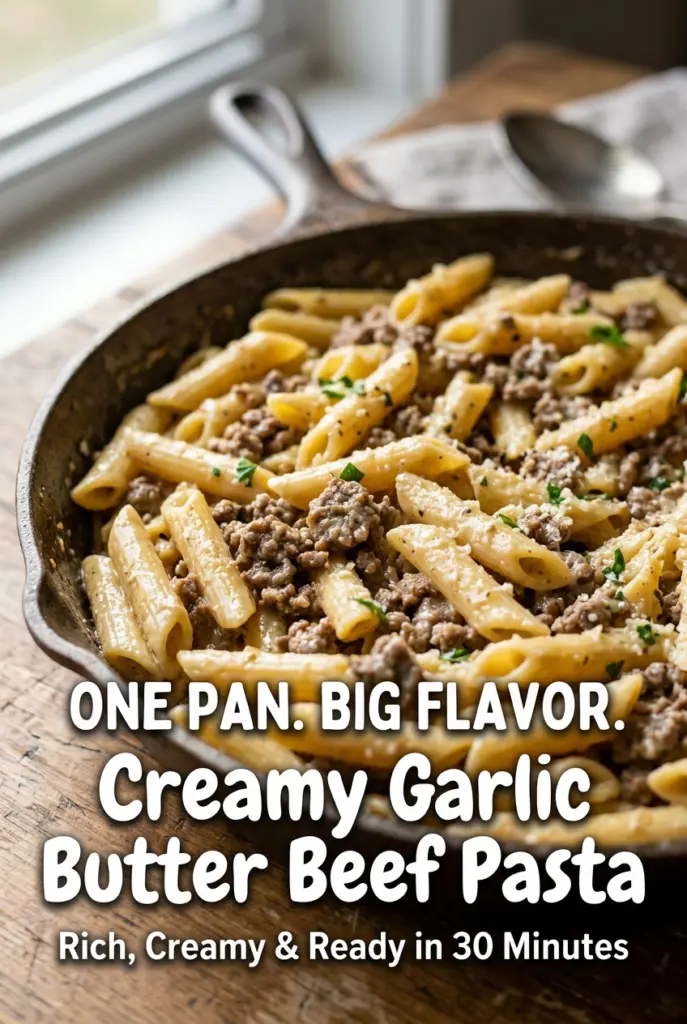
Creamy Garlic Butter Beef Pasta
Creamy Garlic Butter Beef Pasta hits that sweet spot between comforting and fast. The sauce clings to every piece of penne, the beef brings real savory depth, and the garlic…
Tip: save now, cook later.Creamy Garlic Butter Beef Pasta hits that sweet spot between comforting and fast. The sauce clings to every piece of penne, the beef brings real savory depth, and the garlic butter base keeps the whole pan tasting rich without turning heavy or greasy. It’s the kind of dinner that disappears quickly because it tastes like you worked on it longer than you did.
What makes this version work is the order. Browning the beef first gives you a skillet full of flavor, then the butter, onion, and garlic soften into the drippings instead of starting from scratch. The flour cooks briefly before the broth and cream go in, which keeps the sauce smooth instead of chalky. Parmesan goes in at the end, off the harshest heat, so it melts into the sauce instead of turning grainy.
Below, I’ll walk you through the exact moment the sauce should thicken, the ingredient swaps that still give you a good result, and the reheating trick that keeps the pasta from drying out the next day.
The sauce thickened up beautifully and coated the pasta instead of pooling at the bottom. My husband went back for seconds and asked if I could put this one on the weekly rotation.
Save this Creamy Garlic Butter Beef Pasta for the nights when you want a silky Parmesan sauce, browned beef, and one pan worth keeping on repeat.
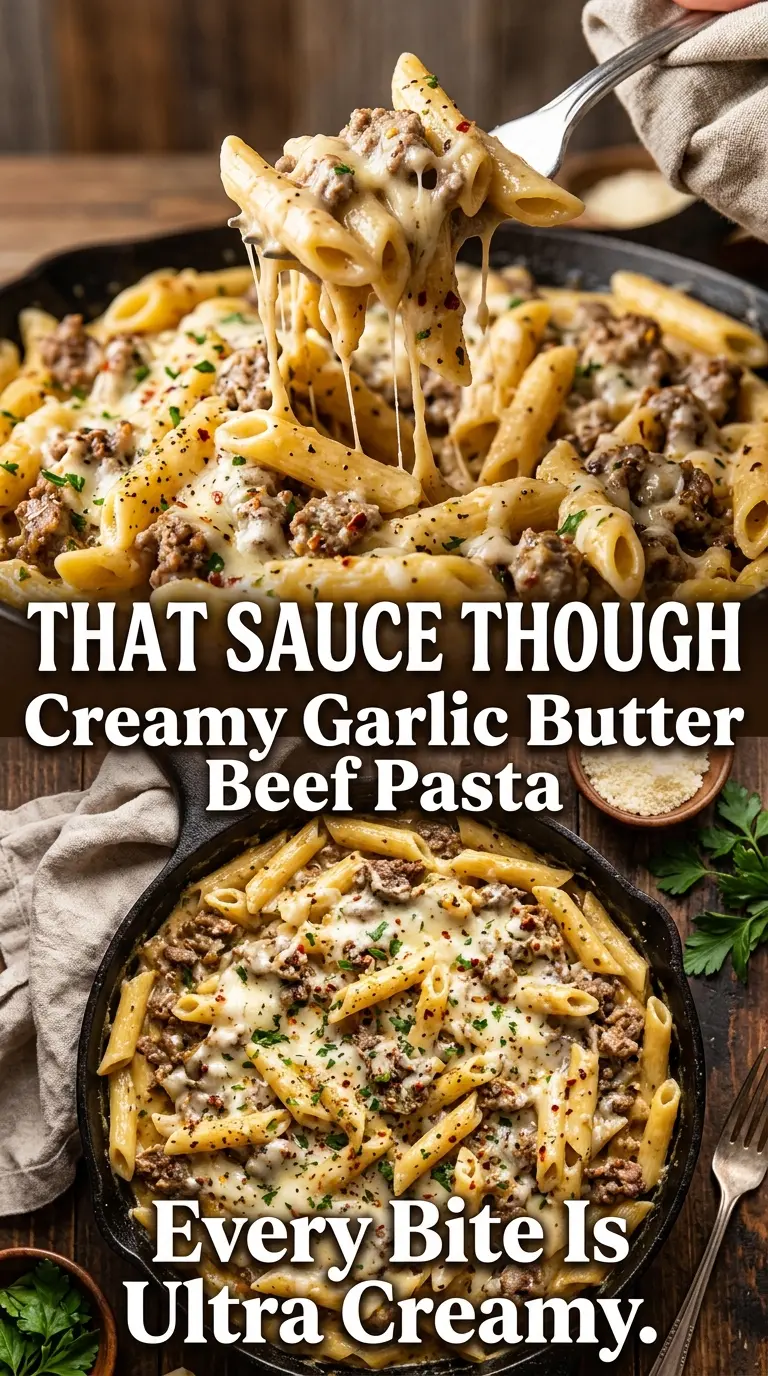
The Quiet Step That Keeps the Parmesan Sauce Smooth
Most cream sauces go wrong in one of two places: the flour never cooks long enough, or the cheese goes in while the pan is still raging hot. This recipe avoids both by building a quick roux after the garlic and onion soften, then loosening it with broth and cream before the Parmesan arrives. That gives you a sauce that feels creamy and cohesive instead of pasty or broken.
The other detail that matters is the pasta. Penne holds onto the sauce because of its shape, but it also needs to be drained at true al dente. It finishes in the skillet, so if it starts out too soft, you’ll end up with mush by the time the sauce is done.
- Ground beef — Lean beef works best here because you want flavor without a pool of grease. If your pan gives off more fat than you want, drain it before the butter goes in so the sauce stays clean-tasting.
- Heavy cream — This is what gives the sauce its body. Half-and-half will work in a pinch, but the sauce will be thinner and a little less luxurious.
- Freshly grated Parmesan — Pre-shredded Parmesan can turn the sauce grainy because of the anti-caking starches. Grate it yourself if you can; it melts smoother and tastes sharper.
- Penne pasta — Any sturdy short pasta can stand in, but you want a shape that traps sauce. Thin pasta will taste fine, but it won’t hold onto the garlic butter coating the same way.
Building the Sauce Before the Pasta Goes Back In
Browning the Beef Until It Actually Develops Flavor
Cook the beef over medium-high heat and let it sit long enough to brown before you start stirring constantly. You’re looking for dark edges and a few browned bits stuck to the bottom of the skillet. If the meat steams instead of browns, the sauce loses a lot of its savory backbone. Drain off excess grease before moving on, but leave the browned bits in the pan.
Softening the Onion and Garlic in the Butter
Add the butter, onion, and garlic after the beef is browned. The onion should turn translucent and soft, and the garlic should smell fragrant, not sharp or scorched. Garlic burns fast, especially in a hot pan with little moisture, so keep it moving and don’t let it sit long enough to darken. If it turns bitter, the whole sauce will taste off.
Whisking the Broth and Cream into a Smooth Base
Sprinkle the flour over the aromatics and stir it for about a minute so the raw flour taste cooks out. Then add the broth slowly while whisking, followed by the cream, until the mixture looks smooth and loose before it starts simmering. If you dump in the liquid too fast without whisking, the flour can clump and leave little lumps in the sauce. Let it simmer gently until it coats the back of a spoon.
Finishing with Parmesan and Pasta
Pull the heat down before the Parmesan goes in. Stir it until melted, then add the cooked pasta and toss until every piece is glossy and coated. If the sauce looks too thick, loosen it with a splash of reserved pasta water or a little broth. The goal is a sauce that hugs the pasta, not one that sits in a heavy pile at the bottom of the skillet.
How to Adapt This for a Lighter Dinner or a Different Pasta Shape
Gluten-Free Version
Use your favorite gluten-free penne and swap the all-purpose flour for a gluten-free flour blend or 1 tablespoon cornstarch mixed with a little cold broth. Cornstarch thickens faster and gives a slightly glossier sauce, so add it carefully and simmer just until it coats the spoon.
A Leaner, Less Rich Sauce
Use half-and-half instead of heavy cream and add an extra splash of broth if needed. The sauce will be a little lighter and less velvety, but it still clings well as long as you don’t boil it hard after the dairy goes in.
Swap the Ground Beef for Ground Turkey
Ground turkey works if you want a lighter-tasting pan, but it needs the butter and seasoning to keep it from tasting flat. Add an extra pinch of salt and a little more Parmesan, because turkey brings less built-in savoriness than beef.
Storage and Reheating
- Refrigerator: Store leftovers in an airtight container for up to 4 days. The pasta will absorb some sauce as it sits, so expect it to look thicker the next day.
- Freezer: It freezes, but the cream sauce can separate a little after thawing. If you want to freeze it, cool it completely and store it in a tightly sealed container for up to 2 months.
- Reheating: Rewarm gently on the stove over low heat with a splash of broth, milk, or cream. High heat is the mistake that breaks the sauce and makes the pasta dry out at the same time.
Questions I Get Asked About This Recipe
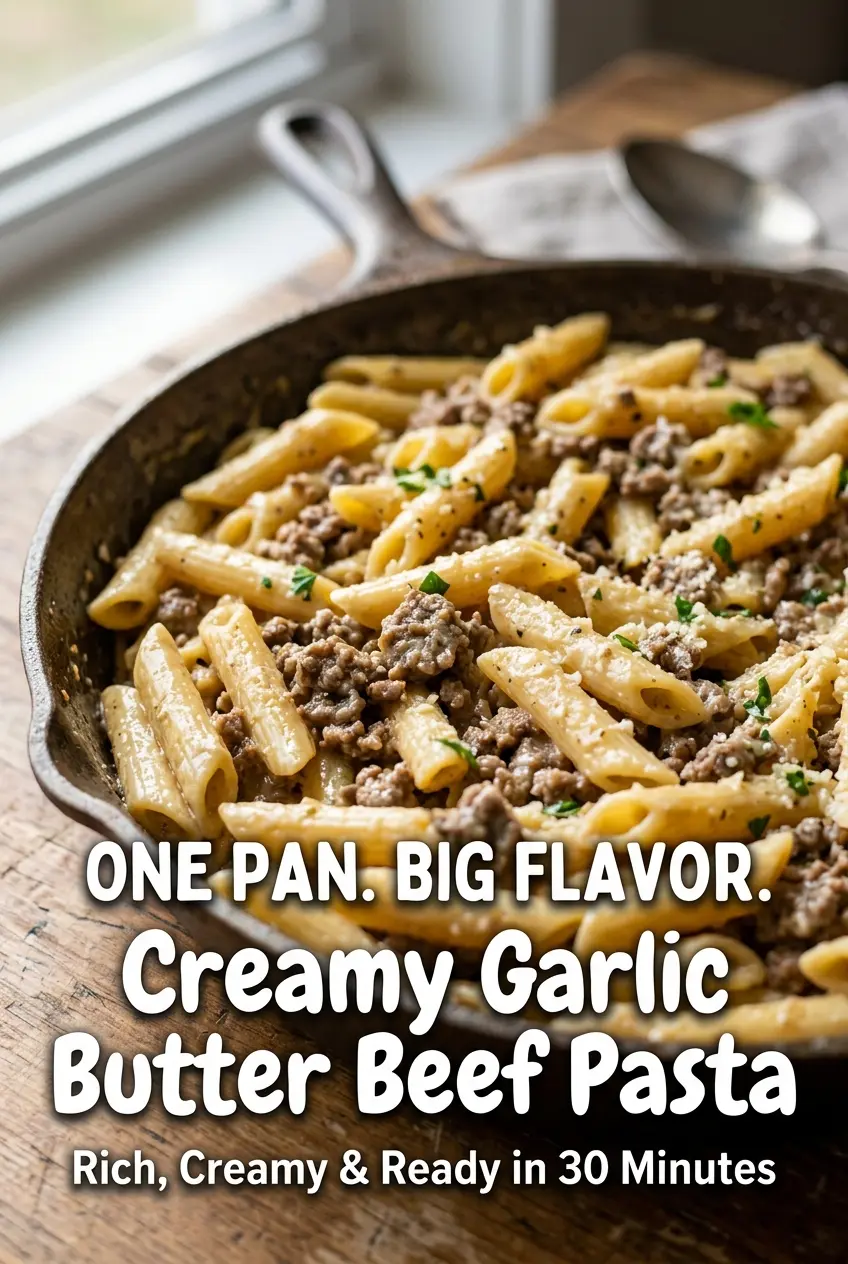
Creamy Garlic Butter Beef Pasta
Ingredients
Equipment
Method
- Boil penne pasta according to package directions until al dente, then drain and set aside.
- In a large skillet, cook lean ground beef over medium-high heat until browned, then drain excess grease.
- Add butter, onion, and minced garlic to the skillet and cook for 2–3 minutes until fragrant.
- Sprinkle in all-purpose flour and stir for 1 minute to remove the raw flour taste.
- Gradually whisk in beef broth and heavy cream until smooth.
- Stir in Italian seasoning, paprika, onion powder, salt, and black pepper.
- Simmer the sauce for 4–5 minutes, stirring occasionally, until it thickens enough to coat a spoon.
- Stir in freshly grated Parmesan cheese until melted and the sauce turns glossy.
- Add the cooked penne pasta and toss until fully coated in the creamy garlic Parmesan sauce.
- Garnish with chopped fresh parsley and extra Parmesan before serving.
