
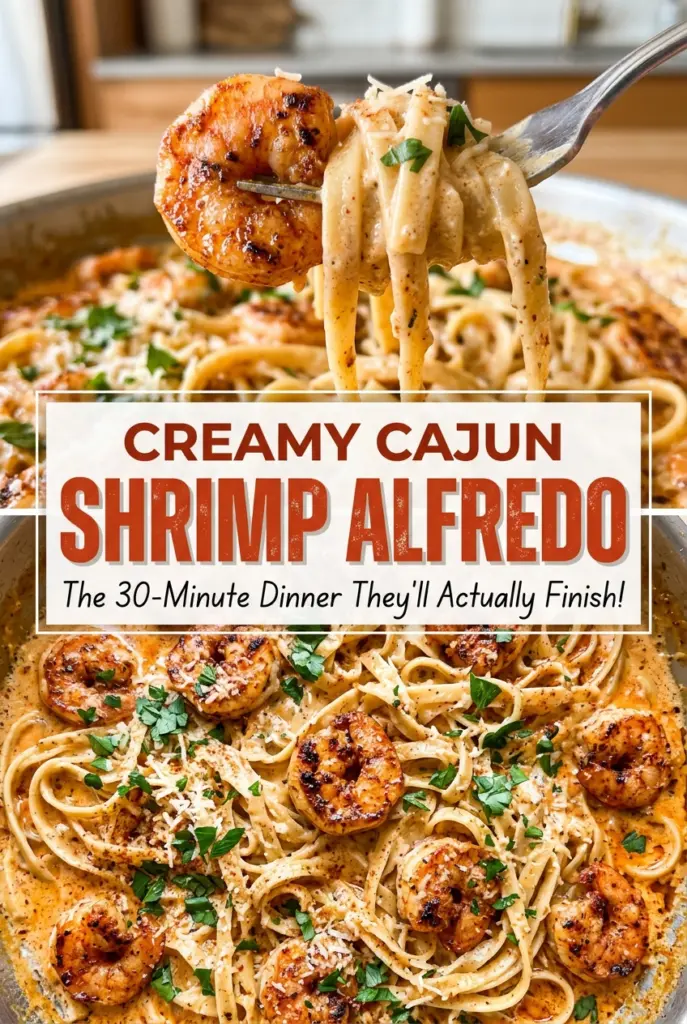
Creamy Cajun Shrimp Alfredo
The shrimp are the part that ask for your attention: they turn opaque quickly in the skillet, and an extra minute can leave them tight instead of tender. I like…
Tip: save now, cook later.The shrimp are the part that ask for your attention: they turn opaque quickly in the skillet, and an extra minute can leave them tight instead of tender. I like having the pasta ready before the sauce comes together, so the finish feels calm rather than rushed. This Creamy Cajun Shrimp Alfredo brings together the familiar richness of butter, cream, and Parmesan with the warm, savory bite of Cajun seasoning.
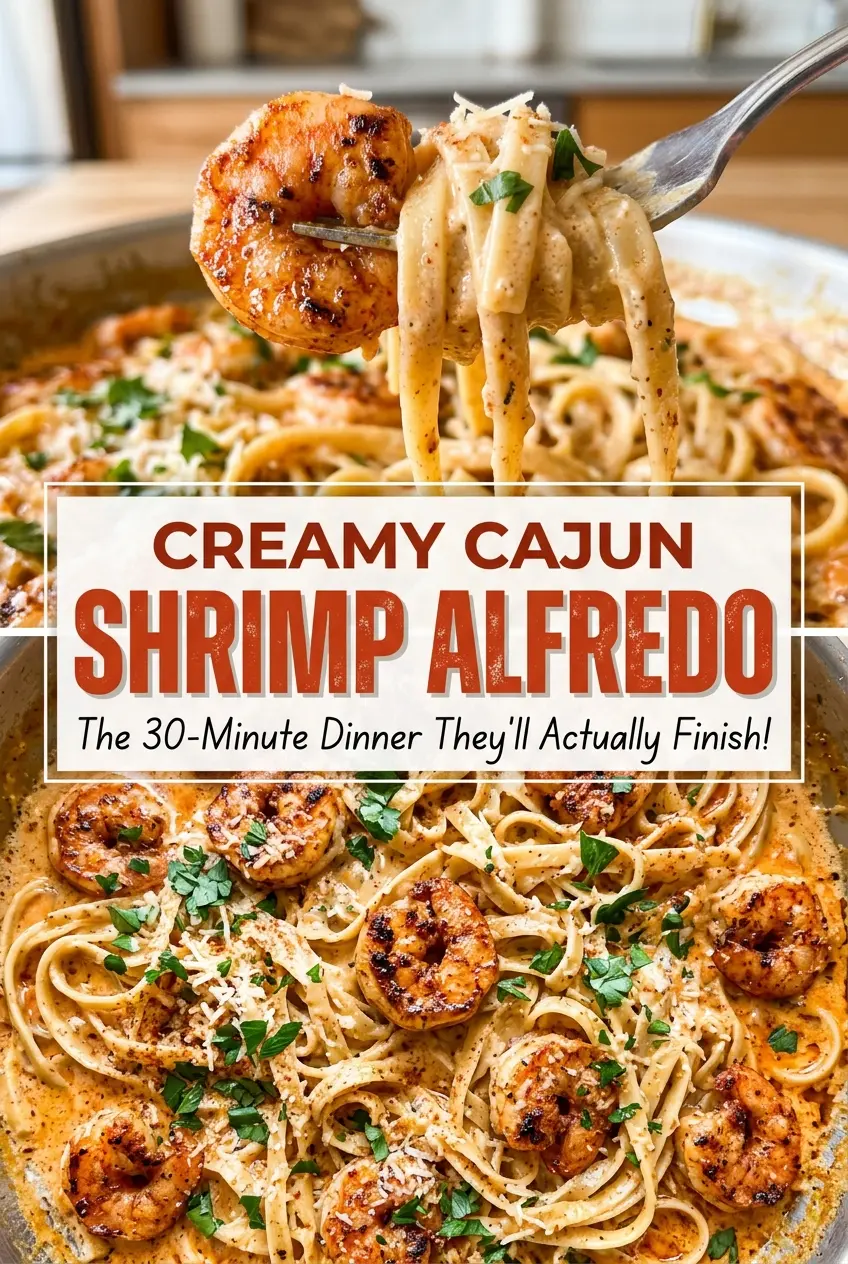
What I enjoy about this version is how the shrimp and sauce stay distinct enough to taste, while every ribbon of fettuccine gets coated. The sauce is creamy without burying the Cajun seasoning, and the shrimp bring a little seared edge to each forkful. It’s a full, comforting bowl with a bright, peppery finish.
Kitchen Note
Finely grated Parmesan melts into the cream more readily than coarse shreds. Lower the heat before you stir it in, and give it a moment to melt rather than turning the burner back up.
Save this Creamy Cajun Shrimp Alfredo for a night when you want silky Parmesan fettuccine and warmly seasoned shrimp in one bowl.
Why Cajun Shrimp Alfredo Needs Pasta Water, Not More Cream
A creamy sauce can look generous in the skillet and still slide off the noodles, leaving a puddle at the bottom of the bowl. More cream doesn’t solve that problem; it can make the coating heavier without helping it cling. The reserved pasta water gives the sauce a little starch and loosens it at the same time, which helps the cream and Parmesan coat the fettuccine instead of sitting apart from it.
That small measure is easy to overlook when you’re eager to drain the pasta. Save it before the colander goes in the sink. Once it’s stirred into the sauce, the liquid helps the Alfredo move around the strands as you toss everything together. The finished sauce should look cohesive and glossy, with enough body to cling to the fettuccine but not so much that the noodles stick together in a solid mass.
The timing matters because the pasta water is most useful at the end, when the cream sauce, noodles, and shrimp meet. It’s not a replacement for cream, and it shouldn’t turn the sauce watery. That balance lets the Cajun seasoning come through while keeping the Parmesan sauce smooth and easy to eat.
What Each Ingredient Brings to This Cajun Alfredo
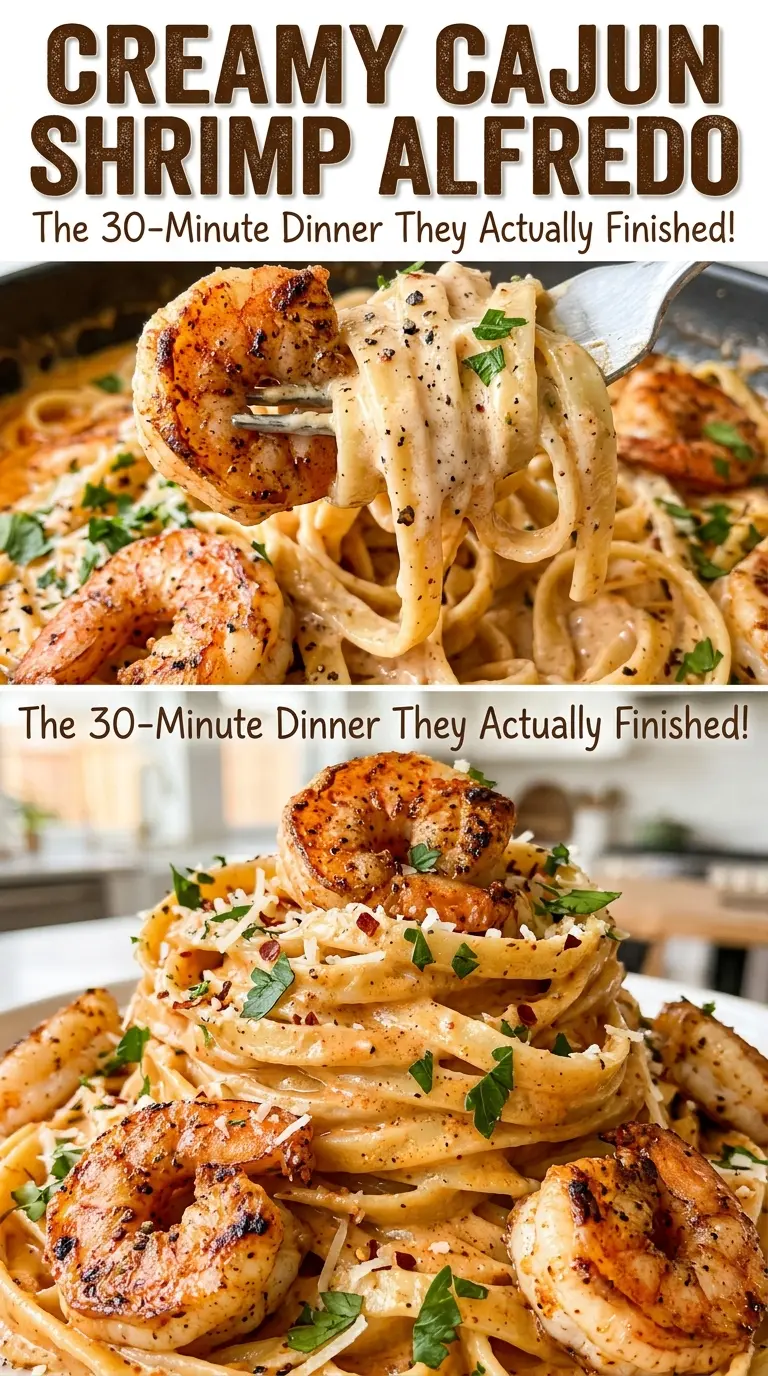
- Fettuccine — Its broad ribbons give the cream sauce plenty of surface to coat. Dried pasta is a practical choice here; cook it until al dente so it keeps its shape when tossed with the sauce. Linguine is the closest easy swap if that’s what you have, while gluten-free fettuccine is a useful adaptation for a gluten-free meal.
- Large shrimp — Peeled and deveined shrimp keep prep manageable and cook quickly. Patting them dry helps the Cajun seasoning adhere and helps them sear rather than steam. Frozen shrimp work once fully thawed and dried; very small shrimp are less forgiving because they cook through so quickly.
- Cajun seasoning — This is where the dish gets its savory spice, so use a blend you enjoy. The salt and heat can differ by brand, which is why it’s worth tasting your seasoning before cooking. There isn’t another ingredient in this list that can replace its distinct blend of seasoning.
- Heavy cream — Its richness gives the sauce body and helps it simmer without becoming thin. Half-and-half isn’t an equal swap for the same creamy result, so heavy cream is the better choice here.
- Finely grated Parmesan — Fine shreds melt into the warm cream more evenly than thick pieces. A block of Parmesan grated just before cooking works well, but the important thing is the fine texture; coarse shreds take longer to melt smoothly.
- Butter and garlic — Butter builds the sauce’s base, and minced garlic gives it a fragrant savory note. Fresh garlic is worth using because it cooks briefly and its aroma carries through the cream. Mince it before you start; it only needs about 30 seconds in the skillet.
How to Bring the Shrimp, Sauce, and Fettuccine Together
Cook the Fettuccine Until It Still Has a Little Bite
Bring 4 quarts of water and the kosher salt to a boil in a 6-quart pot, then add the fettuccine. Cook it according to the package directions until al dente, usually 8 to 12 minutes; the strands should bend easily but still have a little firmness when you bite one. Before draining, reserve 1/4 cup of the pasta cooking water. Drain the noodles and keep them ready for the sauce.
Give the Shrimp Room to Sear
Pat the peeled and deveined shrimp dry, then toss them with the Cajun seasoning. Heat the olive oil in a 12-inch skillet over medium-high heat and arrange the shrimp in a single layer; work in batches if they don’t fit without crowding. Cook for 1 to 2 minutes per side, until the shrimp are opaque and reach 145°F. Transfer them to a plate so they don’t keep cooking while you make the sauce.
Build the Cream Sauce in the Same Skillet
Melt the butter in the skillet over medium heat, then add the minced garlic. Cook for about 30 seconds, just until fragrant; garlic can turn bitter if it browns. Stir in the heavy cream and let it simmer gently for 2 to 3 minutes. Lower the heat, then stir in the Parmesan and black pepper until the cheese melts.
Toss Until the Sauce Coats Every Strand
Stir the reserved pasta water into the sauce, then add the drained fettuccine and cooked shrimp. Toss until the noodles and shrimp are evenly coated. If the sauce looks loose at first, keep tossing so it can distribute across the pasta rather than collecting beneath it. Serve while the coating is creamy and the shrimp are tender.
Two Easy Ways to Adapt the Pasta
Make It Gluten-Free with Gluten-Free Fettuccine
Use gluten-free fettuccine in place of the regular pasta and cook it according to its package directions until al dente. The Cajun shrimp and Alfredo sauce stay the same, though gluten-free pasta can be more delicate when tossed, so fold it through the sauce gently.
Trade Fettuccine for Linguine
Linguine gives you long strands with a slightly narrower shape, but it still carries the creamy sauce well. Cook it to al dente according to the package directions, then finish it with the shrimp and Alfredo just as you would the fettuccine.
Storage and Reheating
- Refrigerator: Store leftovers in an airtight container for up to 3 days. The fettuccine will absorb some sauce as it sits, so it won’t be quite as loose as when freshly tossed.
- Freezer: I don’t recommend freezing the finished dish. Cream sauce can separate after thawing, and the pasta tends to soften.
- Reheating: Warm leftovers gently in the microwave in short intervals, stirring between each one, with a small splash of water to loosen the sauce. High heat can make the cream sauce separate and the shrimp tough.
Questions That Come Up With Creamy Cajun Shrimp Alfredo
Creamy Cajun Shrimp Alfredo
Ingredients
Equipment
Method
- Bring the water and kosher salt to a boil in a 6-quart pot.
- Add the fettuccine and cook according to package directions until al dente, usually 8 to 12 minutes.
- Reserve 1/4 cup pasta cooking water, then drain the fettuccine.
- Pat the shrimp dry and toss with the Cajun seasoning.
- Heat the olive oil in a 12-inch skillet over medium-high heat.
- Cook the shrimp in a single layer, working in batches if needed, for 1 to 2 minutes per side until opaque and 145°F.
- Transfer the shrimp to a plate.
- Melt the butter in the same skillet over medium heat.
- Add the garlic and cook for about 30 seconds until fragrant.
- Stir in the heavy cream and simmer gently for 2 to 3 minutes.
- Lower the heat and stir in the Parmesan and black pepper until the cheese melts.
- Stir the reserved pasta water into the sauce.
- Add the drained fettuccine and cooked shrimp, and toss until evenly coated.
