
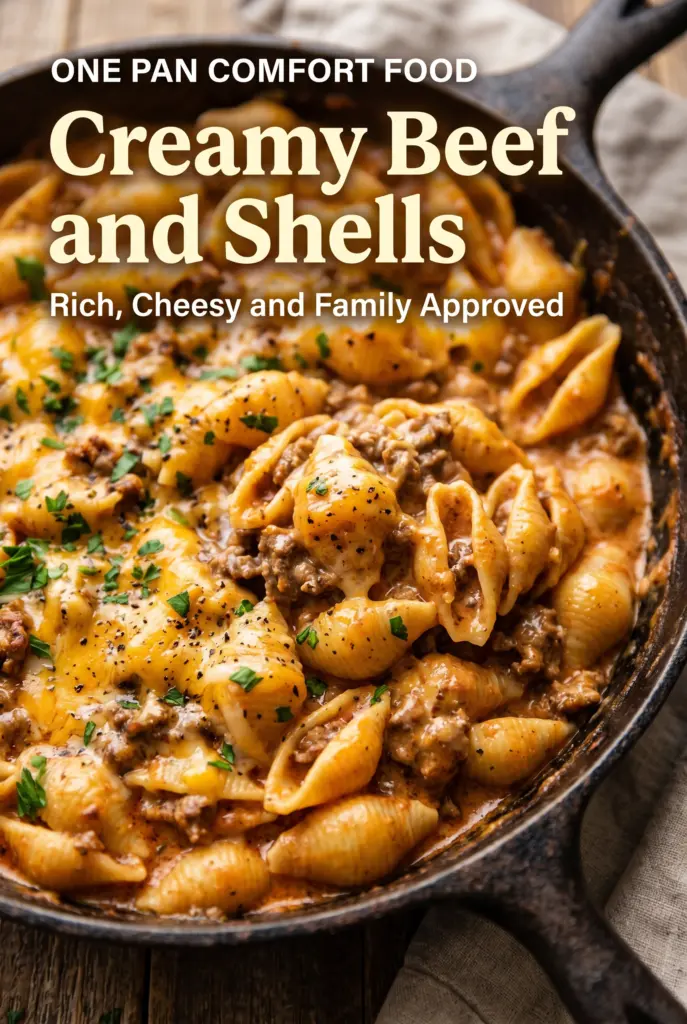
Creamy Beef and Shells
Creamy beef and shells lands on the table with that rare weeknight combination of cozy, fast, and filling. The sauce clings to every shell, the beef stays savory instead of…
Tip: save now, cook later.Creamy beef and shells lands on the table with that rare weeknight combination of cozy, fast, and filling. The sauce clings to every shell, the beef stays savory instead of lost in the cream, and the cheddar melts into a thick, spoon-coating finish that tastes like it took longer than it did. It’s the kind of skillet dinner that disappears fast because every bite has pasta, meat, and sauce in the same forkful.
What makes this version work is the balance in the pan. Tomato sauce gives the base enough acidity to keep the cream from tasting flat, beef broth keeps the sauce loose long enough for the pasta to drink some in, and cheddar goes in off the heat so it melts smooth instead of turning grainy. The shells matter too. Their shape catches the sauce in the center, which is why this dish eats better than a straight noodle version.
Below, I’ve included the little timing details that keep the sauce creamy, not split, plus a few swaps that still give you that same skillet comfort food feel.
The cheese melted into the sauce perfectly and the shells held onto every bit. I liked that it didn’t turn watery after sitting for a few minutes, and my kids went back for seconds without a complaint.
Creamy Beef and Shells is the kind of skillet dinner that stays saucy and comforting even after a few minutes on the stove.
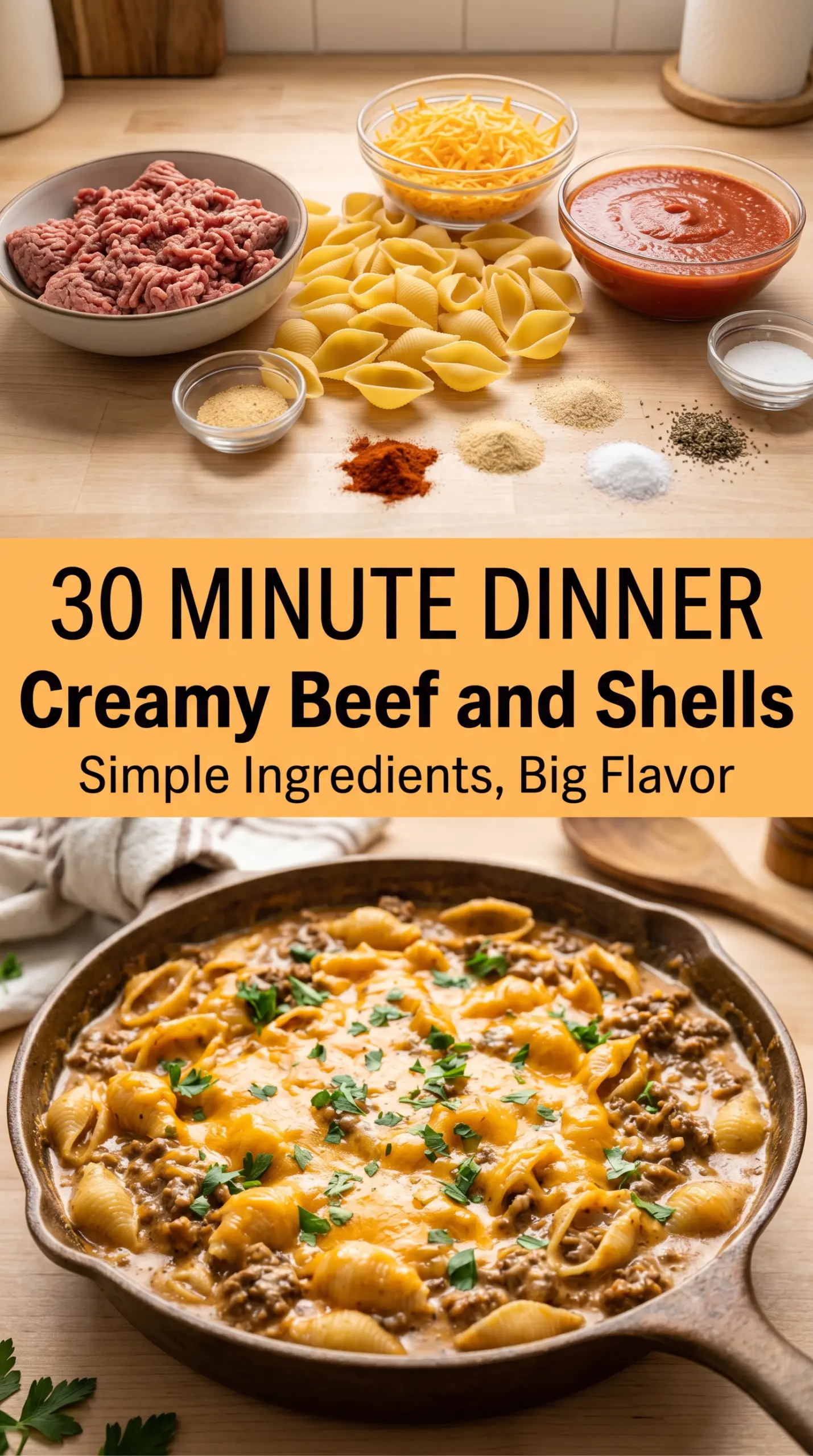
The Sauce Breaks When You Rush the Dairy
The mistake with creamy beef and shells is treating the dairy like it can take the same heat as the meat and tomato base. It can’t. Once the cream and cheddar go in, the pan needs to come down to low heat so the sauce thickens gently instead of turning greasy or grainy. The tomatoes and broth should already be simmering and slightly reduced before the cream joins the party.
Another thing that matters here is the order. Brown the beef first, then build the sauce in the same skillet so the browned bits stay in the pan and season the sauce from the bottom up. If the skillet looks dry after draining the beef, the onion and garlic will pick up the flavor that the meat left behind.
- Lean ground beef — Leaner beef keeps the sauce from tasting heavy, but any ground beef works if you drain excess grease after browning. If yours is fattier, spoon off the grease before adding the tomato sauce so the finished dish doesn’t feel oily.
- Medium pasta shells — Shells catch the sauce in their curves and hold up better than delicate pasta. If you swap them, pick another short shape like rotini or small rigatoni so the sauce still has something to cling to.
- Tomato sauce — This gives the creamy base enough acidity and body. Crushed tomatoes can work in a pinch, but they leave the sauce looser and a little less smooth.
- Heavy cream — This is what gives the sauce its plush texture and keeps it from tasting sharp. Half-and-half can be used, but the sauce will be thinner and a little more prone to separating if it boils.
- Cheddar cheese — Shred it yourself if you can. Pre-shredded cheese has anti-caking starches that can make the sauce slightly grainy instead of silky.
Building the Skillet Dinner in the Right Order
Brown the Beef and Soften the Onion
Heat the oil, then cook the onion until it turns translucent and the edges start to soften. Add the garlic for just 30 seconds so it smells fragrant but doesn’t brown. Then add the beef and break it up into small crumbles as it cooks. If you crowd the pan or leave the beef in big chunks, the sauce won’t coat it as evenly later.
Simmer the Tomato Base Before the Cream Goes In
Stir in the tomato sauce, broth, Italian seasoning, paprika, salt, and pepper, then let the mixture simmer for about 5 minutes. That short simmer matters because it concentrates the flavors and takes the raw edge off the tomato. If the sauce still looks thin at this stage, that’s fine; it should reduce a little before the dairy gets added.
Finish with Cream and Cheese on Low Heat
Lower the heat before adding the cream, then stir in the cheese slowly until the sauce turns smooth and glossy. High heat is the quickest way to split the dairy, so keep the pan calm and let the residual heat do the work. Fold in the cooked shells at the end and simmer just long enough for everything to heat through and the pasta to soak up some sauce.
How to Adapt This for Different Pans, Diets, and Leftovers
Make It Gluten-Free
Use gluten-free pasta shells and cook them just to al dente, because they soften faster once they sit in the sauce. The rest of the recipe already works as written, but don’t overcook the pasta or it’ll go mushy when tossed with the creamy beef mixture.
Swap the Beef for Ground Turkey
Ground turkey gives you a lighter dish, but it needs a little extra help to taste rich. Add an extra pinch of salt and a small splash more broth if the pan looks dry, since turkey doesn’t bring the same built-in fat and flavor as beef.
Use Monterey Jack for a Milder Cheese Sauce
Monterey Jack melts smoothly and gives the sauce a softer, creamier flavor than sharp cheddar. It won’t bring the same tang, so the tomato sauce and paprika do a little more of the heavy lifting.
Storage and Reheating
- Refrigerator: Store for up to 4 days in an airtight container. The pasta will keep absorbing sauce, so the dish gets thicker by the next day.
- Freezer: It freezes, but the cream sauce changes texture a bit after thawing. Freeze in portions for up to 2 months, then expect a slightly less silky finish.
- Reheating: Warm it gently on the stove over low heat or in the microwave at half power with a splash of broth or milk. The biggest mistake is blasting it on high heat, which can make the cheese separate and the pasta go soft.
The Questions That Come Up Before Dinner Is On the Table
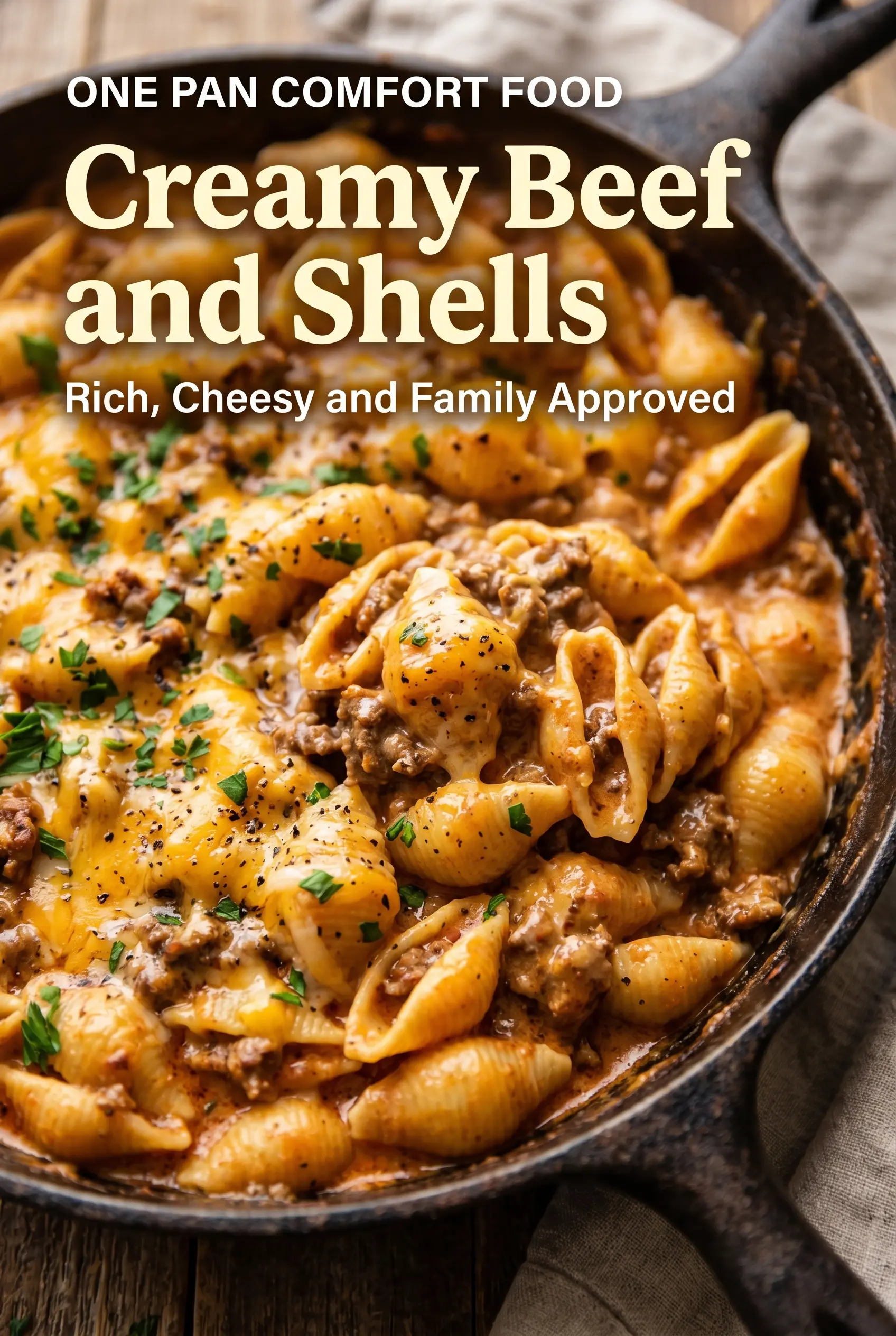
Creamy Beef and Shells
Ingredients
Equipment
Method
- Cook medium pasta shells according to package directions until al dente. Drain and set aside.
- Heat olive oil in a large skillet over medium heat until shimmering. Add yellow onion and cook until softened.
- Stir in garlic and cook for 30 seconds. Add lean ground beef and cook until browned, then drain excess grease if needed.
- Stir in tomato sauce, beef broth, Italian seasoning, paprika, salt, and black pepper. Simmer for 5 minutes.
- Reduce heat and stir in heavy cream. Add shredded cheddar cheese and stir until melted and smooth.
- Fold in cooked medium pasta shells. Simmer for 2–3 minutes until heated through and glossy.
- Garnish with chopped parsley and serve warm. Keep the sauce thick by serving immediately after the final simmer.
