
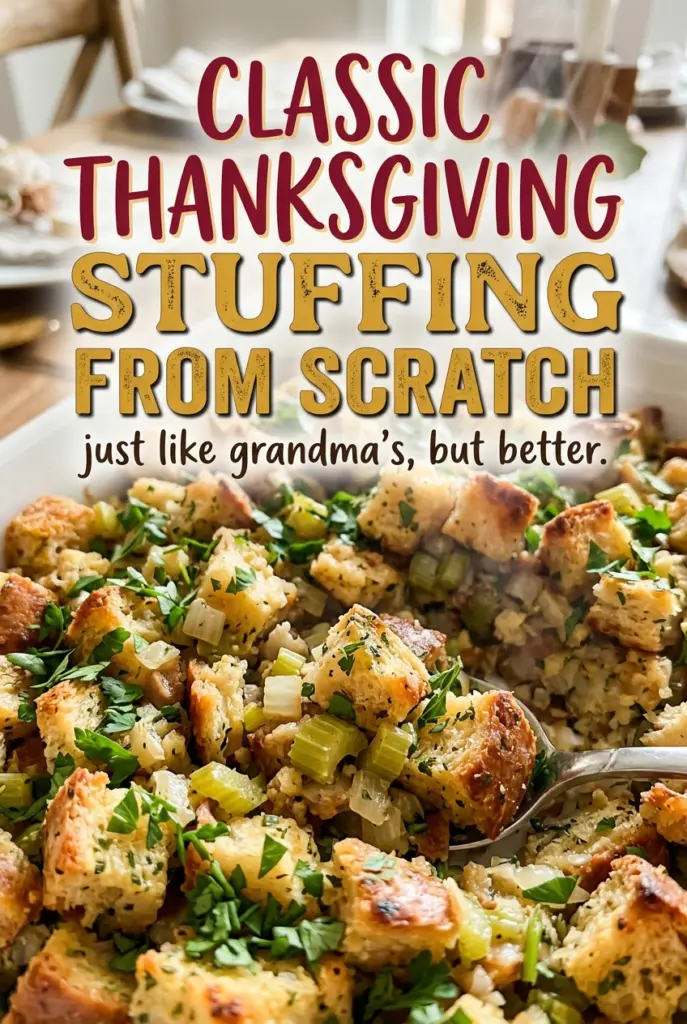
Classic Thanksgiving Stuffing from Scratch
When sage hits warm butter, its woodsy smell settles into the onions and celery, and the kitchen starts to smell like the best part of a holiday meal. I like…
Tip: save now, cook later.When sage hits warm butter, its woodsy smell settles into the onions and celery, and the kitchen starts to smell like the best part of a holiday meal. I like this Classic Thanksgiving Stuffing from Scratch because it gets a crisp top without leaving the middle dry or crumbly. The bread cubes have enough time in the oven to lose their softness, then soak up the seasoned broth and vegetables instead of collapsing into a paste.
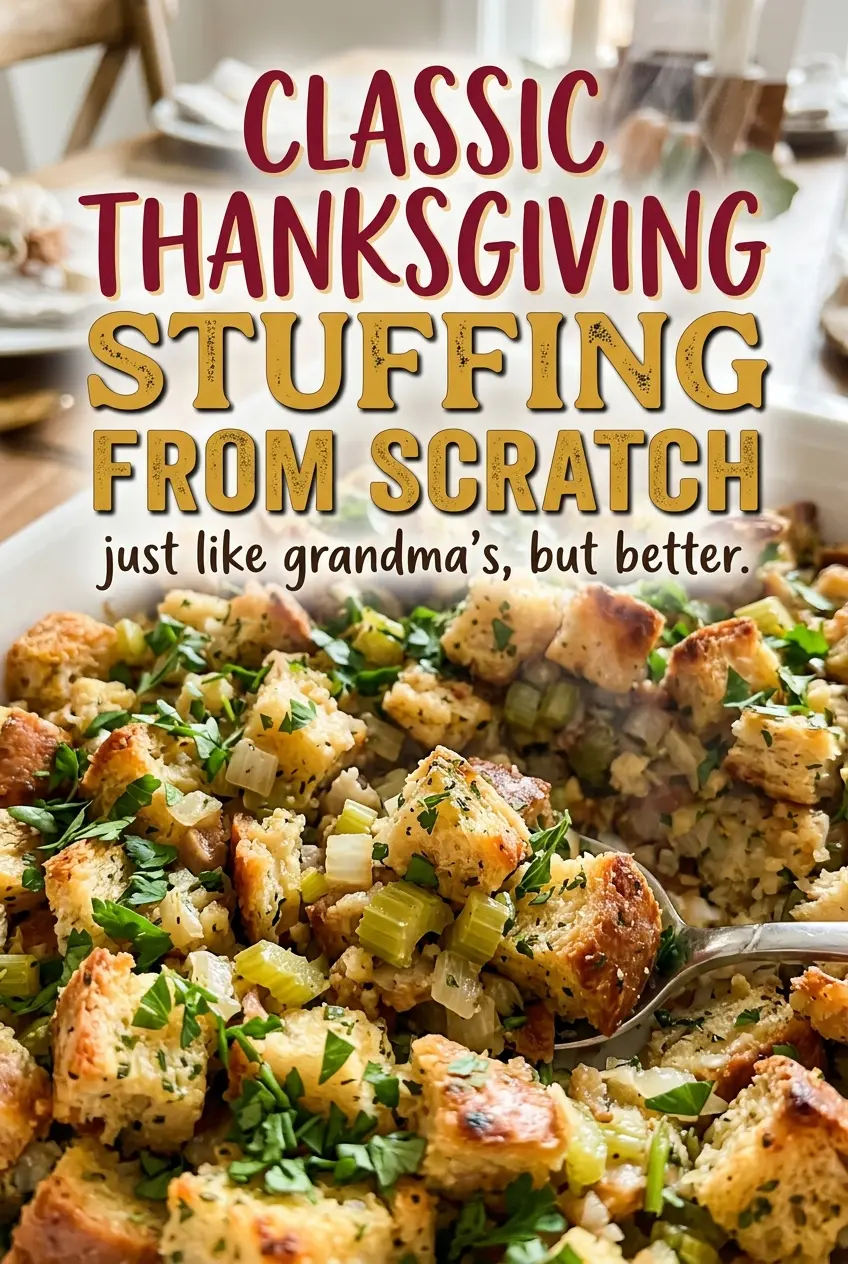
The texture comes down to two very different stages: dry the bread first, then let the covered stuffing bake before exposing the top to the oven. That gives the center time to set while the surface turns golden. The chopped herbs go into the buttery vegetables at the end, where a brief cook wakes up their aroma without dulling it. On the table, you get a tender, savory middle and browned edges with little flecks of sage and parsley.
Kitchen Note
I set aside the tablespoon of butter for the baking dish before melting the rest in the skillet. It’s easy to lose track of that small portion when most of the butter goes into the vegetables.
Save Classic Thanksgiving Stuffing from Scratch for its golden top, buttery vegetables, and herb-scented center.
The Broth Moistens the Bread; the Eggs Keep the Center Cohesive
Stuffing needs enough broth to soften its bread, but broth alone can leave the middle loose and heavy. The eggs do a different job: as the casserole bakes, they set around the bread and vegetables, helping the center hold together when you scoop it. That’s what separates a tender, cohesive stuffing from a bowl of wet bread with vegetables mixed through.
Whisk the eggs thoroughly into the broth before adding the other ingredients. That spreads them through the liquid instead of leaving patches of egg in the finished dish. Once the dried bread and buttery vegetables go into the bowl, fold until everything looks evenly moistened. The cubes should still look like cubes; a hard, prolonged stir breaks them down and makes the texture dense. Keep the listed broth amount in balance with the dry bread, rather than pouring in extra liquid just because some cubes still look firm at first. They continue absorbing as the mixture rests briefly during assembly and then bakes.
Why Crusty Bread Gives This Stuffing Its Best Texture
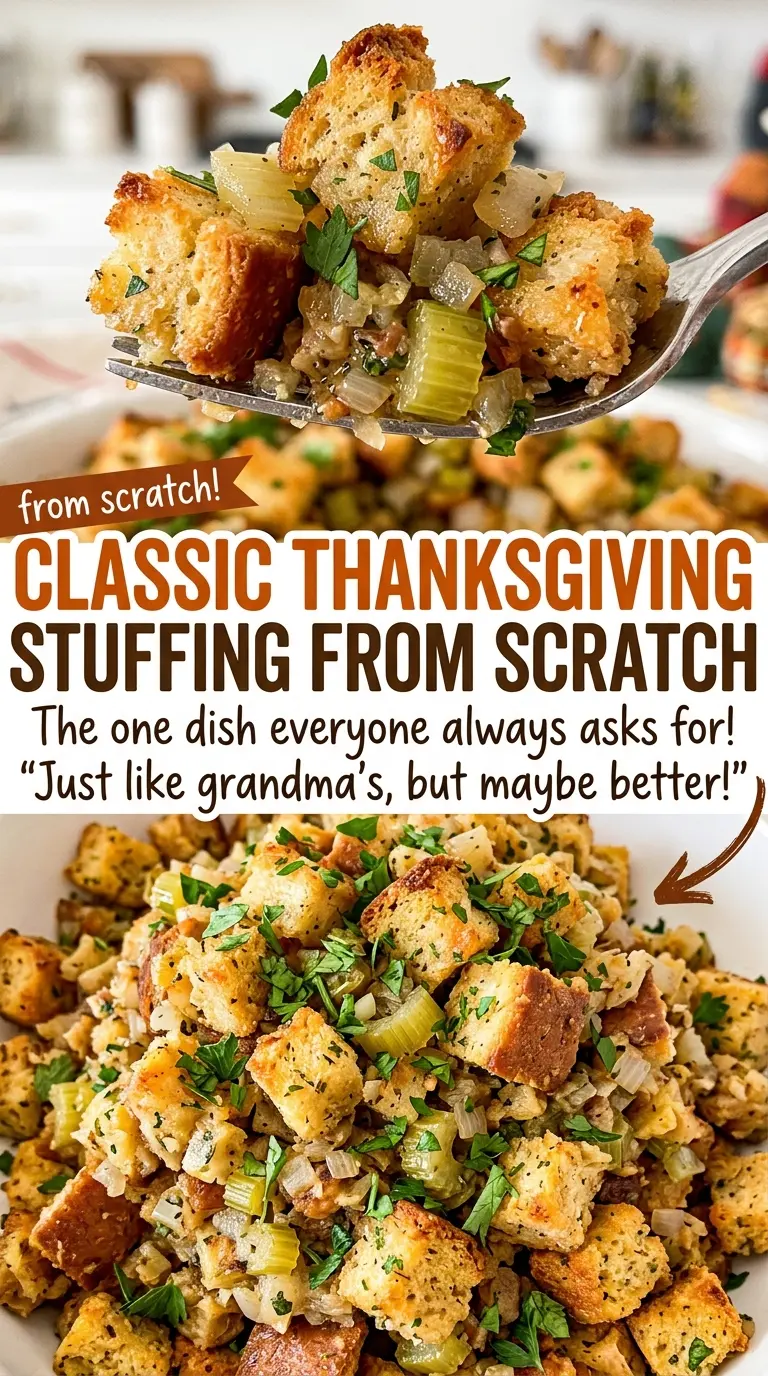
- Crusty white bread — French or Italian bread both work here. Cut the loaf into even 3/4-inch cubes so they dry at a similar rate and absorb the broth evenly. The drying step matters more than starting with bread that’s already stale; cubes that still feel soft in the middle can turn mushy once the liquid goes in.
- Unsalted butter — It carries the flavor of the softened vegetables and fresh herbs while leaving the salt level in your control. A standard grocery-store butter works well; there’s no need for a specialty brand. Salted butter will make the finished stuffing saltier, so unsalted is the better match for the measured kosher salt.
- Yellow onion and celery — Finely chopped pieces soften evenly in the skillet and distribute through the bread without taking over a bite. Fresh vegetables give the stuffing its familiar savory base; large chunks take longer to soften and can stay firm after baking.
- Fresh sage, thyme, and parsley — Fresh herbs bring distinct aromas: sage is earthy, thyme is gently pungent, and parsley keeps the mix tasting bright. Choose herbs with leaves that look fresh rather than wilted. The combination is deliberate, so dried herbs won’t give the same texture or fresh, lifted flavor.
- Low-sodium chicken broth — Low-sodium broth lets the herbs and butter come through without making the seasoning hard to control. Choose a broth you like the taste of on its own, since the bread absorbs it throughout. For the vegetarian adaptation below, use low-sodium vegetable broth in its place.
- Eggs — They bind the soaked bread as the casserole bakes, giving the center enough structure to serve. Whisk them into the broth first so they’re distributed before the bread goes in; there isn’t a simple omission that keeps the same set texture.
Drying, Sautéing, and Baking: The Texture Decisions That Matter
Dry the Cubes Without Browning Them
Heat the oven to 300°F and grease a 9×13-inch baking dish with 1 tablespoon of butter. Arrange the bread cubes in a single layer on a rimmed baking sheet so air can reach them. Bake for 35–45 minutes, stirring once halfway through, until the cubes feel dry and crisp but haven’t browned. If they’re still soft in the center, give them more time within that range rather than moving on while they’re moist.
Soften the Vegetables Before Adding the Herbs
Melt the remaining 15 tablespoons of butter in a 12-inch skillet over medium heat. Add the onion and celery, then cook for 10–12 minutes, stirring occasionally, until softened. You’re looking for tender pieces, not browned edges; keep the heat moderate so the butter doesn’t scorch while the vegetables cook. Stir in the sage, thyme, and parsley and cook for 1 minute, then take the skillet off the heat.
Coat the Bread Evenly in the Broth Mixture
Raise the oven temperature to 350°F. In a large bowl, whisk together the broth, eggs, kosher salt, and black pepper, then add the dried bread and the skillet mixture. Fold gently until the cubes are evenly moistened and the buttery vegetables are spread throughout. Don’t crush the bread as you mix; keeping the cubes intact gives the finished stuffing more texture.
Bake Covered First, Then Brown the Top
Transfer the mixture to the prepared baking dish and cover it tightly with foil. Bake for 30 minutes, then remove the foil and bake for another 20–25 minutes, until the top is golden and the center reaches 160°F. The uncovered finish browns the surface while the covered bake gives the middle time to heat through. Let the stuffing rest for 10 minutes before serving so it settles and is easier to scoop.
Two Ways to Adapt This Thanksgiving Stuffing
Make It Vegetarian With Vegetable Broth
Replace the low-sodium chicken broth with the same amount of low-sodium vegetable broth. The stuffing keeps its buttery herb flavor, though the savory base will be a little lighter; check that the broth is vegetarian if you’re cooking for someone who avoids animal-derived ingredients.
Give the Herbs a Sage-Forward Emphasis
For a more traditional, earthy taste, leave out the thyme and parsley and keep the sage. You’ll get a simpler, more pronounced sage aroma without changing the bread, broth, or baking method. The tradeoff is that the stuffing loses the lighter herbal note from the thyme and parsley.
Storage and Reheating
- Refrigerator: Store leftovers in an airtight container for 3–4 days. The browned top softens as it sits.
- Freezer: Freeze airtight portions for up to 1 month for the best texture. Thaw in the refrigerator before reheating.
- Reheating: Cover in an oven-safe dish and warm at 350°F until the center reaches 165°F. Leaving it uncovered the whole time can dry the edges before the middle is hot.
Questions That Come Up When Stuffing Goes in the Oven
Classic Thanksgiving Stuffing from Scratch
Ingredients
Equipment
Method
- Heat the oven to 300°F.
- Grease a 9x13-inch baking dish with 1 tablespoon of the butter.
- Arrange the bread cubes in a single layer on a rimmed baking sheet.
- Bake the bread cubes for 35–45 minutes, stirring once halfway through, until dry and crisp but not browned.
- Melt the remaining 15 tablespoons butter in a 12-inch skillet over medium heat.
- Add the onion and celery and cook for 10–12 minutes, stirring occasionally, until softened.
- Stir in the sage, thyme, and parsley and cook for 1 minute.
- Remove the skillet from the heat.
- Raise the oven temperature to 350°F.
- In a large bowl, whisk together the broth, eggs, salt, and pepper.
- Add the dried bread and the skillet mixture and fold until evenly combined.
- Transfer the stuffing to the prepared baking dish and cover tightly with foil.
- Bake for 30 minutes.
- Remove the foil and bake for 20–25 minutes, until the top is golden and the center reaches 160°F.
- Rest the stuffing for 10 minutes before serving.
