

Classic French Beef Bourguignon (Dutch Oven Red Wine Beef Stew)
Beef bourguignon earns its reputation the hard way: through a sauce that turns velvety and deep, beef that goes spoon-tender, and vegetables that taste like they’ve spent the whole afternoon…
Tip: save now, cook later.Beef bourguignon earns its reputation the hard way: through a sauce that turns velvety and deep, beef that goes spoon-tender, and vegetables that taste like they’ve spent the whole afternoon soaking up wine and stock. The magic isn’t complicated, but it does depend on a few things happening in the right order — strong browning, a slow braise, and a finishing step that keeps the mushrooms and pearl onions from fading into the stew.
This version keeps the method faithful without making it fussy. The beef gets dusted with a little flour before searing, which helps the sauce thicken naturally later. Bacon adds smoky depth, tomato paste gives the braising liquid some backbone, and the wine gets a chance to cook down before the oven does the long work. By the end, the sauce should cling to a spoon instead of running off it, and the beef should break apart with almost no pressure.
Below, I’ve broken down the part that matters most if you’ve ever ended up with stringy beef or a thin broth. You’ll also find the best swaps for the wine, a few ways to serve it, and the storage notes that matter if you’re cooking ahead.
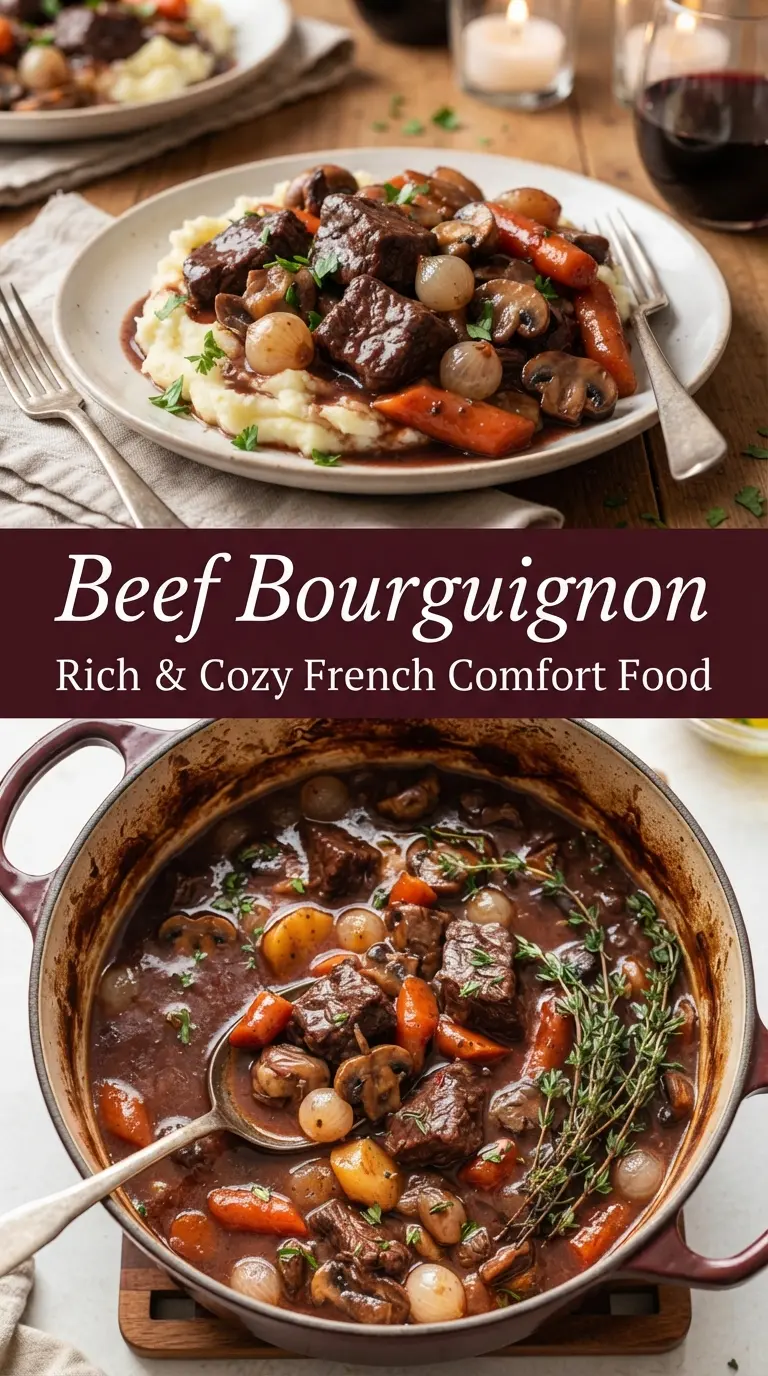
The sauce reduced into this glossy, rich gravy and the beef was fall-apart tender after exactly 3 hours. I added it to mashed potatoes and my husband went back for seconds before I even sat down.
Save this beef bourguignon for the night you want a red wine stew with fork-tender beef, silky sauce, and the kind of slow-cooked depth that feels worth every minute.
The Reason the Beef Gets Tender Instead of Tough
The biggest mistake with beef bourguignon is rushing the braise or heating it too hard. Chuck needs time, not punishment. If the oven runs too hot, the meat tightens before the connective tissue has a chance to soften, and you end up with beef that tastes cooked but still feels stringy. A steady 325°F gives the collagen time to melt into the sauce, which is what creates that lush, silky finish.
The other key is browning. The beef should pick up a deep mahogany crust before it goes into the Dutch oven, and the bottom of the pot should look dark with stuck-on bits after searing. Those bits are not a problem to scrub away — they’re the base of the sauce. When the wine hits the pan, it loosens all of that into the braising liquid and gives the stew its depth.
- Flour on the beef — Just enough to help the meat brown and give the sauce a little body later. Too much flour can turn the stew pasty, so toss lightly and shake off the excess.
- Dry red wine — Pinot Noir or Burgundy keeps the sauce elegant and layered. Use a wine you’d actually drink; harsh, bitter wine will stay harsh after hours in the oven.
- Tomato paste — This adds color, acidity, and a slow-cooked savoriness that plain broth can’t deliver. Cook it for a minute until it darkens or it can taste flat.
- Pearl onions and mushrooms — They go in at the end so they stay distinct. If they cook for three hours, they lose their shape and their flavor gets muddy.
What Each Ingredient Is Doing in the Pot
Beef chuck is the right cut here because it has enough connective tissue to turn silky during a long braise. Don’t swap in a lean roast unless you want meat that dries out before the sauce finishes.
Bacon adds smoky fat and salt right at the start. Thick-cut works best because it stays meaty after rendering, and you don’t want it disappearing into the background.
Carrots, onion, and garlic build the base of the stew. Chop the onion finely enough that it almost melts into the sauce, but keep the carrots in larger chunks so they don’t collapse into mush.
Beef broth and wine form the braising liquid. The wine brings acidity and depth; the broth keeps it from tasting sharp. If you need an alcohol-free version, use extra broth plus a splash of balsamic vinegar, but know the result will be rounder and less complex.
Butter, mushrooms, and pearl onions finish the dish with richness and texture. Sautéing them separately is worth the extra pan because they brown instead of steaming, which keeps the final stew from tasting one-note.
The Slow Part That Actually Matters
Render the bacon first
Start with the bacon in a cold Dutch oven and let it cook over medium heat until the fat renders and the pieces go crisp at the edges. If you start too hot, the bacon can scorch before it gives up enough fat, and that fat is what helps the beef brown cleanly. Lift the bacon out when it’s done and leave the drippings behind.
Brown the beef in batches
Don’t crowd the pot. If the pieces are packed together, they steam and turn gray instead of forming that dark crust that makes the sauce taste like it cooked all day. Sear until each side looks deeply browned and releases easily from the pot, then move on. The beef does not need to be cooked through at this stage; it only needs color.
Build the braising base
Once the onion and carrots soften, stir in the garlic and tomato paste and let them cook briefly before adding the wine. The tomato paste should darken a shade or two and smell sweeter, not raw. When the wine goes in, scrape the bottom thoroughly until the pot is clean and the liquid turns deeply colored from the browned bits.
Braise until the beef gives up
Cover the pot and let the oven do the work. You’re looking for beef that yields easily when prodded with a fork, not just beef that is technically cooked. If it still feels tight after 2½ hours, give it more time; undercooked braised beef is tough, and rushing the finish won’t fix it.
Finish with the mushrooms and onions
Sauté the mushrooms and pearl onions separately until they’re golden and tender, then stir them in at the end. This keeps their edges intact and gives the stew a cleaner, more layered texture. After they go back in, simmer just long enough for the sauce to turn glossy and coat the back of a spoon.
Three Ways to Make This Bourguignon Work for Your Table
Alcohol-Free Version
Replace the wine with more beef broth and add 1 to 2 tablespoons of balsamic vinegar for brightness. You’ll lose some of the classic wine-driven complexity, but the stew will still be rich and deeply savory.
Gluten-Free Adjustment
Swap the all-purpose flour for a gluten-free flour blend or skip it entirely and thicken the finished sauce by simmering uncovered a little longer. Leaving out the flour won’t break the recipe, but the sauce will need a few extra minutes to reach that spoon-coating texture.
Using a Different Braising Cut
Beef brisket or short ribs can stand in for chuck if that’s what you have. Short ribs will taste a little richer and fattier; brisket will slice more cleanly but still turn tender if you give it the full braise.
Storage and Reheating
- Refrigerator: 4 days. The flavor deepens overnight, and the sauce may thicken as it chills.
- Freezer: Yes, it freezes well for up to 3 months. Cool it completely first, then pack it in airtight containers. The mushrooms soften a little after thawing, but the stew still reheats beautifully.
- Reheating: Warm it gently on the stovetop over low heat with a splash of broth if needed. High heat can make the beef firm up and can cause the sauce to split at the edges.
Answers to the Questions Worth Asking

Classic French Beef Bourguignon (Dutch Oven Red Wine Beef Stew)
Ingredients
Equipment
Method
- Heat the oven to 325°F.
- Pat the beef chuck dry, season it with salt and black pepper, and toss it with all-purpose flour.
- Cook the thick-cut bacon in a Dutch oven over medium heat for 6–8 minutes, until crisp, then transfer bacon to a plate and leave the fat in the pot.
- Add olive oil to the Dutch oven and raise the heat to medium-high; sear the beef in batches for 3–4 minutes per side until deeply browned on all sides, then transfer to the plate with the bacon.
- Lower the heat to medium and cook the yellow onion and carrots for 5 minutes, until softened.
- Stir in the garlic and tomato paste and cook for 1 minute, until the paste darkens.
- Pour in the dry red wine and scrape up all the browned bits.
- Add the beef broth, fresh thyme, bay leaves, beef, and bacon; bring to a simmer, cover, and braise in the oven for 2½–3 hours until the beef falls apart with a fork.
- In the last 20 minutes, melt unsalted butter in a cast iron skillet over medium-high heat.
- Sauté the cremini mushrooms and pearl onions for 8–10 minutes, until golden and tender.
- Remove the thyme stems and bay leaves from the stew.
- Stir the mushrooms and onions into the stew and simmer on the stovetop for 5 minutes until the sauce is glossy and thick enough to coat a spoon.
- Garnish with chopped fresh parsley and serve hot.
