
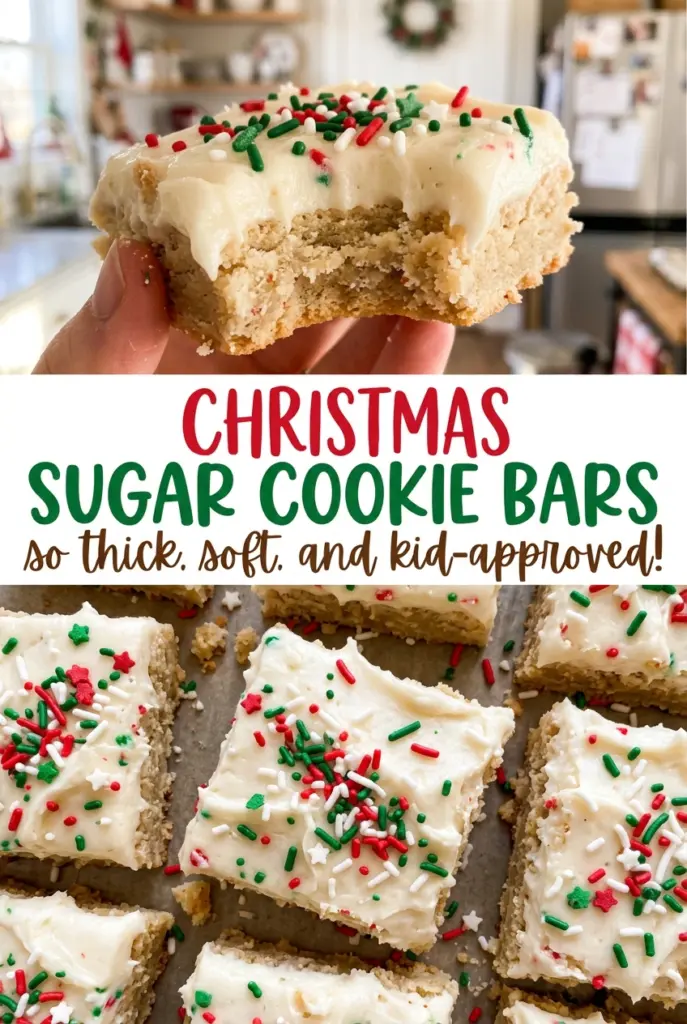
Christmas Sugar Cookie Bars
The dough feels thick when it goes into the 9x13-inch pan, and that’s exactly what I want: it stays where I press it instead of spreading into thin edges. These…
Tip: save now, cook later.The dough feels thick when it goes into the 9×13-inch pan, and that’s exactly what I want: it stays where I press it instead of spreading into thin edges. These Christmas Sugar Cookie Bars give you the familiar buttery sweetness of a sugar cookie without portioning individual cookies or baking multiple sheets.
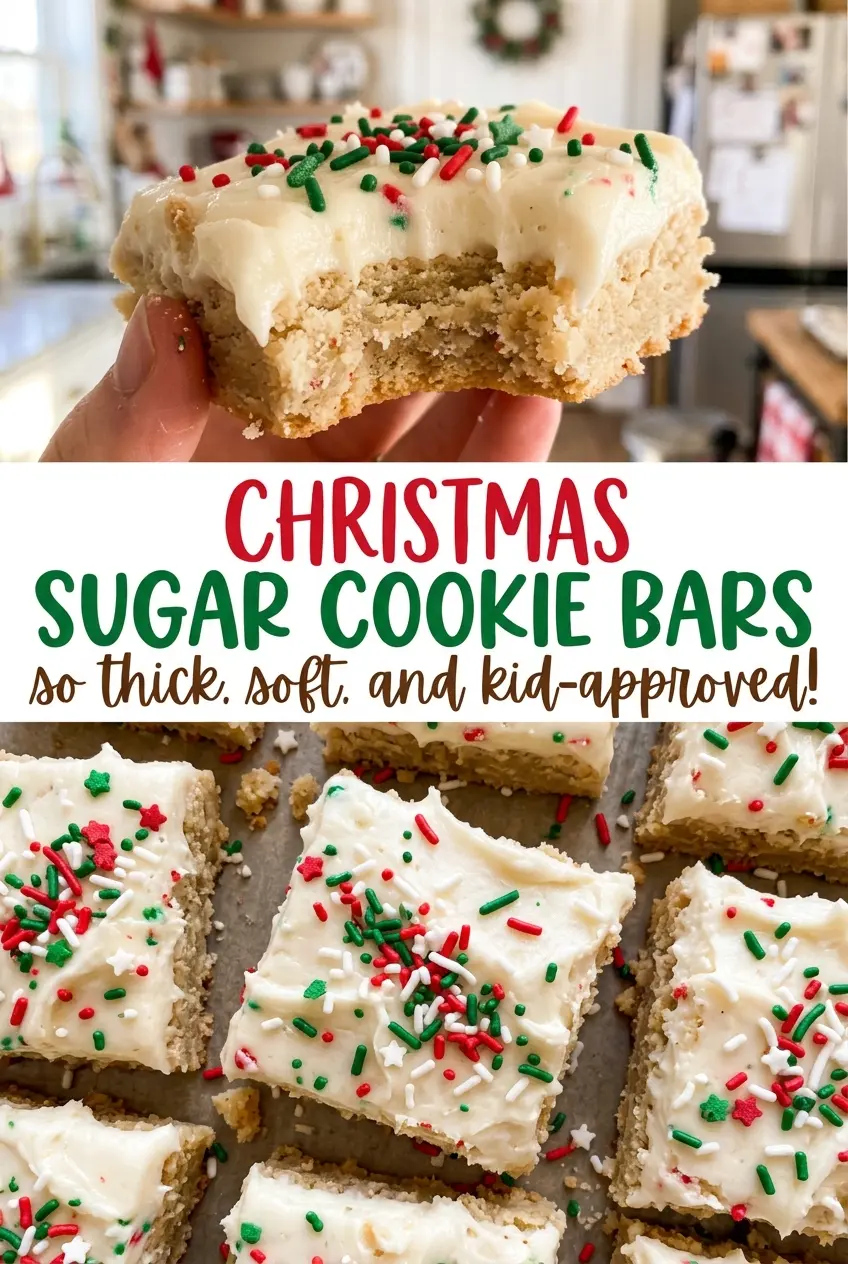
I like the balance here: a soft, tender bar under a smooth vanilla frosting, with red and green sprinkles for a little crunch. The dough comes together in one bowl, and the whole slab cools in the pan before you frost and cut it. Each square has an even bite, from the lightly golden edge to the soft center.
Kitchen Note
Let the bars cool completely before frosting them. Even a little warmth softens the butter frosting and makes it harder to spread into a smooth layer.
Save these Christmas Sugar Cookie Bars for a soft, frosted holiday treat that cuts neatly into a pan of 24.
Why the Extra Egg Yolk Matters in a Pan of Sugar Cookies
A pan of cookie bars needs to hold together when you cut it, but it shouldn’t eat like a firm cake. The whole egg helps bind the dough, while the additional yolk brings richness without adding another egg white. That balance gives these bars a tender, close-textured crumb instead of a light, bouncy one.
There’s a practical difference once the dough is pressed into a pan, too. Individual cookies have edges all the way around; a slab has a larger center that needs to bake through while its edges stay soft. The extra yolk supports that soft, rich texture across the pan. It’s worth separating the egg carefully, since adding the white along with the yolk changes the balance the dough was built around.
The Butter and Flour Choices That Keep These Bars Tender
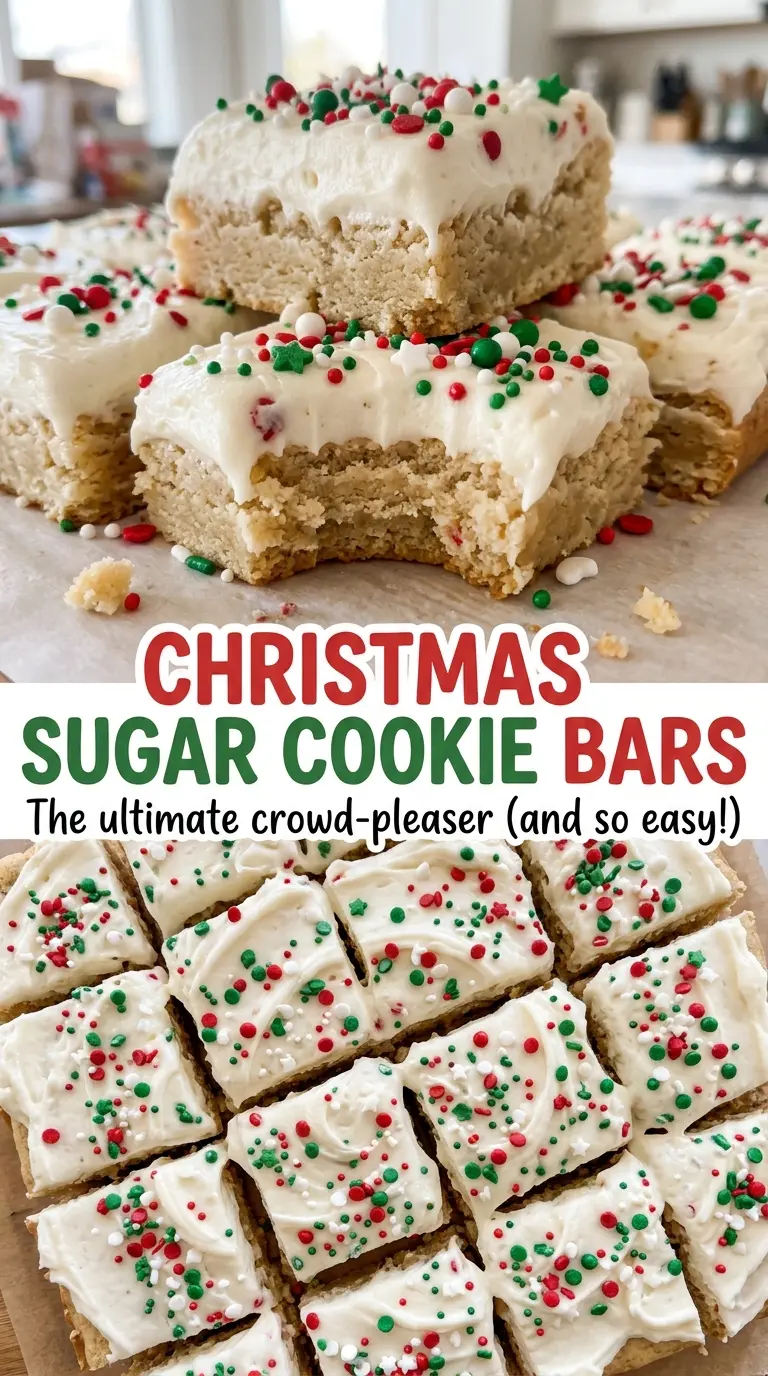
- Unsalted butter — Butter supplies the rich cookie flavor and carries through into the frosting. A standard grocery-store butter works well; there’s no need to buy a specialty brand. Use it softened, not melted, so it creams with the sugar instead of turning the dough greasy.
- Granulated sugar — Its clean sweetness keeps the bars tasting like classic sugar cookies. Brown sugar changes the flavor and makes the texture softer, so it isn’t a neutral swap if you want the same result. The inexpensive bag from the baking aisle is fine here.
- Egg and egg yolk — Use a large egg and separate a large yolk for the dough. The yolk’s richness is part of the bar’s texture, so don’t add the reserved white just to avoid having a leftover. Ordinary fresh eggs work perfectly.
- All-purpose flour — This gives the dough enough structure to press into a slab and cut into squares. Spoon flour into the measuring cup and level it rather than packing it down; too much flour can leave the bars dry. A cup-for-cup gluten-free baking blend is the most practical alternative, though the bars may be a little more delicate.
- Vanilla extract — Vanilla gives the dough its familiar sugar-cookie aroma. Pure vanilla is lovely, but imitation vanilla works well in a baked bar, where its flavor is less delicate. For an almond-forward version, use the separate variation below rather than adding a second flavor on top.
- Confectioners’ sugar and milk — Confectioners’ sugar makes the frosting smooth, while milk loosens it enough to spread. Don’t replace the confectioners’ sugar with granulated sugar; the frosting would feel gritty. Any ordinary milk works, and the frosting doesn’t need a premium brand.
- Holiday sprinkles — They add color and a small crisp bite against the soft frosting. The red-and-green mix makes the bars festive, but the particular shape or brand isn’t important.
From Creamed Butter to a Frosted 9×13 Pan
Prepare the lined pan
Heat the oven to 350°F, then line a 9×13-inch baking pan with parchment, leaving an overhang on two sides. Lightly coat the parchment with nonstick cooking spray so the bars release cleanly. The overhang gives you something to grasp when you lift the cooled slab out. Press the parchment into the corners so the dough can reach the edges evenly.
Cream the butter and build the dough
Beat 1 cup of softened butter with the granulated sugar for about 2 minutes, until the mixture looks light and creamy. Beat in the egg, egg yolk, and vanilla until combined. Add the flour, baking powder, and kosher salt, mixing on low just until no dry flour remains. Stop there; continuing to beat after the flour disappears can make the bars tougher.
Press the dough and bake until set
Transfer the dough to the prepared pan and press it into an even layer, paying attention to the corners. Bake for 20 to 24 minutes. The edges should be lightly golden, and the center should look set rather than wet or shiny. Don’t wait for the middle to turn golden too; that can push the edges past tender.
Cool, frost, and finish
Let the bars cool completely in the pan, about 1 hour. For the frosting, beat the remaining 1/2 cup of softened butter until creamy, then gradually beat in the confectioners’ sugar and milk until smooth and spreadable. Spread it over the cooled bars and scatter the holiday sprinkles on top. Give the frosting time to set before cutting the slab into 24 bars.
Three Small Changes That Give These Bars a New Twist
Use a cup-for-cup gluten-free blend
Replace the all-purpose flour with a gluten-free baking blend labeled as a one-for-one substitute. Choose one that includes a binder such as xanthan gum, or follow the blend’s guidance if it requires adding one. The bars may be a little more fragile when sliced, but you’ll still get the frosted cookie-bar format.
Make them almond-scented
Replace the vanilla in the dough with 1/2 teaspoon almond extract. Almond extract is more concentrated, so using the full vanilla amount can overpower the buttery cookie. You’ll get a distinct bakery-style almond note without changing the bar’s texture.
Add a little orange to the dough
Mix 1 tablespoon of finely grated orange zest into the butter and sugar. It gives the bars a fresh citrus aroma that pairs neatly with the vanilla frosting, while leaving the soft cookie texture unchanged.
Storage and Reheating
- Refrigerator: Store the frosted bars in an airtight container for up to 5 days. The bars firm up when cold, so let them sit out until the frosting softens slightly before serving.
- Freezer: Freeze the cut bars in a single layer until the frosting is firm, then stack them in an airtight container with parchment between layers. They keep well for up to 2 months; thaw in the refrigerator.
- Reheating: These are best served without reheating. A microwave can melt the frosting before the center softens, so let refrigerated bars come toward room temperature instead.
Questions That Come Up Before Cutting These Sugar Cookie Bars
Christmas Sugar Cookie Bars
Ingredients
Equipment
Method
- Heat the oven to 350°F.
- Line a 9x13-inch baking pan with parchment paper, leaving an overhang on two sides.
- Lightly coat the parchment with the nonstick cooking spray.
- In a large bowl, beat 1 cup of the softened butter with the granulated sugar until light and creamy, about 2 minutes.
- Beat in the egg, egg yolk, and vanilla until combined.
- Add the flour, baking powder, and salt, and mix on low just until no dry flour remains.
- Press the dough evenly into the prepared pan.
- Bake for 20 to 24 minutes, until the edges are lightly golden and the center looks set.
- Cool the bars completely in the pan, about 1 hour.
- Beat the remaining 1/2 cup softened butter in a bowl until creamy.
- Gradually beat in the confectioners' sugar and milk until smooth and spreadable.
- Spread the frosting over the cooled bars and top with the holiday sprinkles.
- Let the frosting set before cutting into 24 bars.
